Global Water Scarcity: Which Regions Will Face Critical Shortages by 2030
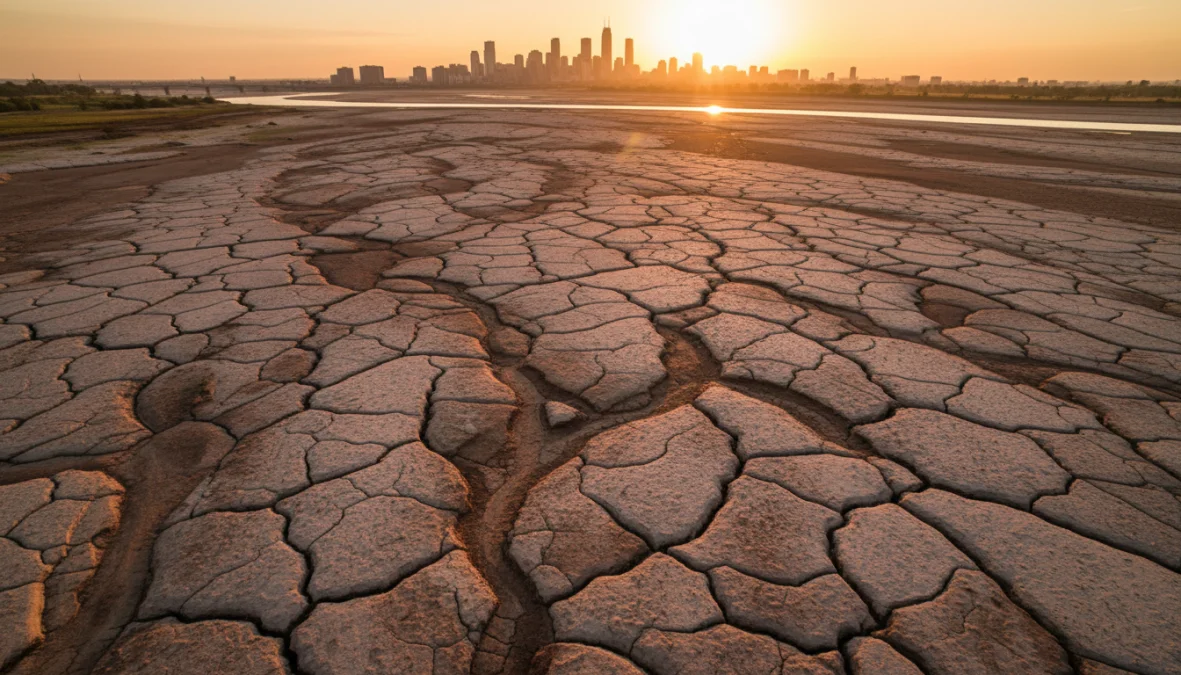
Turn on your tap. Water flows out, clean and abundant. It’s easy to take for granted, right? But for billions of people around the world, this simple act is becoming increasingly difficult—or impossible. Global water scarcity isn’t some distant future problem. It’s happening now, and by 2030, the situation could reach critical levels in regions home to nearly half the world’s population. Let’s dive into where the crisis will hit hardest and what it means for our shared future.
Understanding the Global Water Scarcity Crisis
First things first: what exactly is global water scarcity? It’s when the demand for freshwater exceeds the available supply in a given region. But there’s an important distinction to make here. Water scarcity means there’s not enough water to meet needs, while water stress occurs when water demand is high relative to supply, making resources vulnerable to depletion.
Right now, about 2 billion people—roughly a quarter of humanity—live in countries experiencing high water stress 2030 projections suggest this number could balloon to 5 billion. The water scarcity crisis stems from a perfect storm of factors: climate change disrupting precipitation patterns, explosive population growth (we’re adding about 80 million people annually), rapid urbanization concentrating demand, and agriculture that guzzles around 70% of global freshwater supplies.
Why is 2030 such a critical date? According to the UN and World Resources Institute, it’s when several trends converge. Groundwater depletion and aquifer depletion are accelerating, while climate change intensifies droughts in already vulnerable regions. The World Resources Institute warns that without significant intervention, we’re heading toward a future where freshwater scarcity becomes the norm rather than the exception in many regions. This isn’t just about inconvenience—it’s about food security, economic stability, and potentially, geopolitical conflict over resources, similar to the tensions explored in how geopolitical tensions are reshaping global supply chains.
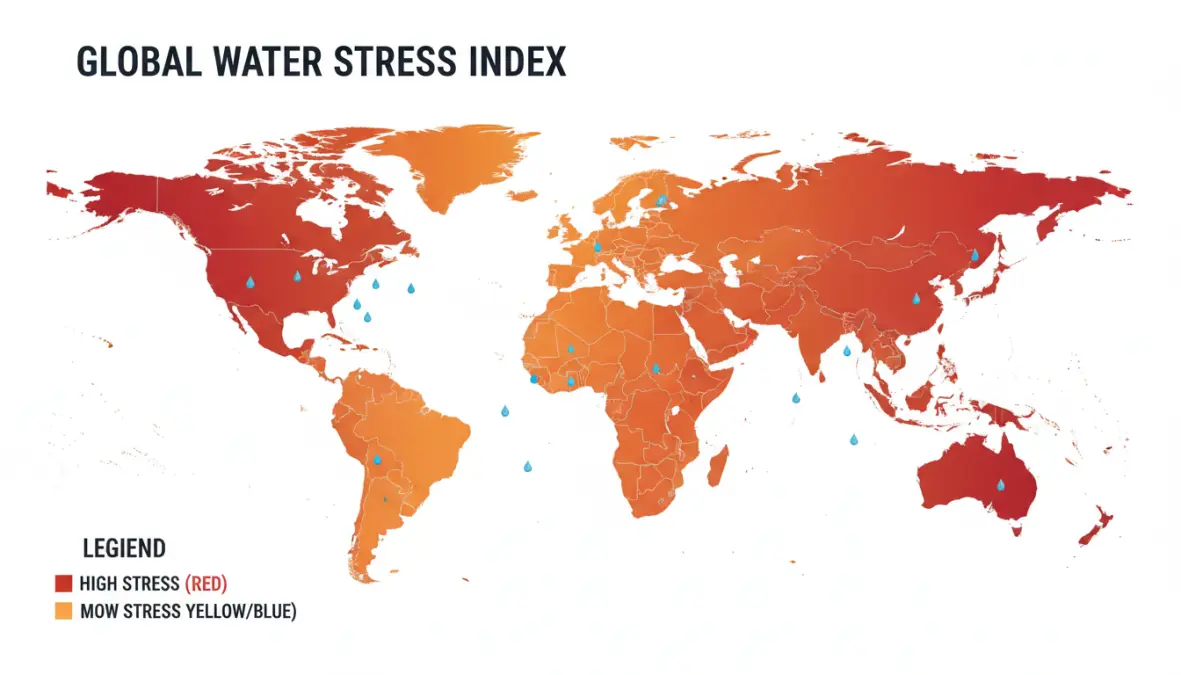
Regions and Countries Facing Severe Water Shortages by 2030
Not all regions face equal risk. The water crisis predictions paint a stark picture: certain areas will experience catastrophic shortages unless dramatic action is taken. Let’s break down the water shortage regions that should be on everyone’s radar.
Middle East and North Africa: The Epicenter of Water Stress
If there’s a ground zero for the global water crisis, it’s here. The Middle East and North Africa (MENA) region is home to 12 of the world’s 17 most water-stressed countries. When people ask which countries will face water scarcity by 2030, the answer invariably starts with this region.
Qatar tops the list as the world’s most water-stressed nation, withdrawing 300% more water than its naturally renewable supply—a feat only possible through expensive desalination. Israel, despite its technological prowess in water resources management, faces extraction rates at 90% of available resources. Lebanon, Iran, Jordan, Libya, Kuwait, Saudi Arabia, and the UAE all hover above 80% water stress levels.
What makes this region particularly vulnerable? Geography dealt it a tough hand: naturally arid climate, limited rainfall, few permanent rivers, and expanding deserts. Drought prone areas are growing as climate change shifts weather patterns. The region’s response? Heavy investment in desalination solutions. Saudi Arabia and UAE lead the world in desalination capacity, but this energy-intensive process comes with environmental costs and requires massive infrastructure investment that not all nations can afford.
Here’s the kicker: water scarcity here isn’t just an environmental issue—it’s a security one. Conflicts over water rights along the Tigris, Euphrates, and Jordan rivers have simmered for decades. As resources dwindle, these tensions could boil over.
Asia and Other Critical Hotspots
Asia faces a different but equally serious challenge. It’s home to 60% of the world’s population but only 36% of global water resources. When examining water scarcity by country, several Asian nations raise red flags.
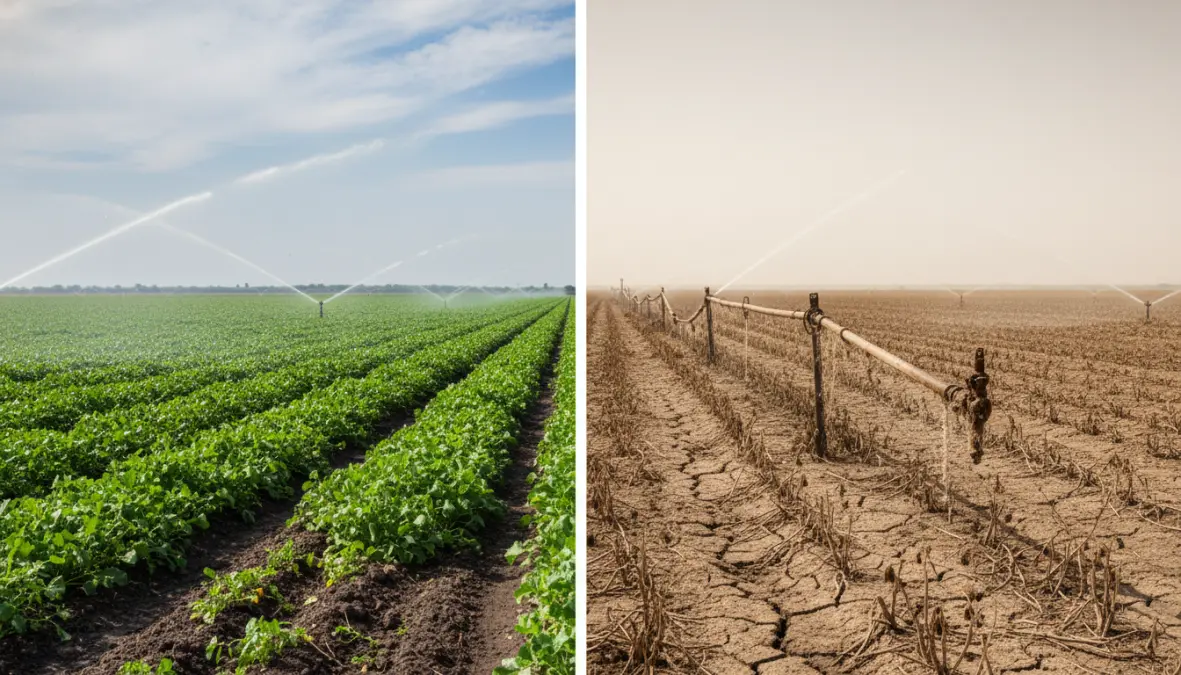
India sits at a critical juncture. Northern regions, including Delhi and surrounding states, experience severe hydrological stress. With 1.4 billion people and growing, India withdraws more groundwater than any nation on Earth. The water scarcity impact on agriculture here could be devastating—agriculture employs nearly half the workforce and depends heavily on increasingly unreliable monsoons.
Pakistan faces similar pressures, with the Indus River Basin supporting 90% of its food production while facing increasing stress. China’s northern regions, despite massive water transfer projects, struggle with aquifer depletion and pollution. Central Asian nations like Uzbekistan and Turkmenistan, reliant on Soviet-era infrastructure around shrinking water sources like the Aral Sea, face existential water challenges.
Beyond Asia, several countries emerge as concerning. South Africa’s Cape Town nearly ran out of water during the “Day Zero” crisis, a preview of what could become routine. Mexico City, built on a drained lakebed, sinks as it depletes underground aquifers. Parts of Spain face increasing desertification. Even Australia, despite advanced water conservation strategies, battles recurring droughts exacerbated by climate change and water shortages.
These are among the most water stressed regions in the world, and the pattern is clear: high population density plus limited or declining water resources equals crisis. The question of countries running out of freshwater isn’t hypothetical—it’s a looming reality requiring immediate action.
FAQ: Common Questions About the Water Scarcity Crisis
What is the main cause of global water scarcity?
There’s no single culprit. The water scarcity crisis results from multiple interconnected factors: climate change altering precipitation patterns and increasing droughts, population growth driving up demand, inefficient agricultural practices consuming vast quantities, and poor water resources management. In many regions, groundwater depletion from over-extraction compounds the problem, while pollution makes existing supplies unusable.
Which country will run out of water first?
No country will literally “run out” completely, but several face imminent crises. According to global water shortage predictions 2030, countries like Qatar, Israel, Lebanon, and Iran face the highest water stress levels. Cape Town’s near-crisis showed how quickly major cities can approach “Day Zero.” Small island nations and Gulf states relying on desalination are particularly vulnerable to any disruption.
How many people will be affected by water scarcity by 2030?
Current projections suggest up to 5 billion people—more than half the world’s population—will live in areas facing water scarcity by 2030. Of these, about 1.6 billion will experience “absolute water scarcity,” meaning insufficient water for basic human needs. The impacts will range from limited access to clean drinking water to agricultural failures and economic disruption in regional water shortages.
Can technology solve the water crisis?
Technology is part of the solution but not a silver bullet. Desalination solutions work but require enormous energy and infrastructure investment. Smart irrigation, water recycling, and leak detection can dramatically improve efficiency. However, how to solve water scarcity crisis ultimately requires combining technology with policy changes, conservation behavior, climate action, and better water conservation strategies. No technological fix alone can overcome unsustainable consumption patterns.
The clock is ticking toward 2030, and the water crisis won’t wait. Understanding which regions face the greatest risk is the first step. The next? Taking action—whether that’s supporting sustainable policies, reducing personal water waste, or staying informed about this critical challenge. Water scarcity might seem abstract until it isn’t, and for millions already, that day has arrived. The question isn’t whether we need to act, but whether we’ll act in time.