How Geopolitical Tensions Are Reshaping Global Supply Chains

The global economy is navigating uncharted waters. From semiconductor shortages triggered by trade tensions between Washington and Beijing to energy crises sparked by the Russia-Ukraine conflict, supply chain geopolitics has become the defining challenge for businesses worldwide. What was once a predictable network of suppliers, manufacturers, and logistics partners has transformed into a complex chess game where political decisions can disrupt entire industries overnight. Companies that once prioritized efficiency above all else are now scrambling to understand how do geopolitical tensions affect supply chains and what they can do to protect their operations.
Introduction: The Growing Impact of Supply Chain Geopolitics
Supply chain geopolitics refers to how international political tensions, conflicts, and policy decisions directly impact the flow of goods, materials, and services across borders. We’re no longer living in a world where business operates independently from politics. Recent events have made this crystal clear: China’s military exercises around Taiwan threaten access to 90% of the world’s advanced semiconductors, attacks on Red Sea shipping routes have forced vessels to take 10-day detours around Africa, and Western sanctions on Russia have redrawn the entire global energy map.
The numbers tell a stark story. Global supply chain disruptions cost businesses an estimated $4 trillion in lost revenue in recent years, according to industry reports. Lead times for critical components have doubled or tripled, and inventory costs have skyrocketed as companies build protective buffers. This isn’t just about delayed shipments anymore—it’s about fundamental questions of access, security, and sovereignty. The COVID-19 pandemic exposed critical dependencies, but ongoing geopolitical uncertainty business has made supply chain resilience a boardroom priority and a matter of national security for governments worldwide.
Key Geopolitical Risks Disrupting Global Supply Chains
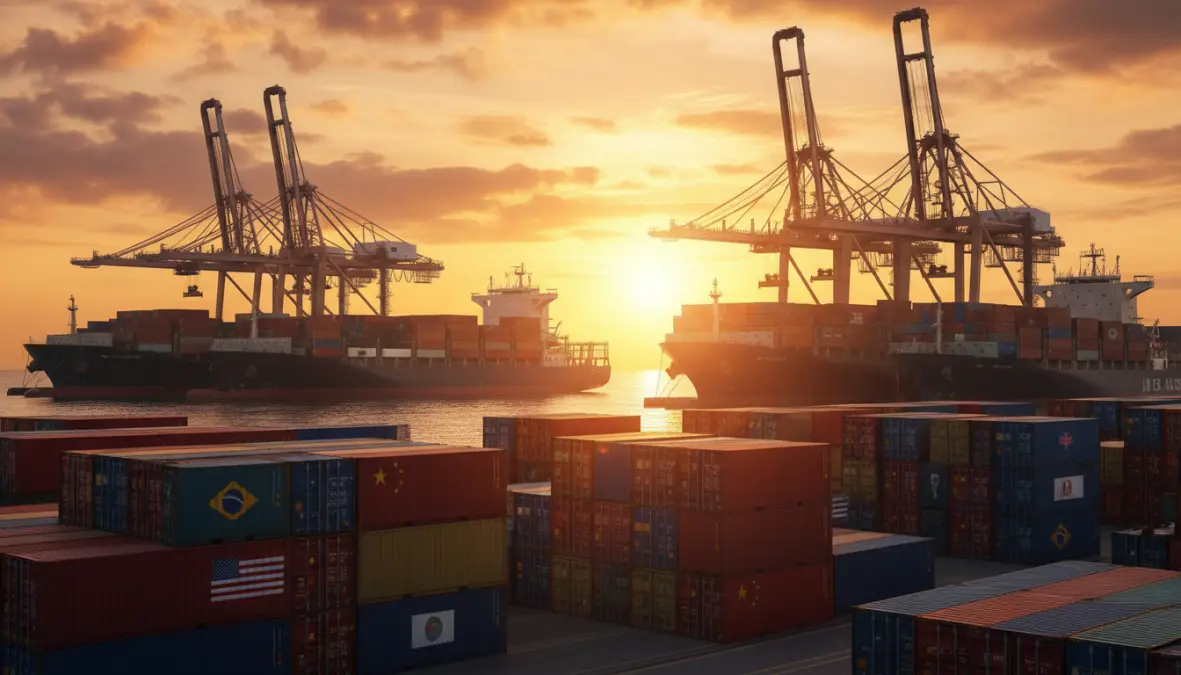
Understanding the landscape of geopolitical risks supply chain requires looking beyond headlines to identify the mechanisms through which politics disrupts commerce. Today’s businesses face a multifaceted threat environment where international trade conflicts can emerge from various sources:
- Military conflicts and territorial disputes: Direct warfare disrupts production facilities, closes critical transportation corridors, and creates no-go zones for commercial shipping. The Ukraine war halted Ukrainian grain exports that feed millions, while tensions in the South China Sea threaten $3.4 trillion in annual trade passing through those waters.
- Economic sanctions and embargoes: When nations impose financial restrictions, entire supplier networks become unusable overnight. Western sanctions on Russian energy forced European manufacturers to find alternative sources at significantly higher costs, while technology embargoes against Iran and North Korea complicate compliance for global companies.
- Export controls and technology restrictions: Governments increasingly weaponize access to critical technologies. The U.S. restrictions on advanced chip-making equipment to China have forced semiconductor companies to maintain separate supply chains for different markets.
- Economic nationalism: Countries prioritizing domestic industries through subsidies, local content requirements, and protectionist policies fragment global markets. India’s production-linked incentive schemes and Europe’s strategic autonomy initiatives are reshaping manufacturing locations.
- Resource competition: Control over critical minerals—lithium, cobalt, rare earths—has become a geopolitical battleground affecting everything from electric vehicles to defense systems.
The trade tensions impact varies by sector. Semiconductors face the most acute pressures, with production concentrated in geopolitically sensitive Taiwan and South Korea. Energy markets remain vulnerable to Middle Eastern conflicts and Russian gas politics. Even food security has become politicized, with wheat and fertilizer exports turned into geopolitical leverage.
Trade Wars and Tariff Barriers
The U.S.-China trade wars fundamentally altered global commerce. What began with tariffs on steel and aluminum escalated into duties affecting hundreds of billions of dollars in goods. Electronics manufacturers faced 25% tariffs on components, forcing painful choices: absorb costs, raise prices, or restructure supply chains entirely. Beyond tariffs, international trade conflicts now include investment restrictions, technology transfer bans, and entity lists that prohibit business with specific companies.
The impact of geopolitics on global logistics extends to trade route redesigns. To avoid tariffs, companies established manufacturing in Vietnam, Mexico, and Eastern Europe—only to discover these locations have their own political risks. Export controls on technologies like AI chips, quantum computing, and advanced software mean companies must track not just where products go, but who uses them and for what purpose. This compliance burden adds layers of cost and complexity to previously straightforward transactions.
Regional Conflicts and Transportation Disruptions
Chokepoints—narrow waterways where vast amounts of global trade must pass—represent acute vulnerabilities. The Suez Canal handles 12% of global trade; when blocked by a grounded container ship, it cost $9-10 billion daily in delayed goods. The Strait of Hormuz, through which 21% of global petroleum passes, remains perpetually tense due to Iran-Gulf state rivalries. Recent attacks on commercial vessels in the Red Sea forced shipping companies to reroute around Africa, adding weeks to delivery times and hundreds of thousands in fuel costs per voyage.
These disruptions cascade through supply chain security planning. Insurance premiums spike for certain routes, shipping schedules become unreliable, and just-in-time inventory models collapse. A European automaker waiting for Asian components suddenly faces production halts because ships can’t reliably reach Mediterranean ports. The pharmaceutical industry struggles to maintain cold-chain integrity when vessels take unpredictable detours. Global supply chain disruptions from regional conflicts prove that geography still matters intensely in our supposedly borderless digital economy.
Building Supply Chain Resilience in an Era of Geopolitical Uncertainty
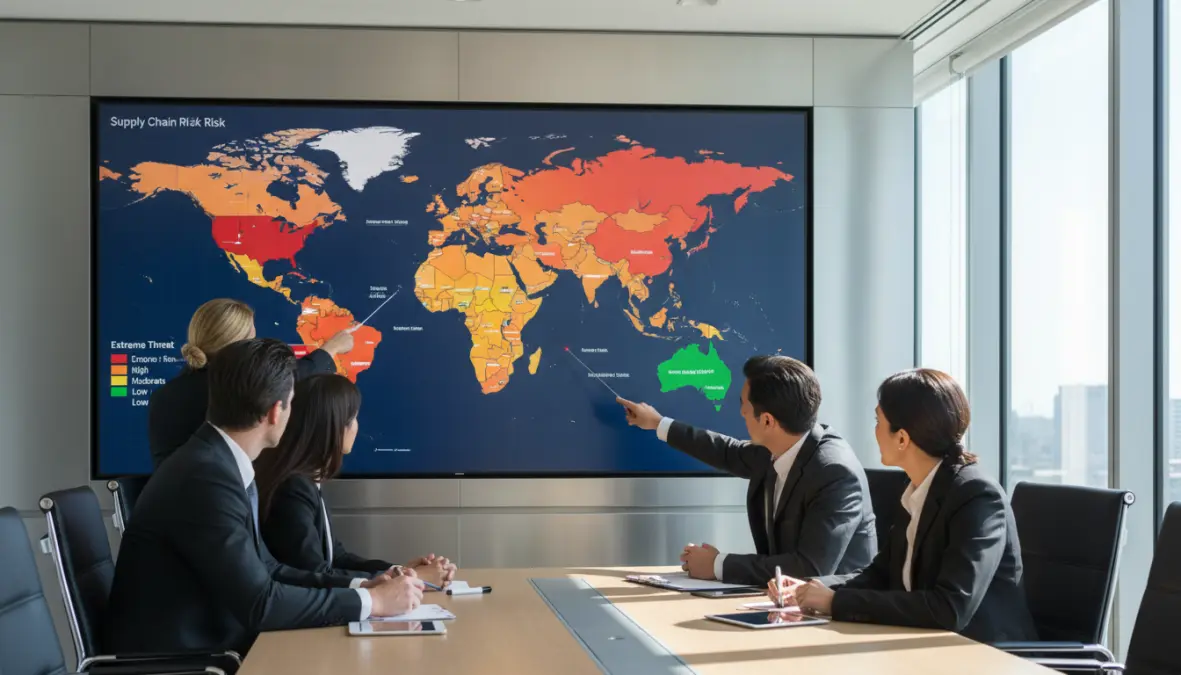
Forward-thinking companies are implementing supply chain strategies for geopolitical risks that balance efficiency with security. Supply chain resilience means designing networks that can withstand shocks without catastrophic failure—think of it as engineering redundancy into what was previously optimized for cost minimization.
Supply chain diversification tops the strategic agenda. Instead of single-sourcing from the cheapest provider, leading firms now maintain relationships with suppliers across multiple geopolitical zones. A medical device manufacturer might source components from Taiwan, Malaysia, and Mexico simultaneously—more expensive in normal times, but invaluable when tensions flare. This “China plus one” or “China plus two” strategy reduces critical supply dependencies on any single nation.
Nearshoring and reshoring represent the most dramatic shifts. Companies are relocating production closer to end markets, prioritizing proximity over pure cost savings. American firms are expanding Mexican manufacturing, European companies are investing in Eastern Europe and North Africa, and Asian manufacturers are diversifying within ASEAN nations. While labor costs might be higher, reduced transportation expenses, lower inventory requirements, and diminished political risk often justify the transition.
“Friendshoring”—the practice of building supply chains primarily within politically aligned nations—is gaining traction. The U.S. Chips Act encourages semiconductor production in America and allied countries. The EU’s Critical Raw Materials Act aims to reduce dependence on geopolitically unreliable suppliers. These policies create incentives for companies to consider geopolitical factors in supply chain management alongside traditional financial metrics.
Technology enables new capabilities for managing supply chain disruptions from trade wars. Digital twins simulate how geopolitical events might cascade through networks. AI-powered risk monitoring tools track political developments and alert procurement teams to emerging threats. Blockchain provides transparency into multi-tier supplier relationships, revealing hidden dependencies on sanctioned entities or conflict zones.
Practical steps for how to build resilient supply chains against geopolitical risks include: establishing war-gaming exercises to stress-test scenarios like Taiwan conflict or Middle East escalation; maintaining strategic inventory buffers of critical inputs despite carrying costs; developing supplier relationships in multiple political blocks; and creating rapid-response protocols for sanctions compliance and trade restriction changes. Companies like Apple have diversified iPhone production beyond China into India and Vietnam, while automotive manufacturers maintain dual-sourced semiconductor supplies from geographically dispersed foundries.
FAQ: Geopolitical Tensions and Supply Chain Management
What are the biggest geopolitical risks to supply chains today?
The most significant threats include U.S.-China tensions affecting technology and manufacturing, potential Taiwan conflict disrupting semiconductor supplies, Middle Eastern instability impacting energy and shipping routes, Russia-Ukraine war effects on commodities, and rising economic nationalism fragmenting previously integrated global markets. Companies must monitor multiple flashpoints simultaneously rather than focusing on any single risk.
How can companies assess geopolitical risks?
Effective assessment combines political analysis with supply chain mapping. Start by identifying all tier-one and tier-two suppliers, then overlay geopolitical risk scores for each country. Monitor policy developments, electoral changes, and diplomatic tensions in supplier nations. Partner with political risk consultancies for scenario planning. Establish cross-functional teams including procurement, legal, and government affairs to evaluate exposure across dimensions like revenue concentration, critical component sourcing, and regulatory compliance requirements.
What is supply chain resilience?
Supply chain resilience is the ability to anticipate, withstand, and recover from disruptions while maintaining business continuity. Unlike traditional efficiency-focused models, resilient supply chains build in redundancy through diversified suppliers, flexible manufacturing capacity, strategic inventory, and rapid reconfiguration capabilities. It accepts higher costs during normal operations as insurance against catastrophic failures during crises, balancing lean operations with protective buffers.
How are companies responding to trade tensions?
Organizations are implementing multi-pronged strategies: diversifying manufacturing locations through nearshoring and reshoring, qualifying alternative suppliers in politically stable regions, redesigning products to use components from multiple sources, building larger safety stocks of critical items, and investing in supply chain visibility technology. Many are also engaging in advocacy, working with industry associations to influence trade policy and seeking government support for restructuring costs through incentive programs.
Will supply chains become more regionalized?
The trend toward regionalization is accelerating but won’t completely replace global networks. We’re moving toward a hybrid model where critical technologies, defense-related items, and strategic goods are produced within allied blocs, while less sensitive products maintain global sourcing. Expect logistics networks to emphasize resilience over pure efficiency, with companies accepting 10-15% higher costs for geographically diversified, politically secure supply chains that can weather future geopolitical storms.
The intersection of politics and commerce isn’t temporary—it’s the new normal. Companies that treat geopolitical uncertainty business as a core strategic consideration rather than an occasional disruption will be best positioned to thrive. The question isn’t whether your supply chain will face geopolitical challenges, but whether you’ll be prepared when they arrive.