The Empathy Deficit: Why Our Ability to Understand Others Is Declining
Have you noticed how hard it is to have a real conversation these days? Not just small talk, but the kind where someone genuinely tries to understand your perspective, even when they disagree? You’re not imagining it. Research suggests we’re living through what some psychologists call an empathy crisis—a measurable decline in our collective ability to step into someone else’s shoes and feel what they’re feeling. And the consequences ripple through everything from our interpersonal relationships to our capacity for moral development.
The Evidence Behind the Empathy Decline
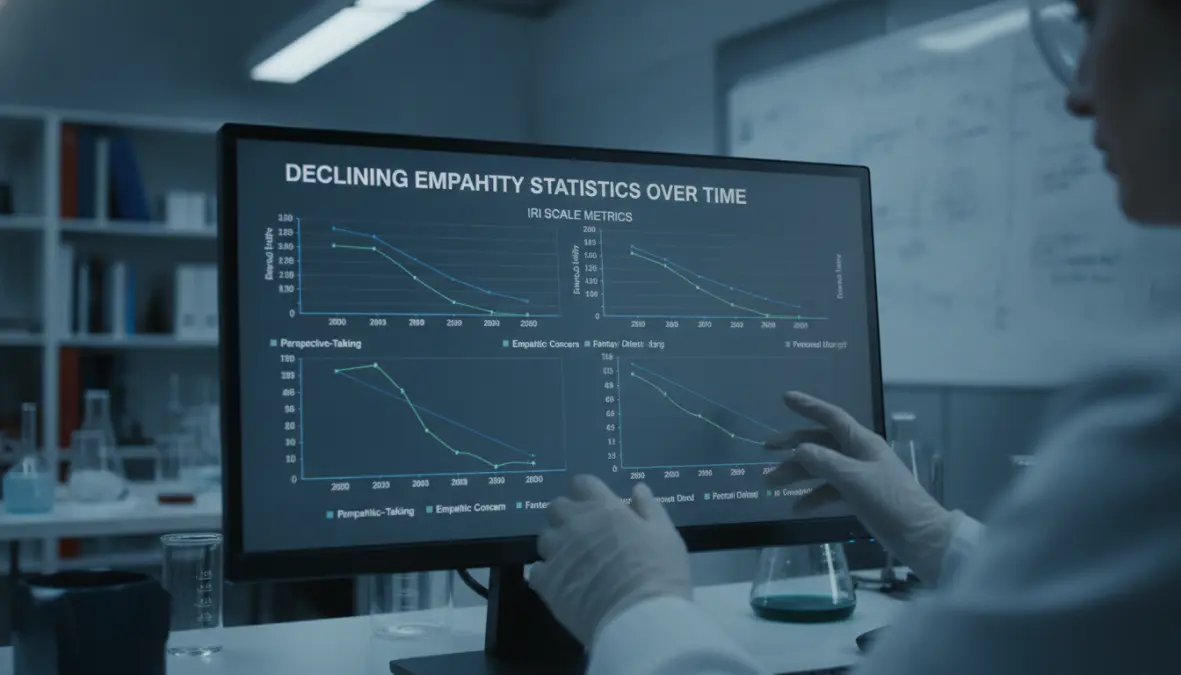
The data is pretty startling. Sara Konrath, a researcher at Indiana University, analyzed empathy research studies involving nearly 14,000 college students over three decades. Her findings? Empathy decline among young adults dropped by about 40% between the late 1980s and recent years. That’s not a small dip—it’s a nosedive.
Researchers measure empathy using tools like the Interpersonal Reactivity Index (IRI scale), which assesses both cognitive empathy (the ability to understand someone’s perspective intellectually) and affective empathy (actually feeling what they feel). Interestingly, the steepest drops appear in perspective-taking skills—the cognitive component. Students today score significantly lower on statements like “I sometimes try to understand my friends better by imagining how things look from their perspective.”
Beyond self-reported measures, behavioral indicators tell the same story. Prosocial behavior—actions that benefit others—has declined alongside empathy scores. Fewer people report volunteering regularly, and studies show decreased willingness to help strangers in distress. The emotional intelligence decrease isn’t just about feeling less; it’s about doing less for others. This matters because empathy isn’t just a warm, fuzzy feeling—it’s the foundation of social cognition and our theory of mind, the ability to attribute mental states to others.
Why We’re Losing Our Ability to Connect
So what’s driving this empathy crisis? The causes of empathy deficit in young adults are complex, but several factors stand out.
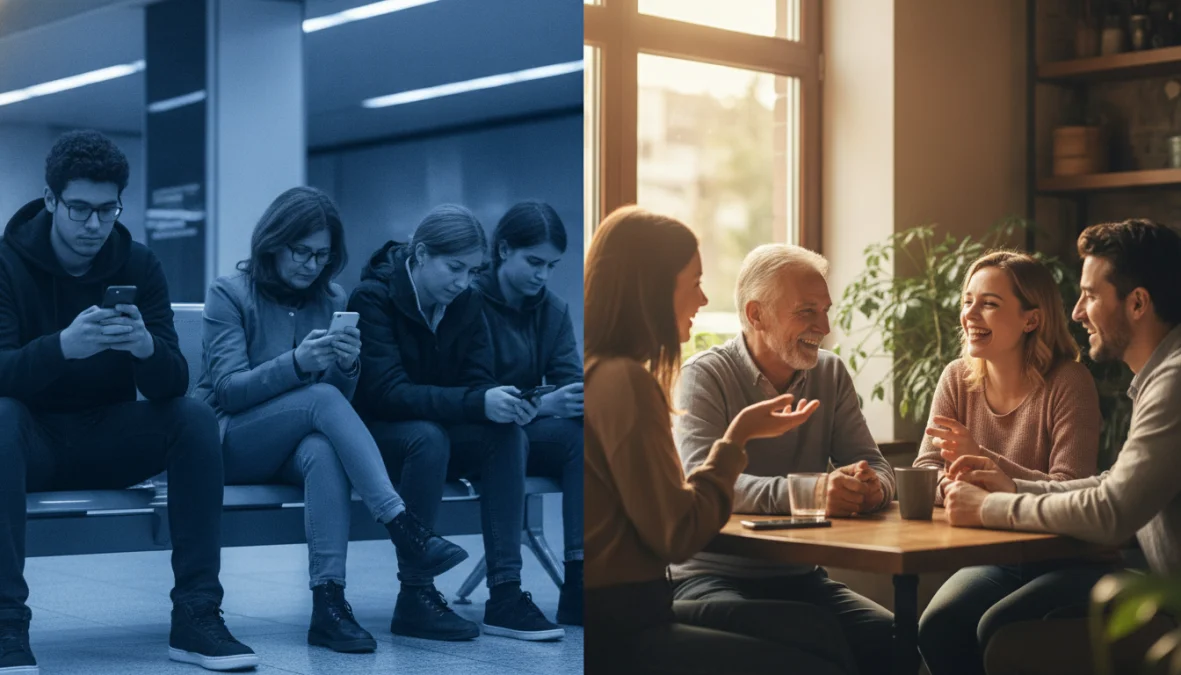
First, let’s talk about the elephant in the room: technology. The effects of social media on empathy are profound. When most of our interactions happen through screens, we lose critical nonverbal cues—facial expressions, body language, tone of voice—that help us read emotions. A “like” or a fire emoji doesn’t require you to actually consider how someone feels. We end up in echo chambers where algorithms feed us content that confirms our existing beliefs, reducing our exposure to diverse perspectives. As psychologist Sherry Turkle puts it, we’re “alone together”—connected but isolated.
The relationship between technology and empathy loss extends beyond social media. Constant notifications fragment our attention, making it harder to engage in the deep, sustained focus required for genuine connection. When’s the last time you had a conversation without checking your phone?
Second, there’s our culture of hyperindividualism and competition. We’re taught to prioritize personal achievement over collective wellbeing. The narcissism increase documented in parallel studies isn’t coincidental—when society tells you to “put yourself first” constantly, empathy becomes a liability rather than a virtue. Jean Twenge’s research shows narcissistic personality traits have risen as steeply as empathy has fallen.
Third, we’re experiencing information overload and compassion fatigue. We’re bombarded with tragic news 24/7—natural disasters, violence, humanitarian crises. Our brains weren’t designed to process this volume of suffering. We become desensitized as a protective mechanism. Psychologist Paul Bloom argues we’re “numbed by numbers”—one person’s story moves us, but statistics about thousands leave us cold.
Fourth, chronic stress and accelerated life rhythms leave little room for reflection. Empathy requires mental bandwidth. When you’re constantly rushing, burned out, and worried about your own survival, you have less capacity to consider others’ experiences. The social connection decline creates a vicious cycle: less connection leads to more stress, which further reduces our empathic capacity.
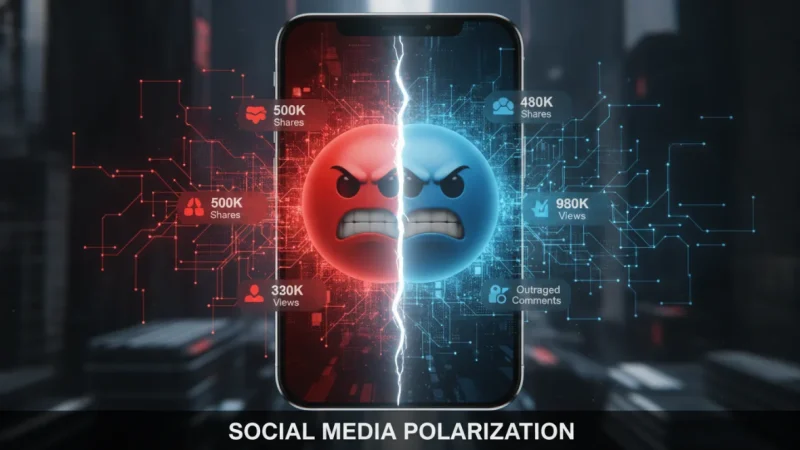
Finally, political polarization and tribalism have turned empathy into a partisan act. We’re increasingly unable to empathize across ideological lines, viewing those with different views not as people with valid concerns but as enemies to defeat. This answers why is empathy declining in society: we’ve created systems and cultures that actively work against it.

Rebuilding Our Capacity for Empathy
Here’s the good news: empathy isn’t fixed. Thanks to neuroplasticity, we can rebuild these atrophied muscles. Empathy research studies point to several evidence-based strategies for how to improve perspective-taking abilities.
Start with mindfulness practices. Regular meditation, even just ten minutes daily, increases activation in brain regions associated with emotional regulation and empathy. Being present—truly present—with another person creates space for genuine understanding.
Seek out diverse narratives. Reading literary fiction (not just any reading—specifically character-driven stories) has been shown to improve theory of mind. When you inhabit different characters’ perspectives on the page, you’re literally practicing empathy. The same goes for documentaries and memoirs from people with radically different life experiences.
Support empathy education programs. Schools implementing social-emotional learning curricula show measurable improvements in students’ perspective-taking skills and emotional intelligence. Programs like Roots of Empathy, where students interact with babies and learn to read their cues, have demonstrated lasting effects on prosocial behavior.
Reduce screen time and increase face-to-face interactions. Make it a rule: no phones during meals or conversations. The quality of your interpersonal relationships depends on undivided attention. Even brief in-person exchanges—talking to the cashier, making eye contact with strangers—rebuild social muscles.
Get involved in your community. Volunteering forces you to see beyond your bubble. Working alongside people from different backgrounds, united toward a common goal, breaks down barriers and builds social connection. Much like the research on human connection and longevity detailed in recent longevity science breakthroughs, our relationships fundamentally shape our wellbeing.
The path forward requires both individual effort and systemic change. We need to design technology that facilitates rather than replaces human connection. We need educational systems that value emotional intelligence alongside academic achievement. We need workplaces that don’t demand we sacrifice our humanity for productivity.
The brain you have today isn’t the brain you’re stuck with tomorrow. Every conversation where you truly listen, every moment you pause to consider someone else’s reality, every story that challenges your assumptions—these rewire your neural pathways. The empathy decline isn’t inevitable. It’s a choice we make, individually and collectively, every single day. What will you choose?