The Science of Sleep: Why Your Chronotype Matters More Than You Think
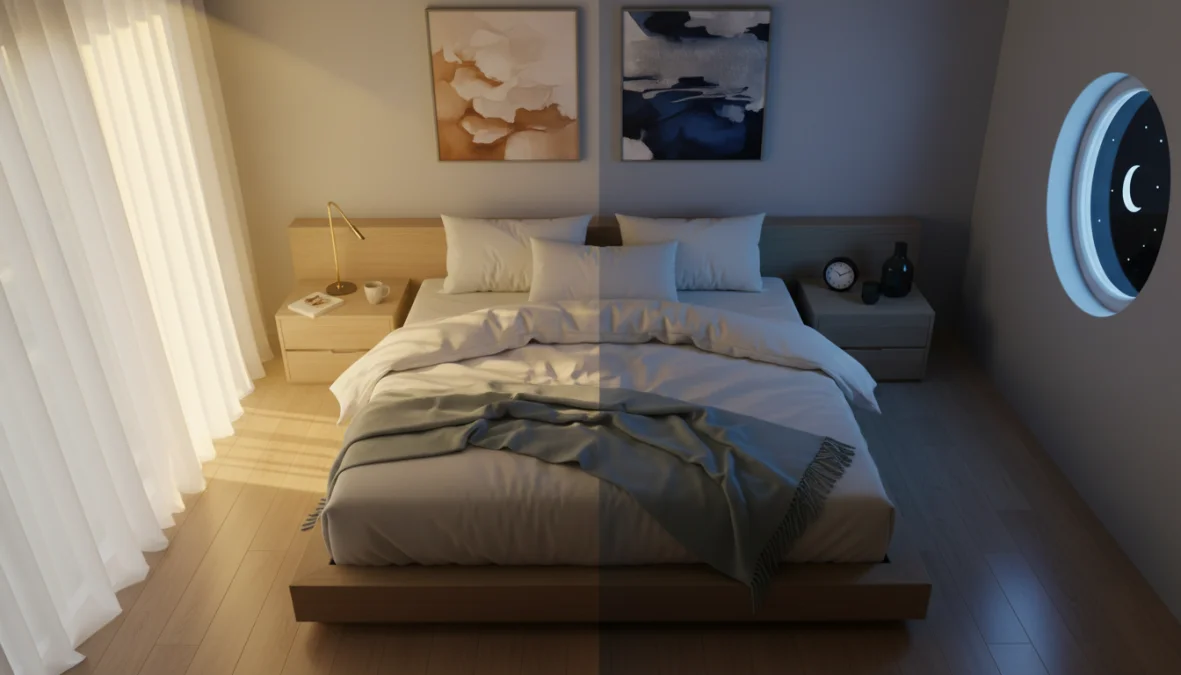
Ever wondered why you’re wide awake at midnight while your partner is snoring peacefully, or why that 6 AM workout feels like torture while your colleague thrives on it? The answer lies in your chronotype—your body’s natural preference for sleeping and waking at certain times. Understanding chronotype sleep science isn’t just about labeling yourself a morning person or night owl; it’s about unlocking better sleep quality, enhanced productivity, and improved overall health by working with your biology instead of against it.
What Is a Chronotype and Why Does It Matter?
Your chronotype is essentially your genetic predisposition to feel alert and energized at specific times of the day. While often confused with circadian rhythm—the 24-hour internal clock that regulates all humans—your chronotype is more personalized. Think of circadian rhythm as the universal biological framework, while chronotype is your individual setting within that framework.
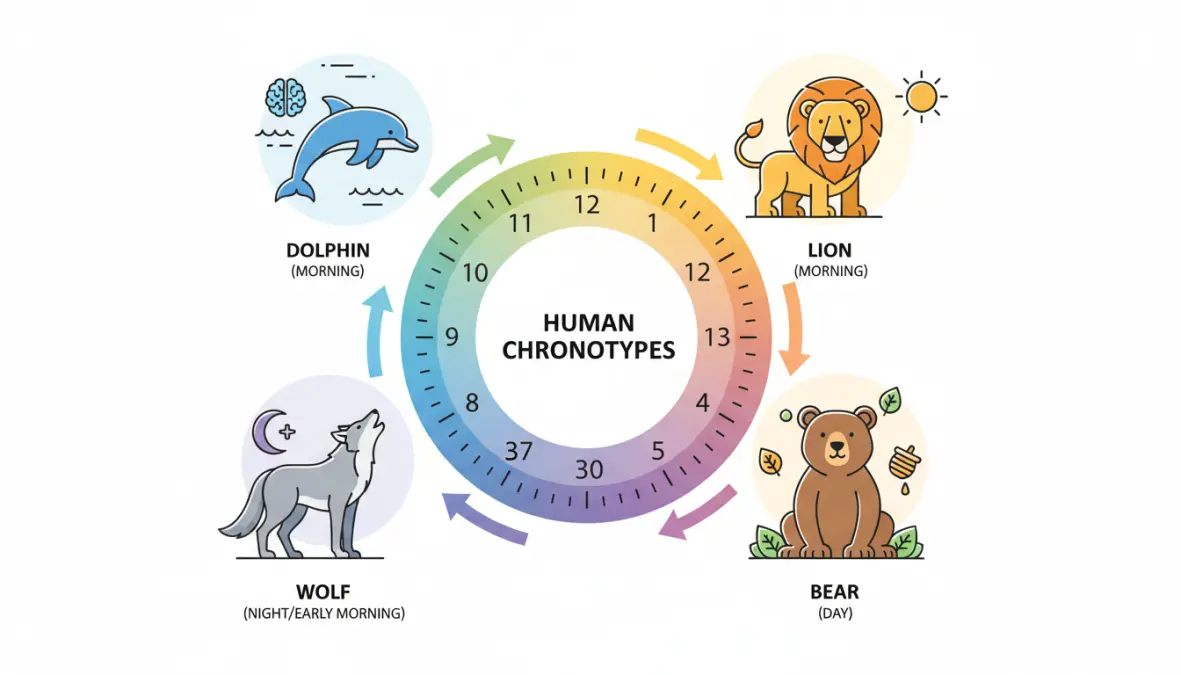
Chronobiology research has identified distinct chronotype categories. Dr. Michael Breus popularized four types: Lions (early risers who peak before noon), Bears (following the sun’s schedule, representing about 55% of the population), Wolves (night owls who hit their stride in the evening), and Dolphins (light sleepers with irregular patterns). Some researchers prefer a simpler classification: Early Birds, Hummingbirds (intermediate types), and Night Owls.
Why does knowing this matter? Your chronotype influences everything from melatonin production timing to when your cortisol levels peak. When you align your schedule with your natural chronotype, studies show improvements in sleep quality, cognitive performance, mood regulation, and even metabolic health. Forcing a Wolf chronotype into a Lion’s schedule creates what researchers call social jetlag—essentially living in a permanent state of jet lag without ever boarding a plane.
Morning Person vs Night Owl: More Than Just a Preference
The difference between morning person vs night owl isn’t about willpower or discipline—it’s written in your DNA. Research has identified the PER3 gene as a key player in determining sleep patterns. People with longer versions of this gene tend toward morning preferences, while those with shorter versions lean toward evening activity.
These genetic differences translate into measurable physiological variations throughout the day. Morning types experience earlier peaks in body temperature, cortisol release, and alertness. Their cognitive performance spikes before noon, then gradually declines. Night owls, conversely, reach peak body temperature and mental sharpness later in the day, often not hitting their stride until late afternoon or evening.
Here’s the important part: neither chronotype is inherently superior. Society has long celebrated early risers with sayings like “the early bird gets the worm,” but chronobiology research shows that evening types often demonstrate superior creativity, problem-solving abilities in the evening hours, and better performance on tasks requiring flexible thinking. The key is when you’re working, not what time you wake up.
The Genetic and Environmental Factors Behind Your Sleep Pattern
Your chronotype is approximately 50% hereditary, meaning genetics play a substantial role in determining whether you’re naturally inclined toward morning or evening activity. But the other 50% comes from environmental and developmental factors.
Age significantly impacts chronotype. Teenagers naturally shift toward later sleep-wake cycles—it’s biology, not rebellion. This shift peaks in the late teens and early twenties, then gradually moves earlier throughout adulthood. By retirement age, many former night owls find themselves waking naturally at dawn.
Modern life often conflicts with our natural biological clock. Artificial lighting, particularly blue light from screens, suppresses melatonin production and can push chronotypes later. Geographic location matters too—people living on the western edge of time zones tend toward later chronotypes than those on the eastern edge, simply due to natural light exposure patterns.

How to Identify Your Chronotype and Optimize Your Sleep Schedule
Wondering how to determine your chronotype? The most scientifically validated tool is the Morningness-Eveningness Questionnaire (MEQ), developed by researchers Horne and Östberg. You can also take a chronotype quiz based on Dr. Michael Breus’s work, which categorizes you into one of the four animal chronotypes mentioned earlier.
The simplest method? Observe your natural patterns during vacation when you’re free from alarm clocks and obligations. When do you naturally fall asleep and wake up? When do you feel most alert and energized? These patterns reveal your true chronotype.
Once you’ve identified your type, you can create an optimal sleep schedule. Here’s a general framework:
- Lions/Early Birds: Sleep 9:30 PM-5:30 AM, tackle demanding cognitive work before noon, exercise in morning
- Bears: Sleep 11 PM-7 AM, peak productivity mid-morning through early afternoon, flexible exercise timing
- Wolves/Night Owls: Sleep 12 AM-8 AM (or later), reserve creative work for afternoon/evening, exercise in late afternoon
- Dolphins: Sleep 11:30 PM-6:30 AM, work around irregular energy peaks, prioritize consistent sleep hygiene
Understanding does chronotype affect sleep quality is crucial: yes, dramatically. When you force yourself into misaligned schedules, you accumulate sleep debt and compromise REM sleep stages, leading to the frustrating experience of why am I tired despite sleeping enough.
Living in Alignment: Practical Strategies for Better Sleep Quality
Achieving sleep quality improvement means working with your chronotype, even when facing rigid work schedules. Here are evidence-based strategies:
Light exposure management is your most powerful tool. Night owls should seek bright light immediately upon waking (even using light therapy boxes) to help shift their circadian rhythm earlier. Conversely, if you’re forced to wake earlier than your chronotype prefers, use blue light blocking glasses in the evening to promote earlier melatonin release.
For the best sleep schedule for night owls working traditional hours, make micro-adjustments rather than drastic changes. Shift your schedule 15 minutes earlier every few days until you reach a sustainable compromise. Protect your sleep quality by maintaining excellent sleep hygiene: consistent sleep times (even weekends), cool bedroom temperature, and avoiding caffeine after 2 PM.
Matching work schedule to chronotype is ideal but not always possible. If you can’t change your hours, negotiate flexibility where possible—perhaps starting 30 minutes later or working from home occasionally to better align with your natural rhythms. The conversation around chronotype diversity in workplaces is gaining traction, similar to other diversity discussions.
Weekend sleep debt recovery strategies should aim to minimize social jetlag rather than “catching up” with 12-hour sleep marathons. Keep your wake time within 1-2 hours of weekday patterns, even on days off.
The question “can you change your chronotype” is complex. While your genetic predisposition remains stable, you can shift your chronotype slightly through consistent light exposure, meal timing, and exercise scheduling. Research shows improvements in chronotype and productivity levels when people optimize their schedules, leading to better mood, enhanced cognitive performance, and reduced health risks associated with chronic circadian misalignment.
Understanding your chronotype isn’t about finding another label—it’s about self-knowledge that empowers better decisions. Whether you’re a Lion ready to conquer mornings or a Wolf who comes alive under moonlight, honoring your natural rhythms is one of the most impactful steps you can take toward better sleep, health, and overall well-being. Your body has been trying to tell you something all along. Maybe it’s time to listen.