The Attention Recession: How Information Overload Is Shrinking Our Focus Capacity

You’re scrolling through your phone before bed, switching between news apps, social media feeds, work emails, and YouTube videos. Twenty tabs are open on your laptop. Your smartwatch buzzes with another notification. Sound familiar? You’re not alone—and you’re experiencing what experts call information overload, a modern epidemic that’s quietly eroding our ability to focus, think deeply, and make decisions. Welcome to the attention recession, where our most valuable cognitive resource is being depleted faster than we can replenish it.
What Is Information Overload and Why It’s Worse Than Ever
Information overload occurs when the volume of input exceeds our processing capacity, leaving us overwhelmed, distracted, and mentally exhausted. While humans have always dealt with information, today’s digital distraction landscape is unprecedented in both scale and intensity.
Consider this: the average person now consumes approximately 34 gigabytes of data daily—equivalent to about 100,000 words of information. That’s like reading a 300-page book every single day. Compare this to just two decades ago, when information consumption was a fraction of that volume. We’ve gone from information scarcity to information abundance in the blink of an evolutionary eye.
At the heart of this crisis lies the attention economy, a business model where tech platforms compete viciously for your focus. Social media companies, streaming services, and news outlets aren’t just providing content—they’re engineered to capture and monetize every second of your attention. As explored in detail in Attention Economy Explained: How Tech Companies Monetize Your Focus, these platforms use sophisticated algorithms designed to keep you engaged, scrolling, and clicking, regardless of the cognitive cost.
The result? We’re drowning in a tsunami of notifications, updates, messages, and content that fragments our attention into increasingly smaller pieces. Understanding the impact of social media on attention span is crucial—we’re not just distracted; we’re being systematically trained to seek constant stimulation.
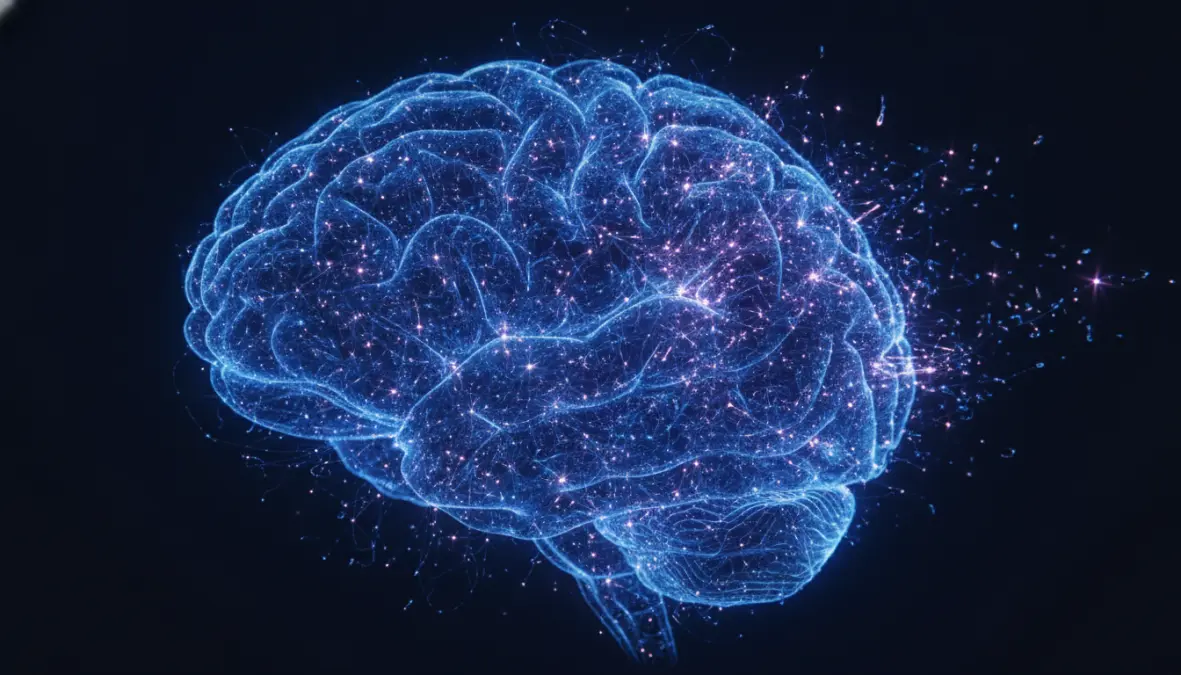
The Science Behind Shrinking Attention Spans: What’s Happening to Our Brains
The consequences of information overload aren’t just anecdotal—they’re neurologically measurable. Research shows that our attention span has declined significantly, with some studies suggesting it’s now shorter than that of a goldfish. But what’s actually happening inside our brains?
Cognitive Overload and the Limits of Working Memory
Your working memory—the mental workspace where you process and manipulate information—has strict biological limits. Think of it like RAM in a computer: it can only handle so many operations simultaneously. Neuroscientists estimate we can hold approximately seven (plus or minus two) chunks of information at once.
When we exceed this capacity through constant digital distraction, we experience cognitive overload. The brain becomes overwhelmed, leading to reduced comprehension, poor decision-making, and increased errors. This isn’t a matter of willpower—it’s biology. Pushing past these limits consistently results in mental fatigue, where even simple tasks feel exhausting. The constant bombardment of information literally drains our cognitive resources, leaving us depleted and unable to focus on what truly matters.
The Myth of Multitasking and Task-Switching Costs
Here’s an uncomfortable truth: multitasking as we know it is a myth. Your brain doesn’t actually process multiple complex tasks simultaneously—it rapidly switches between them. And every switch comes with a cost.
Research from the American Psychological Association shows that task-switching can reduce productivity by up to 40%. When you shift from writing an email to checking a notification to reading a message, your brain needs time to reorient—often 23 minutes to fully regain deep focus after a distraction. Those constant dopamine hits from notifications feel rewarding in the moment, but they fragment your focus capacity into useless shards. The cumulative effect of chronic task-switching includes decision fatigue, where your ability to make quality choices deteriorates throughout the day, and a measurable concentration decline that affects both work and personal life.

Reclaiming Your Focus Capacity in an Overloaded World
Understanding information overload is one thing; combating it requires deliberate strategies. The good news? Your attention span isn’t permanently damaged—it can be retrained and strengthened. Here’s how to combat information overload and rebuild your focus capacity:
Practice Information Diet: Just as you’re mindful about food intake, curate your information sources. Unsubscribe from unnecessary newsletters, limit news consumption to specific times, and be ruthless about cutting low-value content. Quality over quantity always wins.
Implement Deep Work Sessions: Schedule blocks of uninterrupted time for focused work. Start with 25-minute sessions (Pomodoro Technique) and gradually extend to 90-minute deep work periods. During these times, eliminate all digital distraction—turn off notifications, close unnecessary tabs, and put your phone in another room.
Reduce Screen Time Strategically: Understanding how to manage information overload at work starts with conscious screen time reduction. Use apps that track and limit your usage, implement “no-phone” hours, and create physical boundaries between work and personal devices.
Combat Notification Fatigue: Disable non-essential notifications entirely. The world won’t end if you check messages on your schedule instead of responding to every ping. This simple change dramatically reduces notification fatigue and cognitive interruptions.
Schedule Regular Digital Detox: Periodically disconnect completely—weekends, evenings, or even just a few hours daily. A true digital detox allows your brain to reset and rebuild its capacity for sustained attention.
Cultivate Mindfulness Practices: Mindfulness meditation trains your attention muscle. Even 10 minutes daily of focused breathing or meditation can improve concentration and reduce the effects of information overload on productivity.
Recognize Cognitive Overload Symptoms: Learn to identify signs of cognitive overload symptoms—difficulty concentrating, irritability, forgetfulness, or feeling perpetually overwhelmed. These are signals to step back and reduce information intake.
Frequently Asked Questions
How long is the average attention span today?
Studies suggest the average attention span has decreased to approximately 8 seconds for focused tasks, though this varies significantly based on context and content type. The decline is closely linked to constant digital interruptions and information overload, particularly affecting younger generations who’ve grown up with smartphones.
Can you reverse the effects of information overload?
Yes, absolutely. While chronic exposure to digital distraction can diminish your focus capacity, neuroplasticity allows your brain to adapt and recover. Implementing strategies to improve focus in digital age—like deep work, digital detox, and mindfulness—can restore concentration abilities within weeks to months of consistent practice.
Is social media the main cause of attention decline?
Social media is a significant contributor but not the sole cause. The broader issue is the entire attention economy ecosystem—including emails, streaming services, news apps, and workplace communication tools—all competing for limited cognitive resources. Social media’s algorithmic design to maximize engagement makes it particularly impactful on attention span decline.
How much information do we consume daily?
Research indicates the average person now processes approximately 34 gigabytes of data daily, equivalent to roughly 100,000 words. This represents a dramatic increase from previous decades and contributes significantly to cognitive overload and mental fatigue in modern life.
The attention recession isn’t inevitable—it’s a consequence of choices, both individual and societal. By understanding the mechanisms behind information overload and implementing evidence-based strategies, you can reclaim your most precious cognitive resource: the ability to focus deeply on what truly matters. Start small, be consistent, and remember that every moment of reclaimed attention is a victory against the noise.