Summer Skincare Routine: Science-Backed Protection and Hydration Essentials

The sun is shining, temperatures are soaring, and your trusty winter moisturizer suddenly feels like a heavy blanket on your face. If your skin feels congested, greasy by noon, or paradoxically dehydrated despite the humidity, it’s time to talk about a proper summer skincare routine. Swapping seasons isn’t just about trading sweaters for tank tops—your skin faces fundamentally different challenges when the mercury rises, and your skincare arsenal needs to adapt accordingly. Let’s dive into the science-backed essentials that’ll keep your complexion protected, hydrated, and glowing through the hottest months.
Why Your Summer Skincare Routine Needs a Strategic Overhaul
Your skincare routine for hot weather can’t just be a lighter version of your winter regimen—the biological demands on your skin change dramatically. During summer months, UV radiation intensity increases by up to 300% compared to winter, with UVA rays (the ones responsible for premature aging and photodamage) penetrating glass and clouds effortlessly. This means your summer skin protection needs become non-negotiable, not optional.
But UV exposure isn’t the only villain. Higher temperatures trigger increased sebum production—your oil glands can ramp up output by 10% for every degree Celsius increase. Simultaneously, humidity fluctuations and air conditioning create a paradoxical environment where your skin experiences both surface moisture and deeper transepidermal water loss (TEWL). Studies show that TEWL can increase by 25-30% in hot weather, leading to that frustrating combination of oily-yet-dehydrated skin.
Research indicates that 90% of visible skin aging stems from UV radiation damage, including melanin production irregularities, collagen degradation, and cellular DNA damage. Your thick winter creams, packed with occlusive ingredients designed to lock in moisture against cold winds, become counterproductive in summer—they trap sweat, clog pores, and create the perfect breeding ground for breakouts.
The three fundamental pillars of an effective summer skincare routine are: comprehensive sun protection (addressing both UVA and UVB rays), lightweight hydration that supports the skin barrier without congestion, and intelligent sebum control that doesn’t strip your skin into overproduction mode. Understanding how to protect skin in summer heat means working with your skin’s physiology, not against it.
The Complete Summer Face Care Routine: Products and Application Order
A strategic summer face care routine isn’t about piling on products—it’s about choosing the right formulations and applying them in the correct sequence to maximize efficacy. The order matters because each product prepares your skin to absorb the next, building layers of protection and nourishment without heaviness.
Morning Protection Protocol
Start with a lightweight summer moisturizer approach that begins at cleansing. Use a gel-based or foaming cleanser that removes overnight oil production without stripping your skin’s natural barrier. Harsh cleansers trigger rebound sebum production—exactly what you’re trying to avoid in humid weather.
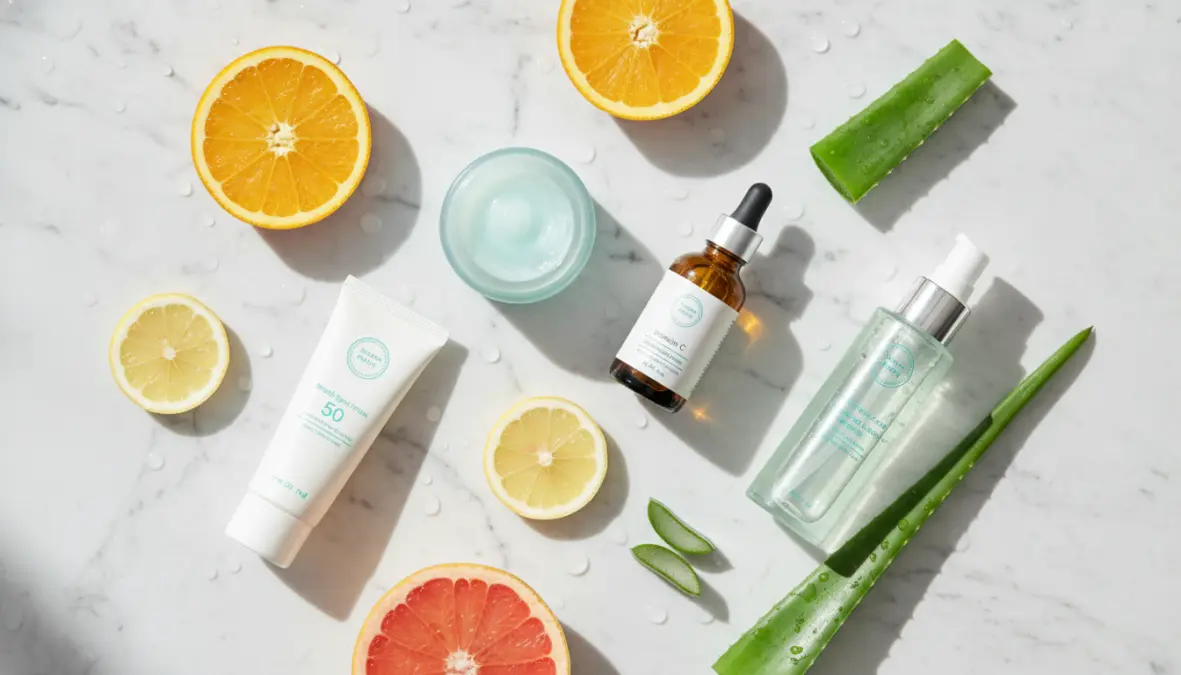
Next comes your defense layer: an antioxidant serum, preferably vitamin C (L-ascorbic acid at 10-20% concentration). This isn’t just skincare folklore—vitamin C neutralizes free radicals generated by UV radiation damage before they can cascade into photodamage. Apply it to slightly damp skin for better penetration. Think of it as your invisible shield against environmental stressors, from pollution to sun exposure.
Follow with a non-comedogenic formula moisturizer containing hyaluronic acid hydration. Hyaluronic acid holds up to 1,000 times its weight in water, providing deep hydration without the greasy finish of heavy creams. Look for gel-cream hybrids or water-based formulas that sink in immediately—these are among the best summer skincare products for maintaining that hydration-oil balance.
The final and most critical step: SPF protection with broad-spectrum coverage, minimum SPF 30 (though SPF 50 is ideal for extended outdoor exposure). This is your ultimate photodamage prevention tool. Modern formulations with zinc oxide or chemical filters like avobenzone provide comprehensive protection without the white cast or greasiness of older sunscreens. This step is non-negotiable for how to prevent sun damage on face—UV rays penetrate even on cloudy days.
Evening Repair and Hydration
Your evening routine focuses on removing the day’s buildup and supporting overnight barrier repair. Start with double cleansing: an oil-based cleanser first to dissolve SPF, sebum, and sweat (yes, even oil cleansers work for oily skin when formulated correctly), followed by your regular gel cleanser. This ensures complete removal without aggressive scrubbing.
Apply a hydrating toner or essence to rebalance skin pH and prep for treatment products. This is when you introduce active ingredients like niacinamide (which regulates sebum and addresses hyperpigmentation from sun exposure) or peptides for collagen support. These hydrating skincare summer essentials work while you sleep, when cellular repair peaks.
Finish with a lightweight night moisturizer or sleeping mask. Even in summer, nighttime barrier support matters—choose formulas with ceramides and squalane that nourish without occlusion. Your skin should feel comfortable, not suffocated. For those wondering about the best skincare routine for oily skin in summer, gel-based sleeping masks provide intense hydration that absorbs completely, leaving no residue.
Science-Backed Summer Skincare Tips for Hot Weather Challenges
Beyond the basic routine, these summer skincare tips address real-world challenges that come with soaring temperatures and increased outdoor time:
Managing sweat and SPF reapplication: Sweat doesn’t just feel uncomfortable—it dilutes your sunscreen. Reapply sun protection skincare every two hours during outdoor activities, or immediately after swimming or heavy perspiration. Powder sunscreens or SPF setting sprays make midday reapplication over makeup feasible.
Ingredient intelligence: For summer skincare routine for dry skin, prioritize these hydration heroes:
- Hyaluronic acid in multiple molecular weights for surface and deep hydration
- Niacinamide (vitamin B3) for barrier strengthening and melanin production regulation
- Ceramides for lipid barrier repair without heaviness
- Zinc oxide in sunscreens for physical UV blocking and anti-inflammatory benefits
Avoid these summer saboteurs: Heavy botanical oils (coconut, olive) that oxidize in heat, thick occlusives like petrolatum in daytime routines, and fragrance-heavy products that can trigger photosensitivity.
Hydration from within: Your skin is your largest organ, and systemic hydration matters. Studies show that adequate water intake improves skin elasticity and recovery. This connects to broader health optimization strategies—similar to principles discussed in science-backed biohacking approaches, where internal health reflects externally.
Skin-type specific adjustments: When considering what products to use for summer skincare, customize your approach. Oily skin benefits from gel formulations and oil-free SPF. Dry skin still needs those ceramides and fatty acids, just in lighter delivery systems. Combination skin should zone-treat—lighter products on the T-zone, slightly richer on cheeks.
After-sun care: Despite your best efforts, some exposure happens. Cooling aloe vera gel (refrigerated for extra relief) and anti-inflammatory ingredients like centella asiatica help mitigate damage. How to keep skin hydrated in summer extends beyond prevention to active recovery.
Product storage wisdom: Heat degrades active ingredients. Store vitamin C serums and retinol products in cool, dark places. Consider a skincare mini-fridge if temperatures regularly exceed 25°C (77°F)—it’s not just aesthetic, it’s preservation science.
Just as we adapt our environments with urban cooling strategies during heat waves, our skincare deserves the same thoughtful adjustment. Your skin is remarkably adaptive when given the right tools—think of upgrading your summer routine as a form of rewiring your skincare habits based on seasonal intelligence.
The perfect summer skincare routine isn’t about buying the most products—it’s about understanding your skin’s changing needs and responding with science backed sunscreen recommendations, smart hydration strategies, and formulations that work with summer’s unique challenges rather than fighting them. Your future skin will thank you for the protection you’re providing today, one SPF application at a time.