Decentralized Social Media Platforms: Are They the Future of Online Communication?
Remember when everyone thought Facebook and Twitter would rule the internet forever? Well, things are changing fast. A new wave of decentralized social media platforms is emerging, promising to give you back control over your data, your content, and your digital identity. Instead of Mark Zuckerberg deciding what you can post, imagine a social network where you own your content and no single company can shut you down. Sounds revolutionary? It might just be the future of how we connect online.
What Is Decentralized Social Media and How Does It Work?
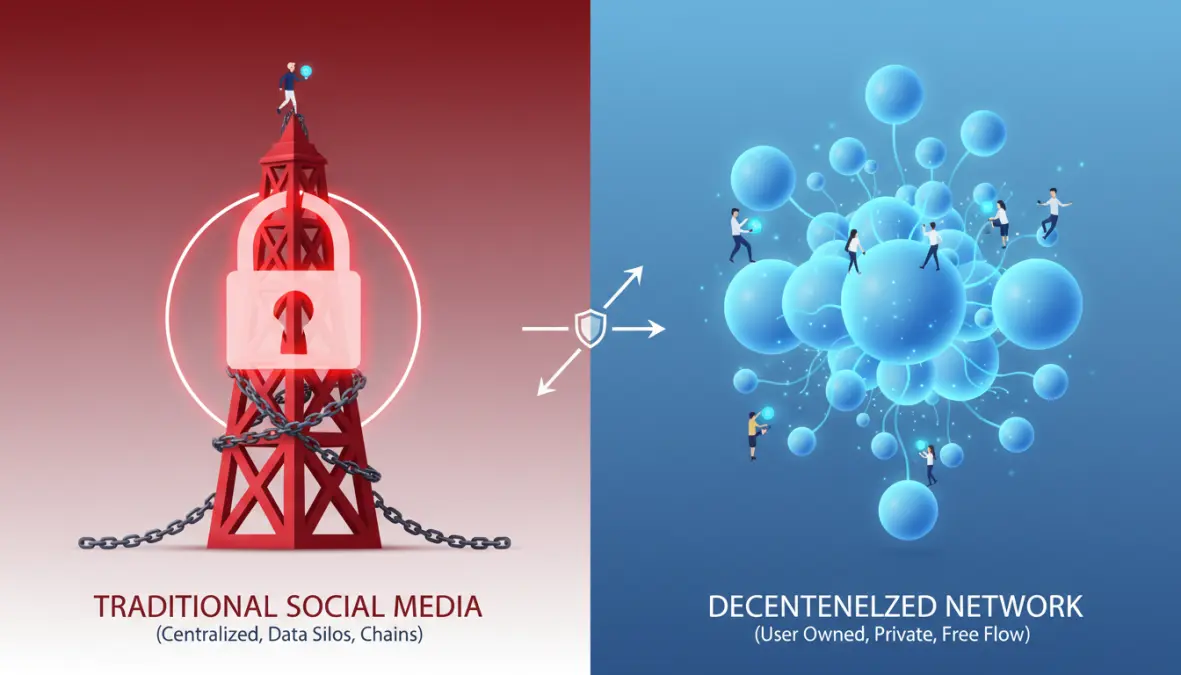
Unlike traditional platforms where Facebook or X (formerly Twitter) store all your data on their servers, decentralized social networks distribute information across multiple independent nodes. Think of it like this: instead of one giant library controlled by a single owner, you have thousands of smaller libraries that all talk to each other and share books.
In distributed social media, no single entity controls the entire network. When you post something, that content doesn’t live on one company’s server—it’s spread across peer-to-peer social networks where different computers (nodes) store and share the information. This architecture makes it nearly impossible for any single authority to censor or delete your content.
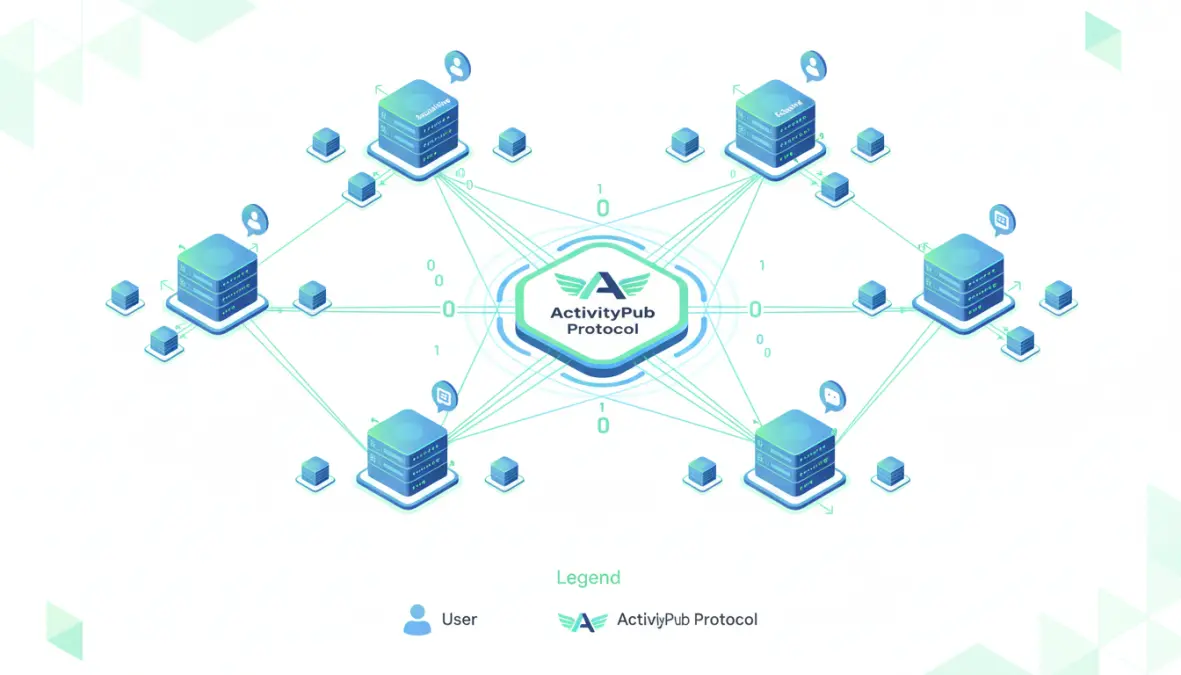
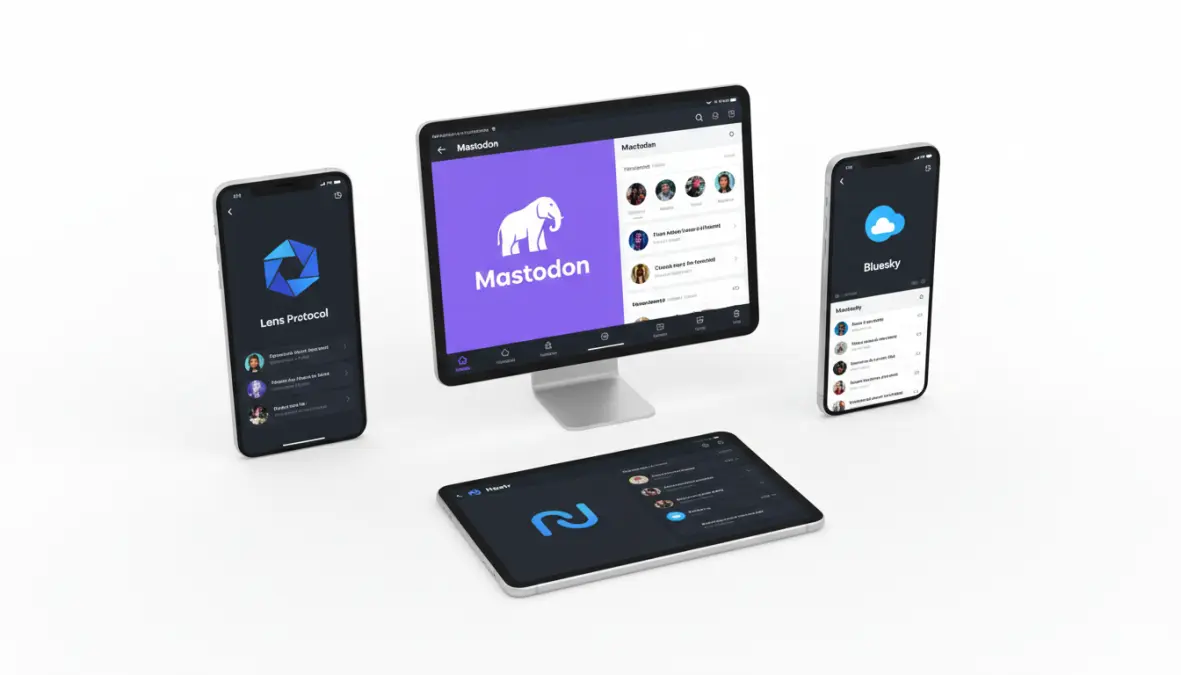
There are two main models: federated social media uses the ActivityPub protocol to connect independent servers (like email works across different providers), while fully decentralized platforms use blockchain technology or peer-to-peer networks where every user contributes to hosting the network. Mastodon exemplifies the federated approach, where you join a specific server but can still communicate with users on other servers. Meanwhile, blockchain social media platforms like Lens Protocol store data on distributed ledgers, ensuring permanent records and data ownership.
The technical magic happens through protocols that allow these independent nodes to communicate. Your profile might live on one server, your friend’s on another, but you can still follow each other and interact seamlessly. This interoperability is what makes the whole system work without a centralized authority pulling the strings.
Key Benefits and Challenges of Decentralized Social Networks
The benefits of decentralized social media platforms are compelling, especially if you’re tired of corporations controlling your online presence. Here’s what makes them attractive:
- True Data Ownership: You control your content, your followers, and your data. No company can suddenly change their terms of service and claim rights to what you’ve posted.
- Censorship Resistance: Censorship-resistant platforms mean no single entity can silence you. While individual servers might have rules, you can always move to another node without losing your identity or followers.
- Enhanced User Privacy: Without a central corporation harvesting your data for advertisers, privacy on decentralized social platforms is fundamentally stronger. Many platforms don’t track your behavior or sell your information.
- Community Governance: Web3 social platforms often use token-based incentives where users vote on platform decisions and earn rewards for valuable contributions.
- Platform Monetization Without Middle Men: Creators can monetize directly without platforms taking huge cuts, thanks to cryptocurrency integration and smart contracts.
But let’s be real—challenges facing decentralized social media are significant and can’t be ignored:
- User Experience Complexity: Setting up accounts, choosing servers, and understanding protocols is confusing for average users. Traditional platforms are simply easier to use.
- Scalability Issues: Handling millions of users and billions of posts requires massive infrastructure. Decentralized networks are still figuring out how to scale without compromising their principles.
- Content Moderation Dilemmas: While content moderation by corporations has problems, decentralized platforms struggle to prevent illegal content or harassment without centralized enforcement.
- Limited Network Effects: Your friends aren’t there yet, which makes adoption difficult. The value of social media comes from having people you know on the platform.
- Technical Barriers: Many blockchain-based platforms require cryptocurrency wallets and gas fees, creating friction for mainstream adoption.
When comparing decentralized social media vs traditional platforms, it’s clear that we’re in an early phase. The technology works, but the user experience and network size aren’t quite there yet for most people.
Popular Decentralized Social Media Platforms and Use Cases
The landscape of decentralized social networks is diverse, with platforms catering to different needs and technical approaches. Here are the best decentralized social media alternatives making waves:
Mastodon leads the federated social media movement with over 10 million users. It looks and feels like Twitter but operates across thousands of independent servers. Perfect for users who want a Twitter-like experience without corporate control. You choose a server based on your interests or values, but you’re not locked in—you can migrate anytime.
Lens Protocol represents the web3 social platforms approach, built on blockchain technology. Your profile is an NFT that you truly own, and you can take your followers and content to any app built on Lens. It’s ideal for creators who want portable audiences and direct monetization through cryptocurrency.
Bluesky, backed by Twitter’s co-founder Jack Dorsey, uses the AT Protocol to create an open-source platform where users can choose their algorithms and moderation policies. It’s gaining traction among users seeking a middle ground between fully decentralized and traditional social media.
Nostr (Notes and Other Stuff Transmitted by Relays) takes a radically simple approach to peer-to-peer social networks. Using cryptographic keys for identity, it’s extremely censorship-resistant and attracts privacy advocates and cryptocurrency enthusiasts.
Diaspora pioneered the decentralized social media concept, offering a Facebook alternative with user-hosted pods. While not as active as newer platforms, it remains popular among privacy-conscious users who want complete control over their data.
For content creators, Lens Protocol or platforms with built-in monetization make sense. Privacy advocates might prefer Nostr or Mastodon instances focused on security. Communities seeking alternatives to Reddit are exploring Lemmy, a federated link aggregator. The future of decentralized social networking likely involves multiple specialized platforms rather than one dominant player.
FAQ: Common Questions About Decentralized Social Media
Are decentralized social networks safe? Generally yes, but it depends on the platform and server you choose. The distributed architecture makes them resistant to single-point failures and corporate data breaches, but individual servers can still have security vulnerabilities. Your user privacy is typically better protected than on traditional platforms.
Can decentralized platforms replace Facebook or Twitter? Not yet for most people. While they offer superior data ownership and control, they lack the network effects and polished user experience of established platforms. They’re growing steadily, but mainstream replacement remains a work in progress.
How do you make money on decentralized social media? Many blockchain social media platforms offer token-based incentives for creating popular content, while others enable direct creator payments through cryptocurrency. Some platforms allow you to monetize without platform fees taking a percentage.
Is blockchain necessary for decentralized social media? No. Federated systems like Mastodon work perfectly well without blockchain, using the ActivityPub protocol instead. Blockchain adds benefits like verifiable ownership and built-in monetization, but it’s not the only path to decentralization.
The shift toward decentralized social media represents more than just new technology—it’s a fundamental rethinking of who should control our digital lives. While challenges remain, the momentum is undeniable. Whether you’re concerned about privacy, censorship, or simply want alternatives to Big Tech, exploring these platforms is worth your time. The future of online communication might not be owned by any single company, and that’s exactly the point.