Self-Healing Materials: How Polymers Repair Their Own Damage Autonomously

Imagine a car bumper that repairs its own scratches overnight, or a smartphone screen that seals minor cracks without a trip to the repair shop. This isn’t science fiction anymore—self healing materials are making it possible. These remarkable smart materials mimic nature’s ability to heal wounds, bringing us closer to products that last longer, require less maintenance, and reduce waste. From aerospace components to everyday consumer goods, the revolution in materials science is quietly transforming how we think about durability and sustainability.
What Are Self-Healing Materials and How Do They Work?
Self healing materials are advanced substances designed to automatically repair damage without human intervention or external repair mechanisms. Think of how your skin closes a cut or how a tree seals a wound in its bark—these biomimetic materials replicate nature’s regenerative processes at a molecular level. The technology represents one of the most exciting frontiers in materials science, combining polymer chemistry with innovative engineering solutions.
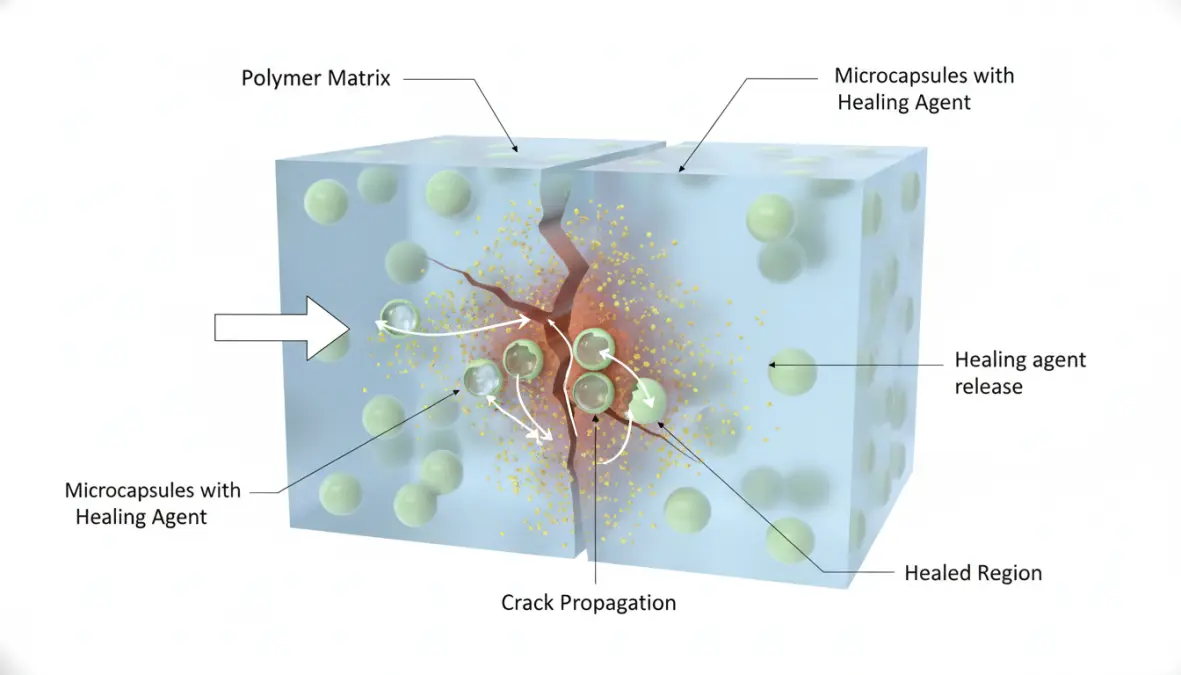
At their core, self-healing polymers work through two primary approaches: intrinsic and extrinsic mechanisms. Intrinsic systems rely on the polymer’s inherent molecular structure—chemical bonds that can break and reform repeatedly. Extrinsic systems, on the other hand, incorporate healing agents stored within the material that release when damage occurs, similar to blood clotting in a wound.
So how do self-healing polymers work in practical terms? When crack propagation begins in the material, it triggers a repair response. In some materials, microscopic capsules break open to release healing chemicals. In others, special molecular chains rearrange themselves to close gaps. The result? Autonomous repair materials that extend product lifespans and maintain structural integrity far longer than conventional alternatives. Real-world examples already exist: self-healing phone screen protectors, automotive coatings that resist scratches, and even experimental concrete that seals its own cracks.
Key Technologies Behind Polymer Self-Repair
The magic behind polymer self-repair comes from sophisticated technologies that activate precisely when and where damage occurs. Understanding these mechanisms helps explain why self-healing materials represent such a breakthrough in material durability.
Microcapsule and Vascular Systems
The most visually intuitive approach involves microcapsule technology—imagine millions of microscopic spheres embedded throughout a material, each filled with liquid healing agents. When a crack forms and propagates through the material, it ruptures these tiny capsules, releasing their chemical payload directly into the damaged area. The healing agent then reacts with a catalyst also embedded in the material, triggering polymerization that fills and seals the crack. It’s remarkably similar to how blood platelets rush to seal a cut.
These encapsulation techniques have evolved significantly. Early systems could only heal once—after the capsules broke, they were depleted. That’s where vascular systems enter the picture. Instead of isolated capsules, engineers developed embedded healing networks that function like artificial circulatory systems. These three-dimensional networks of microscopic channels carry healing agents throughout the material, allowing multiple repair cycles. When damage occurs, the healing agent flows to the site, enabling repeated repairs over the material’s lifetime.
The best self-healing polymer composites for automotive applications often use these vascular systems. Car coatings with this technology can repair minor scratches repeatedly, maintaining that showroom shine for years. Similarly, self-healing materials for automotive applications in structural components can prevent small cracks from becoming catastrophic failures, significantly improving safety and longevity.
Intrinsic Self-Healing Mechanisms
While extrinsic systems rely on stored healing agents, intrinsic mechanisms are even more elegant—the polymer itself does the healing. This approach leverages reversible bonds at the molecular level. These special chemical connections can break under stress but spontaneously reform when brought back into contact. Think of it like Velcro at the molecular scale: pull it apart and it separates, but press it together and it reconnects.
The key to understanding intrinsic vs extrinsic self-healing mechanisms lies in repeatability. Intrinsic systems can theoretically heal indefinitely because nothing gets “used up”—the healing capability is built into the polymer’s molecular architecture. Various types of reversible bonds make this possible: hydrogen bonds, metal-ligand coordination, or dynamic covalent bonds that break and reform in response to damage.
Some intrinsic self-healing polymers require heat or light to activate the healing process, while others work at room temperature. Researchers have developed materials using Diels-Alder chemistry, where molecular bonds break at elevated temperatures and reform upon cooling. Others use supramolecular chemistry where non-covalent interactions provide both flexibility and healing capability. The advantage? Superior fatigue resistance and the ability to repair damage multiple times in the same location—something extrinsic systems struggle with.
Applications and Future Potential of Self-Healing Polymers
The commercial reality of autonomous repair materials is expanding rapidly across multiple industries. In aerospace, where component failure can be catastrophic, self-healing polymers offer an extra safety margin by preventing minor damage from escalating. Aircraft coatings and composite structures incorporating these materials can resist the harsh conditions of flight while maintaining structural integrity longer than traditional materials.
The construction sector is exploring self-healing materials in construction industry applications, particularly developing self-healing concrete polymers. Concrete naturally develops microcracks over time, which allow water infiltration leading to corrosion and structural degradation. Self-healing concrete containing bacteria or polymer capsules can seal these cracks autonomously, potentially extending bridge and building lifespans by decades while reducing maintenance costs dramatically.
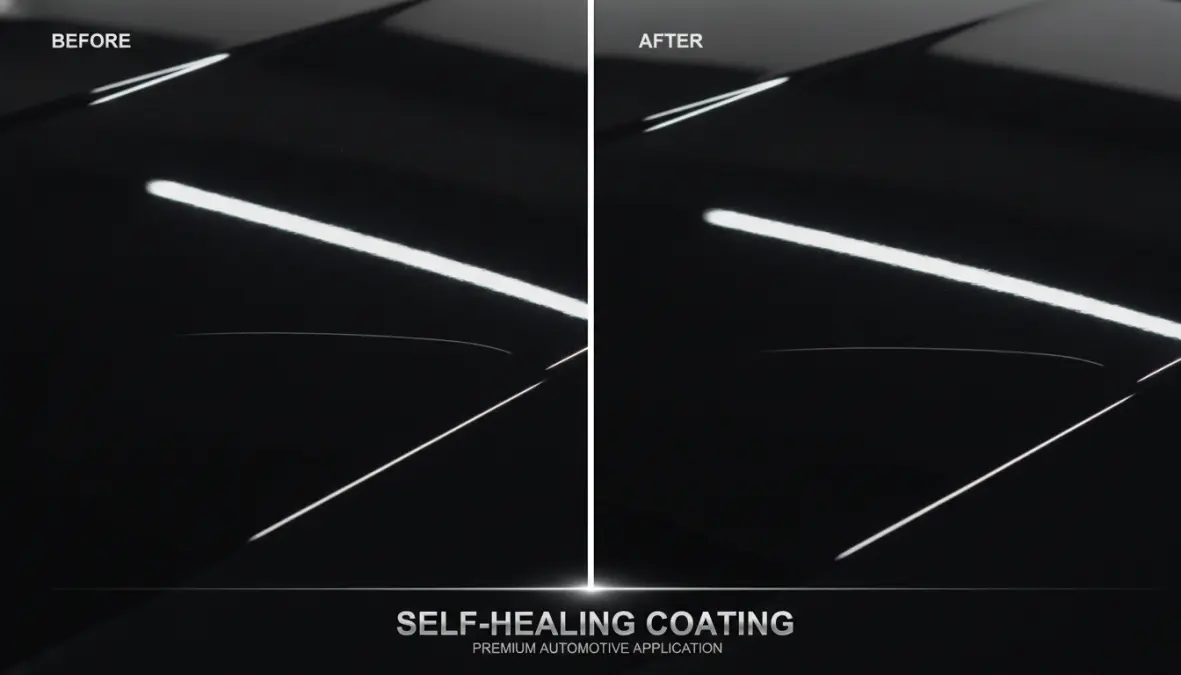
Consumer electronics represent another promising frontier. Flexible displays and protective coatings that repair minor scratches would revolutionize smartphone durability. The automotive industry is already implementing commercial applications of self-healing materials in premium vehicles—paint coatings that heal minor scratches with heat from sunlight or warm water are already available on some luxury models.
However, challenges remain. Cost is a significant barrier—smart materials with healing capabilities are typically more expensive to manufacture than conventional alternatives. Scalability issues persist, as production techniques developed in laboratories don’t always translate efficiently to industrial-scale manufacturing. Performance limitations also exist: most self-healing materials can only repair relatively small damage, and healing efficiency can decrease with each repair cycle.
The future of autonomous repair technology looks promising nonetheless. Researchers are developing next-generation materials that heal faster, more completely, and under a wider range of conditions. The environmental benefits could be substantial—products that last longer mean less waste and reduced resource consumption. Just as ambient computing quietly integrates technology into our environment, self-healing materials may soon become an invisible but essential part of everyday products, silently extending their usefulness without us even noticing.
FAQ
Can self-healing materials repair large cracks?
Most current self-healing materials are designed to repair microscopic to small-scale damage, typically cracks under 100 micrometers wide. Large-scale damage usually exceeds the capacity of embedded healing agents or the reach of molecular rearrangement. However, vascular systems with continuous healing agent supply show promise for larger repairs in future applications.
How many times can a self-healing polymer repair itself?
This depends on the mechanism. Extrinsic systems using microcapsule technology typically heal once per location since capsules deplete after breaking. Intrinsic systems with reversible bonds can theoretically heal indefinitely, though practical efficiency decreases after multiple cycles. Advanced vascular networks enable multiple repairs by continuously supplying healing agents to damaged areas.
Are self-healing materials commercially available?
Yes, though primarily in niche applications. Commercial applications of self-healing materials include automotive clear coats, smartphone screen protectors, and specialty coatings for electronics. Large-scale construction applications like self-healing concrete polymers are in pilot testing phases. Wider adoption is limited by cost, but availability continues expanding as manufacturing improves.
What is the difference between intrinsic and extrinsic self-healing?
Intrinsic self-healing relies on the polymer’s molecular structure—reversible bonds that naturally reform after breaking. Extrinsic self-healing uses embedded healing agents in capsules or vascular networks that release when damage occurs. Intrinsic systems offer repeated healing but often require external triggers like heat; extrinsic systems heal autonomously but may be limited to single repairs per location.
The emergence of self healing materials marks a fundamental shift in how we design and manufacture products. As research advances and costs decrease, these biomimetic materials will become increasingly common, transforming industries and contributing to a more sustainable future. The materials around us may soon possess one of nature’s most valuable traits—the ability to heal themselves.