Gravity Energy Storage: How Lifting Heavy Weights Can Store Renewable Power
Imagine if we could store excess wind and solar power by simply lifting concrete blocks into the air, then releasing that energy back to the grid when the sun sets or the wind stops blowing. Sounds almost too simple, right? Yet gravity energy storage is emerging as one of the most promising renewable energy storage solutions for our transition away from fossil fuels. While lithium-ion batteries grab headlines, a growing number of companies and researchers are betting that the simple physics of lifting heavy things could help solve one of clean energy’s biggest challenges: storing power for when we actually need it.
What Is Gravity Energy Storage and How Does It Work?
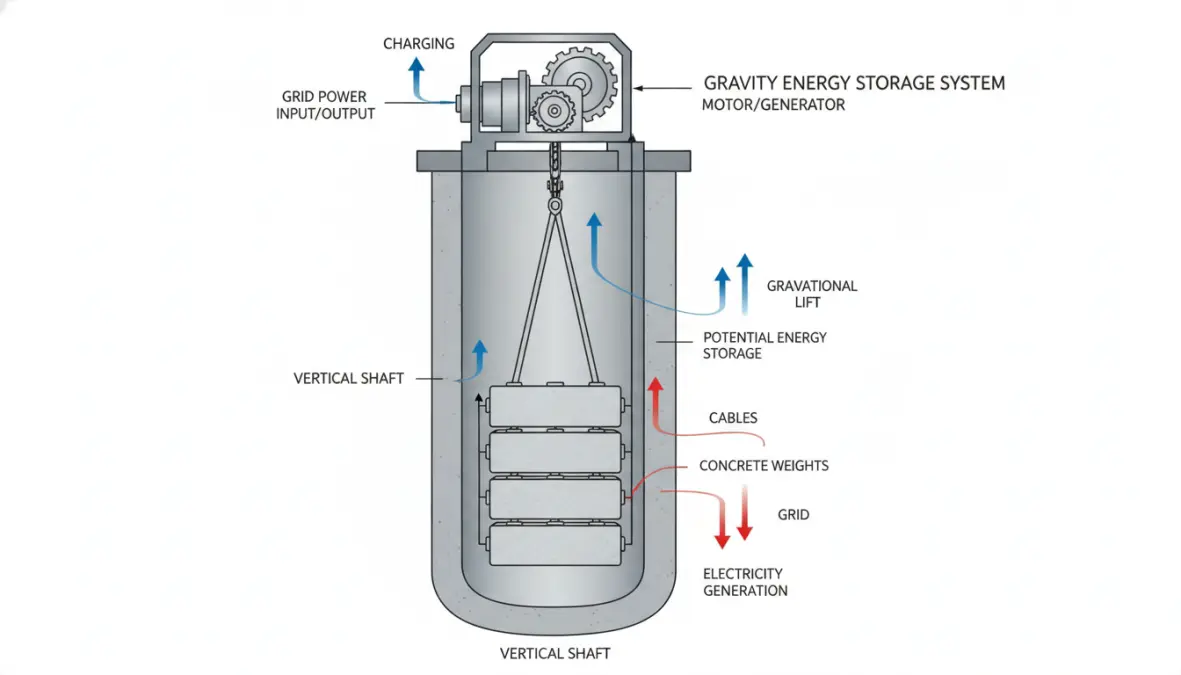
At its core, gravity energy storage harnesses the same principle that’s powered hydroelectric dams for over a century: converting electricity into gravitational potential energy storage, then converting it back when needed. Think of it like a rechargeable battery, except instead of chemical reactions, you’re literally fighting gravity. When renewable energy production exceeds demand, the system uses that surplus electricity to lift massive weights—whether concrete blocks, water, or other heavy materials—to a higher elevation. When energy demand spikes, those weights descend, driving generators that feed electricity back into the grid.
This mechanical energy storage approach offers several compelling advantages over traditional battery storage. There’s no chemical degradation over time, no toxic materials requiring disposal, and the system can theoretically operate for decades with minimal maintenance. Unlike lithium-ion batteries that lose capacity after a few thousand charge cycles, gravity battery technology maintains its storage capacity indefinitely. It’s essentially turning the Earth itself into a massive, long-lasting battery.
The Physics Behind Gravitational Potential Energy Storage
The physics underpinning this technology is refreshingly straightforward. The potential energy stored equals mass times gravitational acceleration times height (PE = mgh). The heavier the mass and the higher you lift it, the more energy you store. Most gravitational potential energy storage systems achieve round-trip efficiency rates between 70-90%, comparable to pumped hydro storage and respectable compared to lithium-ion batteries (typically 85-95%). While chemical batteries convert electrical energy through complex electrochemical processes that generate heat and degrade components, mechanical systems simply convert kinetic energy through well-understood physical processes with minimal losses.
Key Components of Gravity-Based Energy Storage Systems
A typical gravity-based energy storage system consists of several essential components working in harmony. The masses themselves—often composite concrete blocks weighing 35 tons or more—form the energy storage medium. Specialized lifting systems (cranes, winches, or pulley systems) raise and lower these masses with precision. Motor-generators handle the bidirectional energy conversion, functioning as motors during charging and generators during discharge. Supporting structures like towers, mine shafts, or rail systems provide the vertical or inclined pathway for mass movement. Finally, sophisticated control systems manage load balancing and coordinate with grid operators for optimal peak demand management.
Types of Gravity Battery Technology and Real-World Applications
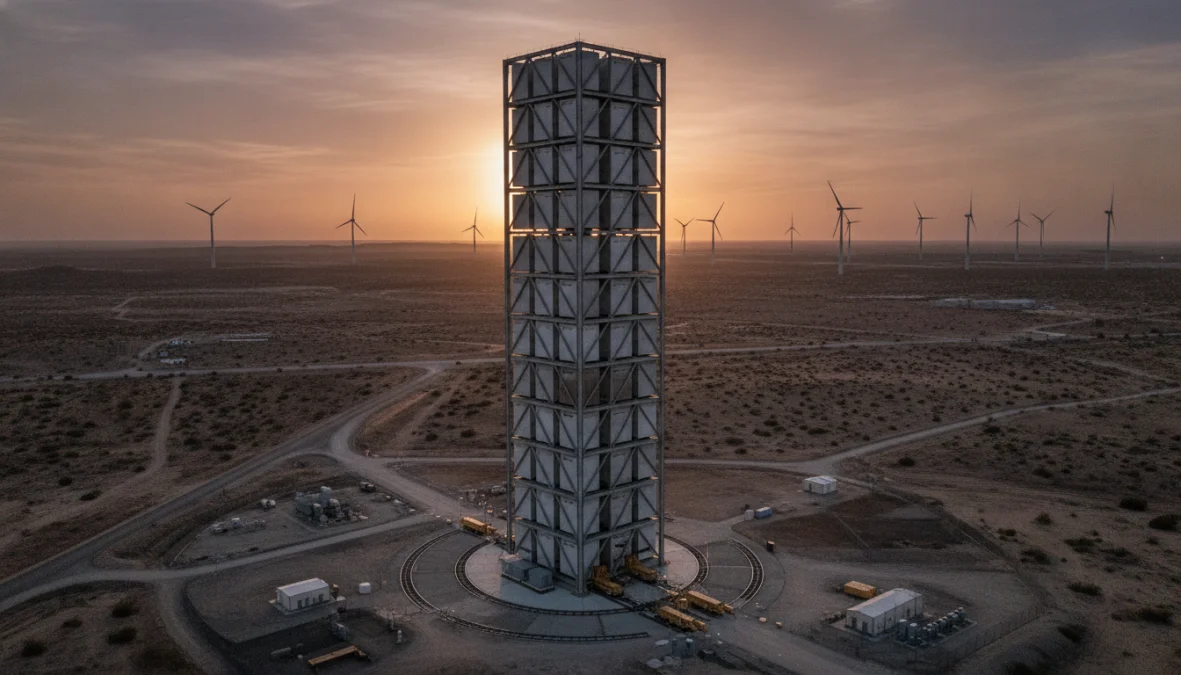
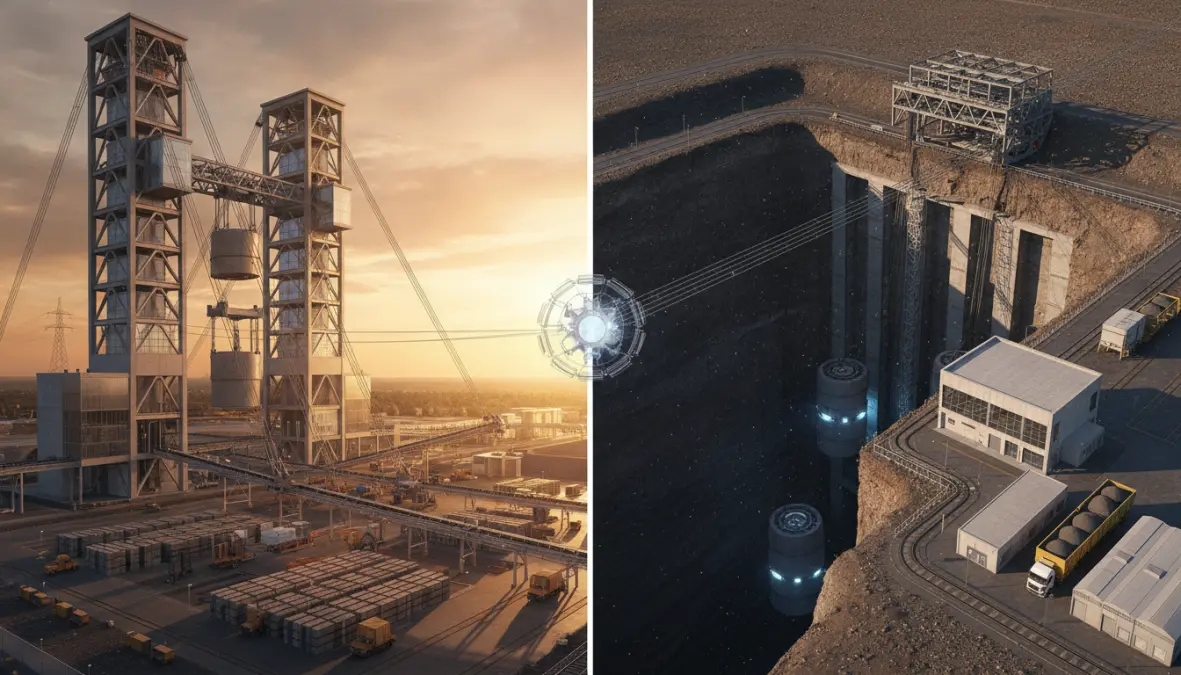
Several distinct approaches to gravity battery technology have emerged, each suited to different geographic and economic contexts. Tower-based systems, pioneered by companies like Energy Vault, stack composite blocks in tall structures reaching 100+ meters high. These modular towers can be built almost anywhere, offering flexibility for grid-scale energy storage deployment. Underground systems, such as those developed by Gravitricity, repurpose abandoned mine shafts, lowering weights thousands of feet underground. This approach maximizes height while minimizing surface footprint and visual impact.
Rail-based gravity storage represents another innovative approach, where heavy rail cars travel up and down mountainsides or purpose-built inclines to store and release energy. Some proposals even suggest using the rail network infrastructure during off-peak hours for energy storage systems. Real-world pilot projects are already demonstrating viability: Energy Vault deployed a commercial system in China with 100 MWh capacity, while Gravitricity successfully tested a 250kW demonstrator in Scotland. These projects showcase power grid stabilization capabilities and rapid response times measured in seconds—crucial for renewable energy storage solutions supporting intermittent solar and wind generation, similar to the integration challenges addressed by decentralized microgrid systems.
Comparing Different Gravity Storage Approaches
Each gravity storage design offers distinct trade-offs. Tower systems provide maximum flexibility in siting and modular scalability but require significant upfront construction investment and have geographic visibility. Mine-shaft systems leverage existing infrastructure, dramatically reducing construction costs while offering massive storage depths, but they’re limited to regions with suitable abandoned mines. Rail-based approaches can integrate with existing topography and infrastructure but face challenges with mechanical complexity and weather exposure. For kinetic energy conversion efficiency, vertical systems generally outperform inclined approaches due to direct vertical motion, though rail systems may offer better scalability. The optimal choice depends on local geography, existing infrastructure, project scale, and specific grid requirements—there’s no one-size-fits-all solution in the emerging sustainable energy storage landscape.
Advantages and Challenges of Gravity Energy Storage for Renewable Power
The advantages of gravity energy storage systems extend well beyond simple physics. Unlike chemical batteries requiring rare earth minerals and facing supply chain vulnerabilities, gravity systems use abundant materials like concrete, steel, and earth. They boast operational lifespans exceeding 30-50 years without capacity degradation—lithium-ion batteries typically last 7-15 years before requiring replacement. There are no toxic chemicals, no fire risks, and minimal environmental impact beyond initial construction. The systems respond to grid signals within milliseconds, providing excellent peak demand management and frequency regulation services. Operating costs remain minimal since there’s no fuel to purchase and maintenance requirements are straightforward mechanical upkeep.
However, challenges remain before gravity energy storage becomes ubiquitous. Initial capital costs for tower construction or mine shaft preparation can be substantial, though they’re offset by longevity. Energy density lags significantly behind chemical batteries—you need vastly more space to store equivalent energy compared to lithium-ion. This makes gravity storage more suitable for stationary grid-scale energy storage applications rather than mobile uses. Geographic requirements can be limiting: tower systems need flat, stable ground with minimal seismic activity, while mine-shaft systems require access to suitable abandoned mines. Permitting and environmental reviews for large structures can delay projects.
Looking forward, gravity-based energy storage will likely complement rather than replace other storage technologies. Just as the energy mix increasingly diversifies to include solar, wind, nuclear power, and green hydrogen, storage solutions will similarly diversify. Gravity storage excels at long-duration discharge (4-16+ hours), making it ideal for seasonal balancing and multi-day storage scenarios where batteries prove economically challenging. As renewable penetration increases globally, the need for diverse renewable energy storage solutions will only intensify, creating ample opportunity for mechanical, chemical, and thermal storage to coexist.
FAQ
How efficient is gravity energy storage?
Most gravity energy storage systems achieve round-trip efficiency between 70-90%, with some advanced designs reaching higher rates. This compares favorably to pumped hydro storage (70-85%) and compressed air systems (40-70%), though slightly below lithium-ion batteries (85-95%). The efficiency remains constant throughout the system’s lifespan, unlike batteries that degrade over time.
What is the lifespan of gravity battery systems?
Mechanical energy storage systems typically last 30-50 years or longer with proper maintenance, significantly outlasting chemical batteries. Since there’s no electrochemical degradation, the storage capacity remains constant throughout this period. Components like motors and generators may require periodic replacement, but the core infrastructure remains functional for decades.
Can gravity storage replace lithium-ion batteries?
Gravity energy storage won’t completely replace lithium-ion but will serve complementary roles. Batteries excel at short-duration, high-frequency response and mobile applications. Gravity systems shine for long-duration stationary storage (4+ hours), grid stabilization, and scenarios where longevity and safety outweigh energy density concerns. Both technologies will coexist in the future sustainable energy storage ecosystem.
How much does gravity energy storage cost?
Current estimates suggest levelized costs between $150-200 per MWh for established gravity battery technology installations, with costs declining as the industry matures. Initial capital costs range widely ($1-2 million per MW) depending on design and location. While upfront investment is substantial, the 30-50 year lifespan and minimal operating costs make the long-term economics increasingly competitive with alternatives like flywheel energy storage or compressed air energy storage.
As the world races toward decarbonization, the humble act of lifting weights might prove as revolutionary as any high-tech battery chemistry. Gravity energy storage reminds us that sometimes the most elegant solutions draw on physics as old as the Earth itself—we’re just finally clever enough to harness them at scale.