The Hidden Environmental Cost of Streaming Services: What Your Netflix Habit Really Costs the Planet
Picture this: you’re binge-watching your favorite series on a lazy Sunday, snuggled up with snacks, feeling pretty good about staying home instead of driving somewhere. But what if I told you that your cozy streaming session is quietly contributing to climate change? The streaming environmental impact is one of those inconvenient truths we don’t like to think about—because honestly, who wants to feel guilty about watching Netflix? Yet as digital consumption skyrockets, understanding the carbon footprint streaming creates is becoming crucial. Let’s dive into what’s really happening behind the screen.
The Real Carbon Footprint of Streaming: Breaking Down Digital Pollution
When you hit play on a video, you’re not just pressing a button—you’re triggering a complex chain of events that consumes energy at every step. The streaming environmental impact starts at massive data centers where your content is stored, travels through network infrastructure across continents, and ends at your device. Each stage requires electricity, and most of that electricity still comes from fossil fuels.
Research suggests that streaming one hour of video can generate between 55 to 450 grams of CO2 equivalent, depending on various factors. To put this in perspective, that’s roughly comparable to driving a car for about a mile. While that might not sound like much, consider this: global video streaming carbon emissions account for nearly 1% of worldwide greenhouse gas emissions—a figure that rivals the entire country of Spain.
The growth trajectory is what’s truly concerning. With streaming usage doubling every few years and platforms like Netflix, YouTube, and Disney+ expanding globally, the digital pollution from our viewing habits is set to explode. Some estimates suggest that if current trends continue, the ICT sector could account for up to 14% of global emissions by the early 2030s. So yes, asking does streaming contribute to climate change isn’t alarmist—it’s necessary.
Where the Energy Goes: Data Centers and Internet Infrastructure
Understanding data center energy consumption is key to grasping the full picture. These massive facilities house thousands of servers running 24/7, and they’re energy hogs in two main ways: powering the servers themselves and cooling them down. Data centers can consume as much electricity as small cities, and they currently account for about 1-2% of global electricity demand—a percentage that’s steadily climbing.
The internet energy usage chain doesn’t stop there. Your streaming data travels through routers, switches, cell towers, and undersea cables—all requiring power. Then there’s the network traffic itself: transmitting data wirelessly or through fiber optics demands continuous energy input. The higher the video quality resolution energy requirement, the more data needs to be transmitted, and the more energy gets consumed. Streaming in 4K uses roughly 7-8 times more data than standard definition, dramatically increasing the electricity consumption and bandwidth usage.
Not all streaming services are created equal when it comes to environmental responsibility. Some companies like Google (YouTube) and Microsoft have invested heavily in renewable energy data centers, powering their operations with solar and wind energy. Others lag behind, still relying primarily on fossil fuels. The cloud computing environmental impact varies significantly based on where data centers are located and what energy sources they use. Understanding the energy consumption of data centers for streaming helps explain why provider choice matters.
The Device Factor: Your Screen Matters More Than You Think
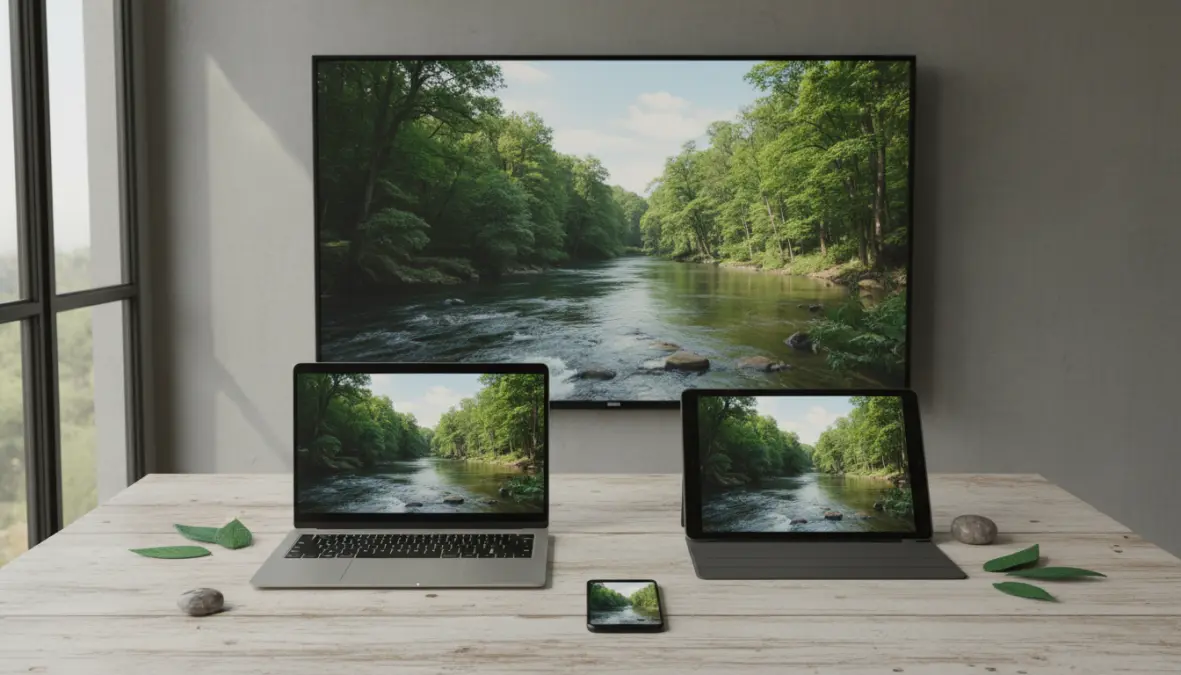
Here’s where things get interesting: your viewing device can have a bigger impact than the streaming itself. A large plasma TV can consume 200-400 watts per hour, while a laptop typically uses 30-70 watts, and a smartphone just 5-10 watts. If you’re genuinely concerned about the environmental cost of Netflix and YouTube, switching from your 55-inch TV to a tablet or phone for casual viewing can slash your energy consumption by up to 90%.
The device’s digital carbon footprint extends beyond just usage. Manufacturing smartphones, laptops, and TVs requires significant resources and energy—producing a single smartphone generates about 85kg of CO2. Plus, electronic waste is mounting at an alarming rate. When considering how much energy does streaming video use, we need to factor in the full lifecycle of our devices, not just their operating costs.
How to Reduce Your Streaming Carbon Footprint: Practical Solutions for Sustainable Digital Consumption
Ready to embrace sustainable streaming without giving up your favorite shows? Good news: small changes can make a real difference. First, adjust your video quality settings. Do you really need 4K resolution on your phone’s 6-inch screen? Probably not. Dropping from HD to SD can reduce your carbon footprint streaming by up to 80% without a noticeable quality loss on smaller devices. Most platforms let you set default quality preferences—use them.
Download content over Wi-Fi instead of streaming repeatedly. If you’re planning a Friends marathon, downloading the season once uses far less energy than streaming each episode individually. Disable autoplay features that queue up content you’re not actively watching. Turn off devices completely rather than leaving them in standby mode. These simple habits can help you reduce carbon footprint from streaming services significantly.
Choose audio over video when possible. Listening to music videos on YouTube while working is wildly inefficient—switch to audio-only platforms like Spotify or Apple Music. Support streaming companies investing in renewable energy by voting with your subscription dollars. And here’s a thought: rediscover offline entertainment occasionally. Reading, board games, or outdoor activities have zero streaming environmental impact.
On the industry side, streaming platforms must step up. This means aggressive investment in renewable energy data centers, optimizing compression algorithms to reduce data transmission, implementing edge computing to localize content delivery, and providing transparent emissions reporting. Some companies are exploring innovative solutions like using waste heat from server infrastructure to warm nearby buildings—turning a problem into a resource.
FAQ: Common Questions About Streaming Environmental Impact
How much CO2 does an hour of Netflix produce?
Estimates vary widely, but generally between 55-450 grams of CO2 equivalent per hour, depending on video quality, device type, and the energy mix powering the data centers. An hour of HD streaming typically produces around 100-150 grams.
Is the comparison streaming vs physical media environmental impact better or worse?
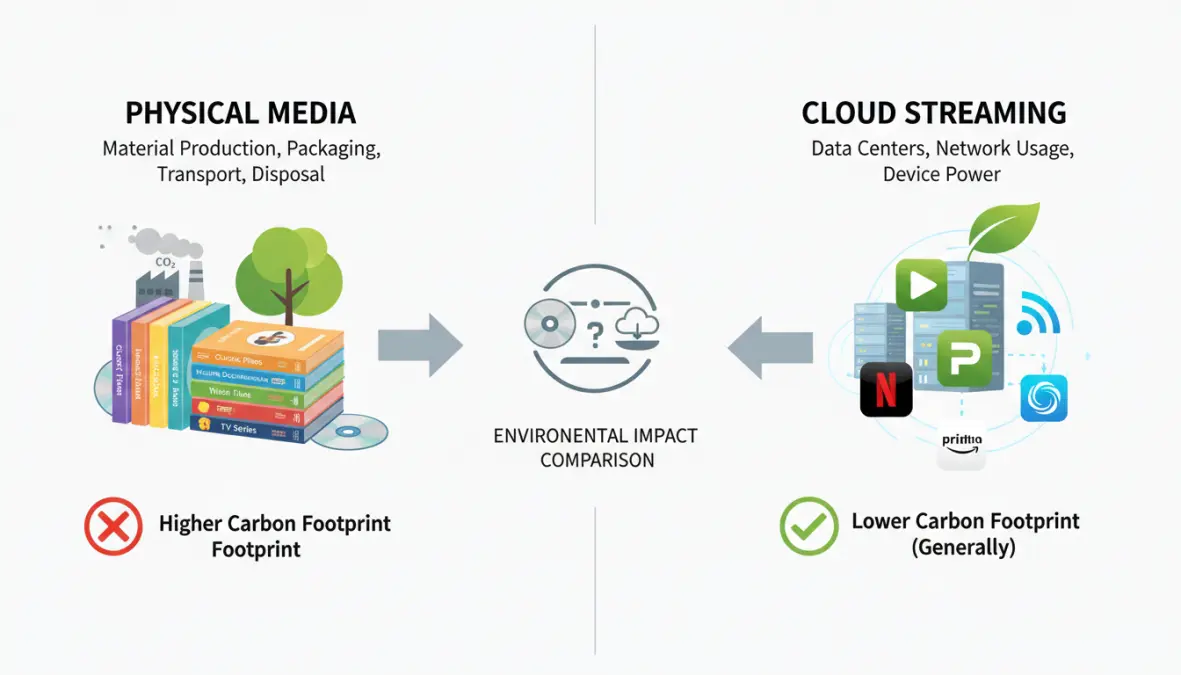
Surprisingly complex! DVDs require manufacturing, packaging, and transportation, but can be watched repeatedly without additional emissions. Streaming has no physical footprint but generates emissions every single viewing. For frequently rewatched content, physical media might actually be greener. For occasional viewing, streaming wins.
Which streaming service is most eco-friendly?
Services powered by companies with strong renewable energy commitments like Google (YouTube) and Apple TV+ tend to have lower emissions. However, complete transparency is lacking across the industry, making definitive rankings difficult.
Does watching on a smartphone really pollute less?
Absolutely. Smartphones consume roughly 5-10 watts versus 100-400 watts for large TVs. For casual viewing, your phone is by far the most energy-efficient choice.
Does 5G improve or worsen environmental impact?
Currently, 5G infrastructure is more energy-intensive to operate than 4G. However, it’s also more efficient per bit of data transmitted. As the technology matures and renewable energy adoption increases, 5G could eventually reduce the overall environmental impact of streaming—but we’re not there yet.
The streaming environmental impact isn’t going away, but it doesn’t have to be a guilty pleasure either. By making smarter choices—from video quality to device selection—and demanding corporate accountability, we can enjoy our digital entertainment while minimizing our planetary footprint. Your next streaming session doesn’t have to cost the Earth. Literally.