Algorithmic Bias in Hiring: How AI Recruitment Tools Perpetuate Workplace Discrimination

Picture this: you’re the perfect candidate for a job. Your skills align perfectly with the requirements, your experience is solid, and you’re genuinely passionate about the role. But your application never reaches human eyes because an algorithm decided you weren’t worth the click. Welcome to the world of algorithmic bias hiring, where artificial intelligence—designed to make recruitment faster and fairer—often does exactly the opposite. As more companies embrace AI-powered hiring tools to sift through thousands of applications, we’re discovering an uncomfortable truth: these systems don’t just reflect our biases, they amplify them at scale.
Understanding Algorithmic Bias in Modern Recruitment Systems
When we talk about algorithmic bias hiring, we’re referring to systematic and unfair discrimination that occurs when machine learning hiring tools make recruitment decisions based on flawed data or problematic design. Unlike old-school human bias, AI recruitment bias operates at lightning speed, processing thousands of candidates while embedding prejudice into every decision.
Here’s the thing: most AI recruitment bias isn’t intentional. Nobody at Amazon set out to create a recruiting tool that downgraded resumes containing the word “women’s” or graduates from all-women’s colleges—yet that’s exactly what happened when the company trained its system on a decade of hiring data from a male-dominated industry. Similarly, HireVue faced backlash when researchers questioned whether their video interview analysis tools unfairly evaluated candidates based on facial features and speech patterns that correlated with race and disability.
There are three main culprits behind algorithmic discrimination: historical bias occurs when training data reflects past discrimination (like Amazon’s case); representation bias happens when certain groups are underrepresented in training datasets, making the AI terrible at evaluating them fairly; and measurement bias emerges when the metrics we use to define “good candidate” are themselves biased. Each type creates a different path to the same problematic destination: qualified candidates getting filtered out before they ever have a chance.
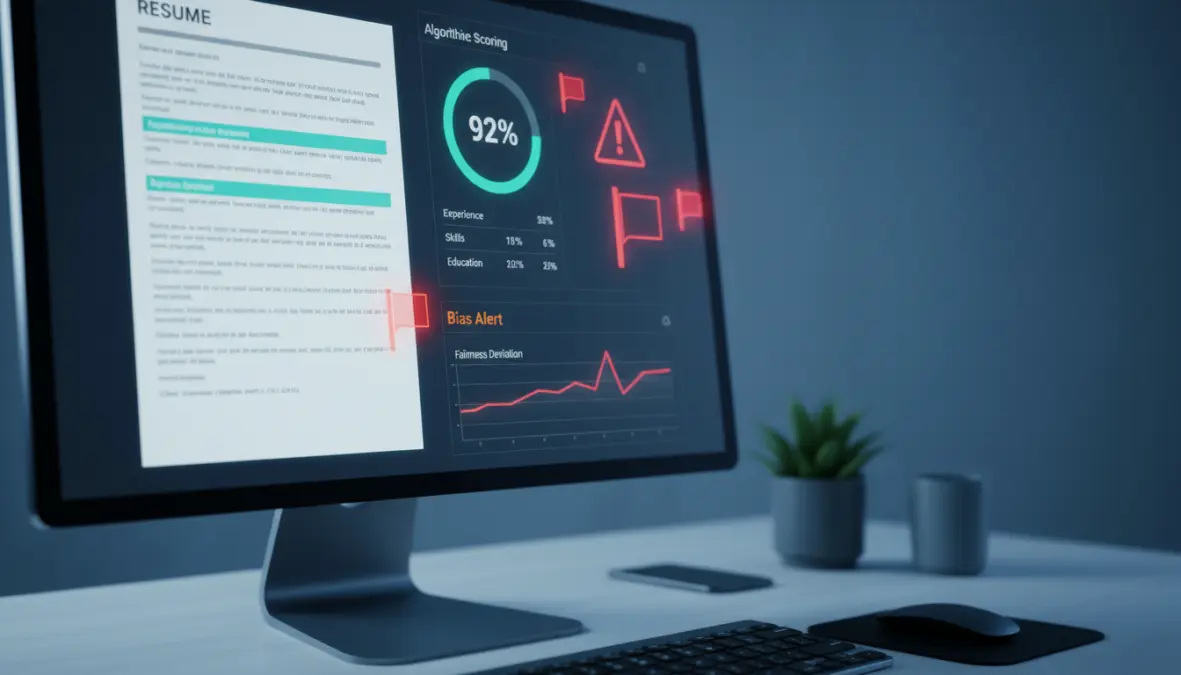
How AI Screening Software Perpetuates Discrimination Throughout the Hiring Pipeline
The recruitment pipeline is riddled with opportunities for automated hiring discrimination to creep in. From the moment a candidate submits their application to the final assessment, AI screening software bias can influence outcomes in ways that violate equal employment opportunity principles without anyone noticing.
Automated Resume Screening and the Amplification of Historical Inequities
Let’s start where most candidates do: the resume. Automated resume screening discrimination typically begins with applicant tracking systems trained on historical hiring data. If your company historically hired from Ivy League schools, the algorithm learns that’s what “quality” looks like—instantly disadvantaging equally qualified candidates from state universities or community colleges.
Resume parsing algorithms can discriminate in surprisingly subtle ways. Research shows these systems often flag candidates negatively for having “ethnic-sounding” names, living in certain zip codes associated with minority communities, or listing non-traditional career paths. Employment gaps—which disproportionately affect women who took parental leave or individuals with disabilities—become automatic disqualifiers. The keyword filtering that’s supposed to identify relevant experience instead penalizes anyone who didn’t use the exact corporate jargon, regardless of their actual capabilities. This is textbook disparate impact: policies that appear neutral but disproportionately harm protected groups.
Predictive Analytics and Assessment Tools That Encode Prejudice
Once you survive the resume screening, you’re not out of the woods. Predictive hiring analytics and assessment tools introduce new layers of potential discrimination. Video interview platforms using facial recognition screening analyze micro-expressions, eye contact, and speech patterns—all of which vary significantly across cultures, neurodivergent conditions, and communication styles.
Consider how these tools evaluate enthusiasm or competence: they’re often calibrated on data from successful employees who fit a particular demographic mold. Someone with a non-native accent, autism spectrum traits, or cultural communication norms that differ from the training data gets scored lower, regardless of their actual qualifications. Personality assessment tools and gamified evaluations claim to measure “culture fit” but frequently encode preferences for extroversion, neurotypical behavior patterns, and Western communication styles.
The biggest problem? Most of these systems operate as black boxes. Companies using them often can’t explain why the algorithm rejected a candidate, making it nearly impossible to identify or challenge bias. This opacity directly contradicts recruitment algorithm fairness principles and makes compliance with equal employment opportunity laws extremely difficult to verify.

Building Fairer AI Recruitment: Strategies for Reducing Algorithmic Discrimination
The good news is that preventing algorithmic bias in the recruitment process isn’t impossible—it just requires intentionality and ongoing vigilance. Organizations serious about recruitment algorithm fairness need to implement multiple safeguards.
First, regular bias audits are non-negotiable. Companies should systematically test their machine learning hiring tools for disparate impact across protected characteristics like race, gender, age, and disability. This means analyzing whether certain demographic groups are disproportionately filtered out at each stage of the pipeline. Some jurisdictions are making this mandatory: New York City’s Local Law 144 requires bias audits for automated employment decision tools, while the EU AI Act classifies hiring systems as high-risk applications requiring stringent oversight.
Second, diversify your training data and continuously update it. If your “successful employee” dataset from five years ago was 80% male, your algorithm will perpetuate that imbalance. Actively include diverse hiring outcomes and remove historical data that reflects discriminatory periods. Some companies use adversarial debiasing techniques—essentially training the AI to ignore correlations with protected characteristics.
Third, embrace human-in-the-loop approaches. AI should assist, not replace, human judgment. Require human review of algorithmic decisions, especially for rejections. Transparency is crucial: candidates should know when AI is evaluating them and have mechanisms to challenge decisions. Finally, focus on diversity and inclusion not just as a compliance checkbox but as a metric for algorithm success. If your “efficient” AI consistently produces homogeneous candidate pools, it’s failing—efficiency that perpetuates discrimination isn’t efficiency worth having.
Frequently Asked Questions About AI Hiring Bias
What is algorithmic bias in hiring?
Algorithmic bias hiring occurs when AI recruitment systems make systematically unfair decisions based on flawed training data, biased design, or problematic metrics. These systems can discriminate against candidates based on protected characteristics like race, gender, age, or disability, often unintentionally amplifying historical workplace inequities at scale.
Can AI recruitment tools be discriminatory?
Absolutely. Automated hiring discrimination has been documented across major companies. Examples include systems that penalize resumes with women’s colleges, downgrade non-native accents in video interviews, or filter out candidates from certain neighborhoods. Even well-intentioned AI can perpetuate bias if trained on historical data reflecting past discrimination.
How do you detect bias in automated hiring systems?
Detection requires systematic bias audits that test for disparate impact—whether the system disproportionately rejects candidates from protected groups. This involves analyzing outcomes across demographics at each pipeline stage, examining training data for representation issues, and testing the algorithm with controlled inputs to identify problematic patterns.
Are companies legally required to audit AI hiring tools?
Requirements vary by jurisdiction. New York City’s Local Law 144 mandates annual bias audits for AI screening software used in hiring. The EU AI Act classifies recruitment systems as high-risk, requiring conformity assessments. Even where not legally required, auditing is advisable to avoid discrimination lawsuits and ensure compliance with equal employment opportunity laws.
The intersection of artificial intelligence and hiring holds tremendous promise for reducing administrative burden and potentially even mitigating human bias—but only if we design these systems with fairness as a fundamental requirement, not an afterthought. As algorithmic hiring becomes the norm rather than the exception, the responsibility falls on employers, developers, and regulators to ensure these powerful tools expand opportunity rather than restrict it. The algorithm may be new, but the principle remains timeless: everyone deserves a fair shot at proving their worth.