Molten Salt Reactors: The Future of Clean Nuclear Energy Explained
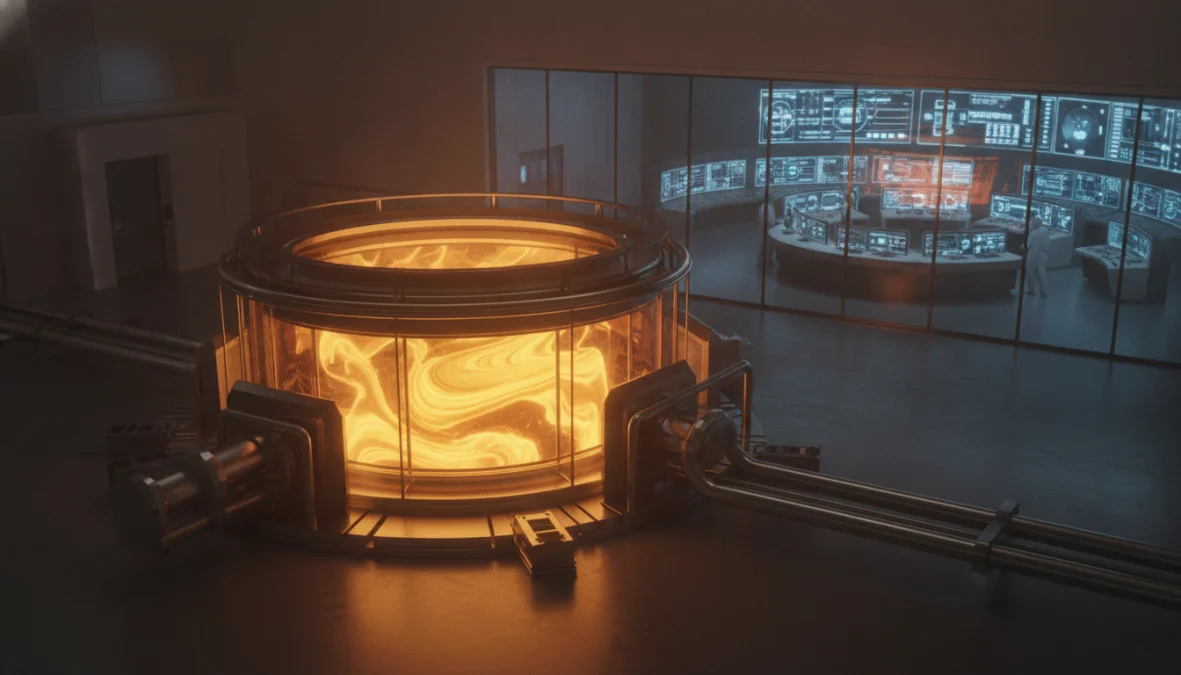
Imagine a nuclear reactor that can’t melt down, produces far less radioactive waste, and could run on fuel that’s more abundant than uranium. Sound too good to be true? Welcome to the world of molten salt reactors, a technology that’s been quietly waiting in the wings for decades and is now emerging as a serious contender in the race for clean, reliable energy. Unlike the massive concrete containment structures housing traditional nuclear plants, these advanced nuclear reactors operate on a fundamentally different principle—one that could reshape how we think about nuclear power entirely.
What Are Molten Salt Reactors and How Do They Work?
At their core, molten salt reactors (MSRs) represent a radical departure from conventional nuclear technology. While traditional reactors use solid fuel rods cooled by water, MSR nuclear reactors dissolve the nuclear fuel directly into a liquid salt mixture that serves as both fuel and coolant. Think of it like the difference between burning logs in a fireplace versus using a liquid fuel lamp—the fundamental physics remains the same, but the engineering possibilities change dramatically.
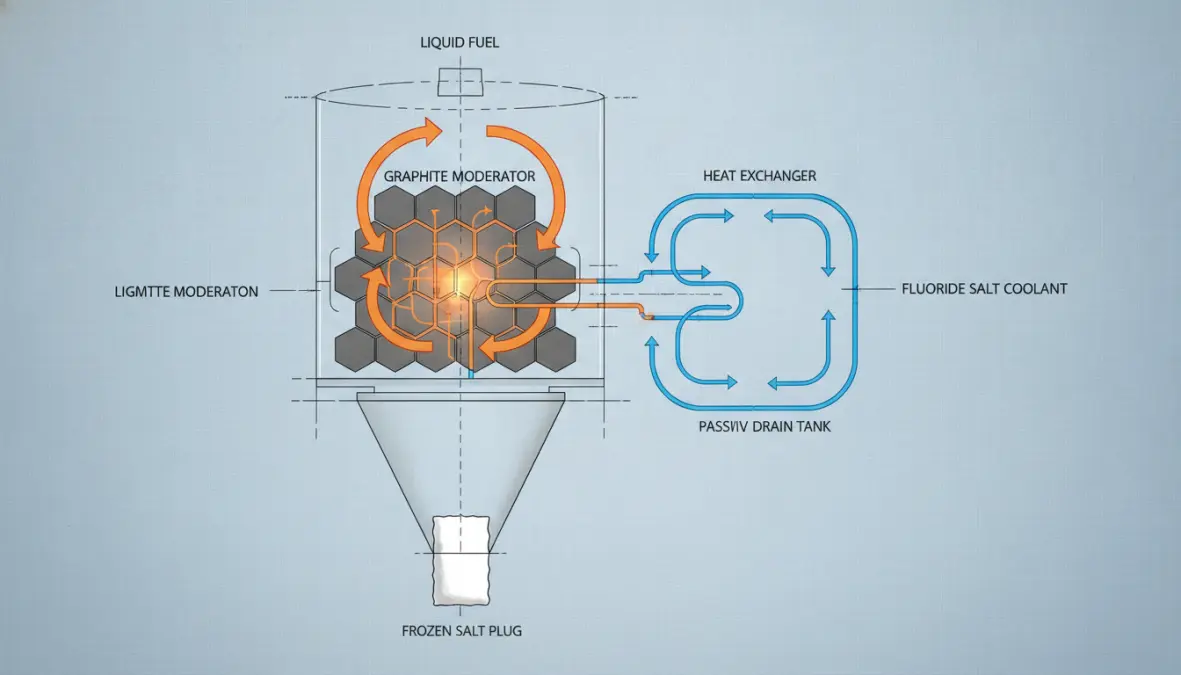
The magic happens with fluoride salt cooled reactors, which typically operate at atmospheric pressure and temperatures around 600-700°C (significantly hotter than water-cooled reactors). The molten salt—usually a mixture of lithium fluoride and beryllium fluoride—flows through the reactor core design, where nuclear fission heats it up. This superheated liquid then transfers its thermal energy to generate electricity with impressive thermal efficiency.
Understanding how do molten salt reactors work requires looking back at the pioneering work done at Oak Ridge National Laboratory in the 1960s. Researchers there successfully operated the Molten Salt Reactor Experiment, proving the concept works in practice. The liquid fuel circulates through a graphite core where the nuclear chain reaction occurs, generating heat. If something goes wrong, a frozen salt plug at the bottom of the reactor melts, draining the fuel into passively cooled tanks where the reaction stops—no human intervention required.
Key Advantages and Challenges of MSR Nuclear Reactors
The advantages of molten salt reactors over traditional nuclear plants read like a wish list for nuclear engineers. First and foremost are the molten salt reactor safety features. Because the fuel is already liquid, there’s no possibility of a core meltdown—the nightmare scenario that haunts conventional reactors. The passive safety systems work without electricity or human action; physics itself provides the safety margin.
These generation IV reactors also promise dramatic improvements in waste management. The continuous reprocessing possible with liquid fuel reactors allows for better radioactive waste reduction, burning up fission products that would otherwise remain dangerously radioactive for millennia. The nuclear fuel cycle becomes far more efficient, potentially extracting 30-100 times more energy from the same amount of fuel compared to traditional reactors. Additionally, the high operating temperatures improve overall thermal efficiency, generating more electricity from less fuel—a win for both economics and the environment. Nations worldwide are recognizing nuclear’s potential role in clean energy, as discussed in The Nuclear Energy Comeback: Why Nations Are Embracing Atomic Power Again.
However, molten salt reactor technology faces significant hurdles before widespread deployment. The corrosive nature of hot fluoride salts poses serious materials science challenges—finding alloys that can withstand decades of exposure remains an active research area. The chemistry of managing fission products in a liquid medium adds complexity that solid-fuel reactors avoid. Regulatory frameworks built around water-cooled reactors don’t neatly apply to MSRs, requiring new approval processes. And while long-term operational costs may be lower, the initial research and development investment is substantial. The coolant systems must maintain precise chemical composition while handling radioactive materials, demanding sophisticated monitoring and control.
Thorium Molten Salt Reactors and the Future of Generation IV Nuclear Technology
Perhaps the most exciting aspect of advanced nuclear reactors is their potential to use thorium as fuel. A thorium molten salt reactor could revolutionize the nuclear landscape. Thorium is three to four times more abundant than uranium in Earth’s crust and can be found in countries without significant uranium deposits, democratizing nuclear energy access.
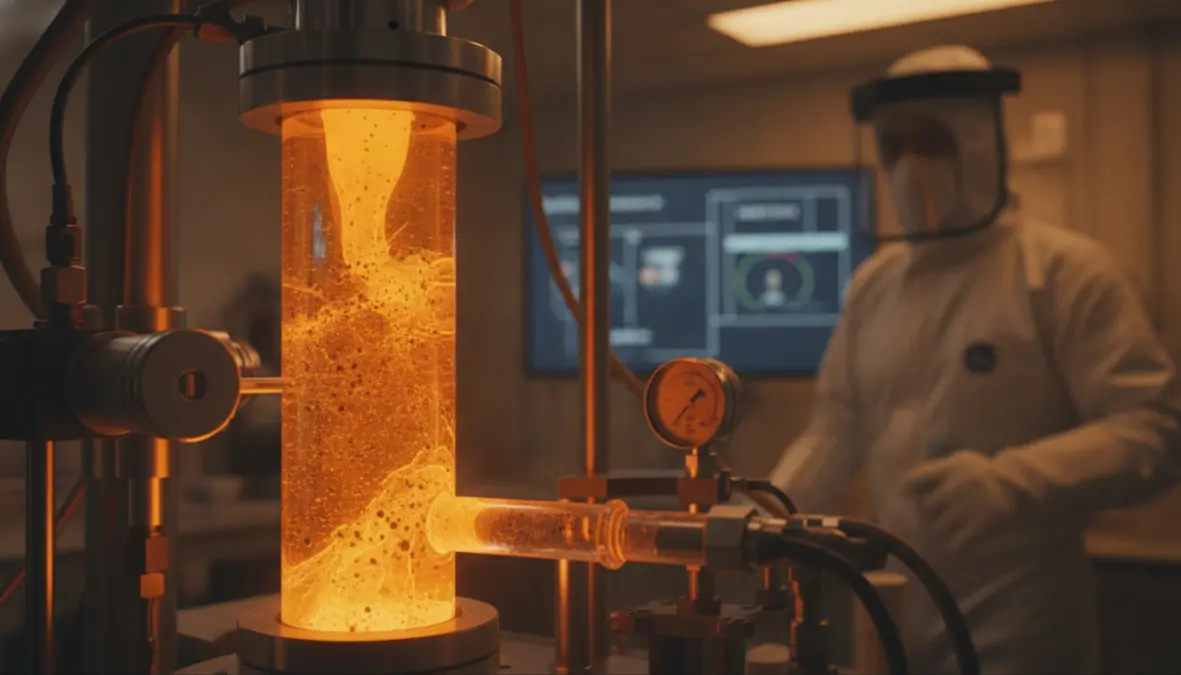
The thorium fueled molten salt reactor design offers compelling advantages. Thorium itself isn’t fissile—it can’t sustain a chain reaction—but when bombarded with neutrons in a reactor, it converts to uranium-233, which is fissile. This bred fuel then powers the reactor, creating a self-sustaining cycle. Crucially, this process generates far less plutonium and other long-lived transuranic wastes that plague uranium-based reactors. The neutron spectrum in these reactors can be optimized to maximize fuel utilization and minimize problematic waste products.
Current commercial molten salt reactor development is accelerating globally. China is investing heavily in thorium MSR technology, with plans for demonstration reactors already underway. In the United States, several startups are pursuing small modular molten salt reactors that could be factory-built and deployed more quickly than conventional gigawatt-scale plants. European research consortiums are tackling the materials and safety challenges methodically.
Realistically, when might we see commercial deployment? Most experts suggest the early 2030s for demonstration plants, with wider commercial rollout possible by the 2040s. That timeline reflects the careful validation required for nuclear technology—rushing leads to problems, as history has shown. But as part of a diversified clean energy portfolio, MSRs could provide the reliable, carbon-free baseload power that intermittent renewables can’t deliver alone, addressing climate change without sacrificing energy security.
FAQ
Are molten salt reactors safe?
Yes, MSRs incorporate multiple passive safety features that make them inherently safer than traditional reactors. The liquid fuel can’t melt down because it’s already molten, and the freeze plug drain system automatically shuts down the reactor without human intervention or external power. The low-pressure operation eliminates the risk of explosive steam releases that characterize water-cooled reactors.
Why aren’t molten salt reactors used today?
Despite successful experiments in the 1960s, MSR development was sidelined in favor of water-cooled reactors that could produce plutonium for weapons programs. The technology also faces materials science challenges—finding alloys resistant to corrosive molten salts over decades. Regulatory frameworks designed for conventional reactors don’t easily apply to MSRs, creating bureaucratic hurdles. Essentially, technical and institutional inertia has delayed deployment, not fundamental flaws in the concept.
What is the difference between MSR and traditional nuclear reactors?
Traditional reactors use solid fuel rods cooled by pressurized water, while MSRs dissolve fuel in molten fluoride salts that serve as both fuel and coolant. This fundamental design difference enables passive safety, higher operating temperatures, better fuel efficiency, and continuous fuel reprocessing. MSRs operate at atmospheric pressure versus the high pressures in conventional reactors, eliminating certain accident scenarios entirely.
Can molten salt reactors use nuclear waste?
Yes, one of the most promising aspects of molten salt reactor waste management is the potential to consume long-lived radioactive waste from conventional reactors. The neutron spectrum in MSRs can be tuned to fission transuranic elements that would otherwise remain hazardous for thousands of years, transmuting waste into shorter-lived or stable isotopes while generating electricity—turning a liability into an asset.
The path forward for molten salt reactors isn’t without obstacles, but the potential rewards—safe, efficient, clean nuclear energy with minimal waste—make them one of the most compelling technologies in our clean energy future. As materials science advances and regulatory frameworks adapt, these generation IV reactors may finally fulfill the promise glimpsed decades ago at Oak Ridge.