Menstrual Leave Policies: A Global Overview of Period-Related Workplace Benefits

Picture this: you’re doubled over with cramps so intense you can barely stand, let alone focus on that spreadsheet. But calling in sick feels awkward—it’s “just” your period, right? For millions of people worldwide, this monthly dilemma highlights a significant gap in workplace policies. Enter menstrual leave policies: a growing movement that’s sparking passionate debates about menstrual health workplace rights, gender equity, and what modern employee wellness should actually look like.
Understanding Menstrual Leave Policies and Why They Matter
So, what exactly are menstrual leave policies? Simply put, they’re workplace benefits that allow employees to take time off during menstruation, particularly when experiencing debilitating symptoms like dysmenorrhea (severe menstrual pain). These policies can be paid or unpaid, ranging from one to three days per month, and they’re designed to acknowledge that menstruation isn’t just an inconvenience—it’s a biological reality that can significantly impact work performance.
The statistics are eye-opening. Research suggests that approximately 20% of people who menstruate experience pain severe enough to disrupt daily activities. That’s potentially affecting hundreds of millions of workers globally. Yet for decades, this issue remained firmly in the “don’t ask, don’t tell” category of workplace conversations. The push for menstrual equity workplace policies recognizes that forcing employees to choose between their health and their job isn’t just outdated—it’s counterproductive.
Historically, Japan pioneered this conversation back in 1947, but the global debate has intensified recently alongside broader discussions about workplace flexibility and employee wellness. As companies reconsider traditional work structures—much like the shifts explored in how workplace culture changed after the Great Resignation—menstrual leave has emerged as a legitimate part of comprehensive employee wellness programs.
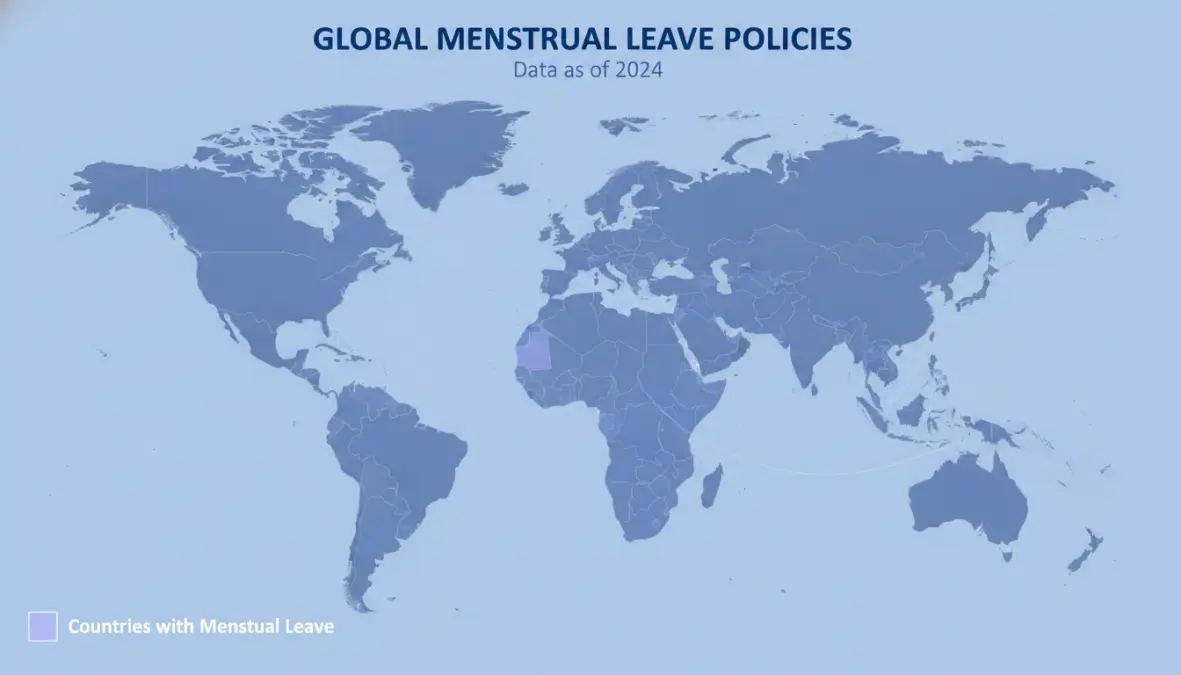
Countries With Menstrual Leave Laws: A Global Comparison
When it comes to countries with menstrual leave policies, the landscape is surprisingly diverse. While most Western nations haven’t adopted national legislation, several countries across Asia, and more recently Europe and Africa, have taken the lead on implementing menstrual leave laws.
Asia-Pacific Region: Pioneers in Menstrual Leave
Asia has been at the forefront of this movement. Japan’s menstrual leave laws, established in 1947, technically allow women to take time off during their periods, though the leave is unpaid and usage rates are surprisingly low—less than 1% of eligible workers actually use it, largely due to stigma and workplace culture. South Korea offers one day of paid leave per month or two days unpaid, though again, cultural factors mean many employees hesitate to take advantage.
Indonesia has required employers to provide two days of paid menstrual leave per month since 1948, making it one of the most progressive policies on paper. Taiwan allows three days annually of “menstrual leave” that can be taken in addition to regular sick leave. These workplace menstruation policies vary significantly in implementation—some require medical certification, while others operate on an honor system.
India introduced menstrual leave in certain states, with Bihar leading the way in 1992 for government employees. However, adoption remains patchy across the country’s private sector. The question of how menstrual leave works globally reveals that having a law on the books doesn’t automatically translate to widespread usage or cultural acceptance.
Recent Developments in Europe and Beyond
Spain made headlines by becoming the first European country to pass national menstrual leave legislation, offering up to three days of leave per month for severe period symptoms, with a doctor’s note required. This marked a significant shift for period leave countries in the West.
Zambia stands out as an African pioneer, granting women one day of paid leave monthly—a policy dubbed “Mother’s Day” since 1965. Meanwhile, discussions are ongoing in the UK, where several companies have voluntarily adopted menstrual leave policies even without national legislation. These corporate initiatives demonstrate that the conversation about should companies offer menstrual leave is evolving independently of government mandates.
Major employers like Nike, Coexist (a UK-based company), and various tech startups have implemented their own period leave benefits as part of broader reproductive health benefits packages. This corporate-level innovation often precedes legislative action and helps normalize conversations about menstrual health in professional settings.

The Debate: Arguments For and Against Period Leave Benefits
Like many gender equity workplace policies, menstrual leave sparks fierce debate. Understanding both sides is crucial for informed menstrual leave policy implementation.
Arguments in favor emphasize that these policies acknowledge biological reality rather than pretending everyone experiences work identically. Supporters argue that recognizing dysmenorrhea workplace accommodation reduces stigma, allowing people to rest when needed rather than suffering through workdays unproductively. Studies suggest that working through severe menstrual pain can actually decrease productivity more than taking a day off would. Furthermore, these policies can contribute to menstrual stigma reduction by bringing menstruation into open workplace conversations—similar to how Gen Z is reshaping workplace norms around mental health and authenticity.
Critics raise valid concerns too. The most significant worry: is menstrual leave discrimination in disguise? Some argue these policies could make employers less likely to hire women, particularly at smaller companies where absences create operational challenges. There’s also the question of reinforcing stereotypes that women are less reliable employees due to biology—precisely the kind of thinking that has held women back professionally for generations.
Privacy issues loom large as well. Many employees feel uncomfortable disclosing menstruation-related absences to managers, especially male supervisors. This discomfort partly explains the low uptake rates in countries where menstrual leave has been available for decades. Additionally, implementing these policies alongside existing sick leave alternatives and flexible work arrangements raises questions about whether separate menstrual leave is necessary or if more robust sick leave and remote work options would address the issue more inclusively.
FAQ: Common Questions About Menstrual Leave Policies
Which countries have paid menstrual leave?
Indonesia, South Korea (one day), Spain, and Zambia offer paid menstrual leave at the national level. Japan, Taiwan, and certain Indian states have provisions, though some are unpaid or partially compensated.
How many days of menstrual leave are typically offered?
Most policies provide one to three days per month. Spain offers up to three days with medical documentation, while South Korea and Zambia provide one day of paid leave monthly.
Do menstrual leave policies discriminate against women in hiring?
This remains a major concern and active area of research. While there’s no conclusive evidence yet, some economists worry about potential hiring discrimination, particularly in regions without strong anti-discrimination enforcement. Addressing workplace discrimination requires comprehensive approaches beyond single policies.
How do employees request menstrual leave?
Procedures vary widely. Some countries require medical certification, while others allow employees to simply notify their employer. Privacy concerns mean many policies aim for discretion—employees might mark leave as “health-related” rather than specifically menstrual.
What alternatives exist to menstrual leave policies?
Many experts suggest robust sick leave policies, remote work options, and general flexible work arrangements might better serve all employees without singling out menstruating workers. Comprehensive workplace benefits for menstruation might include ergonomic accommodations, access to pain relief, and destigmatizing health-related absences generally.
The conversation around menstrual leave policies reflects broader questions about how workplaces accommodate human biology and life circumstances. Whether through dedicated menstrual leave or more flexible wellness policies overall, acknowledging that employees aren’t identical robots is a step toward genuinely inclusive workplaces. As the global dialogue continues, the pros and cons of period leave remind us that workplace equity isn’t one-size-fits-all—it requires nuanced, culturally sensitive approaches that prioritize both employee wellbeing and practical implementation. What’s clear is that ignoring menstrual health in workplace policy discussions is no longer an option.