Modular Construction Revolution: How Prefab Buildings Are Solving the Housing Crisis
The global housing crisis isn’t slowing down—it’s intensifying. Cities are bursting at the seams, rental prices are skyrocketing, and traditional construction methods simply can’t keep pace with demand. But there’s a game-changer quietly reshaping the landscape: modular construction. Once dismissed as cheap or temporary, prefab buildings are now at the forefront of solving one of humanity’s most pressing challenges. By building homes faster, cheaper, and more sustainably than ever before, modular construction is proving that the future of housing isn’t just about building more—it’s about building smarter.
What Is Modular Construction and How Does It Differ from Traditional Building?
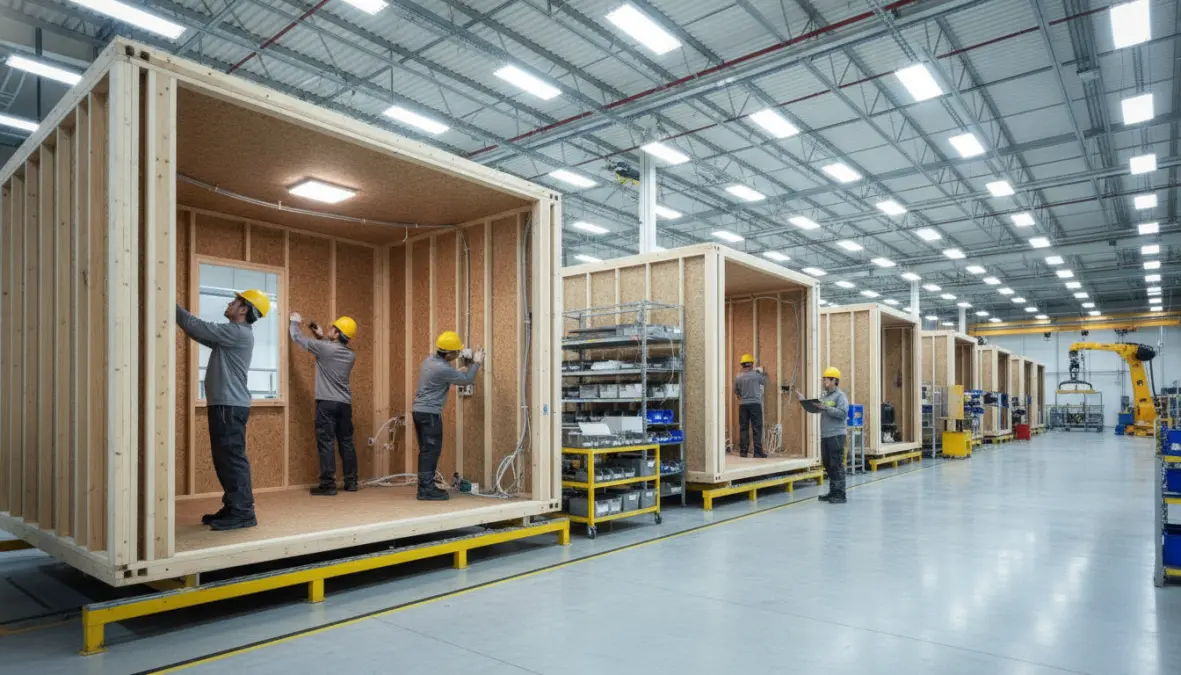
At its core, modular construction is about rethinking where and how we build. Instead of erecting structures entirely on-site, prefabricated construction shifts up to 90% of the work to controlled factory environments. Imagine an assembly line, but instead of cars rolling out, entire factory-built homes emerge—complete with walls, electrical systems, plumbing, and even fixtures installed.
The process starts with design. Architects create blueprints that are then translated into volumetric modules—three-dimensional units built in sections at the factory. There’s also panelized construction, where flat panels (walls, floors, roofs) are manufactured separately and assembled on-site. Either way, the magic happens indoors, shielded from weather delays and subjected to rigorous quality control that would be impossible at a traditional construction site.
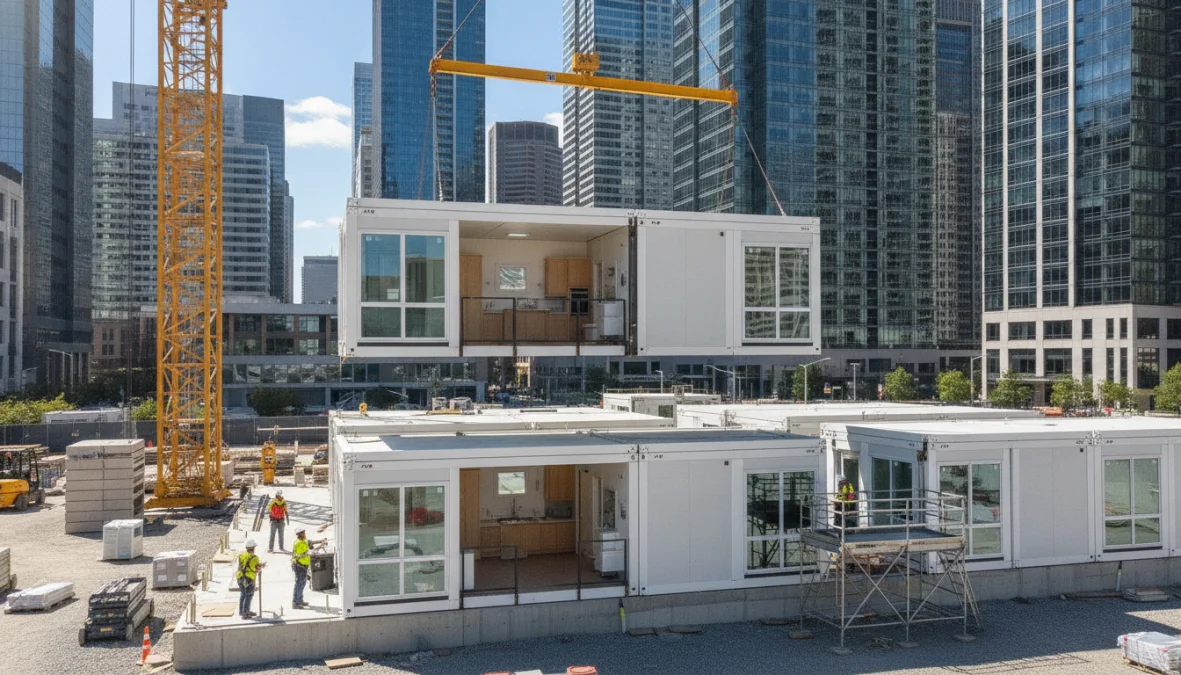
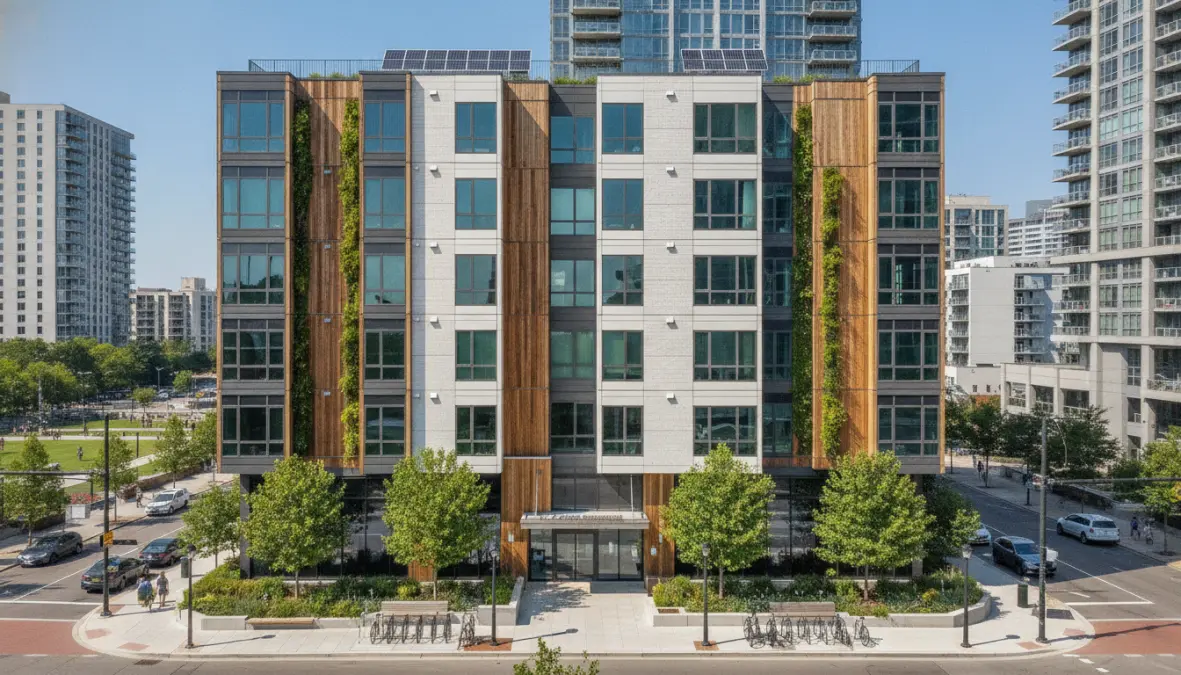
Once completed, these modules are transported to the building site and assembled like sophisticated building blocks. The foundation is prepared traditionally, but the actual structure can rise in days rather than months. This offsite construction approach applies to everything from single-family modular homes to multi-story apartment complexes, schools, hospitals, and even commercial offices. The versatility is staggering—what was once considered only for basic housing now encompasses high-end architectural designs that rival conventional buildings in aesthetics and functionality.
How Modular Construction Addresses Housing Shortage Solutions
When cities face housing emergencies, traditional construction timelines become a cruel joke. Permits take months, weather halts progress, labor shortages delay completion, and costs spiral out of control. Modular housing cuts through this chaos with surgical precision, offering housing shortage solutions that are both practical and scalable.
The numbers tell the story. Prefab buildings can be completed 50-70% faster than traditional builds, with cost reductions averaging 15-20%. That’s not marginal improvement—that’s transformational. Factory production allows manufacturers to scale up quickly, producing multiple units simultaneously while maintaining consistency. This scalability means developers can respond to market demands with agility impossible in conventional construction.
Real-world examples abound. After natural disasters, rapid deployment housing using modular techniques has housed displaced communities in weeks. Urban developments in cities facing critical shortages have turned to modular homes to deliver hundreds of units in timeframes that would have been laughable a decade ago. The impact on affordable housing development cannot be overstated—when you can build faster and cheaper without sacrificing quality, you directly address the affordability crisis strangling working families.
Speed and Efficiency: Building Homes in Record Time
Let’s get specific about timelines. A traditional single-family home takes 7-12 months from groundbreaking to move-in. A comparable modular home can be ready in 3-4 months. Multi-family developments see even more dramatic improvements—projects that would take two years can be completed in under one.
Why the speed difference? While site preparation happens, factory production runs simultaneously. There’s no waiting for concrete to cure in the rain or rescheduling because a subcontractor got delayed. Workers operate in climate-controlled environments with all materials at hand, following streamlined processes refined over thousands of repetitions. When modules arrive on-site, skilled crews can assemble entire buildings in days, not months.
Consider a recent project in London where a 29-story residential tower was erected using modular construction in just over a year—half the time projected for traditional methods. Each module arrived with bathrooms, kitchens, and finishes complete, requiring only connection and sealing. The modular building construction timeline advantage isn’t theoretical—it’s delivering results right now, especially valuable in prefab housing for urban development where every month of delay costs money and prolongs housing shortages.
Cost Reduction and Economic Benefits
The economics of how modular construction solves housing crisis challenges go beyond simple speed. Factory efficiency creates economies of scale impossible on scattered job sites. Bulk purchasing of sustainable building materials reduces costs. Precision manufacturing means virtually zero waste—factories report construction waste reduction of up to 90% compared to traditional builds.
Labor costs drop significantly too. Factory workers are more productive than field crews dealing with weather, site constraints, and logistics headaches. The prefabricated homes cost comparison consistently shows 15-20% savings, but in some markets, particularly for multi-family developments, savings can exceed 25%.
For developers, the return on investment accelerates dramatically. Faster completion means faster occupancy and revenue generation. For buyers, the benefits of prefab buildings for affordable housing translate directly into lower purchase prices or rent—making homeownership accessible to families priced out of conventional markets. When you combine reduced construction time with lower costs and improved construction efficiency, the financial case becomes irresistible.
The Future of Prefab Buildings: Sustainability, Quality, and Market Growth
Skeptics once questioned whether factory-built homes could match traditional construction quality. The modern reality flips that assumption entirely. Because offsite construction happens in controlled environments with rigorous oversight, quality often exceeds site-built structures. Every module must survive transportation and crane lifting—structural standards are inherently higher. Building code compliance is built into every stage, with inspections occurring throughout factory production rather than intermittent site visits.
Sustainability represents perhaps the most compelling advantage of sustainable modular construction techniques. That 90% waste reduction isn’t just cost-saving—it’s environmentally critical. Traditional construction generates mountains of scrap lumber, drywall, and packaging. Factories recycle materials, optimize cuts, and reuse excess. Energy efficiency improves too, as factory-built walls and seals achieve tighter tolerances than field construction, reducing heating and cooling costs for occupants.
Technological innovation continues accelerating. Building Information Modeling (BIM) allows designers to optimize every square inch before production begins. Automation and robotics are enhancing precision while reducing costs further. The market is responding—industry analysts project the global modular construction market will grow substantially over the coming years, driven by urbanization, housing shortages, and environmental concerns. Much like innovations in battery technology are transforming energy storage, modular construction is revolutionizing how we build.
The old stigma attached to “prefab” is evaporating as high-profile architects embrace the medium. Award-winning designs now incorporate modular construction, proving that speed and efficiency don’t require aesthetic compromise. As supply chain challenges continue—influenced by factors discussed in analyses of global supply chain disruptions—the controlled environment of factory production offers stability that traditional construction can’t match.
The revolution is here, and it’s built on precision, speed, and sustainability. As housing demands grow and resources become scarcer, modular construction isn’t just an alternative—it’s becoming the smart default choice. Whether you’re a developer looking to maximize ROI, a city planner seeking housing shortage solutions, or a family dreaming of homeownership, the modular future offers hope that quality housing can be accessible, affordable, and environmentally responsible. The question isn’t whether prefab will transform housing—it’s how quickly we’ll embrace the inevitable.