The Burnout Generation: Why Chronic Exhaustion Has Become Our Default State

You wake up tired. You go to bed exhausted. The weekend arrives, and instead of feeling refreshed, you spend it recovering just enough to drag yourself through another week. Sound familiar? Welcome to the burnout generation, where chronic exhaustion isn’t an occasional problem—it’s the baseline experience for millions of millennials and Gen Z workers navigating an economic and cultural landscape that demands everything while offering increasingly less in return.
What Is the Burnout Generation and Why Does It Matter?
The term burnout generation primarily refers to millennials and Gen Z—cohorts who’ve come of age during unprecedented economic instability and cultural transformation. Unlike previous generations who experienced burnout as an occupational hazard affecting specific high-stress professions, millennial burnout has become a widespread, default condition affecting workers across industries and income levels.
The numbers tell a sobering story. Recent studies indicate that over 60% of millennials report experiencing burnout at work, with Gen Z following close behind. But this isn’t just regular tiredness after a long day. Generational burnout represents a state of chronic exhaustion—physical, emotional, and mental depletion that doesn’t resolve with a good night’s sleep or a vacation.
What makes this phenomenon generational rather than individual? The answer lies in the unique economic gauntlet these cohorts have faced. Millennials entered the workforce during or immediately after the 2008 financial crisis, facing diminished job prospects and wage stagnation. Many carry crushing student debt for degrees that promised middle-class stability but delivered precarious employment instead. The housing crisis has made homeownership—once a standard milestone—an unattainable dream for many. Gen Z inherited these same challenges, compounded by a global pandemic that upended their formative years and early career experiences.
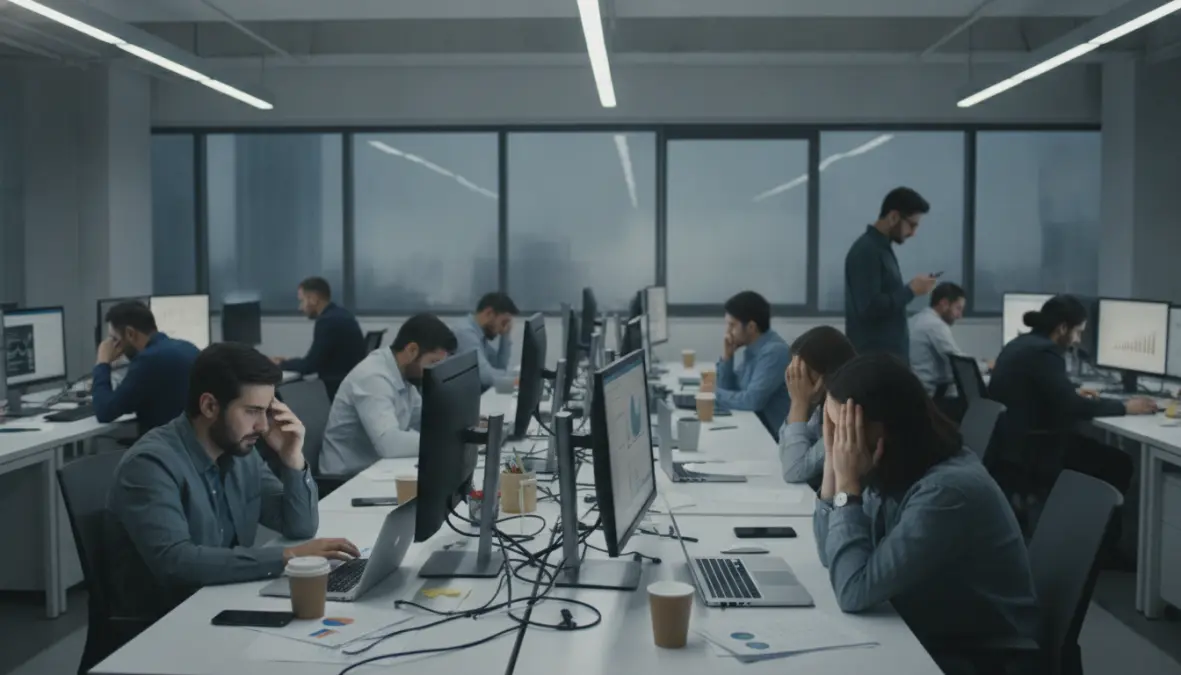
The Root Causes: Why Chronic Exhaustion Has Become the Default
Understanding why chronic exhaustion has become the default state for younger generations requires examining the perfect storm of cultural, technological, and economic forces that converge to create what we now recognize as burnout culture.
At the heart of this mental health crisis sits hustle culture—the glorification of constant productivity and the equation of self-worth with professional output. Social media feeds overflow with productivity porn: influencers waking at 4 AM, entrepreneurs juggling multiple ventures, the relentless message that rest equals laziness. This creates an impossible standard where simply doing your job well is never enough.
Then there’s the digital overload factor. The always-on nature of modern technology has obliterated traditional boundaries between work and personal life. Emails arrive at midnight. Slack messages ping during dinner. The expectation of constant availability creates a state of perpetual partial attention that prevents genuine rest. We’re never truly off the clock, never fully disconnected, never completely present anywhere.
Economic precarity compounds these pressures. When a single income doesn’t cover basic living expenses, many young workers juggle multiple side hustles alongside their primary employment. The gig economy, often praised for its flexibility, frequently translates to working multiple part-time jobs without benefits, paid time off, or job security. This isn’t ambition—it’s survival.
Social media adds another layer to this stress epidemic. Constant comparison with curated highlight reels creates emotional exhaustion and the feeling of perpetually falling behind. Everyone else seems to be thriving, traveling, achieving—making your own exhaustion feel like personal failure rather than a systemic issue.
The Workplace Factor: When Jobs Drain More Than They Give
Workplace exhaustion has reached crisis levels, driven by fundamental shifts in how work is structured and compensated. Chronic understaffing has become normalized, with remaining employees expected to absorb the workload of positions that are never filled. The math is simple: companies discovered they could extract more productivity from fewer workers, and the practice stuck.
Work burnout syndrome flourishes in environments where the psychological contract between employer and employee has eroded. Previous generations could expect loyalty, benefits, pensions, and reasonable work hours in exchange for their labor. Today’s workers face expectations of 24/7 availability, constant upskilling on their own time, and performance metrics that ratchet ever upward—all while benefits shrink and job security evaporates.
The mismatch between effort and reward has never been starker. Productivity has soared over recent decades while wages have stagnated. Workers are producing more value than ever but seeing less of it reflected in their compensation or quality of life. This fundamental inequity creates a deep sense of futility that feeds directly into burnout.
The Cultural Dimension: How Society Normalized Exhaustion
Perhaps most insidiously, modern culture has reframed chronic exhaustion as a badge of honor. The mental exhaustion generation grew up absorbing messages that equate busyness with importance and rest with weakness. Bragging about how little sleep you got or how many hours you worked becomes a form of social currency.
This normalization of burnout culture extends beyond individual attitudes to institutional structures. Community spaces that once provided rest and connection have eroded. The atomization of modern life means people increasingly face their struggles alone, without the buffer of strong social support networks. When everything becomes an individual responsibility—from healthcare to retirement to education costs—the weight becomes crushing.
Individualism tells us that exhaustion is a personal failing requiring better time management or more self-care, rather than a predictable outcome of unsustainable systems. This framing conveniently shifts responsibility away from the structural conditions creating the problem.

Breaking Free: Pathways Out of Collective Burnout
Addressing generational burnout requires both individual strategies and systemic change—because no amount of bubble baths will solve problems rooted in economic inequality and exploitative labor practices.
On an individual level, recognizing the signs of burnout generation syndrome matters. Persistent fatigue, cynicism about work, reduced performance, physical symptoms like headaches or insomnia—these aren’t character flaws but warning signals. Setting boundaries, even when it feels uncomfortable, becomes an act of self-preservation. Learning to say no, protecting personal time, and seeking professional mental health support when needed are crucial steps.
Redefining success away from hustle culture’s narrow metrics helps too. As explored in how Gen Z is redefining career success, younger workers are increasingly prioritizing work-life balance, meaningful work, and personal well-being over traditional markers of achievement.
But individual solutions only go so far when facing systemic problems. Real change requires policy interventions: enforced limits on work hours, mandatory paid time off, universal healthcare that isn’t tied to employment, living wages that eliminate the need for multiple jobs, and affordable housing and education.
Employers bear responsibility too. Creating sustainable workplaces means adequate staffing, respect for off-hours boundaries, mental health resources, and compensation that reflects the value workers create. Companies that continue extracting maximum productivity while offering minimum support aren’t just unethical—they’re contributing to a public health crisis.
Collective action—through unions, worker organizing, and political movements that challenge the structures enabling productivity pressure and exploitation—offers the most promising path forward. The burnout generation didn’t create these conditions individually, and they won’t solve them individually either.
The exhaustion so many young people feel isn’t a personal failing—it’s a rational response to irrational circumstances. Recognizing that truth is the first step toward demanding and creating something better. Because a generation running on empty isn’t sustainable, and it shouldn’t be normal.