Cryonics Technology: The Real Science Behind Human Body Preservation
Imagine being placed in a state of deep freeze right after death, your body preserved at temperatures colder than the Antarctic winter, waiting for a future where medical technology could potentially bring you back to life. This isn’t science fiction—it’s cryonics technology, a real field that sits at the controversial intersection of medicine, physics, and futurism. While we can’t yet revive frozen humans, dozens of people worldwide have already chosen this path, betting on tomorrow’s science to give them a second chance at life.
What Is Cryonics Technology and How Does Human Cryopreservation Work?
Cryonics technology is the practice of preserving legally deceased humans at ultra-low temperatures with the hope that future medical advances might restore them to life and health. Operating at -196°C using liquid nitrogen storage, this isn’t about freezing bodies like ice cubes—it’s about preserving the intricate structures of cells and, critically, the brain’s information patterns that make us who we are.
Let’s clear up a common confusion: cryonics isn’t the same as cryogenics. Cryogenic preservation is the broader science of producing and working with extremely cold temperatures, while cryonics science specifically applies these principles to preserve human bodies or brains. The fundamental goal of human cryopreservation is informational preservation—maintaining the brain’s neural connections and cellular structures that encode memories, personality, and consciousness.
The concept emerged in the 1960s, with the first human cryopreservation performed in 1967. Today’s low temperature preservation techniques are far more sophisticated, focusing on preventing cellular damage while maintaining the structural integrity that future technologies—perhaps molecular repair machines or advanced nanotechnology—might need to reverse the process. The key philosophical premise? If the brain’s information structure remains intact, revival might theoretically be possible, even if current technology can’t accomplish it.
The Cryonics Procedures: From Legal Death to Cryogenic Preservation
Understanding how does cryonics preservation work requires looking at the precise, time-sensitive steps involved. The process begins the moment legal death is declared—and timing is absolutely critical for minimizing damage.
Immediate Response and Stabilization
When a cryonics patient is declared legally dead, a standby team immediately springs into action. Within minutes, the body is packed in ice to begin cooling and slow metabolic processes. Mechanical chest compressions maintain blood circulation, delivering oxygen to tissues even though the heart has stopped. Anticoagulant medications prevent blood clotting, while initial cryoprotective agents begin circulating through the system.
This phase is crucial for cellular damage prevention. Every minute counts—warm ischemia (lack of blood flow at normal temperatures) causes progressive damage to cells, particularly in the brain. The team administers medications to protect against ischemic injury while preparing for transport to the cryonics facility. In ideal scenarios, this standby team is present before legal death occurs, allowing intervention within seconds.
The Vitrification Process and Long-Term Storage
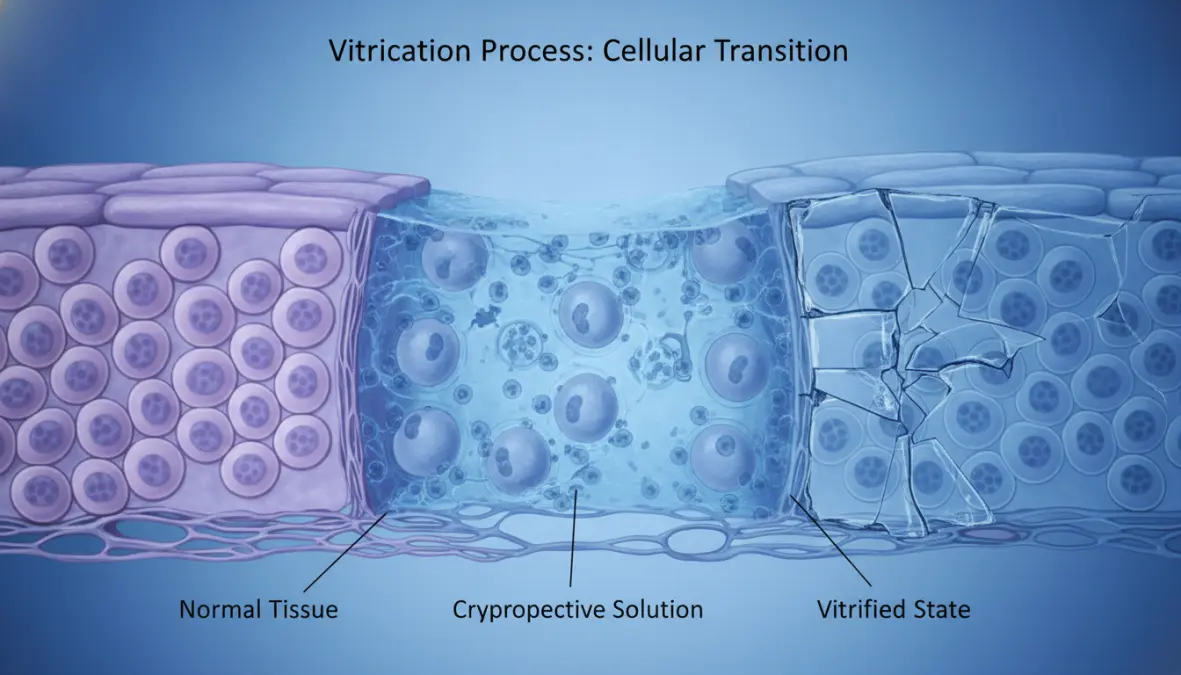
Once at the facility, the real magic of modern body freezing technology begins: vitrification. When considering vitrification vs freezing in cryonics, the difference is profound. Traditional freezing creates ice crystals that tear through cell membranes like microscopic shards of glass, destroying tissue structure. Vitrification, conversely, transforms water into a glass-like solid state without crystallization.
The vitrification process involves gradually replacing the blood with increasingly concentrated cryoprotective agents—essentially medical-grade antifreeze. This happens over several hours as the concentration increases and temperature drops. These agents prevent ice crystal formation by allowing the body’s water to solidify into an amorphous, non-crystalline state. It’s similar to how certain frogs survive freezing winters, though far more complex.
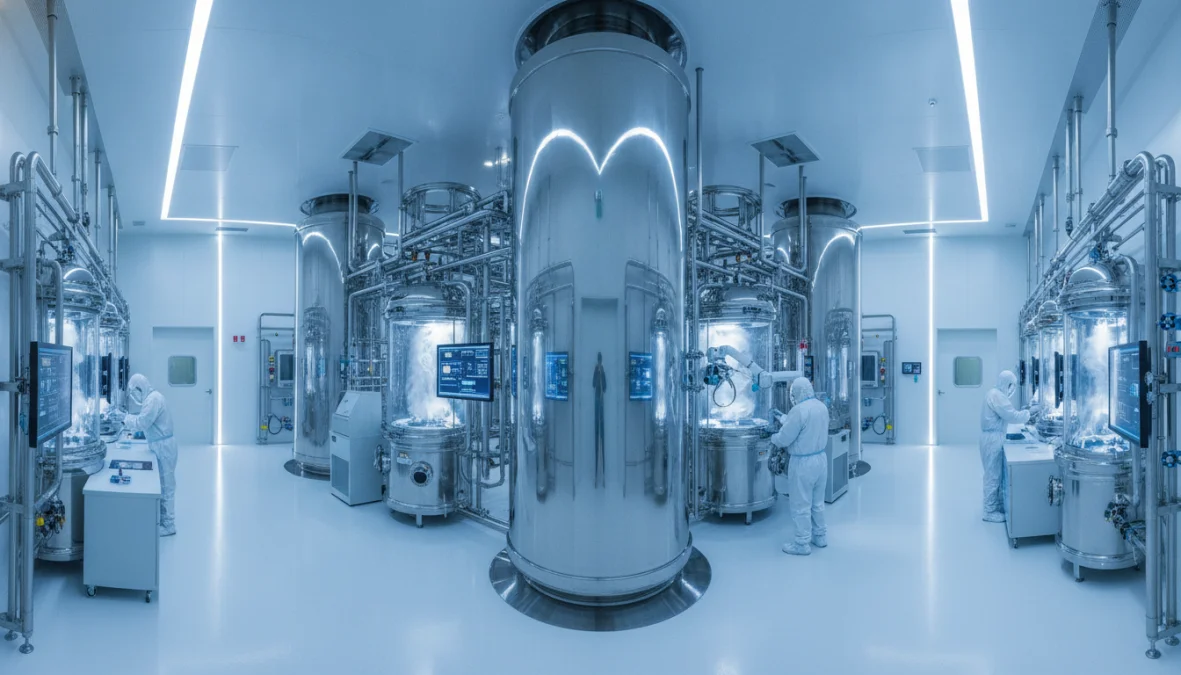
Temperature is then carefully lowered to -196°C over several days using computer-controlled cooling protocols. Too fast, and thermal stress causes fracturing; too slow, and ice crystals might form. Finally, the body or brain (in neuropreservation cases) is placed upside-down in a specialized container called a dewar, filled with liquid nitrogen. These storage units are continuously monitored and refilled, maintaining the patient in a state resembling suspended animation—metabolic processes essentially stopped at the molecular level.
The Scientific Challenges and Current Limitations of Cryonics
Let’s be clear: is cryonics scientifically possible? The preservation part—yes, we can do that. The revival part? That’s where things get complicated, and honesty is essential when discussing cryonics science.
The primary challenge is that cryoprotective agents, while preventing ice formation, are inherently toxic at the concentrations required for effective tissue preservation. These chemicals can damage cell membranes and proteins even as they protect against freezing. Researchers are constantly working to develop less toxic formulations, but it’s a delicate balance.
Thermal stress presents another obstacle. Even with controlled cooling, bodies can develop fractures from the enormous temperature change—imagine the stress of cooling something from 37°C to -196°C. These fractures don’t necessarily destroy information, but they complicate any future revival attempt.
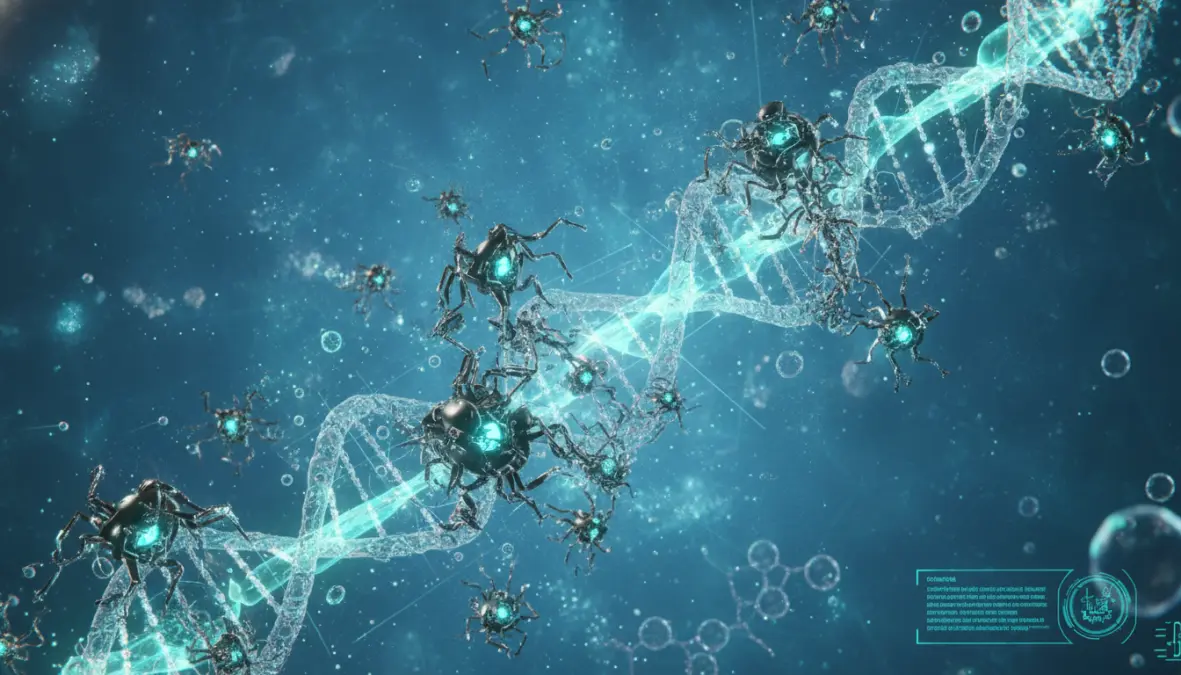
The elephant in the room: can cryonically frozen bodies be revived? Currently, no. We lack the technology for molecular repair at the scale required to reverse cryopreservation damage, warm tissues without destroying them, and restart biological functions. Cryonics is essentially a bet on future technology—perhaps advanced nanotechnology capable of cell-by-cell repair, or techniques we haven’t even imagined yet.
That said, progress is happening. Scientists have successfully cryopreserved and revived simple organisms like the nematode C. elegans, and even some mammalian organs. Rabbit kidneys have been vitrified, rewarmed, and successfully transplanted. These proof-of-concept demonstrations suggest the underlying principles work, even if scaling up to whole humans remains distant. Much like how biohacking optimizes current human biology, cryonics attempts to extend biology beyond current natural limits—though on a much more speculative timeline.
FAQ: Common Questions About Cryonics Technology
What happens during cryonics procedure step by step?
After legal death, the body is immediately cooled, circulation is maintained mechanically, anticoagulants are administered, blood is gradually replaced with cryoprotective agents, temperature is slowly lowered to -196°C through vitrification, and the body is stored in liquid nitrogen indefinitely.
What’s the cost of human cryogenic preservation?
Whole-body preservation typically ranges from $200,000 to $220,000, while neuropreservation (brain only) costs $80,000 to $90,000. Most people fund this through life insurance policies, making monthly costs quite affordable.
How many people are currently cryopreserved?
Approximately 500 people worldwide are in cryopreservation, with several thousand more signed up for the procedure upon legal death. The two largest organizations are Alcor Life Extension Foundation and the Cryonics Institute.
What’s the difference between whole body and neuropreservation?
Whole-body preservation stores the entire body, while neuropreservation preserves only the brain. The latter is cheaper and based on the premise that future technology capable of revival could also create a new body, making preservation of the original less critical.
Is cryonics legal?
Yes, in most countries. Cryonics can only be performed after legal death is declared, so it doesn’t conflict with laws against euthanasia. However, regulations vary internationally, and not all jurisdictions explicitly address the practice.
What are the actual chances of revival?
Honestly? Unknown. It depends entirely on future technological developments that don’t currently exist. Proponents argue that if brain structure is preserved, revival is theoretically possible with sufficiently advanced technology. Critics point out this requires multiple breakthroughs that may never occur.
Whether cryonics technology represents humanity’s boldest medical frontier or an expensive long shot depends on your perspective. What’s certain is that the science continues advancing, preservation techniques keep improving, and the conversation about life, death, and the limits of medicine grows more fascinating. For those willing to take the ultimate leap of faith in future science, cryonics offers something unprecedented: a chance—however uncertain—at a second life in a world we can barely imagine.