Metamaterials Applications: Engineering Materials with Impossible Properties
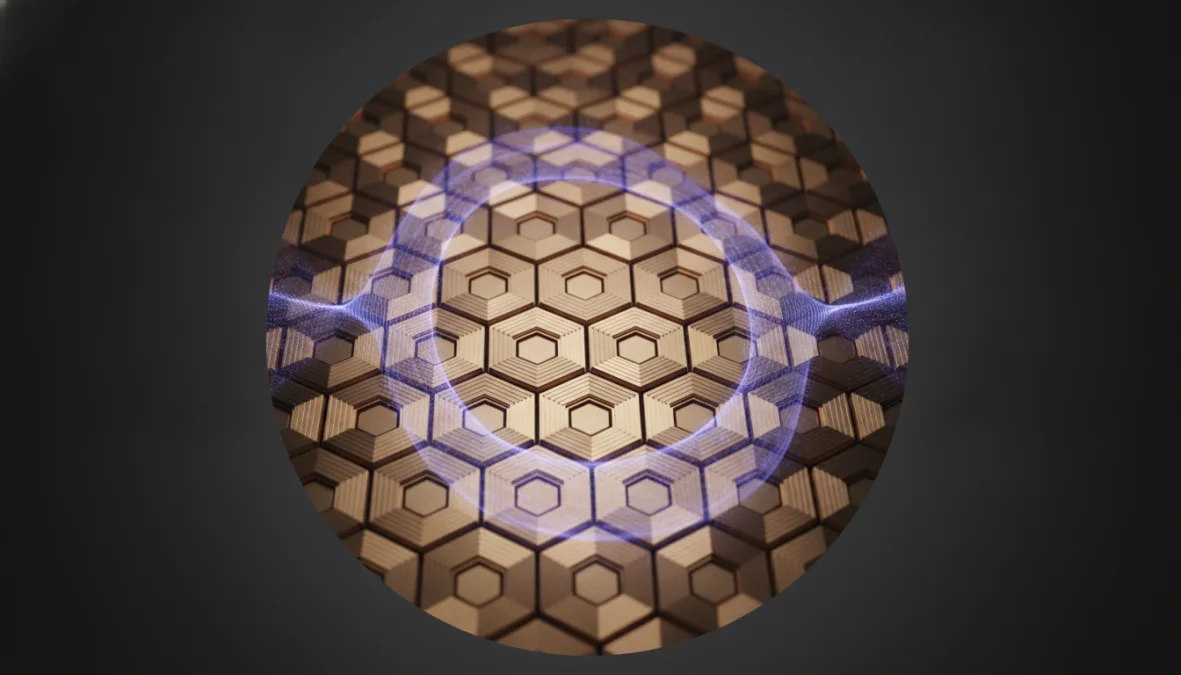
Imagine materials that can bend light backwards, make objects invisible, or absorb sound so completely that silence becomes tangible. These aren’t sci-fi fantasies—they’re real metamaterials applications reshaping everything from telecommunications to medical imaging. Unlike anything found in nature, these engineered structures manipulate waves in ways that seem impossible, opening doors to technologies that once lived only in our imagination.
Understanding Metamaterials: Properties That Defy Nature
At their core, metamaterials are artificial electromagnetic materials engineered at scales smaller than the wavelengths they interact with. While conventional materials get their properties from their chemical composition, metamaterials engineering derives extraordinary characteristics from precisely arranged subwavelength structures—patterns and geometries repeated at micro or nanoscales.
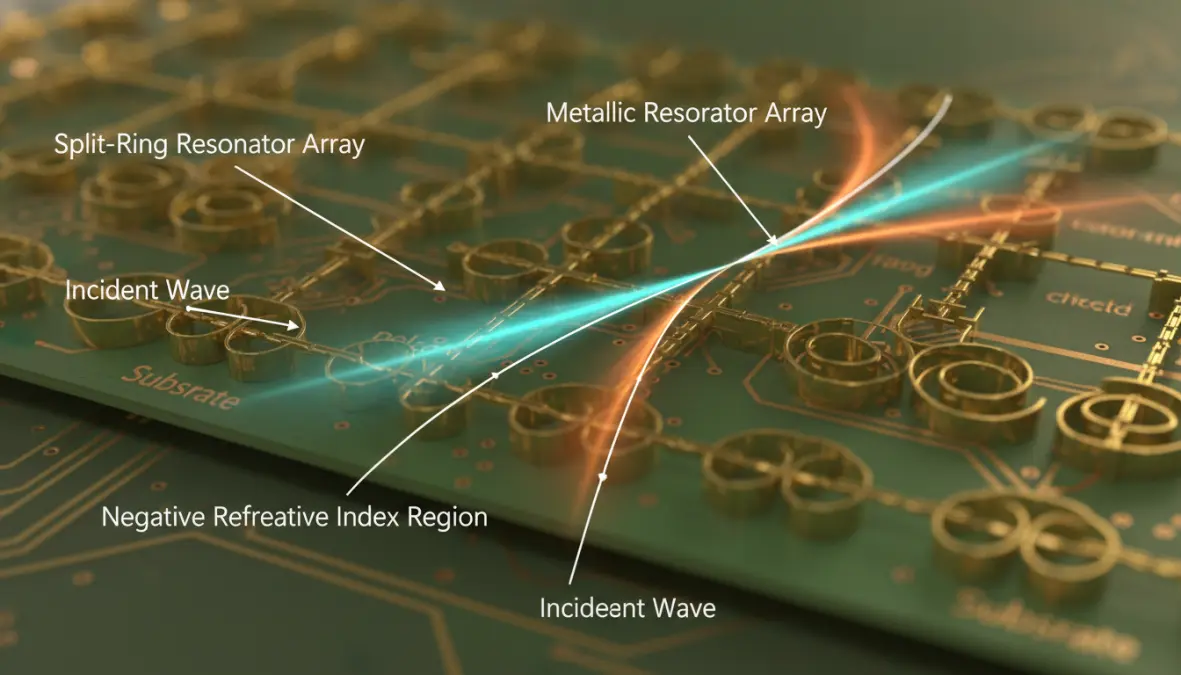
The most mind-bending example? The negative refractive index. In natural materials, light bends one way when passing through—think of how a straw looks bent in water. Metamaterials can bend light the opposite direction, defying centuries of optical understanding. This happens through carefully designed periodic structures that create plasmonic resonance and electromagnetic responses impossible in ordinary matter.
These structures work by manipulating effective medium theory—basically fooling waves into experiencing properties that don’t actually exist in the constituent materials. An electromagnetic bandgap can block specific frequencies completely, while transformation optics principles let engineers guide waves along curved paths. The difference between natural materials and metamaterials? Nature builds from atoms; metamaterials build from structure.
Revolutionary Metamaterials Applications Across Industries
The real excitement around metamaterials applications lies in how they’re transforming multiple industries simultaneously. From invisibility devices to perfect sound absorbers, metamaterial design is creating solutions to problems we thought unsolvable.
Electromagnetic and Photonic Metamaterials
Electromagnetic metamaterials have generated perhaps the most buzz, especially around metamaterials for invisibility cloaking devices. While we’re not quite at Harry Potter levels yet, researchers have successfully cloaked small objects from specific wavelengths by routing electromagnetic waves around them using transformation optics. The military and security sectors watch this development closely.
More immediately practical are metamaterials applications in telecommunications. Engineers are creating superlenses that exceed the diffraction limit—capturing details finer than the wavelength of light itself, which conventional optics said was impossible. Photonic metamaterials enable ultra-compact optical devices and perfect absorbers that capture nearly 100% of incoming radiation at specific frequencies.
Metamaterials applications in antenna design are already commercialized. By manipulating electromagnetic fields, metamaterial antennas achieve better performance while occupying a fraction of traditional antenna space—crucial for everything from smartphones to satellites. The technology enables beam steering without moving parts and enhanced bandwidth efficiency, directly improving metamaterials applications in telecommunications infrastructure. Similar innovations in quantum communication networks showcase how advanced materials drive connectivity breakthroughs.
Acoustic Metamaterials and Beyond
Acoustic metamaterials apply the same principles to sound waves rather than light. These structures achieve acoustic metamaterials for sound absorption at levels conventional foam can’t match, particularly at low frequencies where traditional materials fail. Architects are incorporating them into buildings for unprecedented noise control, while automotive engineers use them to create quieter vehicle cabins.
The medical field benefits through metamaterials applications in medical imaging. Enhanced ultrasound systems using acoustic metamaterials achieve better resolution and penetration depth, improving diagnostic capabilities. Some experimental designs even promise seismic protection—structures that could shield buildings from earthquake waves by redirecting seismic energy around them.
The concept extends beyond just electromagnetic and acoustic applications. Mechanical metamaterials exhibit bizarre properties like negative Poisson’s ratio (getting fatter when stretched), while thermal metamaterials can cloak heat signatures or channel thermal energy along specific paths. Researchers have created structures with negative mass density for vibration control in precision manufacturing equipment. Just as digital twins optimize industrial processes, metamaterials optimize physical wave interactions at fundamental levels.

The Future of Metamaterial Design and Engineering Challenges
Despite remarkable progress, metamaterials engineering faces significant hurdles before widespread adoption. Manufacturing scalability remains problematic—creating precise nanoscale structures economically at industrial volumes tests current fabrication capabilities. Many designs work beautifully in laboratories but prove impractical for mass production.
Energy losses through absorption and scattering limit performance, especially in optical metamaterials for superlenses and cloaking applications. Bandwidth limitations mean most metamaterials work optimally only within narrow frequency ranges, restricting versatility. How metamaterials achieve negative refraction often involves resonant structures inherently narrow-band and lossy.
The future, however, looks promising. Tunable and programmable metamaterials—whose properties can be dynamically adjusted through electrical, optical, or mechanical stimuli—represent the next frontier. Imagine surfaces that change from reflective to absorptive on command, or lenses whose focal length adjusts electronically.
AI-driven metamaterial design is accelerating discovery dramatically. Machine learning algorithms now optimize complex wave manipulation structures far faster than human intuition, exploring design spaces previously inaccessible. This computational approach, similar to innovations in AI-powered productivity tools, is uncovering metamaterial configurations with unprecedented performance.
Potential breakthrough applications include quantum computing components, energy harvesting systems that capture waste electromagnetic radiation, and medical devices with capabilities currently impossible. The intersection of metamaterials with other emerging technologies—like ambient computing environments—suggests a future where our physical surroundings become as programmable as software.
FAQ: Common Questions About Metamaterials Applications
What makes metamaterials different from ordinary materials?
Metamaterials derive their properties from engineered structure rather than chemical composition. Their repeating patterns, designed at scales smaller than the wavelengths they affect, create electromagnetic or acoustic responses impossible in natural materials, including negative refractive indices and electromagnetic bandgaps.
Are invisibility cloaks real?
Yes, but with significant limitations. Researchers have demonstrated cloaking for specific wavelengths at small scales using transformation optics principles. Broadband cloaking of large objects in visible light remains beyond current capabilities, though progress continues toward practical applications in radar and acoustic domains.
What industries benefit most from metamaterials?
Telecommunications gains improved antennas and signal processing; defense develops cloaking and sensing technologies; medical imaging achieves better resolution; architecture obtains superior acoustic control; and aerospace creates lighter, more efficient structures. Manufacturing scalability will determine which applications reach commercial viability first.
How are metamaterials manufactured?
Production methods depend on scale and application. Photonic metamaterials often require electron-beam lithography or focused ion beam milling for nanoscale precision. Larger acoustic metamaterials may use 3D printing or conventional machining. Cost-effective mass production remains a primary engineering challenge limiting widespread adoption.
The journey of metamaterials from theoretical curiosity to practical applications demonstrates how understanding fundamental physics unlocks technological possibilities. As manufacturing techniques improve and computational design tools become more sophisticated, these materials with impossible properties will increasingly shape the technologies surrounding us—making the invisible visible, the inaudible silent, and the impossible routine.