Holotropic Breathwork: A Complete Guide to This Psychedelic-Like Breathing Practice
Ever feel like there’s more to breathing than just keeping you alive? You’re onto something. Holotropic breathwork is a powerful breathing practice that can take you on an inner journey rivaling some psychedelic experiences—no substances required. Developed in the 1970s, this technique uses controlled breathing patterns to unlock profound states of consciousness, offering everything from emotional healing to spiritual insights. Whether you’re curious about alternative therapies or looking for deeper self-exploration, this guide will walk you through everything you need to know about this transformative practice.
What Is Holotropic Breathwork and How Does It Work?
Holotropic breathwork is a therapeutic breathing practice created by psychiatrist Stanislav Grof and his wife Christina in the mid-1970s. After LSD became illegal for clinical use, Grof sought non-pharmaceutical ways to access the healing potential of altered states of consciousness. The result was this remarkable technique that combines accelerated breathing, evocative music, and focused bodywork.
The term “holotropic” comes from Greek words meaning “moving toward wholeness” (holos = whole, trepein = moving toward). This perfectly captures the practice’s intention: facilitating access to your complete self, including unconscious materials and transpersonal dimensions of experience.
Physiologically, holotropic breathwork works through controlled hyperventilation—breathing faster and deeper than normal for extended periods. This alters the balance of oxygen and carbon dioxide in your bloodstream, changing blood pH levels and triggering what Grof called “non-ordinary states of consciousness.” These are psychedelic-like states where you might experience vivid imagery, emotional releases, or profound insights without ingesting any substances.
Unlike meditation, which typically emphasizes stillness and observation, or traditional pranayama, which uses specific breath ratios and retention, holotropic breathwork employs continuous, accelerated breathing without pauses. The framework draws from depth psychology, transpersonal psychology, and various spiritual traditions, proposing that these altered states can access healing wisdom from your psyche’s deeper layers.

The Holotropic Breathwork Experience: What to Expect During a Session
A typical holotropic breathwork session lasts between two to three hours and usually takes place in a group setting, though individual sessions are also available. The practice involves pairs of participants who alternate roles: one person is the “breather” (the one doing the breathwork), while the other serves as a “sitter” (providing support and assistance if needed).
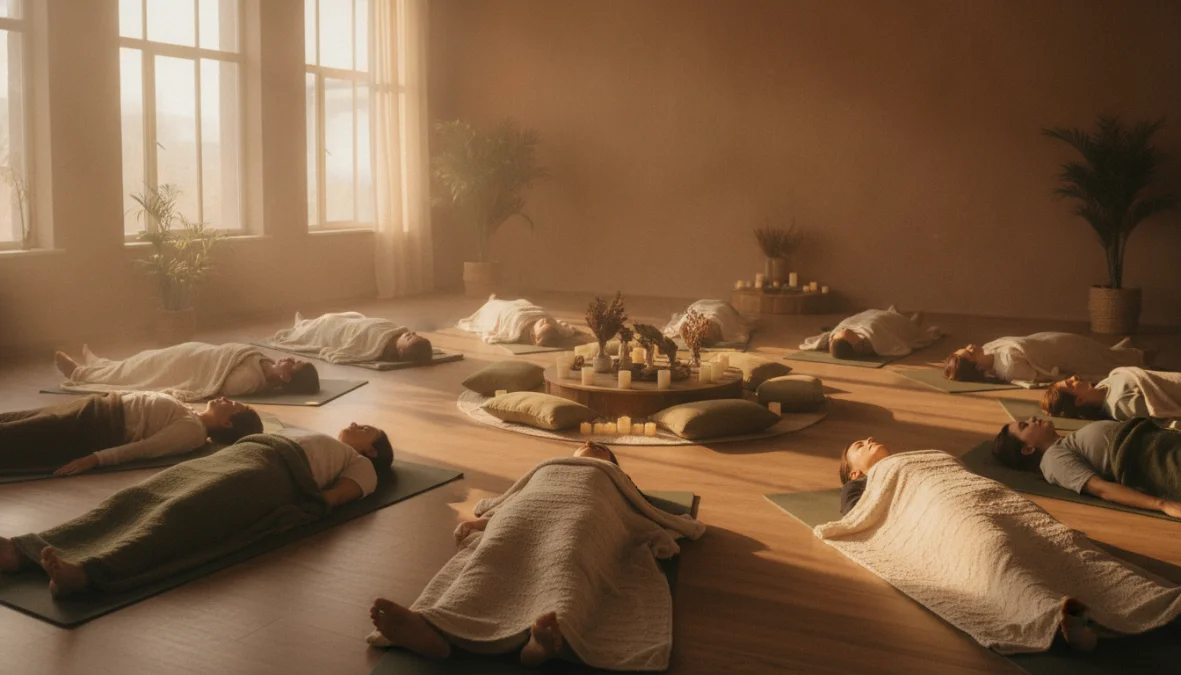
Sessions begin with participants lying on mats in a safe, comfortable space. A certified facilitator guides the process, encouraging breathers to accelerate their breathing while carefully curated, evocative music plays—typically starting with drumming or rhythmic sounds, building to more emotional orchestral pieces, and concluding with gentle, meditative music.
The music isn’t just background noise; it’s an integral component that helps guide your inner journey and facilitate emotional release. As you continue the accelerated breathing, you may enter altered states where memories surface, emotions intensify, or visionary experiences unfold.
After the breathing portion concludes, participants often create mandalas—circular drawings that help integrate and express their experiences non-verbally. This creative component serves as a bridge between the non-ordinary state and everyday consciousness. Finally, a group sharing circle allows participants to process their experiences together, though sharing is always voluntary.
The role of a certified facilitator cannot be overstated. These trained professionals create a safe container for the experience, offer bodywork when appropriate, and help participants navigate challenging moments. They’re trained through programs like Grof Transpersonal Training, ensuring they understand both the potential and the risks of this powerful practice.
Physical and Emotional Effects You May Experience
During a holotropic breathwork session, you might encounter a wide range of physical sensations. Tetany—temporary muscle cramping or rigidity, particularly in the hands and feet—is extremely common and results from altered blood chemistry. You might experience tingling sensations, temperature changes, or waves of energy moving through your body. Some people report feeling physical tension releasing from areas where they’ve held chronic stress.
Emotionally, the experiences vary dramatically from person to person and session to session. Some participants experience profound catharsis—releasing long-held grief, anger, or fear through crying, shaking, or vocalization. Others revisit memories they’d forgotten or gain new perspectives on past events. Some journey into what feel like past lives or archetypal realms, encountering imagery from mythology or spiritual traditions they’ve never studied.
It’s crucial to understand that there’s no “right” experience. Some sessions feel intensely dramatic; others might seem quiet or subtle. Within the holotropic framework, whatever emerges is considered exactly what you need for your healing process at that moment. The altered states of consciousness aren’t the goal themselves—they’re the vehicle for accessing your inner healing intelligence.

Benefits, Risks, and Who Should Consider Holotropic Breathwork
Many practitioners report significant benefits from holotropic breathwork, though it’s important to note that large-scale clinical studies remain limited. Reported benefits include processing unresolved trauma, gaining insights into life patterns and behaviors, experiencing spiritual or mystical states that provide meaning and connection, and reducing symptoms of stress, anxiety, and depression.
Some people find that a single session provides breakthrough insights, while others engage in the practice regularly as part of ongoing personal development. The experience can complement traditional therapy, offering access to material that talk therapy alone might not reach. Just as regenerative agriculture works with natural systems to restore wholeness to the land, holotropic breathwork works with your psyche’s inherent capacity to move toward integration and healing.
However, holotropic breathwork isn’t for everyone. There are important medical contraindications to consider. You should avoid this practice if you’re pregnant, have cardiovascular disease (including high blood pressure or previous heart attack), have a history of seizures or epilepsy, are experiencing acute psychosis or have a diagnosis of schizophrenia, have severe asthma or other respiratory conditions, have glaucoma or retinal detachment, or are recovering from surgery or significant physical injuries.
Even without these conditions, the intensity of the experience can be challenging. If you’re new to inner work or have significant unprocessed trauma, the altered states can feel overwhelming. This is why practicing with qualified facilitators in appropriate settings is essential. Always consult with your healthcare provider before trying holotropic breathwork, especially if you have any medical or psychiatric conditions or take medications.
Frequently Asked Questions About Holotropic Breathwork
Is holotropic breathwork safe?
When practiced with certified facilitators and appropriate screening for contraindications, holotropic breathwork has a strong safety record. However, it’s a powerful technique that deliberately induces altered states, so proper guidance and medical clearance are essential.
How is it different from meditation or pranayama?
While meditation emphasizes awareness and observation, and pranayama uses specific breath patterns and retention, holotropic breathwork employs continuous accelerated breathing to induce non-ordinary states. It’s more active and cathartic than most meditation practices and doesn’t follow the structured ratios of traditional pranayama.
Do I need any special preparation?
Most facilitators recommend avoiding heavy meals before sessions and wearing comfortable clothing. Mentally, approach with openness and willingness to surrender to whatever arises. Many facilitators provide pre-session orientation to help you understand what to expect.
How often should I practice?
There’s no standard frequency. Some people attend workshops quarterly or annually, while others engage more regularly. Because sessions are intensive and require integration time, most practitioners don’t recommend doing them more than monthly. Listen to your own process and discuss frequency with your facilitator.
Where can I find certified facilitators?
Grof Transpersonal Training is the primary certifying body for holotropic breathwork practitioners. Their website maintains a directory of certified facilitators worldwide. Look for practitioners who have completed the full training program and maintain ethical standards.
Holotropic breathwork offers a remarkable gateway to self-exploration and healing, using nothing more than your breath, music, and inner wisdom. While it’s not suitable for everyone and shouldn’t replace necessary medical or psychiatric treatment, for many people it provides profound experiences that catalyze growth and transformation. If you’re curious about this powerful practice, find a certified facilitator, get medical clearance if needed, and consider experiencing this journey toward wholeness for yourself.