EMF Protection: What Science Really Says About Electromagnetic Radiation Safety
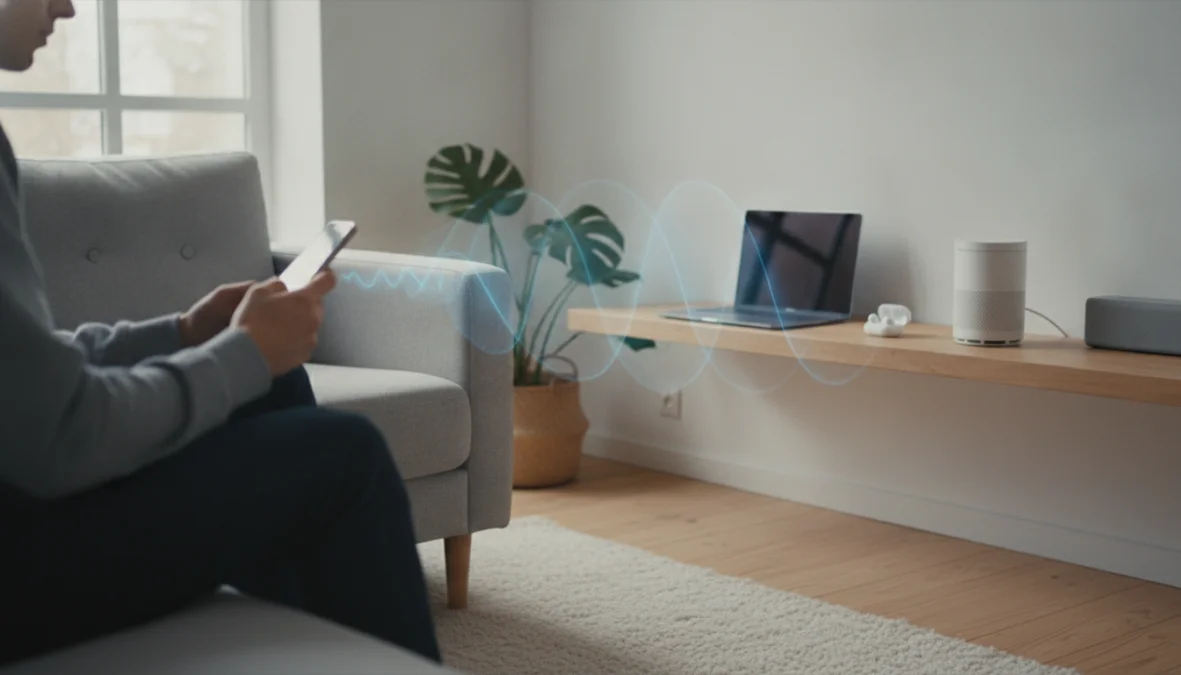
Your phone buzzes in your pocket. Your WiFi router blinks silently in the corner. Power lines hum overhead as you walk down the street. We’re swimming in an invisible sea of electromagnetic fields, and it’s understandable if you’re wondering whether all this radiation is safe. The internet is flooded with products promising EMF protection, but sorting science from scaremongering isn’t always easy. Let’s cut through the noise and examine what peer-reviewed research actually tells us about electromagnetic radiation protection.
Understanding EMF Exposure: Sources and Health Effects
First things first: not all radiation is created equal. The electromagnetic spectrum ranges from harmless radio waves to dangerous gamma rays, and the distinction between non-ionizing radiation (what your phone emits) and ionizing radiation (like X-rays) is crucial. Non-ionizing radiation doesn’t have enough energy to knock electrons off atoms or break chemical bonds in your DNA—that’s the domain of ionizing radiation.
Your daily EMF exposure comes from predictable sources: smartphones, WiFi routers, Bluetooth devices, microwave ovens, power lines, and electrical appliances. These emit radiofrequency radiation at levels far below what’s considered dangerous by international standards. The World Health Organization (WHO) and the International Commission on Non-Ionizing Radiation Protection (ICNIRP) have established WHO EMF guidelines based on decades of research, and typical household exposure sits comfortably below these thresholds.
What does the science actually say? Large-scale epidemiological studies haven’t found consistent evidence linking everyday EMF exposure to serious health problems. The most comprehensive reviews by organizations like the WHO acknowledge that while some individuals report electromagnetic hypersensitivity symptoms, controlled studies haven’t been able to demonstrate a causal link between EMF exposure and these symptoms. That said, research continues, particularly regarding long-term effects and children’s exposure. Similar to how understanding microplastics requires separating genuine concerns from hysteria, electromagnetic field health effects demand a balanced, evidence-based approach.
EMF Protection Methods: What Works and What Doesn’t
The market for radiation protection products is booming, but not everything marketed as EMF shielding actually delivers. Let’s separate legitimate science from expensive placebos.
Science-Backed EMF Reduction Strategies
If you’re looking for how to protect against electromagnetic radiation at home, physics offers some straightforward answers. The inverse square law is your friend: electromagnetic radiation intensity decreases dramatically with distance. Doubling your distance from a source reduces exposure by 75%. This simple principle means keeping your phone on a nightstand instead of under your pillow makes a measurable difference.
RF shielding materials genuinely work when properly applied. Faraday cages—enclosures made of conductive materials like copper mesh or aluminum—effectively block electromagnetic fields. Professional-grade shielding fabrics containing silver or copper threads can reduce exposure when used correctly in curtains or wall coverings. However, these require proper grounding and installation to function as advertised.
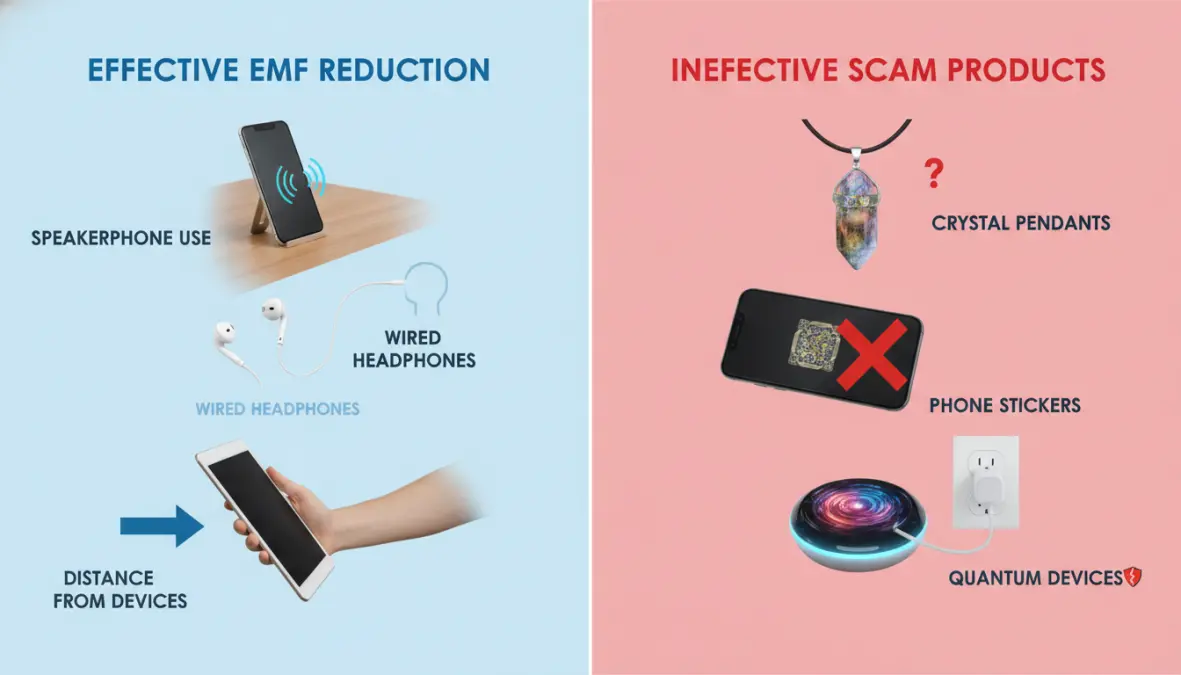
Practical EMF safety guidelines that actually work include using speakerphone or wired headphones for calls (keeping the phone away from your head), enabling airplane mode when you don’t need connectivity, positioning your WiFi router away from bedrooms and workspaces, and following FCC exposure limits recommendations. These methods align with IEEE standards and don’t require purchasing questionable gadgets.
Products to Avoid: Common EMF Protection Scams
When asking “do EMF protection devices actually work,” the unfortunate answer for many products is a resounding no. Phone stickers claiming to “neutralize” or “harmonize” radiation violate basic physics principles. Electromagnetic radiation either reaches your body or it doesn’t—there’s no magical middle ground where it’s been “neutralized” but your phone still works perfectly.
Pendants with “quantum” technology, crystals, and stones that supposedly protect you from EMF are pure pseudoscience. No peer-reviewed studies support these claims, and the marketing typically relies on scientific-sounding jargon detached from actual physics. Red flags include vague explanations of how products work, absence of independent testing, testimonials replacing data, and claims that seem too good to be true (because they are).
Similarly, many EMF blocking devices that plug into outlets claiming to “clean” your home’s electrical field have no credible scientific backing. If you’re wondering “are EMF protection products worth buying,” the answer depends entirely on whether they’re based on legitimate shielding principles or marketing gimmicks.
Practical EMF Safety Guidelines for Daily Life
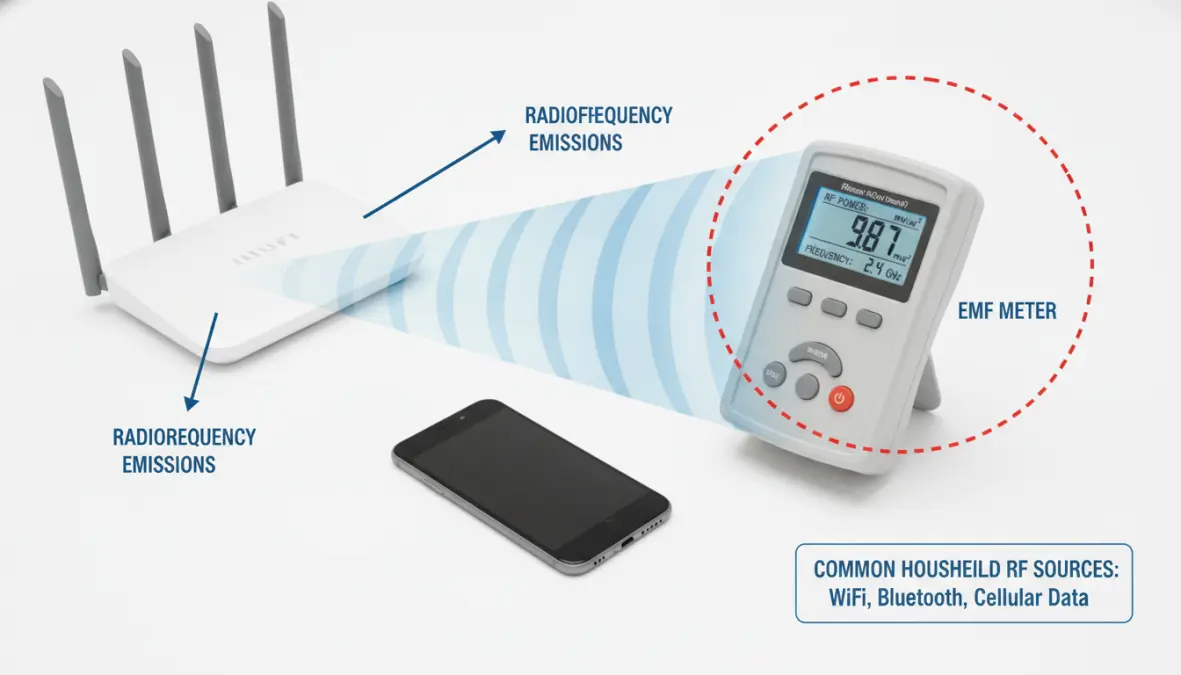
Evidence-based electromagnetic radiation protection doesn’t require expensive purchases or lifestyle upheaval. Start by measuring if you’re genuinely curious: EMF meters (look for ones measuring electric, magnetic, and RF fields separately) from reputable manufacturers can show you actual exposure levels in your home. Compare these to established safety standards rather than arbitrary “low” readings marketed by protection product sellers.
For WiFi optimization, place your router centrally but away from bedrooms and primary living spaces. Modern routers often have power settings—reducing transmission power when you don’t need whole-house coverage is a reasonable precaution. Turn off WiFi overnight if it doesn’t inconvenience you; this won’t necessarily improve health outcomes, but it follows the precautionary principle without significant sacrifice.
Children’s developing bodies may theoretically be more sensitive to EMF exposure, though research remains inconclusive. WHO guidelines suggest simple precautions: limiting screen time, encouraging speakerphone use, and avoiding prolonged contact with phones. Pregnant individuals might similarly choose to minimize unnecessary exposure as a precautionary measure, though current evidence doesn’t indicate typical exposure levels cause harm.
Just like science-backed biohacking approaches, effective EMF exposure safety focuses on evidence rather than fear. When should you consult professionals? If you’re designing shielding for specialized environments, if you have occupational exposure concerns, or if you’re experiencing unexplained symptoms you’re attributing to EMF (a qualified physician should evaluate these, not an EMF product salesman).
Reliable information sources include the EPA, WHO, IEEE, and FCC websites—not blogs selling protection products. Citizen science initiatives are even contributing to EMF mapping projects, providing real-world exposure data in various environments.
FAQ: EMF Protection Questions Answered
Do EMF blocking devices really work?
It depends entirely on the device. Properly designed Faraday cages and shielding materials based on physics principles work as advertised. However, stickers, pendants, and plug-in “harmonizers” have no scientific support and don’t measurably reduce exposure.
What are safe EMF levels?
The FCC and WHO have established exposure limits based on extensive research. Typical household exposure from WiFi, phones, and appliances falls well below these thresholds. Your smartphone operates at around 0.5-1.5 watts, far below levels that cause biological heating effects.
Can WiFi routers cause health problems?
Current scientific evidence doesn’t support claims that WiFi routers at typical residential distances cause health problems. Router output is considerably lower than a cell phone held to your head, and the inverse square law means exposure drops rapidly with distance.
Are EMF protection clothes worth it?
Clothing made with genuinely shielding fabrics (silver or copper threads) can reduce exposure to covered body parts, but effectiveness varies wildly by product quality. For most people, simple distance from sources provides better risk-to-cost value than specialized clothing.
How to reduce cell phone radiation exposure?
The most effective methods are using speakerphone or wired headphones, texting instead of calling when possible, keeping the phone away from your body (not in pockets during calls), and avoiding use when signal is weak (phones boost power in low-signal areas).
Should I be worried about 5G?
5G operates at higher frequencies but lower power levels than previous generations, and its shorter-range means more, smaller cells rather than fewer powerful towers. Current research indicates 5G deployment follows the same safety standards as 4G, with exposure remaining well below established limits.
What does science say about EMF exposure?
The scientific consensus, based on thousands of studies, is that everyday exposure to non-ionizing radiation from consumer devices doesn’t pose significant health risks at current exposure levels. Research continues, particularly on long-term and high-exposure scenarios, but panic isn’t warranted by existing evidence.
The bottom line? Reasonable precautions like maintaining distance from EMF sources and following established safety guidelines make sense. Expensive protection gadgets that defy physics don’t. In a world where optimizing your sleep and reducing proven health risks matter most, don’t let EMF anxiety drain your wallet or peace of mind without scientific justification. Stay informed, stay skeptical of miracle products, and focus your health concerns where the evidence actually points.