Compressed Air Energy Storage: How CAES Technology Balances the Power Grid
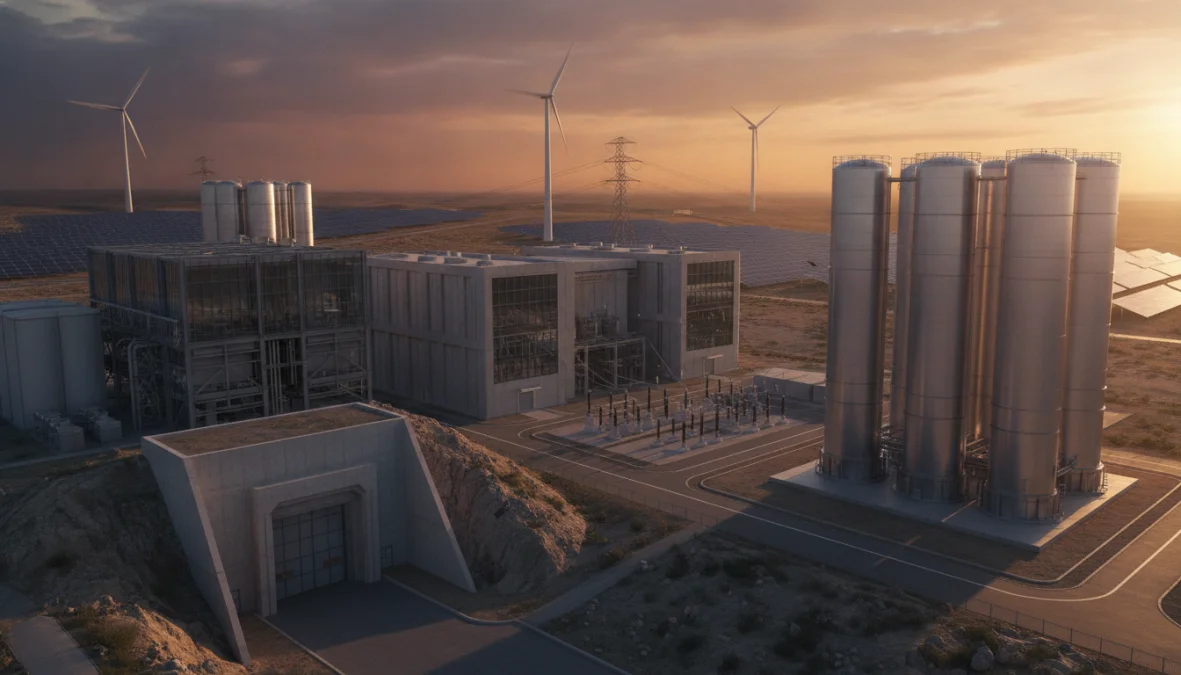
Picture this: the sun’s blazing at noon, solar panels are churning out electricity like there’s no tomorrow, but everyone’s at work and demand is low. Then evening hits, the sun dips below the horizon, and suddenly everyone’s home cooking dinner, running air conditioning, and streaming Netflix. This daily energy rollercoaster is where compressed air energy storage comes into play—a technology that’s been quietly working behind the scenes for decades, acting like a giant battery made of, well, air.
What Is Compressed Air Energy Storage and How Does It Work
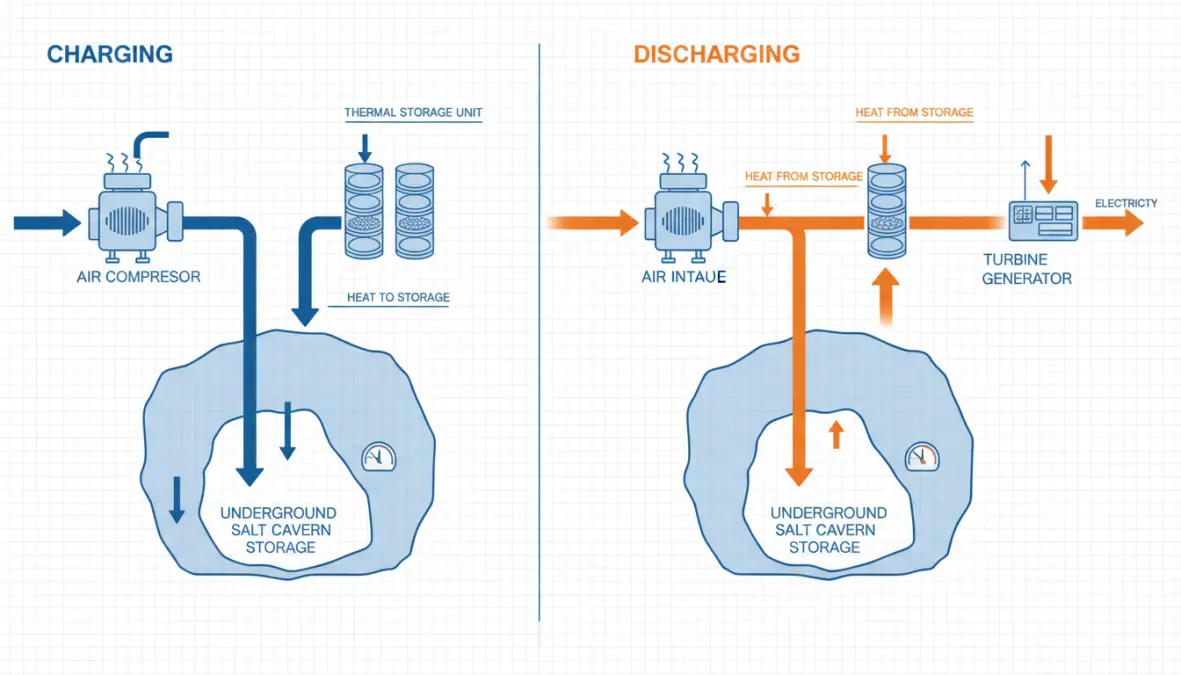
At its core, compressed air energy storage (or CAES technology) is beautifully simple: take excess electricity when you don’t need it, use it to compress air into an underground cavern or large pressure vessel, then release that air through a turbine to generate electricity when demand spikes. Think of it as inflating a massive balloon during off-peak hours and letting it deflate to spin a generator during peak times.
The basic compressed air storage systems involve three main components: a compressor (powered by excess grid electricity), a storage facility (typically underground caverns, aquifers, or even abandoned mines), and a turbine-generator setup. During the charging phase, air compression storage squeezes ambient air to high pressures—often 40-80 bar—and pumps it underground. When electricity is needed, the compressed air is released, heated (in conventional systems), and expanded through turbines to generate power.
Now, here’s where it gets interesting: there are two main flavors of CAES. Diabatic CAES, the traditional approach, vents the heat generated during compression and requires natural gas to reheat the air before expansion. Adiabatic compressed air energy storage, the newer kid on the block, captures and stores that compression heat in thermal energy storage systems, then reuses it during the expansion phase—making it far more efficient and eliminating fossil fuel dependence. When people ask how does compressed air energy storage work, this diabatic versus adiabatic distinction is crucial to understanding the technology’s evolution.
Compared to battery storage, CAES offers something fundamentally different: duration. While lithium-ion batteries excel at short-duration storage (2-4 hours), compressed air can discharge for 8-26 hours or more, making it ideal for longer-term energy storage solutions.
The Role of CAES in Grid Scale Energy Storage and Power Grid Balancing
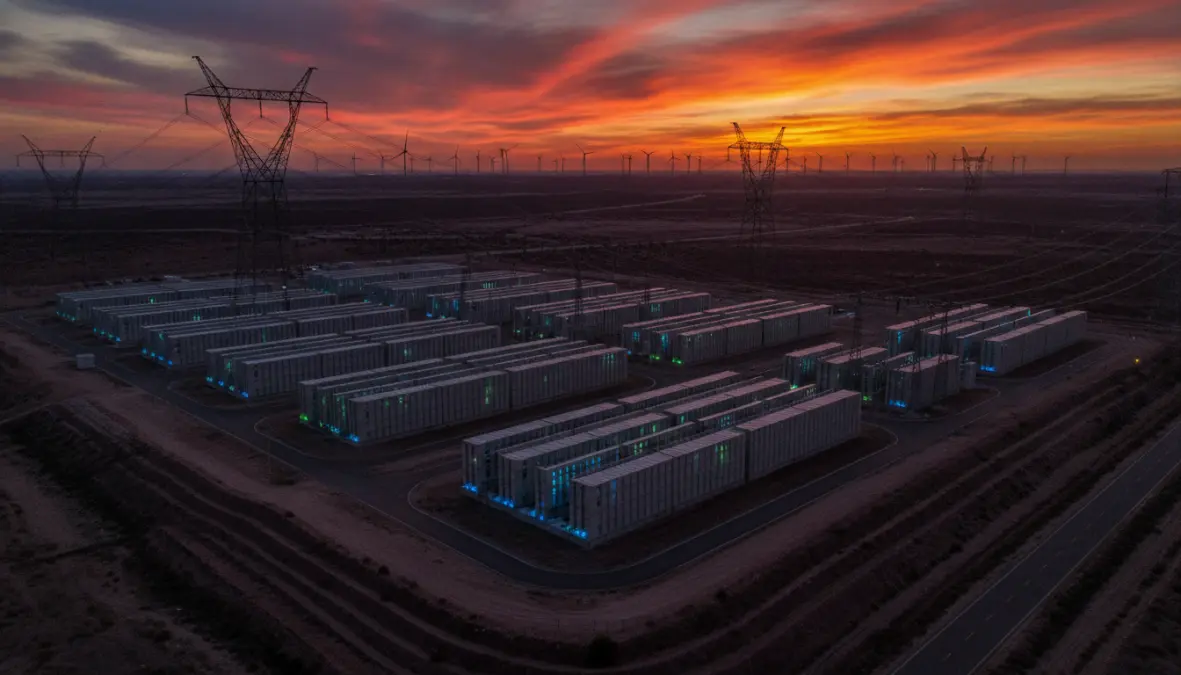
As wind and solar power expand rapidly, the electricity grid faces a growing challenge: intermittent renewable sources don’t produce power on demand. The wind doesn’t blow consistently, and solar panels go dark at night. This is where grid scale energy storage becomes absolutely critical, and CAES technology offers a compelling solution for power grid balancing.
Compressed air energy storage excels at peak demand management—absorbing excess renewable generation during low-demand periods and releasing it during peak hours. This capability helps smooth out the volatility that intermittent sources introduce to the grid, maintaining grid stability and preventing brownouts or the need to fire up expensive peaker plants. For more context on how various technologies support grid resilience, check out our article on microgrids and decentralized energy systems.
The numbers tell an impressive story: the Huntorf plant in Germany, operational since 1978, provides 290 MW of power for up to 3 hours. The McIntosh facility in Alabama, commissioned in 1991, delivers 110 MW for up to 26 hours. These systems achieve round-trip efficiencies of 42-54% for diabatic systems—not spectacular compared to batteries’ 85-95%, but compressed air energy storage efficiency improves dramatically with adiabatic designs, potentially reaching 70-80%.
What makes CAES for renewable energy integration particularly attractive is its scalability and long discharge duration. Unlike batteries that degrade over time, cavern storage can last decades with minimal degradation. The technology provides genuine renewable energy storage capability at grid scale, complementing other storage technologies rather than competing directly with them. As nations reconsider their energy mix—including developments covered in our piece on the nuclear energy comeback—CAES offers flexible backup that works alongside diverse generation sources.
Advantages, Challenges, and Future Outlook for Compressed Air Storage Systems
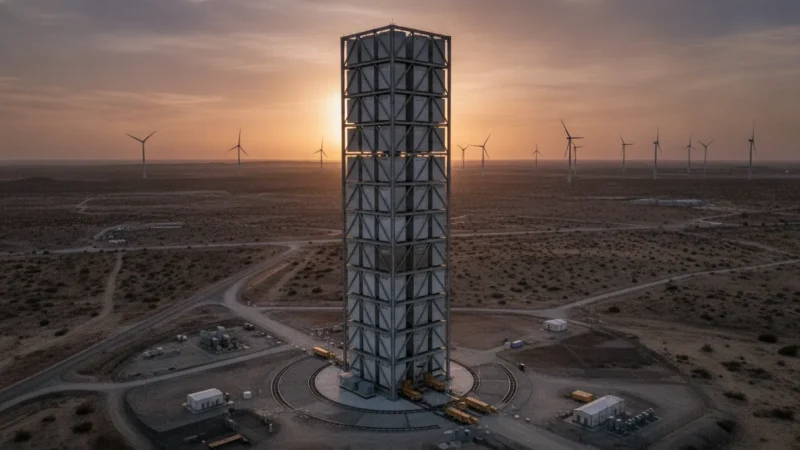
Let’s talk pros first. Compressed air storage systems boast some genuinely impressive advantages. They can operate for 30-40 years with proper maintenance—far longer than battery systems. The technology leverages existing geological formations like salt caverns, depleted natural gas reservoirs, or hard rock mines, avoiding the need to manufacture millions of battery cells. Operating costs are relatively low once infrastructure is built, and the systems can scale to massive capacities measured in hundreds of megawatts.
But CAES isn’t without its challenges. The biggest hurdle? Geography. You need the right underground geology for underground compressed air energy storage—not every location has suitable caverns or rock formations. Diabatic systems require natural gas for reheating, which adds operational costs and emissions (though adiabatic systems eliminate this entirely). The cost of compressed air energy storage systems can be substantial upfront, with estimates ranging from $50-150 per kWh for cavern-based systems, though this varies wildly based on geological conditions.
Efficiency limitations plague conventional diabatic designs, and thermal losses during compression remain a technical challenge. When evaluating compressed air storage vs battery storage, batteries win on efficiency and flexibility, but CAES wins on duration, lifespan, and potentially cost per kWh for longer-duration applications.
The future looks increasingly bright as technology advances. Advanced adiabatic compressed air energy storage projects are in development, promising fossil-fuel-free operation with improved efficiency. Isothermal CAES—which compresses air at constant temperature—could push efficiencies even higher. Small-scale modular systems using manufactured pressure vessels rather than geological formations are emerging, potentially democratizing access to the technology.
As the global energy transition accelerates and renewable capacity explodes, the demand for diverse energy storage solutions will only grow. CAES won’t replace batteries, but it fills a crucial niche for longer-duration storage and bulk load balancing. The technology could work synergistically with emerging solutions like green hydrogen, creating integrated systems that maximize renewable energy utilization.
Frequently Asked Questions About Compressed Air Energy Storage
What is the typical efficiency of CAES systems?
Conventional diabatic CAES systems achieve 42-54% round-trip efficiency, while advanced adiabatic designs promise 70-80%. This is lower than batteries but acceptable for long-duration applications where other factors like cost and lifespan matter more.
What’s the difference between diabatic and adiabatic CAES?
Diabatic systems vent compression heat and burn natural gas to reheat air before expansion. Adiabatic systems capture and store that heat, then reuse it during expansion, eliminating fossil fuel use and improving efficiency significantly.
How long can compressed air energy storage retain energy?
Unlike batteries that self-discharge, properly sealed cavern storage can retain compressed air for days, weeks, or even months with minimal pressure loss, making it excellent for seasonal storage applications.
Where can CAES systems be installed?
Underground systems require suitable geology—salt caverns, aquifers, depleted gas fields, or hard rock formations. Above-ground systems using manufactured pressure vessels can be installed almost anywhere but are currently limited to smaller capacities.
How does CAES cost compare to lithium-ion batteries?
For short-duration storage (2-4 hours), batteries are typically cheaper. For longer durations (8+ hours), CAES becomes increasingly cost-competitive, with lower levelized costs over their 30-40 year lifespan compared to batteries requiring replacement every 10-15 years.
As renewable energy continues its march toward grid dominance, compressed air energy storage stands ready to play its part—not as the silver bullet, but as one crucial tool in the diverse energy storage toolkit we’ll need to power a carbon-free future. The technology may not grab headlines like cutting-edge batteries or fusion reactors, but sometimes the most reliable solutions are the ones that have been quietly working all along.