Tidal Energy Systems: How Ocean Currents Generate Predictable Renewable Power
Imagine harnessing the moon’s gravitational pull to power your home. Sounds like science fiction? It’s not. Tidal energy systems are doing exactly that, transforming the predictable rhythm of ocean tides into clean electricity. While solar panels and wind turbines get most of the renewable energy spotlight, there’s a massive, largely untapped power source right beneath the waves – one that’s more reliable than sunshine and steadier than the breeze. Let’s dive into how these underwater powerhouses are revolutionizing marine renewable energy.
What Are Tidal Energy Systems and How Do They Work?
Tidal energy systems convert the kinetic energy of moving ocean water into electricity, capitalizing on one of nature’s most predictable phenomena. Unlike solar and wind power, tidal power generation relies on the gravitational forces of the moon and sun, which create reliable, cyclical movements in our oceans that we can calculate centuries in advance.
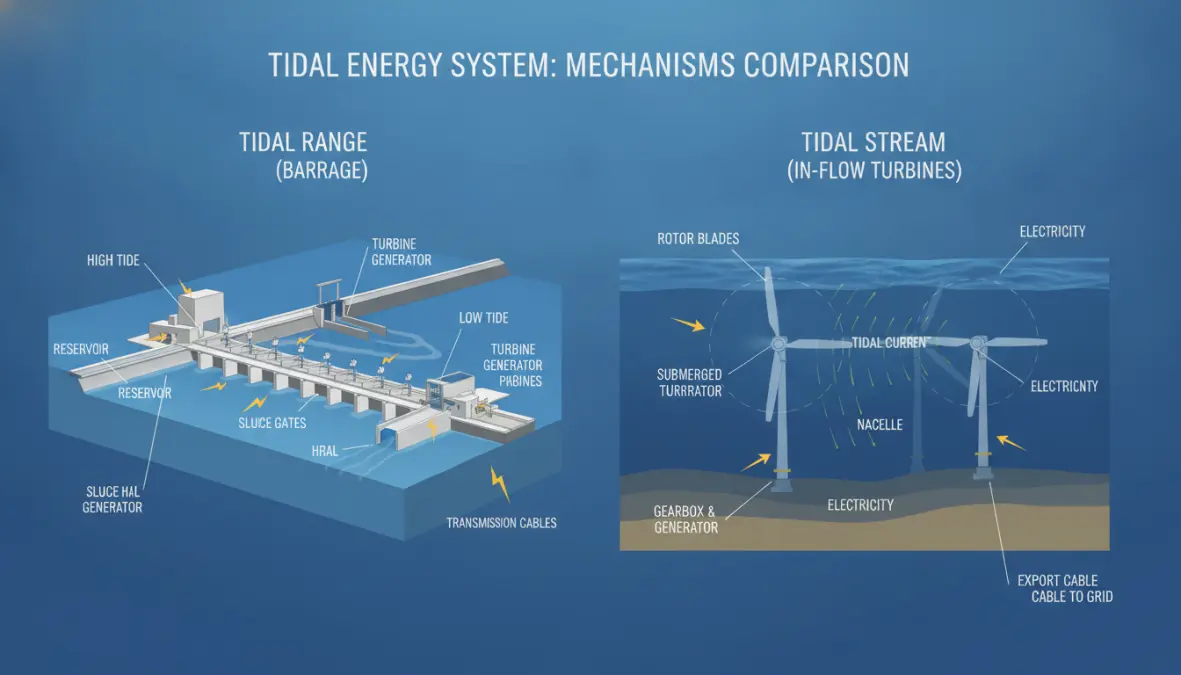
But how do tidal energy systems work exactly? The process centers on two primary mechanisms: tidal range and ocean current energy (also called tidal stream). Tidal range systems exploit the vertical difference between high and low tides, while tidal stream systems harness the horizontal flow of water as tides move in and out. Think of it like the difference between a waterfall (vertical drop) and a river (horizontal flow) – both contain energy, just captured differently.
The main components of these systems include tidal turbines – underwater devices resembling wind turbines that spin as water flows past them – tidal barrages, which are essentially dams built across estuaries, and tidal lagoons, which are artificial pools that trap water during high tide. Each technology has its sweet spot depending on local geography and tidal conditions.
What makes tidal energy particularly compelling compared to other marine renewable energy sources is its exceptional predictability. Wave energy, for instance, varies significantly with weather patterns, but tides follow astronomical cycles we can map out for generations. This makes hydrokinetic energy from tides a grid operator’s dream – you know exactly when and how much power you’ll generate months or even years ahead.
Types of Tidal Energy Technology and Their Applications
The world of tidal energy technology encompasses three main approaches, each with distinct advantages and optimal deployment scenarios. Let’s break them down from the newest innovations to the established giants.
Tidal Stream Generators: The Leading Technology
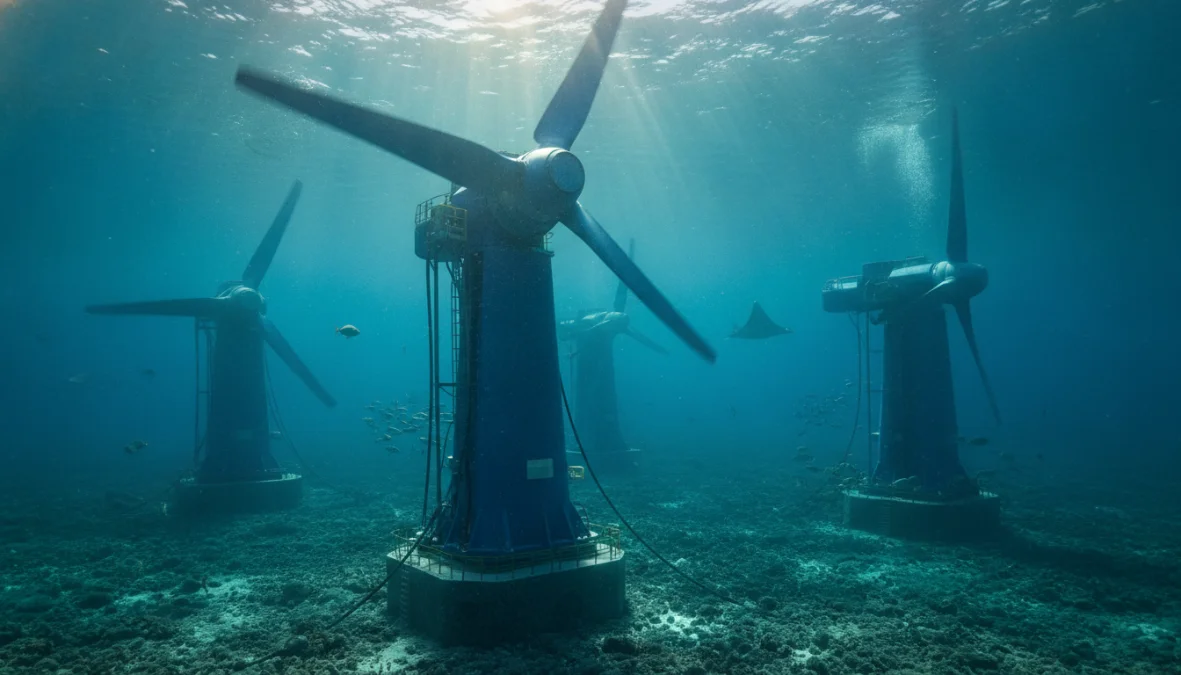
Tidal stream generators represent the cutting edge of marine renewable energy. These devices look remarkably similar to underwater wind turbines, with blades that rotate as tidal currents flow past them. The beauty of this technology lies in its scalability and relatively minimal environmental footprint.
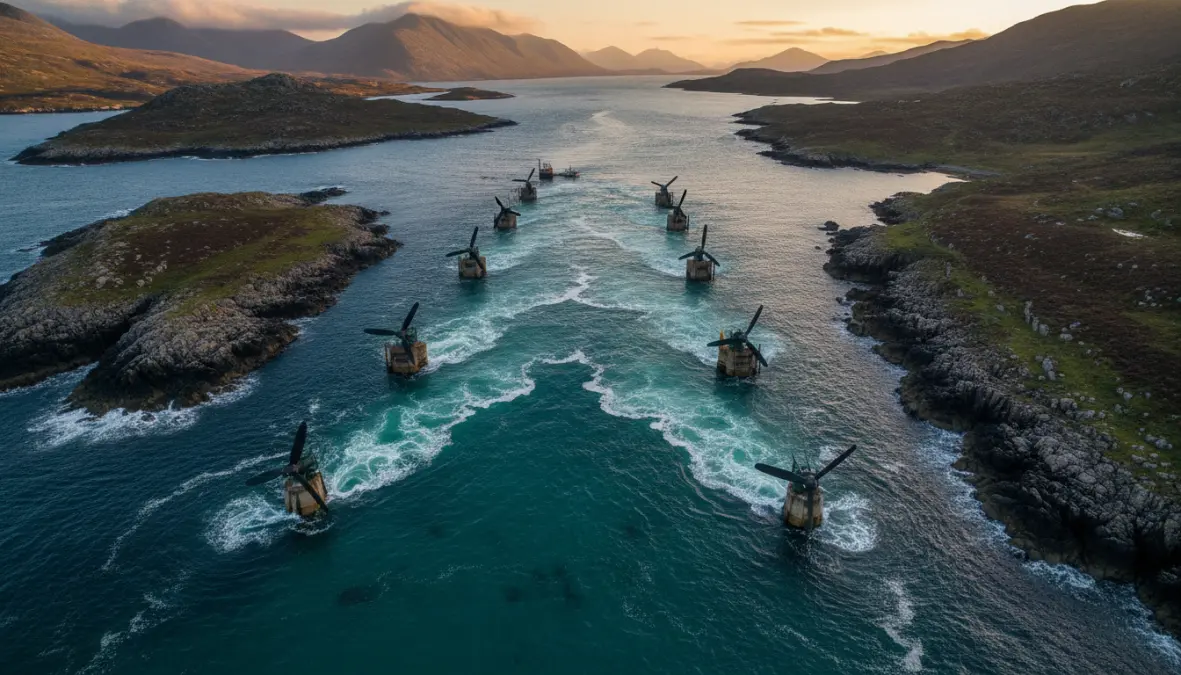
Modern underwater turbines can be deployed individually or in arrays, creating “tidal farms” in areas with strong currents. The MeyGen project in Scotland’s Pentland Firth stands as the world’s largest tidal stream array, demonstrating impressive capacity factor rates – often exceeding 40%, which is substantially higher than typical wind or solar installations. When considering the cost of installing tidal turbines, economies of scale are improving rapidly as the technology matures, though upfront investment remains significant.
The best locations for tidal energy farms are typically narrow straits, areas between islands, or anywhere coastal geography funnels tidal flows into concentrated channels. The Bay of Fundy in Canada, the Pentland Firth in Scotland, and the Alderney Race in France represent prime real estate for this technology.
Tidal Range Systems: Large-Scale Infrastructure
Barrage systems require significant civil engineering – think massive dams spanning entire estuaries. The La Rance Tidal Power Station in France, operational since 1966, remains the poster child for this approach, generating 240 MW from a 750-meter barrage across the Rance River estuary.
While tidal barrages can produce enormous amounts of electricity, they come with substantial environmental considerations. These structures fundamentally alter estuarine ecosystems, affecting sediment flow, marine ecosystems, and fish migration patterns. Installation costs are astronomical – we’re talking billions for a single project – but the infrastructure can operate for over a century with proper maintenance.
Tidal lagoons offer a middle ground, creating enclosed areas in coastal waters rather than blocking entire estuaries. This approach promises many benefits of barrages with reduced ecological disruption, though large-scale commercial deployment remains in development stages.
Advantages and Challenges of Tidal Power Generation
The case for predictable renewable power from tidal systems is compelling. Let’s start with the good news: tidal energy predictability benefits are unmatched in the renewable sector. You can schedule maintenance, plan grid stability measures, and balance other intermittent sources with confidence that wasn’t possible before. This reliability makes tidal power an excellent complement to systems like microgrids, where predictable baseload generation enhances community energy resilience.
Water is roughly 800 times denser than air, meaning ocean energy conversion systems can extract far more energy from slower-moving currents than wind turbines can from fast-moving air. This translates to smaller installations generating comparable or greater output. Plus, once operational, tidal systems produce zero emissions and can function for decades with minimal fuel costs – similar advantages driving interest in other clean baseload sources like nuclear energy and green hydrogen.
When examining tidal energy efficiency compared to other renewables, the advantages of tidal power over solar and wind become clear: capacity factors often exceed 40-50% versus 25-35% for wind and 15-25% for solar. This means tidal installations generate closer to their maximum rated capacity more consistently.
Now for the challenges. The environmental impact of tidal power systems requires careful consideration – underwater turbines can affect marine life, particularly fish and marine mammals, though studies suggest impacts are manageable with proper placement and design. The harsh marine environment also means maintenance is complex and expensive, with saltwater corrosion accelerating wear on components.
Geographic limitations pose another hurdle. Only certain coastal areas possess the tidal range or current speeds necessary for economically viable generation. And while predictable, tidal power isn’t constant – it follows roughly 12.5-hour cycles, meaning generation peaks don’t always align with demand peaks.
The levelized cost of energy (LCOE) for tidal systems currently sits higher than established renewables, though it’s dropping as technology improves and deployment scales up. Innovation in turbine design, materials science, and installation techniques promises to narrow this gap significantly in coming years.
As coastal nations search for diverse renewable portfolios, tidal energy systems offer a uniquely predictable piece of the puzzle. While challenges remain, the combination of reliability, energy density, and zero emissions makes this ocean-based technology increasingly attractive. The tides will keep flowing regardless of weather, season, or time of day – and that’s a consistency we can literally set our clocks by.