Precision Fermentation Food: How Lab-Made Dairy and Meat Are Created Without Animals
Imagine biting into a scoop of creamy ice cream or enjoying a slice of mozzarella that tastes exactly like traditional dairy—but no cow was involved in making it. This isn’t science fiction; it’s precision fermentation food, a groundbreaking approach that’s quietly revolutionizing how we produce proteins. By harnessing the power of microorganisms, scientists are creating everything from milk proteins to egg whites in laboratories, offering a glimpse into a future where our food system doesn’t depend on raising billions of animals.
What Is Precision Fermentation and How Does It Work?
At its core, precision fermentation food is about programming tiny biological factories—usually yeast or bacteria—to produce specific proteins that are molecularly identical to those found in animal products. Unlike traditional fermentation (think beer, yogurt, or kimchi), which relies on microorganisms breaking down ingredients, fermentation technology in this context involves engineering microbes to manufacture targeted molecules.
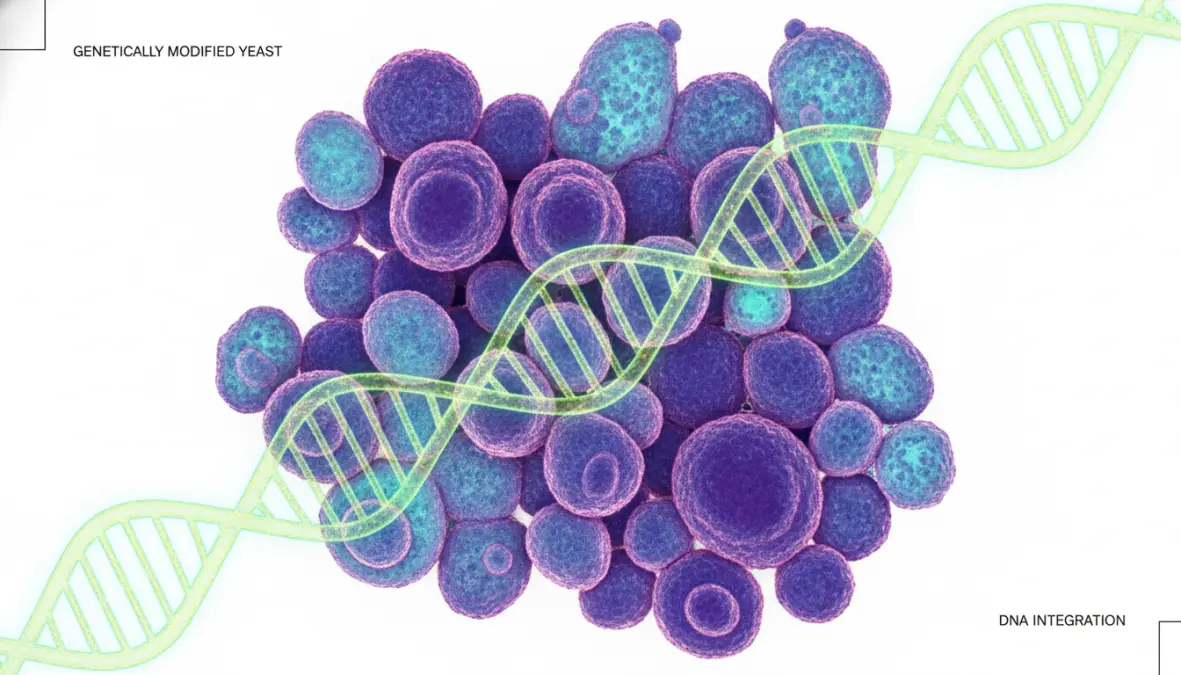
Here’s how it works: Scientists identify the exact DNA sequence responsible for a desired protein—say, whey or casein from cow’s milk. They then insert this genetic code into microorganisms like genetically modified yeast or bacteria. When these programmed microbes are fed simple sugars in a controlled environment, they churn out the target protein through microbial fermentation. The result? Authentic dairy proteins without a single animal involved.
This process falls under the broader umbrella of synthetic biology food and food biotechnology. You can produce whey protein, casein, collagen, egg proteins, and even heme (the molecule that makes meat taste “meaty”). It’s precise, controllable, and remarkably efficient once scaled properly.
Precision Fermentation vs Cellular Agriculture: Key Differences
There’s often confusion between precision fermentation and cellular agriculture, so let’s clear that up. While both aim to create animal-free protein, they’re fundamentally different:
- Precision Fermentation: Uses microorganisms (yeast, bacteria) as microscopic factories to produce specific proteins. No animal cells involved—just microbes making molecules.
- Cellular Agriculture/Lab Grown Meat: Involves cultivating actual animal cells in bioreactors to grow tissue that becomes meat, without raising or slaughtering animals.
Think of it this way: precision fermentation creates the ingredients (proteins), while lab grown meat creates the product (actual muscle tissue). Both are exciting innovations, but they tackle different parts of the food system. Similar to how vertical farming is transforming urban food production, these technologies represent parallel revolutions in how we source our nutrition.
From Microbes to Market: The Precision Fermentation Production Process
Understanding the precision fermentation dairy production process reveals why this technology holds such promise. Let’s walk through the journey from laboratory to your refrigerator:
Step 1: Target Identification. Scientists pinpoint the exact protein needed—whether it’s whey protein, casein production targets, or egg albumin. They map out its genetic blueprint with precision.
Step 2: Microorganism Programming. The gene responsible for producing that protein gets inserted into a host organism, typically yeast or bacteria. This is where fermentation technology meets genetic engineering.
Step 3: Fermentation in Bioreactors. The engineered microorganisms are placed in large fermentation tanks called bioreactors, where they’re fed nutrients (usually sugar). As they grow and multiply, they produce the target protein as a byproduct—much like how yeast produces alcohol during beer fermentation, but with designer proteins instead.
Step 4: Harvesting and Purification. Once fermentation is complete, the protein is separated from the microorganisms and other byproducts through filtration and purification processes, resulting in pure protein identical to its animal-derived counterpart.
Step 5: Product Formulation. The purified proteins are then combined with other ingredients to create final products—ice cream, cheese, protein powders, or baked goods.
The beauty of this microbial fermentation approach? It offers unparalleled consistency, quality control, and scalability compared to traditional animal agriculture. Each batch is identical, free from seasonal variations or animal health issues.
Real-World Products: Precision Fermentation Dairy and Proteins Already on Shelves
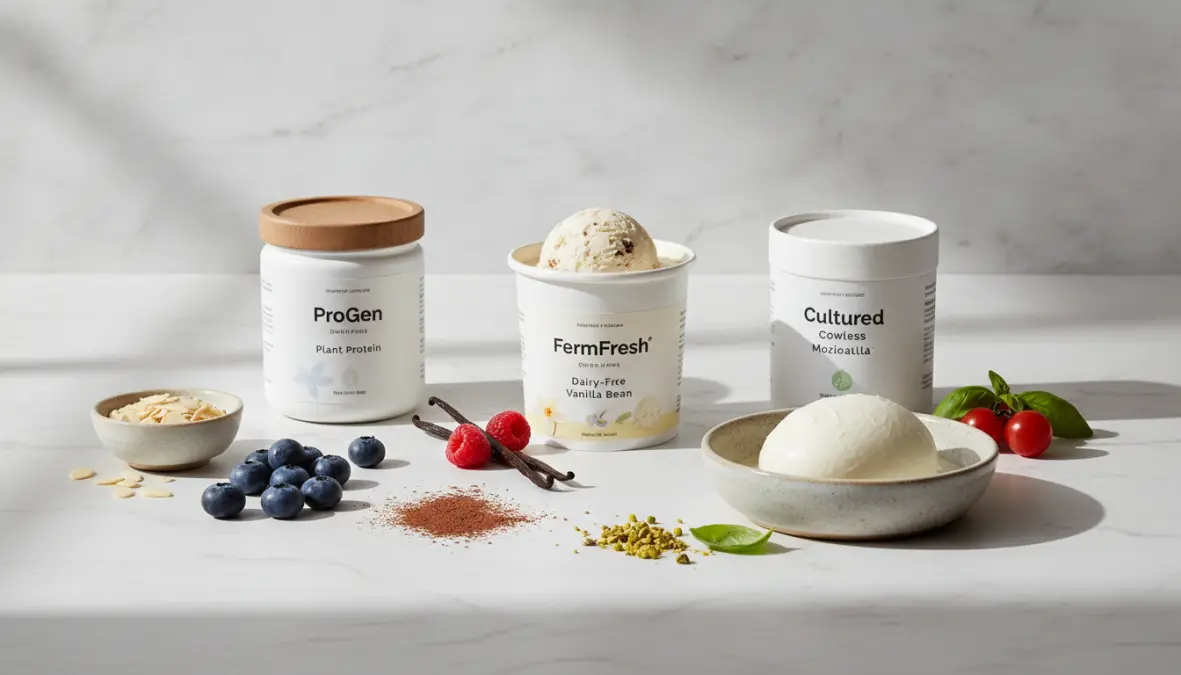
This isn’t theoretical anymore—precision fermentation dairy products are already reaching consumers. Perfect Day has pioneered animal-free whey protein used in ice cream brands like Brave Robot and in protein powders. The Every Company produces egg proteins for everything from baked goods to mayo, without a single chicken. Remilk creates authentic milk proteins for dairy products, while New Culture is perfecting mozzarella for pizza that melts and stretches just like the traditional version.
These alternative proteins aren’t niche experiments—they’re increasingly available in mainstream retail, proving that sustainable food production can deliver on both taste and functionality. Just as insect proteins offer alternative nutrition sources, precision fermentation provides another pathway toward diversifying our food systems.
Benefits, Challenges, and the Future of Precision Fermentation Food
The potential advantages of precision fermentation food are compelling. Environmentally, the process requires dramatically less land, water, and energy compared to conventional animal agriculture, while producing fewer greenhouse gas emissions. There are zero animal welfare concerns since no animals are involved. The technology also enables precise allergen control—you can create dairy proteins without lactose, for instance—and offers enhanced food security by decoupling protein production from livestock farming.
However, challenges remain. Production costs are currently higher than traditional methods, though they’re dropping rapidly as technology improves and scales. Regulatory approval varies by country, creating market access hurdles. Consumer acceptance is another factor—many people remain skeptical of foods produced through synthetic biology food methods, despite safety assurances. The comparison with approaches like regenerative agriculture also raises questions about which sustainable food production methods will dominate the future.
Looking ahead, experts predict costs will continue declining as production scales, potentially reaching price parity with conventional products within the next decade. New applications are emerging constantly—beyond dairy and eggs, companies are developing precision fermentation fats, vitamins, and even complex flavor molecules. The adoption timeline suggests we’ll see increasingly mainstream availability as regulatory frameworks mature and consumer familiarity grows.
FAQ: Common Questions About Precision Fermentation Food
Is precision fermentation safe to eat?
Yes, products made through precision fermentation undergo rigorous safety testing before reaching market. The proteins produced are molecularly identical to their animal counterparts, and regulatory agencies like the FDA have granted GRAS (Generally Recognized as Safe) status to several precision fermentation ingredients. The process itself is cleaner and more controlled than traditional animal agriculture.
Is it the same as GMO food?
The microorganisms used in production are genetically modified, but they’re not present in the final product—only the proteins they produce make it to your plate. These proteins are identical to natural versions, containing no modified DNA themselves. It’s similar to how insulin for diabetics has been produced using engineered bacteria for decades.
How does it taste compared to animal products?
When formulated correctly, precision fermentation dairy and proteins are virtually indistinguishable from traditional versions because they’re chemically identical. Blind taste tests often show consumers can’t tell the difference, especially in products like ice cream or baked goods where the proteins are key functional ingredients.
Is precision fermentation more expensive?
Currently, yes—most precision fermentation products carry premium pricing due to production scale and infrastructure costs. However, prices are dropping steadily as companies optimize processes and build larger facilities. Industry projections suggest cost competitiveness with conventional products within the next several years.
Is precision fermentation the same as lab grown meat?
No. Precision fermentation uses microorganisms to produce specific proteins, while lab grown meat involves cultivating actual animal cells to create muscle tissue. They’re different technologies addressing different parts of the alternative protein landscape, though both fall under the broader food biotechnology category.
As our food system faces mounting pressure from climate change, population growth, and resource constraints, precision fermentation food offers a scientifically elegant solution. It’s not about replacing all traditional food production overnight, but rather expanding our toolkit for creating nutritious, sustainable options. Whether you’re excited or skeptical, one thing’s certain: the proteins on your plate are about to get a whole lot more interesting—and they might just come from a bioreactor rather than a barn.