Insect Protein Benefits: Why Crickets and Mealworms Could Replace Traditional Meat

Imagine walking into a grocery store and finding cricket flour protein bars next to your usual beef jerky, or browsing a restaurant menu that offers mealworm tacos alongside traditional chicken. Sounds wild? Well, this scenario isn’t as far-fetched as you might think. Insect protein benefits are causing a genuine revolution in how we think about food, and billions of people worldwide are already munching on these tiny critters. Let’s dig into why crickets and mealworms might just become your new favorite protein source.
What Is Insect Protein and Why Is It Gaining Attention?
Insect protein refers to the protein content derived from edible insects like crickets, mealworms, grasshoppers, and black soldier fly larvae. While the idea might make some Westerners squirm, over 2 billion people across Asia, Africa, and Latin America have been eating insects for centuries as a regular part of their diet. Now, the rest of the world is catching on.
The global edible insect market is experiencing explosive growth, projected to reach several billion dollars within the next decade. Why? Because we’re facing a perfect storm of environmental crises, population growth, and the urgent need for sustainable protein sources. Traditional livestock farming is resource-intensive and environmentally taxing, while insects offer a remarkably efficient alternative that checks all the boxes: nutritious, eco-friendly, and scalable.
The most commonly farmed insects include crickets (especially the house cricket and banded cricket), mealworms (the larval form of the darkling beetle), grasshoppers, and black soldier fly larvae. These species are chosen for their high protein content, ease of farming, and relatively neutral taste that can be easily incorporated into various food products. Companies are now producing everything from cricket protein powder to mealworm pasta, making it easier than ever to integrate insect protein into your diet without actually seeing a six-legged creature on your plate.
The Nutritional and Environmental Benefits of Insect Protein
When we talk about insect protein benefits, we’re really talking about a nutritional powerhouse wrapped in an environmental superhero cape. These tiny creatures pack a serious punch on both fronts, and the numbers are genuinely impressive.
Nutritional Profile: What Makes Insects Nutritionally Superior
Here’s where things get really interesting. Cricket protein nutrition and other insect proteins aren’t just good—they’re exceptional. Dried crickets and mealworms contain between 60-80% protein by dry weight, which puts even chicken breast to shame. But it’s not just about quantity; the quality is equally remarkable.
Insect protein provides all nine essential amino acids, making it a complete protein source comparable to eggs or meat. Here’s what you’re getting in a typical serving of cricket or mealworm protein:
- High protein density: 60-80g of protein per 100g dry weight (compared to 30g for beef)
- Vitamin B12: Essential for nerve function and often lacking in plant-based diets
- Iron: Crickets contain more iron than spinach, with better bioavailability
- Omega-3 and Omega-6 fatty acids: Heart-healthy fats in ideal ratios
- Minerals: Rich in zinc, magnesium, and calcium
- Chitin fiber: A prebiotic fiber that supports gut health
- Low saturated fat: Much healthier fat profile than traditional red meat
When compared directly to beef, insects deliver similar or superior protein content with significantly lower fat, fewer calories, and a broader micronutrient profile. Compared to plant-based proteins like soy, insects offer better amino acid completeness and higher bioavailability, meaning your body can actually use more of what you’re consuming. Just as people are exploring alternative approaches to health and wellness—similar to those discovering wild swimming benefits for physical and mental wellbeing—the shift to insect protein represents a fundamental rethinking of nutrition.
Environmental Impact: The Sustainability Advantage
If the nutritional benefits don’t convince you, the environmental statistics certainly should. Insect farming is arguably the most sustainable food source we currently have access to, and the data is staggering.
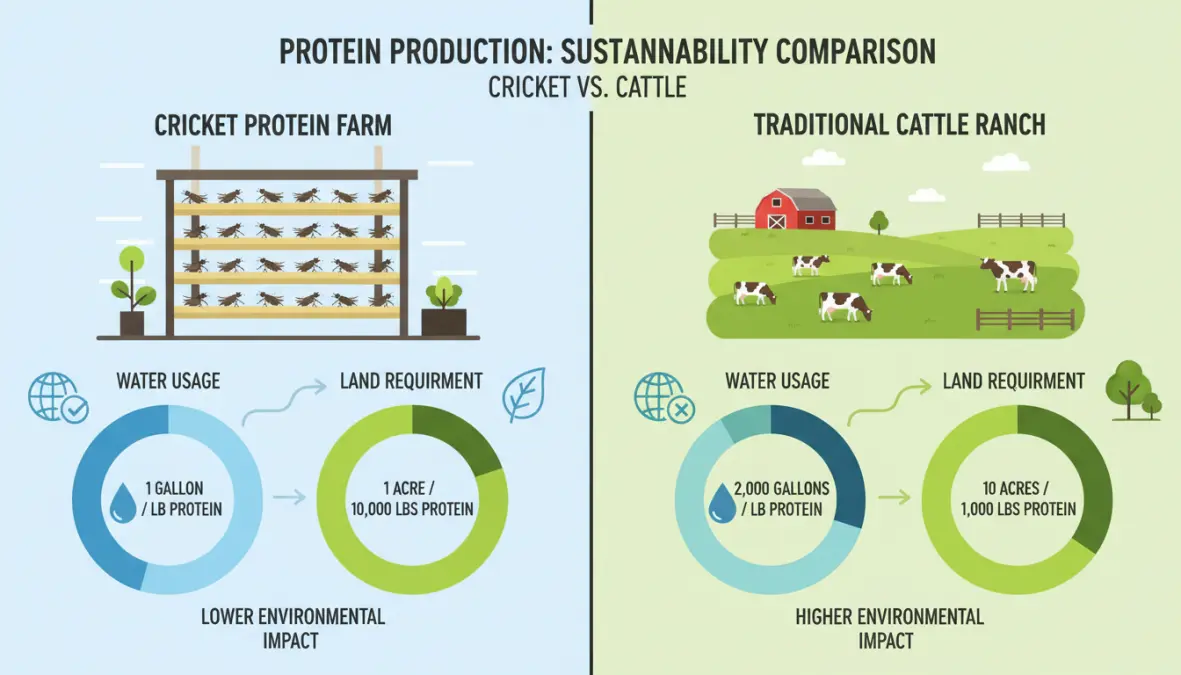
Producing 1 kilogram of cricket protein requires approximately 2,000 liters of water, compared to a mind-boggling 15,000 liters for the same amount of beef protein. That’s nearly 99% less water usage. Greenhouse gas emissions? Insects produce up to 100 times fewer emissions than conventional livestock. They’re also incredibly efficient at converting feed into body mass—crickets are about 12 times more efficient than cattle at this process.
Land use is another massive advantage. Traditional livestock farming occupies nearly 80% of global agricultural land, driving deforestation and habitat destruction. Insect farming requires minimal space and can even be done vertically in urban settings, using warehouse facilities that would otherwise sit empty. A cricket farm can produce the same amount of protein as a cattle ranch using just a fraction of the land—we’re talking about converting unused industrial spaces into protein production facilities.
The feed conversion ratio tells the whole story: crickets need about 1.7 kg of feed to produce 1 kg of body mass, while cattle need 10 kg of feed for just 1 kg of beef. This efficiency means less agricultural land devoted to animal feed crops, less water consumption, less fertilizer runoff, and dramatically reduced environmental impact across the board.
Challenges and Common Concerns About Eating Insects
Let’s address the elephant—or should we say, the cricket—in the room. Despite all these benefits, insect protein faces significant hurdles, particularly in Western markets where cultural acceptance remains the biggest barrier.
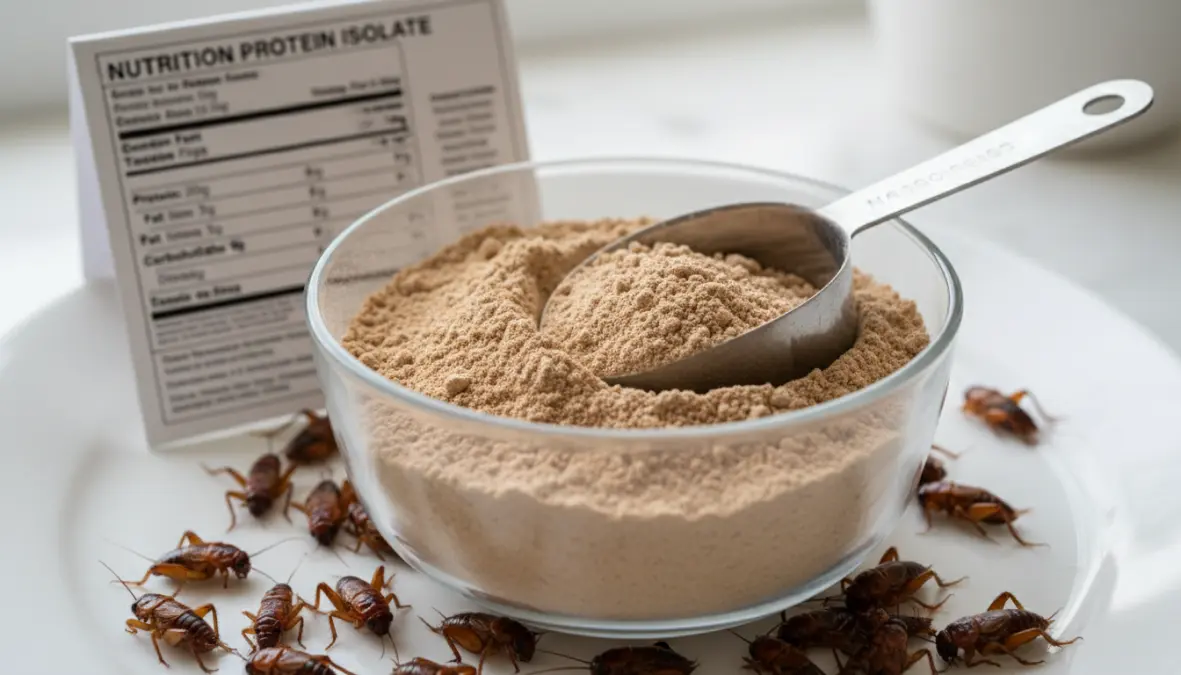
The “yuck factor” is real. Decades of Western cultural conditioning have taught us that insects are pests, not food. This psychological barrier is perhaps the most challenging obstacle to overcome, though it’s worth noting that many foods we now consider delicacies—like lobster or escargot—were once viewed with similar disgust. The key to overcoming this lies in education and gradual normalization, particularly through processed products like protein powders and flour where the insect origin is invisible.
Safety concerns are another consideration. People with shellfish allergies should be cautious, as insects contain similar proteins (chitin) that can trigger cross-reactive allergic responses. However, for the general population, properly farmed and processed insect protein is entirely safe. The European Union has approved several insect species for human consumption, and regulatory frameworks are developing rapidly worldwide to ensure food safety standards.
Cost currently presents a challenge too. Insect protein products often carry premium prices due to limited production scale and niche market positioning. However, as farming operations expand and become more efficient, prices are expected to drop significantly, potentially becoming cheaper than conventional meat. Availability remains limited, though online retailers and specialty health food stores are increasingly stocking insect-based products.
As for taste and texture, most people are pleasantly surprised. Cricket flour has a mild, slightly nutty flavor that easily blends into baked goods, smoothies, and protein bars. Whole roasted insects have a crunchy texture similar to nuts and can be seasoned in countless ways. Much like how decentralized social media platforms are challenging our assumptions about online communication, insect protein challenges our preconceptions about what food should be.
FAQ: Common Questions About Insect Protein
Is insect protein safe to eat?
Yes, when sourced from reputable farms and properly processed, insect protein is completely safe. The EU, several Asian countries, and increasingly North American regulators have approved various insect species for human consumption. They’re subject to the same food safety standards as other animal proteins.
What does insect protein taste like?
Cricket protein has a mild, slightly nutty or earthy flavor that’s actually quite pleasant. Mealworms have a nuttier taste. When processed into flour or powder, the flavor is barely noticeable and easily masked by other ingredients in recipes.
Can people with shellfish allergies eat insects?
Caution is advised. Insects contain chitin, a protein also found in shellfish, which can trigger cross-reactive allergic responses. If you have a shellfish allergy, consult your doctor before trying insect protein products.
Where can I buy insect protein products?
Online retailers, specialty health food stores, and increasingly mainstream supermarkets stock insect protein powders, bars, and snacks. Brands like Exo, Chirps, and Cricket Flours offer various products that ship internationally.
How much protein is in crickets vs beef?
Dried crickets contain 60-70g of protein per 100g, while beef contains approximately 26-30g per 100g. Crickets deliver more than double the protein content by weight, with fewer calories and less saturated fat.
The future of food might be smaller than we thought—much smaller. As environmental pressures mount and our population continues growing, the insect protein benefits become impossible to ignore. Whether you’re ready to crunch on whole crickets or prefer the stealth approach of cricket flour in your morning smoothie, insect protein offers a genuinely sustainable path forward. The question isn’t really whether we’ll embrace insects as food, but when. Why not start exploring this protein revolution today?