Tidal Energy Technology: Why Ocean Power Remains Untapped Renewable Potential
Picture this: twice a day, every day, billions of tons of water shift across our planet’s oceans with the precision of clockwork. This massive movement of marine water, driven by celestial mechanics, represents one of nature’s most reliable energy sources. Yet while wind and solar have become household names in the renewable energy conversation, tidal energy technology remains a relative unknown—a sleeping giant with enormous untapped potential. The ocean covers 71% of Earth’s surface, and we’re barely scratching the surface of its power generation capabilities. So why hasn’t tidal power generation taken off like other renewables? The answer is more complex than you might think.
Understanding Tidal Energy Technology and How It Works
At its core, tidal energy technology harnesses the predictable movement of ocean water caused by gravitational forces from the moon and sun. Unlike wave energy, which is driven by wind patterns and can be erratic, tidal power generation operates on a completely predictable schedule. The moon’s gravitational pull creates bulges in Earth’s oceans, resulting in high and low tides that occur approximately every 12 hours. This reliability makes tidal energy fundamentally different from solar and wind power, which depend on variable weather conditions.
Ocean energy systems capture this movement through two primary mechanisms: the rise and fall of tides (potential energy) and the horizontal flow of tidal currents (kinetic energy). The global theoretical potential is staggering—estimates suggest tidal energy could generate around 120 gigawatts of power worldwide, enough to power tens of millions of homes. As a form of marine renewable energy, tidal power offers a unique advantage: you can predict exactly how much energy will be generated months or even years in advance, making it ideal for grid planning. This predictability surpasses even established renewables, positioning tidal technology as a potential game-changer in the transition away from fossil fuels.
Tidal Stream Technology vs Tidal Barrage Systems
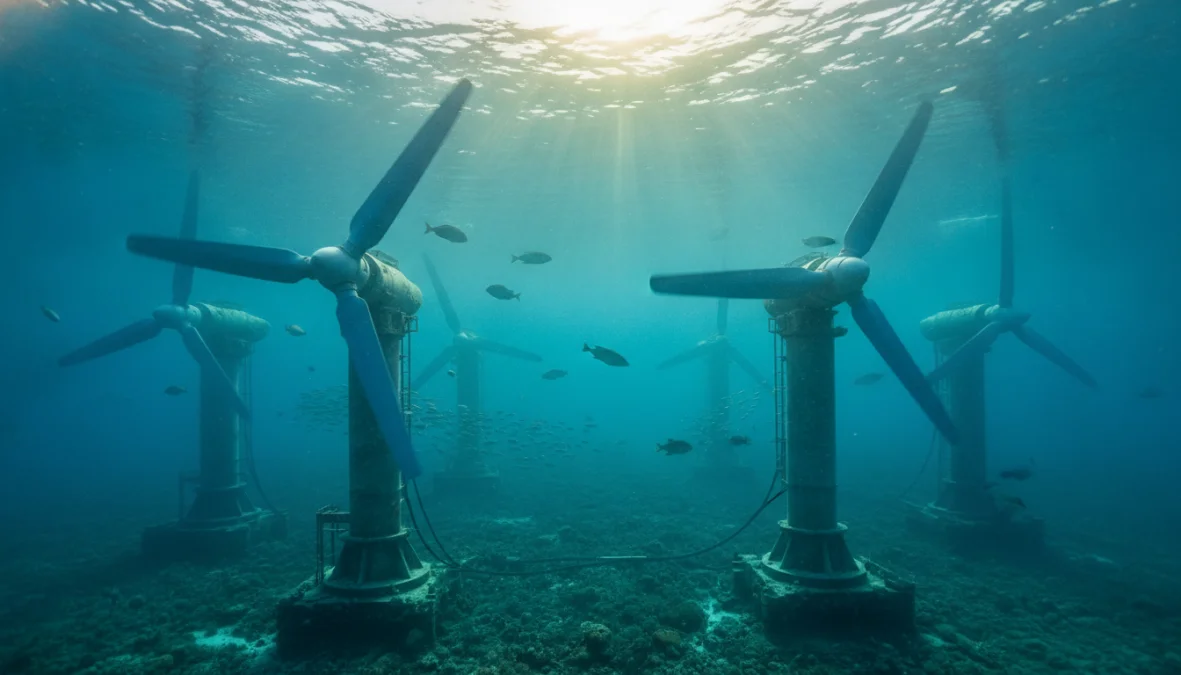
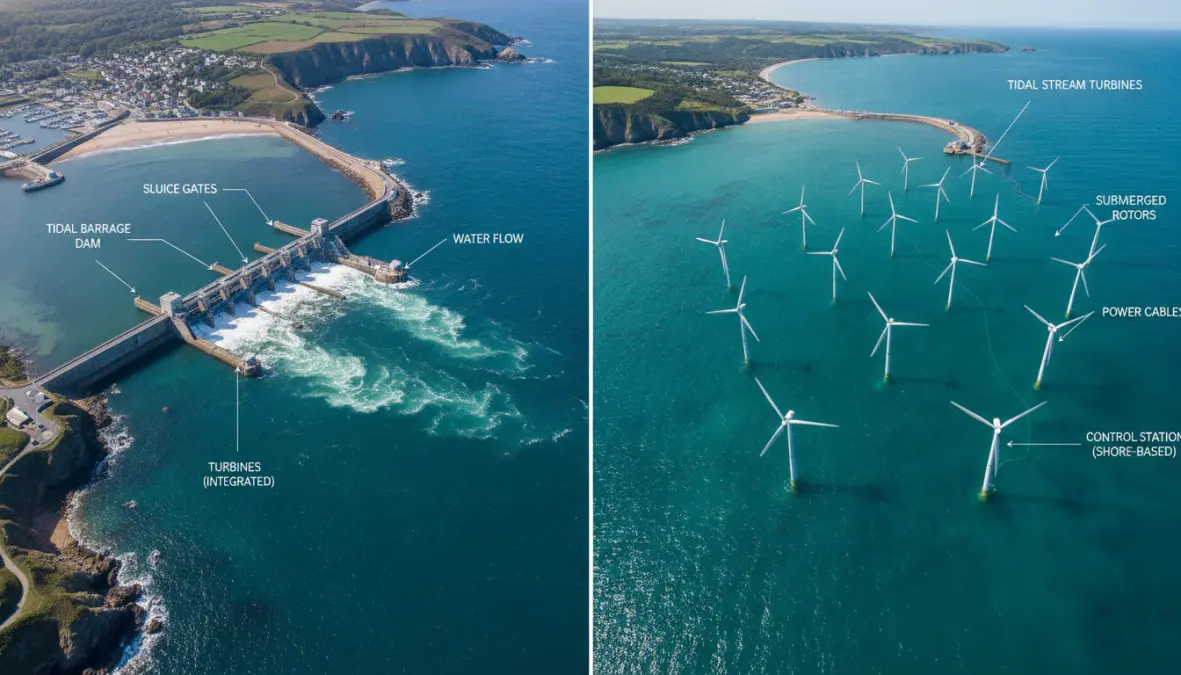
The two main approaches to underwater energy harvesting couldn’t be more different in design and impact. Tidal stream technology uses underwater turbines that look remarkably similar to wind turbines but operate beneath the waves. These tidal turbines are placed in areas with strong tidal currents, spinning as water flows past them in both directions. Scotland’s MeyGen project, one of the world’s largest tidal stream arrays, demonstrates this approach brilliantly, with turbines sitting on the seabed in the Pentland Firth, generating clean electricity with minimal visual impact.
Tidal barrage systems, on the other hand, function more like traditional hydroelectric dams. These structures span entire estuaries or bays, creating a difference in water level between the ocean and a reservoir. As tides rise and fall, water flows through turbines in the barrage, generating electricity. France’s La Rance facility, operational since 1966, remains the textbook example of this technology. While barrages can generate significant power, they require massive coastal infrastructure investments and can dramatically alter local ecosystems. Tidal stream systems are generally less invasive and more modular, but barrage systems can provide greater total output in the right locations.
Why Tidal Energy Remains Largely Untapped: Key Challenges
Despite its promise, tidal energy technology faces formidable obstacles that explain why it contributes less than 0.001% to global electricity generation. The most immediate challenge is economic: capital costs for tidal installations are eye-wateringly high. Building structures capable of withstanding the ocean’s relentless forces requires specialized materials, vessels, and expertise. Installation in harsh marine environments is exponentially more complex and expensive than mounting solar panels on a roof or erecting wind turbines on land. Maintenance presents similar difficulties—accessing underwater equipment for repairs requires specialized diving teams or remotely operated vehicles, driving operational costs through the ceiling.
Geography compounds these economic challenges. Unlike solar panels that work almost anywhere the sun shines, ideal tidal sites are remarkably rare. You need locations with tidal ranges exceeding five meters or current speeds above 2-3 meters per second—conditions found in only a handful of global locations like the Bay of Fundy in Canada, the Severn Estuary in the UK, and select straits in Southeast Asia. This geographical limitation means offshore renewable resources can’t be deployed as flexibly as other renewables, restricting the technology’s scalability.
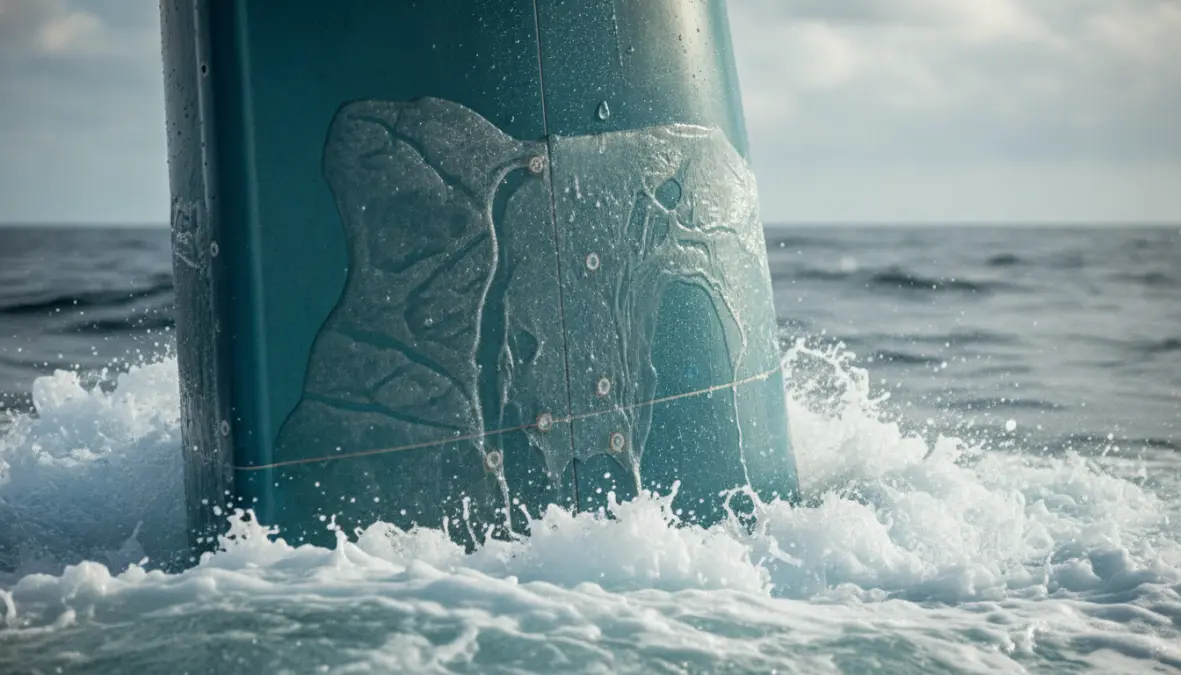
The ocean itself presents ongoing technical challenges that engineers are still working to overcome. Saltwater corrosion resistance is paramount—equipment must withstand constant exposure to corrosive seawater while maintaining operational integrity for decades. Biofouling, where marine organisms colonize equipment surfaces, can reduce turbine efficiency by up to 40% if left unchecked. Materials science has advanced considerably, but creating components that balance durability, efficiency, and cost-effectiveness remains an engineering puzzle.
Then there’s the environmental impact assessment considerations. While tidal energy is clean in terms of carbon emissions, it’s not without ecological consequences. Tidal barrages can disrupt sediment flows, affecting fish migration patterns and altering habitats that countless species depend on. Even tidal stream turbines pose collision risks for marine life, though studies suggest impacts may be less severe than initially feared. Thorough environmental reviews add years to project timelines, increasing costs further.
Finally, grid integration challenges create headaches for developers. Prime tidal sites are often in remote coastal areas far from population centers and existing electrical infrastructure. Building transmission lines to connect these offshore facilities to the grid requires substantial investment. Similar to challenges faced by decentralized energy systems, integrating a predictable but intermittent source (tides don’t always peak when electricity demand is highest) requires sophisticated grid management and potentially energy storage solutions.
The Path Forward: Innovation and Future Potential for Tidal Power Generation
Despite these challenges, the future of ocean energy systems isn’t bleak—it’s evolving. Innovative companies are developing next-generation technologies that address many traditional limitations. Orbital Marine Power’s O2 turbine, which began operations off Scotland, represents a breakthrough in design: a floating platform that can be towed to port for maintenance rather than requiring underwater repairs. This dramatically reduces operational costs while maintaining energy output. SIMEC Atlantis Energy has pioneered hydrokinetic power systems with improved efficiency and reduced environmental footprint, demonstrating that technological advancement is accelerating.
Materials science innovations are tackling corrosion and biofouling through advanced coatings and composite materials that promise longer operational lifespans with less maintenance. Some developers are exploring hybrid approaches, combining tidal stream technology with offshore wind installations to share infrastructure costs and smooth out energy production variability. This integration strategy, similar to diversification approaches in the broader clean energy landscape, could make marine renewable energy projects more economically viable.
Government support is gradually increasing, with the UK, Canada, and several European nations offering targeted subsidies and streamlined permitting for tidal projects. As the world searches for firm, low-carbon baseload power to complement intermittent renewables—a conversation happening alongside discussions about nuclear energy’s role—tidal power’s predictability becomes increasingly valuable.
Realistically, tidal power generation won’t replace solar or wind as dominant renewables anytime soon. But it doesn’t need to. Even capturing a fraction of the ocean’s energy potential could provide significant baseload power in coastal regions, reducing reliance on fossil fuels during peak demand. The technology exists; what’s needed now is sustained investment, continued innovation, and recognition that our renewable energy future will likely be a diverse portfolio rather than a single solution. The ocean’s power has waited billions of years—with the right strategic investments, we might finally be ready to harness it effectively.