The Male Loneliness Crisis: Breaking Down Barriers to Emotional Connection

Something’s shifted in how men experience connection. Walk into any coffee shop, gym, or office space, and you’ll see men going through the motions—working, socializing, existing—yet many report feeling profoundly alone. This isn’t just anecdotal observation. Male loneliness has reached epidemic proportions, creating ripple effects across mental health, physical wellbeing, and entire communities. Understanding why men are struggling to connect emotionally isn’t just important—it’s urgent.
Understanding the Male Loneliness Epidemic: Statistics and Root Causes
The numbers paint a sobering picture of the male loneliness epidemic. Research shows that approximately 1 in 5 men report having no close friends, a dramatic increase from previous generations. Loneliness in men statistics reveal that men aged 18-34 are experiencing unprecedented levels of social isolation, with rates significantly higher than their female counterparts. Even more concerning: male loneliness and suicide rates are intrinsically linked, with socially isolated men facing exponentially higher risks of mental health crises.
But why are men so lonely today? Several interconnected factors fuel this crisis. Traditional male spaces—union halls, fraternal organizations, sports leagues—have largely disappeared, leaving fewer organic opportunities for men to build social connection. Modern work culture prioritizes productivity over community, while digital technology promises connection but often delivers superficial interaction instead. The broader loneliness epidemic affects everyone, but male isolation carries unique dimensions rooted in how boys are socialized from childhood.
Cultural expectations around masculinity compound these structural changes. Men are still taught, implicitly and explicitly, that self-reliance equals strength and that needing others signals weakness. This conditioning creates a perfect storm where external opportunities for connection decrease just as internal permission to seek connection remains taboo. The impact on men’s mental health manifests in alarming ways: higher addiction rates, delayed help-seeking for medical issues, and deteriorating emotional wellbeing.

How Toxic Masculinity and Emotional Barriers Fuel Male Isolation
At the heart of male loneliness lies a paradox: the very traits men are taught to embody often prevent the connections they desperately need. Toxic masculinity loneliness describes how rigid gender norms—stoicism, emotional suppression, self-sufficiency—actively sabotage intimacy and vulnerability. When boys hear “toughen up” or “boys don’t cry,” they’re learning that emotions are liabilities rather than bridges to understanding.
The conditioning runs deep. Many men report feeling physically uncomfortable displaying emotion, as if years of suppression have created actual physiological barriers. Why don’t men talk about their feelings? Because they’ve learned that doing so invites ridicule, dismissal, or worse—exclusion from the tribe. This mental health stigma particularly affects men, who fear that admitting struggle contradicts their masculine identity.
Emotional vulnerability men experience looks different than popular culture suggests. It’s not just about crying during movies. It’s the inability to tell a friend you’re struggling financially. It’s choosing sarcasm over sincerity. It’s canceling plans because you can’t articulate feeling depressed. These patterns manifest daily: the dad who can’t tell his kids he’s proud, the husband who expresses love through fixing things rather than words, the friend who shows up but never shares what’s actually happening in his life.
The Declining State of Men’s Friendships
The male friendships decline represents one of the most visible symptoms of this crisis. Men’s friendships increasingly lack the emotional intimacy that transforms acquaintances into genuine support systems. Men have drinking buddies, golf partners, work colleagues—but few confidants. Research comparing friendship patterns shows women typically maintain deeper, more emotionally reciprocal connections, while men’s relationships often revolve around shared activities rather than shared feelings.
This superficiality isn’t inevitable or biological—it’s learned. Men struggling to make friends face unique challenges: fewer acceptable venues for male bonding, discomfort with one-on-one hangouts that might seem “date-like,” and no script for deepening existing friendships beyond surface-level banter. Life transitions compound the problem. Marriage, fatherhood, and career advancement consume time and energy previously available for friendship cultivation. Without intentional effort, male isolation becomes the default as circumstantial connections fade.
Breaking the Cycle: Practical Steps Toward Emotional Connection
Acknowledging the problem is crucial, but how can men build emotional connections in practical terms? Change requires both internal work and external action. Start small: practice emotional vulnerability men can actually sustain. Share something slightly uncomfortable in conversation—maybe you’re worried about a health issue or feeling overwhelmed at work. Notice that the world doesn’t end. Most men discover that vulnerability invites reciprocation rather than judgment.
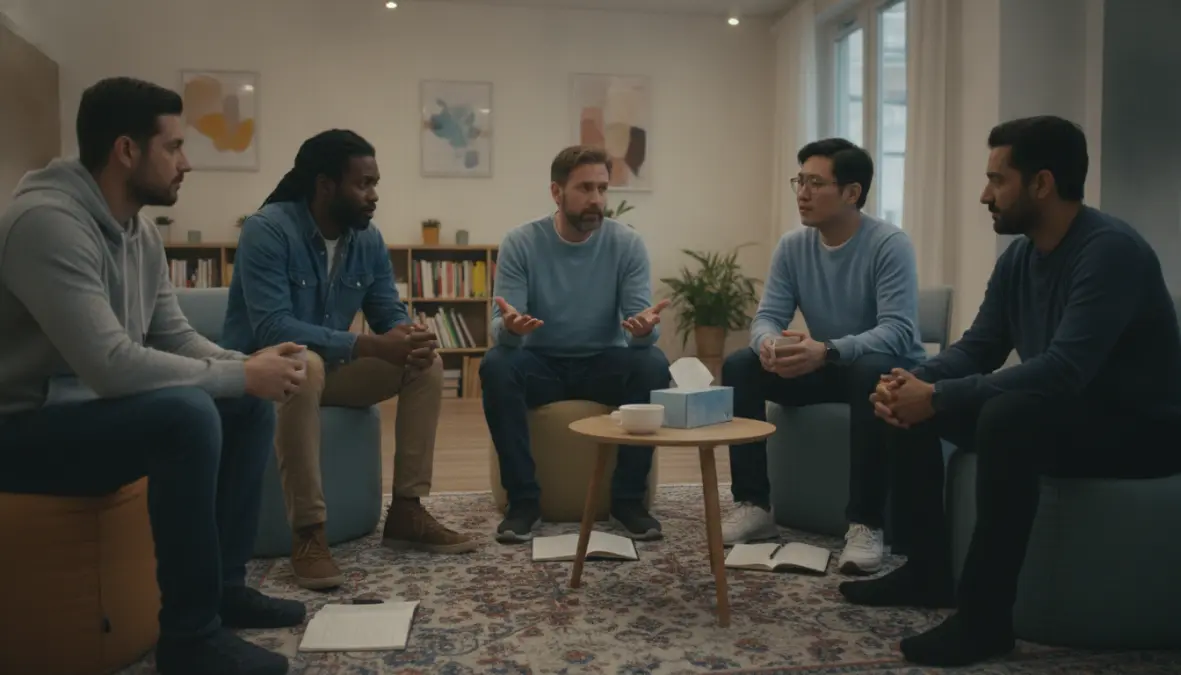
How to help men overcome loneliness involves creating and finding spaces designed for genuine connection. Men’s groups—whether focused on mental health, hobbies, parenting, or personal growth—provide structured environments where deeper conversation feels natural. Therapy and support groups specifically addressing men’s mental health offer professional guidance through the process of building emotional support networks. Don’t underestimate the power of pursuing interests: joining recreational sports leagues, volunteering, or taking classes creates repeated exposure that naturally develops into friendship.
Reframe masculine norms around strength to include emotional literacy. True courage involves acknowledging fear. Real strength includes asking for help. Modern masculinity movements are challenging outdated scripts, offering models of manhood that embrace both toughness and tenderness. Organizations like The ManKind Project, men’s mental health initiatives, and even digital tools supporting emotional processing provide resources for men navigating this terrain.
The effects of loneliness on men’s health—cardiovascular disease, weakened immunity, cognitive decline, depression—make this personal work a health imperative. Schedule regular check-ins with friends. Text someone you haven’t spoken to lately. Accept invitations even when isolation feels easier. Small, consistent actions accumulate into transformed connection patterns.
FAQ
What are the main causes of male loneliness?
Male loneliness stems from multiple factors: socialization that discourages emotional expression, loss of traditional male community spaces, work and family demands that limit friendship time, fear of vulnerability that prevents deep connections, and cultural messages equating independence with masculinity. Technology and urbanization have further eroded organic opportunities for building meaningful relationships.
How does toxic masculinity contribute to loneliness?
Toxic masculinity enforces rigid norms—stoicism, self-reliance, emotional suppression—that directly prevent the vulnerability required for genuine connection. When men learn that showing emotion equals weakness, they avoid the very behaviors that create intimacy. This creates isolation disguised as strength, leaving men surrounded by people yet fundamentally alone.
What are signs of loneliness in men?
Men often mask loneliness through workaholism, substance use, irritability, or withdrawal. Warning signs include having no close confidants, avoiding social situations, difficulty expressing emotions, physical health decline, increased risk-taking, depression, or feeling disconnected despite being around others. Men may describe feeling “empty” or “going through the motions” rather than explicitly naming loneliness.
How can men build deeper friendships?
Building deeper friendships requires intentionality: initiate one-on-one hangouts, share something personal beyond surface conversation, show consistent interest in friends’ lives, be willing to discuss feelings and struggles, make friendship maintenance a priority despite busy schedules, and practice active listening. Join groups aligned with your values where vulnerability is normalized and connection happens through shared purpose.
When should men seek professional help for loneliness?
Seek professional help when loneliness significantly impacts daily functioning, persists despite efforts to connect, accompanies depression or suicidal thoughts, leads to substance abuse or destructive behaviors, or creates overwhelming distress. Therapy isn’t a last resort—it’s a proactive tool for developing emotional skills and processing the barriers preventing connection. Early intervention prevents crisis.
The male loneliness crisis won’t resolve through individual willpower alone. It requires cultural transformation: redefining masculinity to embrace emotional wholeness, creating spaces where men can connect authentically, and normalizing vulnerability as strength rather than weakness. But change begins with individual men choosing connection over isolation, one honest conversation at a time. Your willingness to reach out—to admit struggle, to ask for help, to show up genuinely—doesn’t just transform your life. It gives permission for others to do the same, creating ripples of connection that challenge the epidemic at its core.