Neuromorphic Computing: Why Brain-Inspired Chips Could Replace Traditional Processors
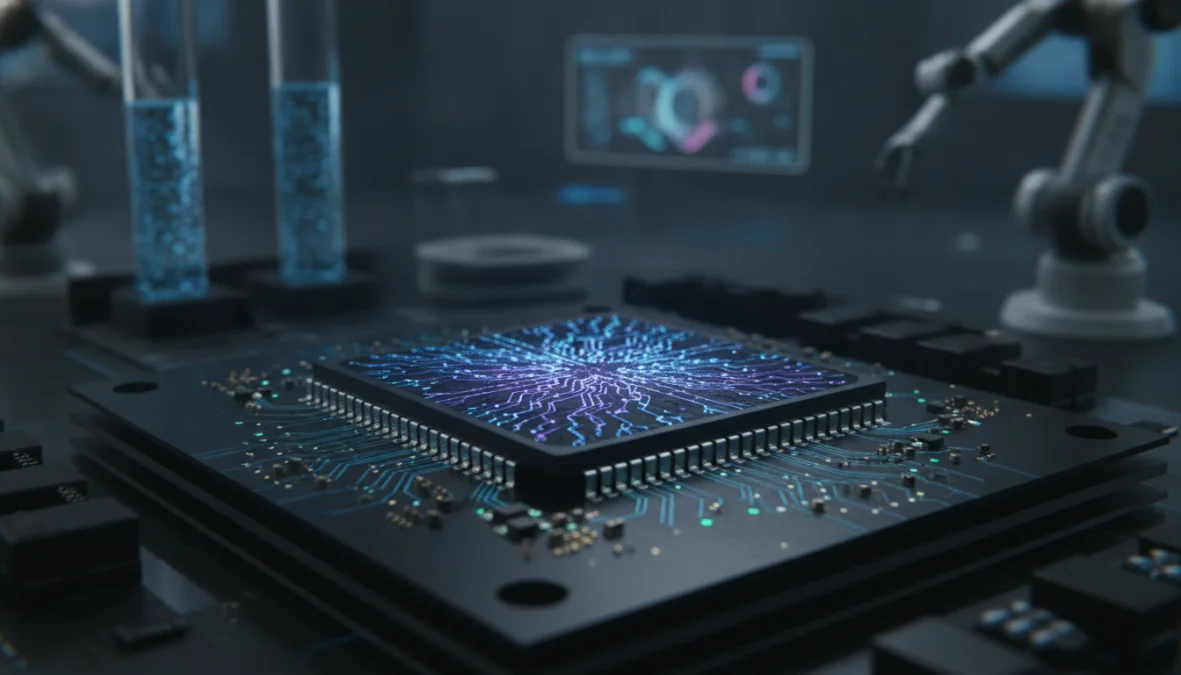
Your brain is an incredible machine. It runs on about 20 watts of power—roughly the same as a dim light bulb—yet it outperforms the world’s most advanced supercomputers in tasks like pattern recognition, learning, and sensory processing. Now imagine if we could build computer chips that work the same way. That’s exactly what neuromorphic computing promises to deliver: processors that mimic the brain’s neural architecture to achieve unprecedented efficiency and cognitive capabilities.
What Is Neuromorphic Computing and How Does It Work?
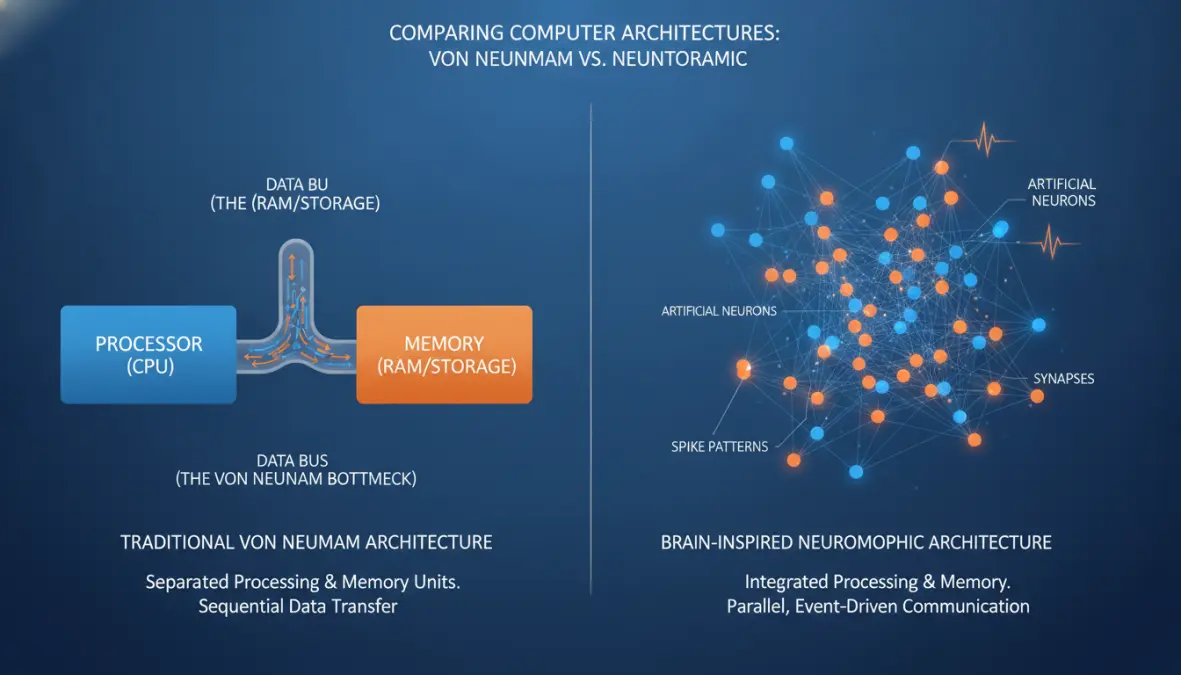
At its core, neuromorphic computing represents a fundamental shift in how we design computer hardware. Traditional processors follow the von Neumann architecture, where memory and processing units are separate, creating a bottleneck as data shuttles back and forth. Brain-inspired computing takes a radically different approach by modeling the structure and function of biological neural networks.
Neuromorphic chips use artificial neurons and synapses to process information. Instead of the continuous, clock-driven operations of conventional CPUs, these chips employ spiking neural networks (SNNs) that communicate through discrete electrical pulses—or “spikes”—just like neurons in your brain. When a neuron receives enough input signals, it fires a spike to connected neurons, creating a cascade of event-driven processing.
Here’s how do neuromorphic chips work in practice: imagine you’re watching a cat walk across your field of vision. A traditional camera sensor captures every pixel of every frame at fixed intervals, generating massive amounts of redundant data. A neuromorphic vision sensor, however, only records changes—the movement of the cat—drastically reducing data volume while capturing the essential information. This event-driven computing approach mirrors how your retina and visual cortex actually work, sending signals only when something meaningful changes.
The magic happens through specialized components like memristors—memory resistors that can store information while simultaneously processing it, eliminating the von Neumann bottleneck. This integration of memory and computation enables the kind of parallel processing that makes biological brains so efficient. Similar to how ambient computing creates seamless, intelligent environments, neuromorphic systems process information in ways that feel more natural and adaptive.
Key Advantages of Neuromorphic Hardware Over Traditional Processors
The comparison between neuromorphic processors and traditional CPUs/GPUs reveals some striking differences. The most compelling advantage is low power consumption. While training a single large AI model on conventional hardware can consume as much energy as five cars over their entire lifetimes, brain-like processors achieve similar tasks using a fraction of that power. IBM’s TrueNorth chip, for example, simulates one million neurons using just 70 milliwatts—about 100 times more efficient than conventional processors performing comparable tasks.
This neuromorphic computing energy efficiency stems from the architecture itself. Neuromorphic hardware processes information asynchronously, meaning components only activate when needed rather than constantly consuming power with each clock cycle. Combined with synaptic plasticity—the ability to strengthen or weaken connections based on use, mimicking biological learning—these chips can adapt and learn in real-time without the massive computational overhead required by traditional artificial intelligence hardware.
The advantages of brain-inspired chips extend beyond energy savings. Their neural architecture excels at tasks that stumped conventional processors for decades: real-time pattern recognition, processing unstructured sensory data, making decisions under uncertainty, and learning from sparse or noisy inputs. This makes cognitive computing systems ideal for applications where traditional computing struggles, particularly in edge computing devices where power and space are limited.
Real-World Applications and Use Cases
The neuromorphic computing applications currently emerging showcase the technology’s versatility. Intel’s Loihi chip powers research in autonomous vehicles, where split-second decisions about pedestrian movements or road obstacles require rapid, efficient processing of visual and sensor data. The chip’s ability to learn and adapt in real-time means self-driving systems can improve their performance without constant cloud connectivity or energy-intensive GPU clusters.
In the Internet of Things ecosystem, neuromorphic chips for AI applications are revolutionizing sensory processing. BrainChip’s Akida processor enables smart security cameras to recognize faces and detect unusual behavior patterns while consuming minimal power—crucial for battery-operated devices. NASA is exploring these processors for space exploration, where extreme energy constraints and the inability to quickly upload software updates make adaptive, efficient computing essential.
Medical diagnostics represent another frontier. Neuromorphic systems can analyze complex, multi-dimensional patient data—from EEG patterns to medical imaging—identifying subtle anomalies that might escape traditional analysis. Their ability to work with incomplete or noisy data mirrors how clinicians make diagnostic decisions, combining multiple imperfect information sources into coherent conclusions.

Current Limitations and Challenges
Despite the excitement, neuromorphic computing faces significant hurdles before it can truly challenge traditional processors. The biggest challenge is programming. Decades of software development have created robust ecosystems around von Neumann architectures, with familiar programming languages, debugging tools, and frameworks. Spiking neural networks require entirely different programming paradigms, and the learning curve for developers is steep.
Standardization remains elusive. Different companies are pursuing varied approaches to neuromorphic hardware, making it difficult to create portable applications or compare performance across platforms. Manufacturing costs are still high—these specialized chips don’t benefit from the economies of scale that make conventional processors relatively affordable. Integration with existing computing infrastructure poses practical challenges, as most enterprise systems weren’t designed to accommodate hybrid architectures.
There’s also the question of application scope. While neuromorphic processors excel at specific cognitive tasks, they’re not universal replacements for CPUs. Complex symbolic reasoning, precise mathematical calculations, and sequential processing tasks still favor traditional architectures. The future likely involves heterogeneous systems where neuromorphic and conventional processors work together, each handling tasks suited to its strengths.
FAQ: Understanding Neuromorphic Computing
Will neuromorphic chips completely replace traditional processors?
Not entirely. Neuromorphic computing vs traditional processors isn’t an either-or proposition. These brain-inspired chips will likely complement rather than replace conventional CPUs and GPUs, handling specific cognitive and sensory tasks where they excel—pattern recognition, adaptive learning, real-time decision-making—while traditional processors continue managing tasks requiring precise calculation, sequential logic, and compatibility with existing software ecosystems. Hybrid systems combining both approaches represent the most probable future.
How energy-efficient are neuromorphic processors?
Remarkably efficient. Best neuromorphic computing companies like Intel and IBM have demonstrated chips that consume 10-100 times less power than conventional processors for comparable cognitive tasks. Intel’s Loihi 2 chip achieves this through event-driven processing—only consuming power when neurons actually fire—and collocated memory-processing that eliminates energy-wasting data transfers. For battery-powered edge devices and large-scale AI deployments, this efficiency advantage could be transformative, potentially reducing operational costs and environmental impact significantly.
What companies are leading neuromorphic computing development?
Intel’s Loihi research chips, IBM’s TrueNorth processor, and BrainChip’s commercial Akida platform lead the field. Academic institutions like Stanford’s Brainchip Lab and the Human Brain Project in Europe contribute fundamental research. Companies like SynSense, GrAI Matter Labs, and Rain Neuromorphics are emerging players. The future of neuromorphic processors depends on these diverse efforts converging toward practical, scalable solutions that developers can actually deploy in production environments.
When will neuromorphic computing become mainstream?
Mainstream adoption is probably 5-10 years away. Current applications remain primarily in research labs and specialized niches like space exploration or high-end robotics. For broader deployment, the industry needs standardized programming frameworks, reduced manufacturing costs, demonstrated advantages in commercial applications, and integration with existing computing infrastructure. As these barriers fall—and as energy efficiency becomes increasingly critical—neuromorphic systems will gradually move from exotic research projects to practical tools powering the next generation of intelligent devices.
The revolution in computing architecture isn’t just about faster chips—it’s about fundamentally rethinking how machines process information. As neuromorphic technology matures, we’re moving toward computing systems that learn, adapt, and respond to the world with something approaching biological intelligence, all while sipping power rather than guzzling it. The brain-inspired future of computing is closer than you think.