Edge Computing Explained: Why Processing Data Locally Matters for Modern Business
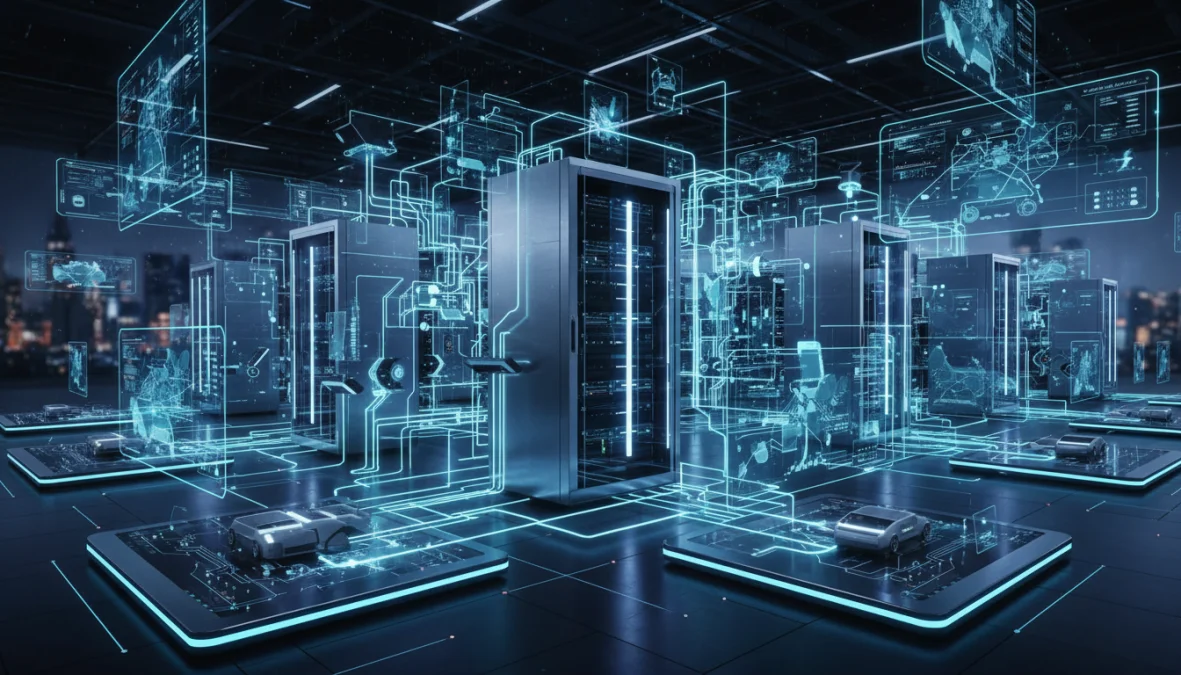
Picture this: your autonomous vehicle needs to decide whether to brake or swerve in a split second. Sending data to a cloud server hundreds of miles away, waiting for processing, and receiving instructions back could take hundreds of milliseconds—an eternity when safety is on the line. This is where edge computing explained becomes not just interesting, but essential. Instead of relying solely on distant data centers, edge computing brings computational power right where the action happens, transforming how businesses handle data in our hyper-connected world.
What Is Edge Computing and How Does It Work?
At its core, what is edge computing? It’s a distributed computing paradigm that processes data at or near the source of data generation—at the “edge” of the network—rather than sending everything to centralized cloud data centers. Think of it as having mini-computers strategically positioned close to where data is created, whether that’s a factory floor, a retail store, or even inside your smart refrigerator.
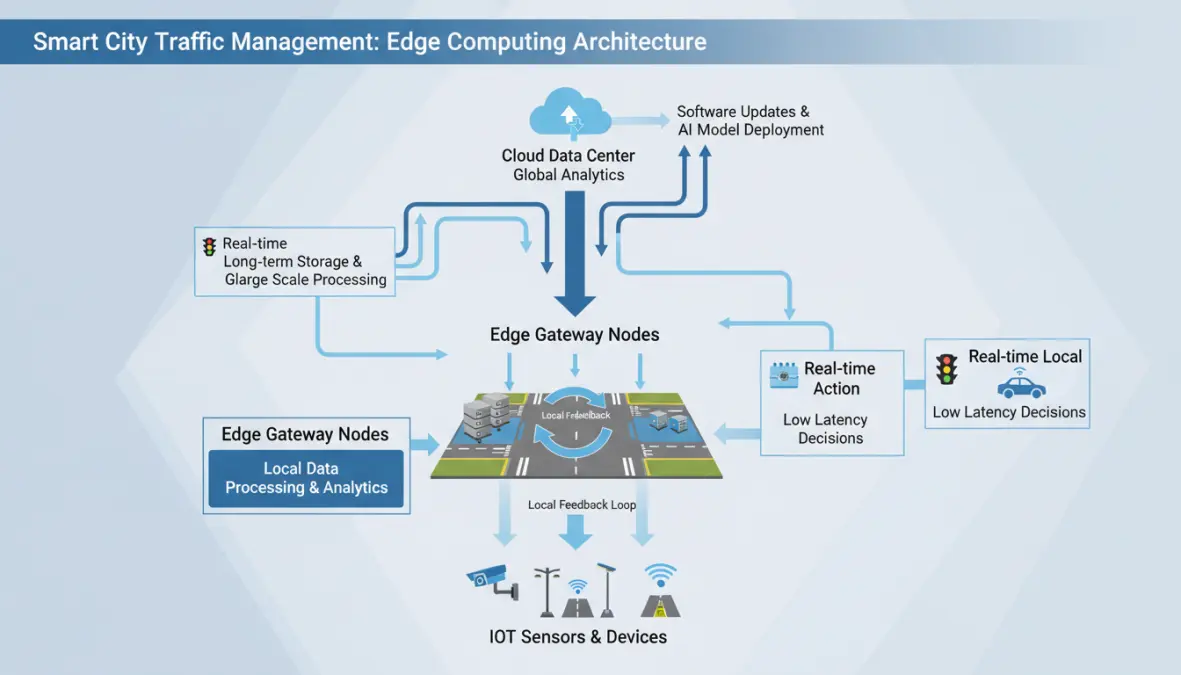
The edge computing architecture typically consists of several layers. At the bottom, you have edge devices—sensors, cameras, IoT gadgets—that generate data. Above them sit edge nodes or gateways, which are small servers or computing units that perform initial processing. These nodes analyze, filter, and sometimes act on data immediately, only sending relevant information to the cloud for long-term storage or deeper analysis. This local data processing happens in real-time, right where it’s needed.
Here’s a concrete example: imagine a smart traffic light system. Cameras at an intersection continuously capture vehicle and pedestrian movement. Instead of streaming all this video footage to a distant data center, an edge device at the intersection processes it locally, adjusts light timing based on traffic flow, and only sends aggregated statistics to city planners. The decision-making happens in milliseconds, right there at the network edge, ensuring traffic flows smoothly without the delays that cloud-only processing would introduce.
Edge Computing vs Cloud Computing: Understanding the Key Differences
The edge vs cloud computing debate isn’t really about choosing one over the other—it’s about understanding when each approach shines. These two paradigms are complementary pieces of modern distributed computing infrastructure.
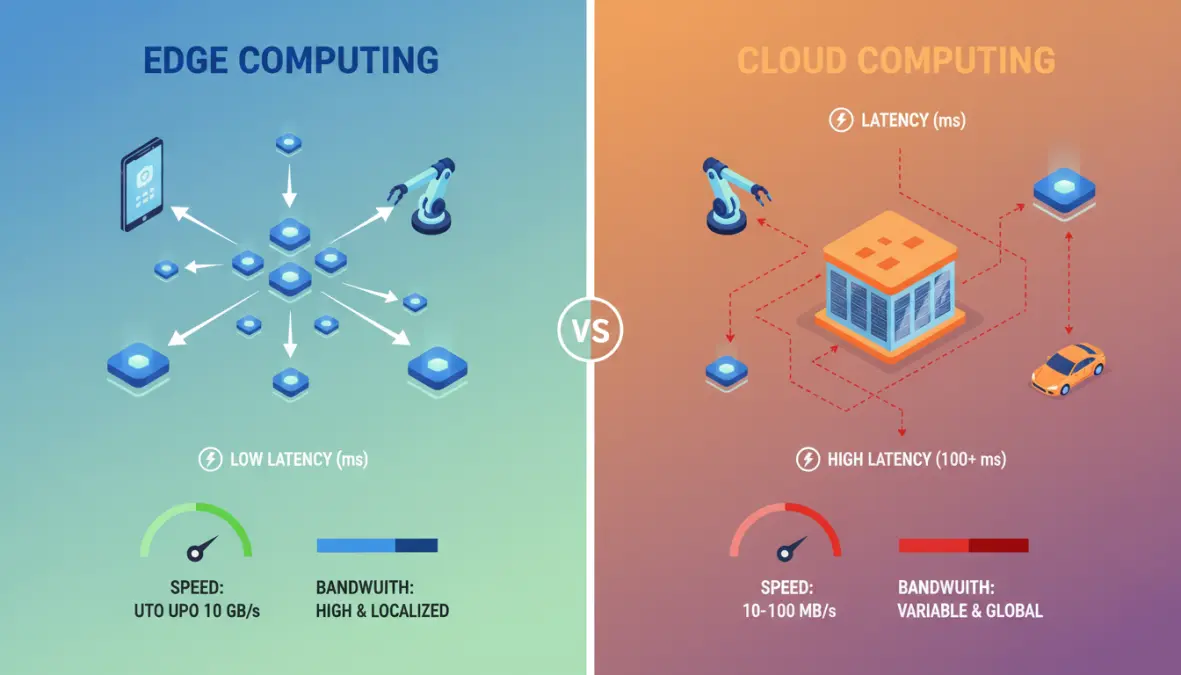
Cloud computing excels at handling massive datasets, complex analytics, and providing virtually unlimited scalability. It’s centralized, cost-effective for heavy workloads, and perfect when real-time response isn’t critical. Edge computing, on the other hand, prioritizes speed and proximity. By processing data locally, it delivers latency reduction that cloud simply can’t match—we’re talking milliseconds versus potentially hundreds of milliseconds.
Here’s how they compare on key dimensions:
- Latency: Edge wins decisively with near-instantaneous response times; cloud involves round-trip delays
- Bandwidth: Edge dramatically reduces network traffic by processing locally; cloud requires constant data transmission
- Privacy & Security: Edge keeps sensitive data on-premises; cloud centralizes data, creating different security considerations
- Scalability: Cloud offers easier massive scaling; edge scales by adding more distributed nodes
- Costs: Edge reduces bandwidth costs but requires more edge infrastructure; cloud has predictable subscription models
- Reliability: Edge continues functioning during network outages; cloud depends on connectivity
The sweet spot? A hybrid approach. Use edge for time-sensitive operations and initial filtering, then leverage cloud for long-term storage, training AI models, and complex analytics. This combination delivers the edge computing benefits while maintaining cloud’s strategic advantages. Similar to how emerging technologies like quantum networks are designed to complement existing infrastructure, edge and cloud work better together than apart.
Why Edge Computing Matters: Real-World Benefits and Use Cases
Understanding why is edge computing important becomes crystal clear when you examine its tangible benefits. First, there’s real-time processing—critical for applications where milliseconds matter. Then comes bandwidth optimization: instead of flooding networks with raw data, edge systems send only processed insights, reducing costs and congestion. Privacy-conscious organizations appreciate that sensitive data can be analyzed locally without ever leaving their premises, addressing both security concerns and regulatory compliance requirements.
The reliability factor shouldn’t be overlooked either. Edge systems continue operating even when internet connectivity drops, essential for mission-critical applications. And as data sovereignty regulations tighten globally—much like how carbon credit frameworks vary by region—edge computing helps businesses keep data within specific geographic boundaries.
Now for the exciting part: edge computing use cases across industries. In IoT infrastructure and smart cities, thousands of sensors monitor everything from air quality to parking availability, with edge nodes processing this deluge locally to provide instant insights without overwhelming central systems. Autonomous vehicles represent perhaps the most dramatic example—cars can’t wait for cloud responses when navigating busy streets, so they process sensor data at the edge for split-second decisions.
Manufacturing and Industry 4.0 leverage edge computing for predictive maintenance, quality control, and process optimization. Sensors on assembly lines detect anomalies instantly, triggering immediate corrections without cloud latency. Healthcare facilities use edge for patient monitoring systems that must respond immediately to vital sign changes, or for medical imaging analysis that keeps patient data secure within hospital walls.
Retail environments deploy edge computing for real-time inventory management, personalized shopping experiences through in-store analytics, and cashier-less checkout systems. Gaming, augmented reality, and virtual reality applications depend on edge computing to deliver the ultra-low latency that immersive experiences demand—nobody wants lag in their VR headset. These edge computing real world examples demonstrate how benefits of processing data locally translate into competitive advantages across virtually every sector.
Frequently Asked Questions About Edge Computing
Is edge computing replacing cloud computing?
No, edge computing isn’t replacing cloud—they’re complementary. Edge handles time-sensitive, local processing while cloud excels at large-scale analytics, storage, and AI training. Most modern architectures use both, with edge for immediate responses and cloud for strategic intelligence. The future is hybrid, not either-or.
What are the main challenges of edge computing?
Managing distributed infrastructure across potentially thousands of edge locations is complex. Organizations face challenges in maintaining, updating, and securing numerous edge nodes. Standardization remains incomplete, and initial deployment costs can be significant. Edge also requires different skills than traditional centralized IT management.
How secure is edge computing?
Edge computing offers both security advantages and challenges. Keeping data local reduces transmission vulnerabilities and exposure, but distributed nodes create more potential attack surfaces. With proper encryption, access controls, and physical security, edge can be very secure—sometimes more so than cloud for sensitive applications.
What industries benefit most from edge computing?
Industries requiring real-time decisions and handling sensitive data benefit most: manufacturing, healthcare, autonomous transportation, retail, telecommunications, energy, and smart city infrastructure. Essentially, any sector combining IoT devices with low-latency requirements finds edge computing transformative for operations.
What is the future of edge computing?
The edge computing market is exploding as 5G networks, AI at the edge, and IoT proliferation accelerate adoption. Expect more powerful edge devices, better integration with cloud services, standardized management platforms, and edge computing becoming invisible infrastructure—as fundamental as electricity for modern business operations.
Edge computing represents a fundamental shift in how we think about data processing—moving intelligence closer to where it’s needed most. As our world becomes increasingly connected and real-time responsiveness becomes table stakes rather than luxury, understanding edge computing explained isn’t just technical knowledge—it’s business literacy. Whether you’re evaluating infrastructure for your organization or simply curious about technology shaping our digital future, recognizing when to use edge computing could be the difference between leading your industry and playing catch-up. The edge isn’t just where networks end—it’s where the future of computing begins.