Ancestral Movement: Reconnecting with Natural Movement Fitness for Modern Health
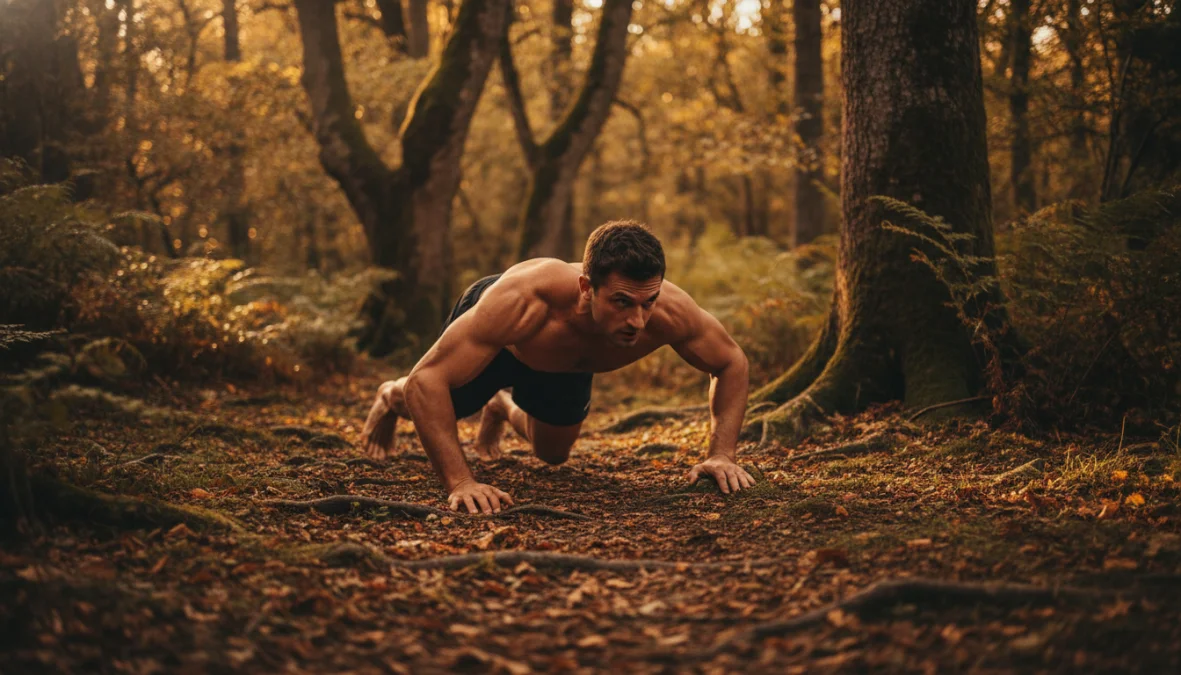
Picture this: a cramped gym with rows of machines designed to isolate single muscles, fluorescent lights buzzing overhead, and everyone staring at screens while mechanically repeating movements. Now imagine our ancestors—climbing trees, sprinting across open plains, carrying heavy loads, squatting effortlessly around a fire. Which scenario feels more aligned with how our bodies were designed to move? This stark contrast is at the heart of ancestral movement, a fitness philosophy that’s turning the modern exercise paradigm on its head by reconnecting us with the movement patterns that shaped our evolution.
What Is Ancestral Movement and Why It Matters
Ancestral movement is a holistic approach to fitness that draws inspiration from how our hunter-gatherer ancestors moved naturally in their environment. Unlike traditional gym workouts that compartmentalize the body into isolated muscle groups, natural movement fitness emphasizes full-body, functional patterns that our species has been performing for hundreds of thousands of years. This isn’t just nostalgic romanticism—it’s grounded in evolutionary fitness principles that recognize our bodies haven’t evolved to sit in chairs for eight hours or perform bicep curls on machines.
The movement culture gaining traction today represents a rebellion against sedentary modern life and its consequences: chronic back pain, poor posture, reduced mobility, and disconnection from our physical capabilities. When we examine biomechanics through an evolutionary lens, we see that humans are designed for diverse, unpredictable movement—not repetitive, linear exercises. Ancestral movement practitioners argue that by returning to these primal patterns, we can address many contemporary health issues while building genuine functional strength that translates to everyday life. Practices like MovNat and other natural movement systems have emerged as structured approaches to this philosophy, though the concept itself is as old as humanity.
Core Primal Movement Patterns and Functional Training Principles
At the foundation of primal movement patterns are the movement categories that kept our ancestors alive and thriving. These aren’t arbitrary exercises—they’re the fundamental ways humans interact with their environment. Functional movement training based on ancestral principles typically includes seven core patterns: squatting, hinging, pushing, pulling, carrying, crawling, and jumping. Each pattern has deep evolutionary roots and offers distinct benefits that far exceed what you’d get from a leg press or chest fly machine.
The squat, for instance, isn’t just a lower body exercise—it’s a resting position our ancestors used for hours daily, promoting hip mobility and digestive health. The hinge (bending at the hips) was essential for gathering food and lifting objects safely, building posterior chain strength that protects the spine. Pushing and pulling movements developed from climbing, throwing, and manipulating the environment, creating balanced upper body strength and shoulder stability. These primitive movement exercises differ fundamentally from gym staples because they engage multiple joints, require stabilization, and mimic real-world activities rather than isolating muscles artificially.
Ground-Based Movements and Natural Locomotion
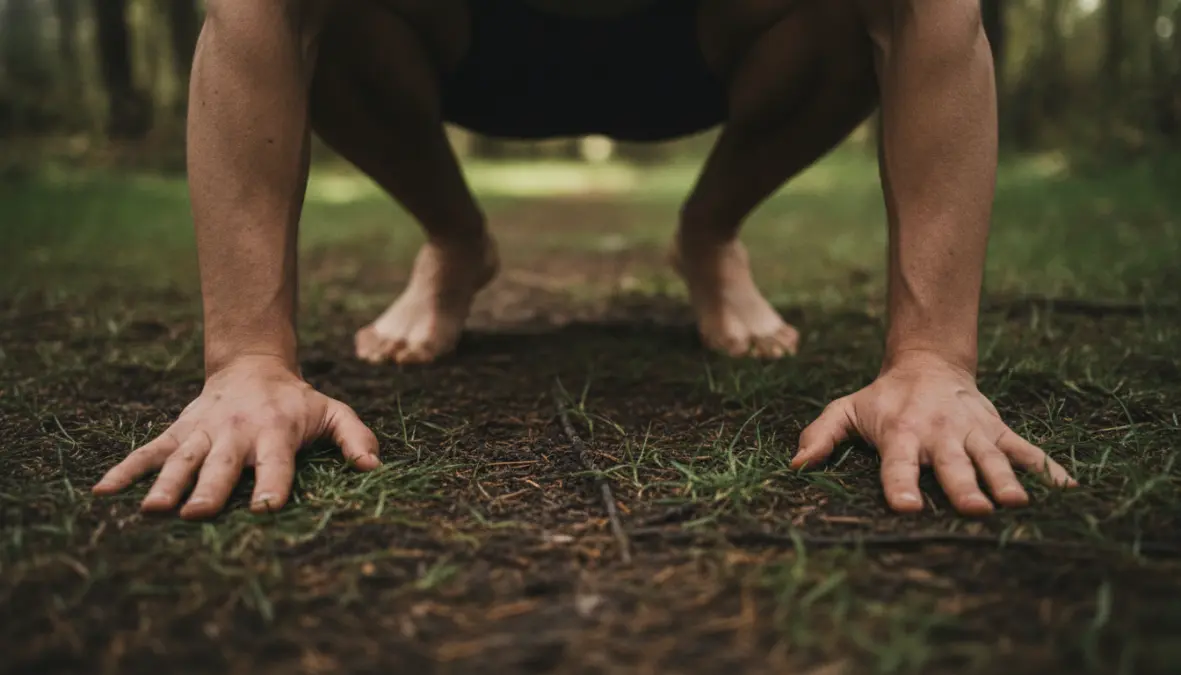
Perhaps the most overlooked aspect of modern fitness is our disconnect from the ground. Ground-based movements—including crawling patterns, rolling, deep squatting, and smooth transitions from sitting to standing—are central to ancestral health fitness. Babies instinctively crawl before they walk, developing cross-lateral coordination that remains crucial throughout life. Adults who maintain these locomotive patterns demonstrate superior proprioception (body awareness in space), core stability, and joint mobility.
Deep squatting with heels flat on the ground, once a universal human resting position, has become nearly impossible for many modern adults due to ankle immobility and hip tightness. Relearning this pattern alone can transform lower body function. Rolling movements—transitioning from supine to prone and back—demand spinal articulation and coordination often lost in adulthood. These ground transitions aren’t just exercise; they’re fundamental life skills that predict independence and injury resilience as we age.
Load Carrying and Environmental Interaction
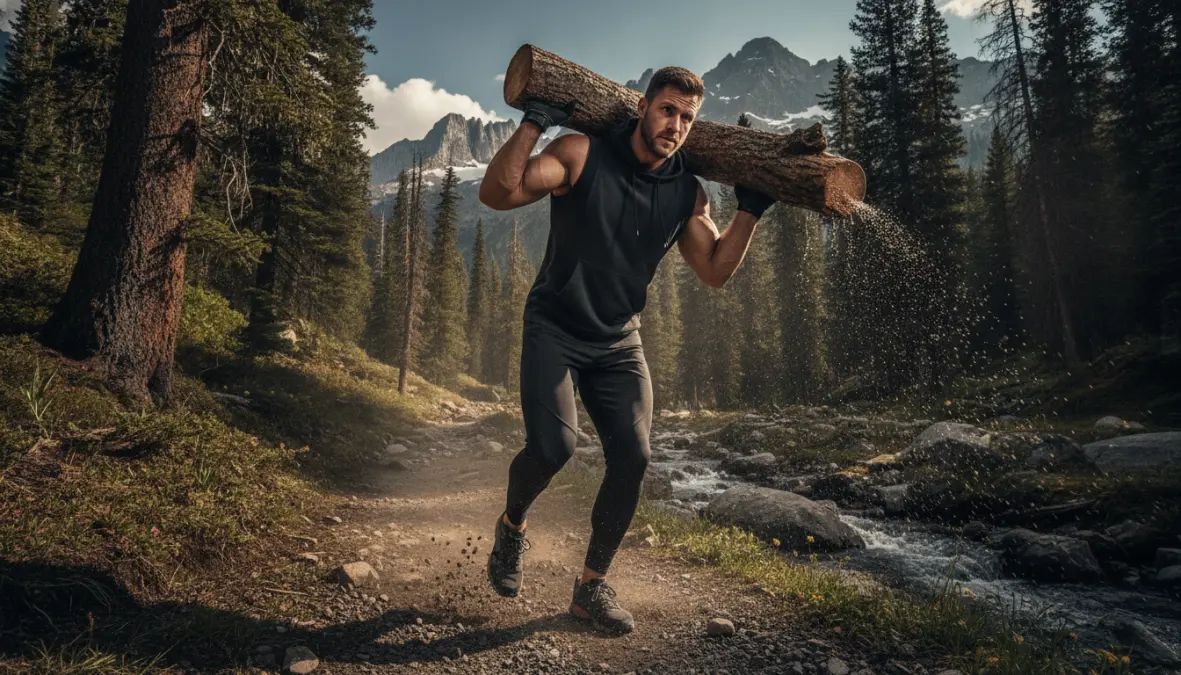
Our ancestors didn’t have the luxury of wheels and delivery services—they carried everything. Load carrying variations like farmer’s walks, overhead carries, and asymmetrical loads build not just strength but functional strength that stabilizes the core and improves posture during real-world tasks. Object manipulation—picking up stones, branches, or other natural implements of varying sizes and shapes—develops grip strength and adaptability that uniform dumbbells can’t match.
Environmental interaction takes this further: balancing on logs or rocks, climbing trees or walls, navigating uneven terrain. These activities demand constant adaptation and engagement with unpredictable surfaces, developing the neuromuscular coordination and reactive strength that kept our ancestors safe. This aspect of ancestral movement connects beautifully with outdoor practices like wild swimming, which similarly reconnects us with natural environments. Barefoot training amplifies these benefits by restoring natural foot mechanics and sensory feedback from the ground—something shoes fundamentally compromise.
Integrating Ancestral Movement Into Modern Life
The beauty of natural movement fitness is its accessibility—you don’t need a gym membership or expensive equipment. Starting a practice begins with assessing your current movement capacity honestly. Can you sit in a deep squat comfortably? Get up from the floor without using your hands? Hang from a bar for 30 seconds? These simple tests reveal where to focus your attention.
For beginners wondering how to practice primal movement, start with daily floor sitting instead of chairs, practice getting up and down using different patterns, and incorporate short crawling sessions. Progress to spending time in deep squat positions, practicing dead hangs from a bar, and carrying groceries in your hands rather than bags. An ancestral movement workout routine might look less like structured sets and reps and more like an exploratory play session: 10 minutes of crawling variations, 5 minutes practicing different jumps and landings, 10 minutes balancing and climbing on whatever’s available.
The mindset shift is crucial. Movement culture emphasizes quality over quantity, presence over performance metrics. Unlike pumping iron to exhaustion, ancestral movement invites you to move frequently throughout the day at varying intensities. This aligns naturally with practices like slow travel, where the journey matters as much as the destination. Urban environments can be surprisingly accommodating: parks offer climbing opportunities, stairs become training tools, and your living room floor becomes a movement laboratory. Consistency matters more than intensity—daily 15-minute sessions beat weekly hour-long workouts for building sustainable mobility and flexibility.
FAQ
Is ancestral movement suitable for beginners?
Absolutely. In fact, natural movement fitness for beginners is often more accessible than traditional gym training because it starts with fundamental patterns everyone once knew as children. Begin with simplified versions—crawling on hands and knees before bear crawls, shallow squats before deep ones—and progress at your own pace. The focus on movement quality over load makes it inherently scalable.
Do I need special equipment for ancestral movement training?
Not really. Your body and the ground are the primary tools. A pull-up bar is helpful, and objects to carry (rocks, sandbags, or even water jugs) are useful, but elaborate equipment isn’t necessary. Nature provides the best training environment with its uneven terrain, trees, and varied surfaces.
How does ancestral movement differ from CrossFit or yoga?
While there’s some overlap, functional movement vs traditional exercise distinctions apply here. CrossFit emphasizes intensity and timed workouts with specific exercises; yoga focuses on static poses and breathing. Ancestral movement prioritizes natural, varied movement patterns that mimic evolutionary activities, with less structure and more environmental interaction. It’s less about predetermined workouts and more about movement exploration.
Can ancestral movement help with back pain?
Often, yes. Many back issues stem from prolonged sitting, poor movement patterns, and weak stabilizing muscles. The emphasis on ground-based movements, proper hinging mechanics, and core integration through functional patterns addresses these root causes. However, consult healthcare professionals for persistent pain, and start gradually to avoid aggravating existing conditions.
Reconnecting with ancestral movement isn’t about rejecting modernity—it’s about reclaiming the physical capabilities that made us human. By honoring the movement patterns encoded in our biology through millions of years of evolution, we don’t just build fitness; we restore a fundamental relationship with our bodies and environment that modern life has disrupted. Whether you’re seeking pain relief, functional strength, or simply a more intuitive way to move, the wisdom of our ancestors offers a path forward that’s surprisingly accessible and profoundly transformative.