Autonomous Ships: How Crewless Vessels Are Revolutionizing Maritime Trade
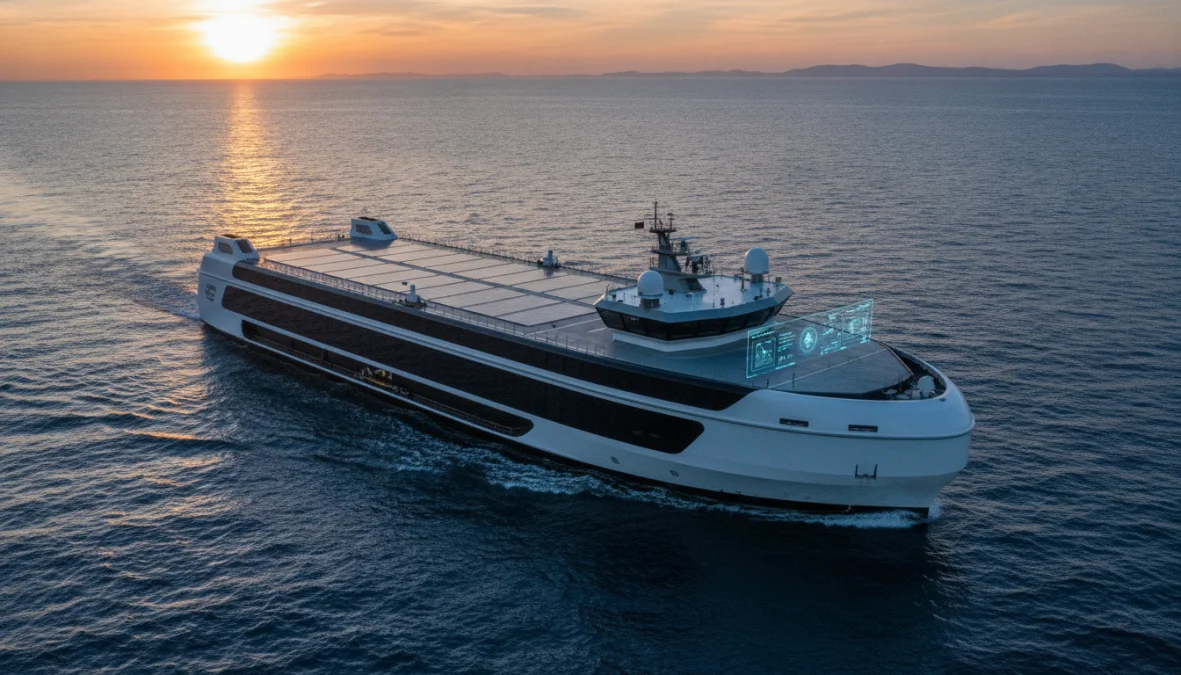
Imagine massive cargo ships crossing oceans without a single crew member aboard—no captain at the helm, no engineers in the engine room, just sophisticated technology steering tons of cargo across the seas. This isn’t science fiction anymore. Autonomous ships are rapidly moving from concept to reality, promising to fundamentally reshape how goods travel across our planet’s waterways.
What Are Autonomous Ships and How Do They Work?
Autonomous ships are vessels capable of operating with reduced or no human presence on board, relying instead on advanced smart shipping technology to navigate, avoid obstacles, and complete their voyages. Unlike traditional ships, these autonomous vessels use a combination of AI navigation systems, sensor technology, GPS, and sophisticated vessel collision avoidance systems to make real-time decisions about route optimization and safety.
The shipping industry recognizes several levels of maritime automation, similar to how autonomous cars are classified. At the basic level, we have remote controlled ships where human operators guide vessels from shore-based remote monitoring centers. Mid-level automation involves ships that can perform certain functions independently while crew remains aboard for oversight. At the highest level, fully unmanned cargo ships operate entirely on their own, with autonomous navigation handling everything from departure to docking.
Real-world examples are already making waves. Norway’s Yara Birkeland, an electric container ship, has been conducting trials for short-distance operations. Rolls-Royce (now part of Kongsberg Maritime) has demonstrated remote-controlled vessel operations, while Japan’s NYK Line has tested collision-avoidance systems on ocean-going ships. These projects rely on technologies like radar, lidar, cameras, and satellite communication systems that constantly feed data to AI algorithms capable of interpreting maritime traffic patterns and weather conditions. Similar to how edge computing processes data locally for faster decision-making, autonomous ships process vast amounts of navigational data in real-time to ensure safe passage.
The Benefits and Challenges of Crewless Ships in Maritime Trade
The case for crewless ships rests on compelling advantages, but the path to widespread adoption faces significant obstacles. Understanding both sides is crucial for grasping the future trajectory of maritime automation.
Economic and Safety Advantages
The benefits of autonomous cargo ships start with dramatic cost reductions. Crew-related expenses account for an estimated 30-40% of operational costs for traditional vessels—that includes salaries, training, insurance, and accommodations. Unmanned cargo ships eliminate these expenses entirely, while predictive maintenance systems using AI can identify mechanical issues before they become costly failures, reducing downtime and repair expenses.
Fuel efficiency represents another major benefit. Without the need for crew quarters, galleys, and life-support systems, autonomous vessels can be designed lighter and more aerodynamic. AI-powered route optimization constantly adjusts courses based on weather, currents, and traffic, maximizing fuel efficiency in ways human captains simply cannot match.
Safety improvements could be revolutionary. According to maritime industry studies, human error contributes to 75-96% of shipping accidents. Fatigue, miscommunication, inadequate training, and simple mistakes cause collisions, groundings, and other incidents. Autonomous vessels don’t get tired, distracted, or impaired—they maintain constant vigilance through multiple redundant sensor systems. The economic impact of autonomous shipping extends beyond individual shipping companies to include reduced insurance premiums, fewer environmental disasters, and safer seas overall.
Technical and Regulatory Obstacles
Despite the promise, the challenges of crewless vessel operation are substantial. Cybersecurity tops the list—a hacked autonomous ship could become a weapon or cause environmental catastrophe. Navigation in congested ports, narrow channels, and extreme weather conditions remains problematic for AI systems that lack human judgment and experience.
Technical reliability in harsh marine environments is another concern. Salt water, storms, ice, and temperature extremes test electronic systems in ways that land-based autonomous vehicles never experience. Communication systems must remain operational even when satellite communication is disrupted, requiring robust backup systems.
The regulatory landscape presents perhaps the biggest obstacle. The International Maritime Organization (IMO) is developing safety regulations for unmanned ships, but international maritime law wasn’t written with crewless vessels in mind. Questions about liability in accidents, insurance frameworks, and port state control inspections remain largely unanswered. Different nations may adopt conflicting regulations, complicating international trade routes. These challenges mirror broader issues in global commerce, including how geopolitical tensions reshape supply chains.
The Timeline and Future Impact on Global Maritime Trade
When considering when will autonomous ships be commercially available, experts predict a gradual rollout rather than sudden transformation. Short-haul routes between fixed points—like ferry services or coastal container routes—will likely see autonomous operations within the next few years. These controlled environments allow technology to mature before tackling the complexity of transoceanic voyages.
The future of autonomous maritime transport probably involves a hybrid approach for the next decade or two. Remote controlled ships operated from shore-based centers will handle many routes, with skeleton crews aboard for emergencies. Fully autonomous ocean crossings will follow once technology, regulations, and industry confidence align—likely beginning with specific commodity routes where predictability is highest.
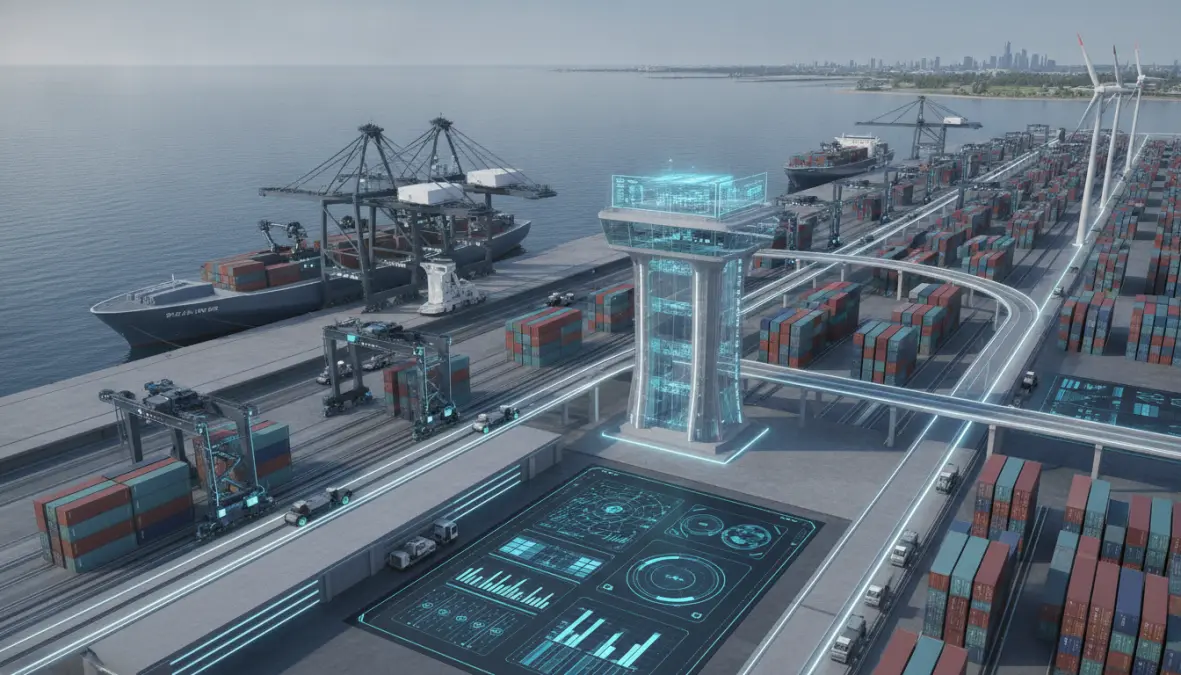
Port automation will evolve alongside vessel autonomy. Smart ports equipped with automated loading systems, AI-powered logistics coordination, and seamless digital integration will be essential. Much like digital twin technology creates virtual replicas for industrial optimization, ports will deploy digital twins to simulate and optimize autonomous vessel operations before implementation.
The transformation of global supply chains will be profound. Maritime trade digitalization powered by autonomous vessels enables 24/7 operations, more precise scheduling, and reduced costs that could lower consumer prices. Industries handling bulk commodities—grain, ore, oil—may adopt the technology first, followed by container shipping as systems prove reliable.
Job displacement remains a serious concern. While new positions will emerge in remote monitoring, AI system maintenance, and cybersecurity, traditional seafaring roles will inevitably decline. The industry must address this transition thoughtfully, with retraining programs and gradual implementation that allows workforce adaptation.
FAQ: Common Questions About Autonomous Shipping
When will autonomous ships become mainstream?
Full mainstream adoption is likely 10-20 years away for ocean-going vessels. Short-haul autonomous routes will appear sooner, within 3-5 years, while complete replacement of crewed ships on major trade routes requires technological maturation, regulatory frameworks, and industry-wide infrastructure changes that take time to develop and implement properly.
Are autonomous ships safer than crewed vessels?
Potentially yes, since human error causes 75-96% of maritime accidents. However, autonomous systems must prove themselves reliable in extreme weather, demonstrate resilience against cyberattacks, and handle unexpected situations that require judgment. Early implementations will likely achieve safety parity before eventually surpassing human-crewed vessels as technology improves.
What happens to maritime jobs?
Traditional shipboard positions will decline, but new roles will emerge in remote vessel operation, AI system maintenance, cybersecurity, and shore-based monitoring centers. The transition will be gradual rather than sudden, requiring substantial retraining programs and workforce development initiatives to help maritime workers adapt to technology-focused positions.
How much can autonomous ships reduce shipping costs?
Crew costs represent 30-40% of operational expenses, so eliminating them creates substantial savings. Additional reductions come from fuel optimization, predictive maintenance, and improved efficiency. Industry estimates suggest autonomous operations could reduce total shipping costs by 20-30% once technology is fully mature and widely deployed.
Can autonomous ships operate in all weather conditions?
Not yet. Extreme weather, heavy seas, and severe storms challenge autonomous systems more than experienced human crews. Current autonomous ship technology development focuses on improving performance in adverse conditions, but for now, autonomous vessels will likely avoid severe weather or defer to remote human operators during challenging conditions until AI systems gain more sophistication.
The maritime industry stands at a technological crossroads. Autonomous ships represent more than just crewless vessels—they embody a complete reimagining of how global trade operates. While challenges remain, the combination of economic incentives, safety improvements, and rapid technological advancement suggests that autonomous vessels will become an integral part of our maritime future. The question isn’t whether this transformation will happen, but how quickly we can navigate the transition responsibly.