Analog Productivity: Why Paper Planners Are Outselling Digital Apps
Remember when everyone swore that paper planners were dead? When every productivity guru insisted that apps were the future and physical stationery was just nostalgic clutter? Well, the joke’s on us. While we’ve been drowning in notifications and app subscriptions, something unexpected happened: paper planners started outselling their digital counterparts. And no, it’s not just your grandma buying them. Professionals, students, and even tech workers are ditching their productivity apps for good old pen and paper. Welcome to the world of analog productivity methods, where the future of getting things done might actually look a lot like the past.
The Surprising Comeback: Paper Planner Sales Trends
Let’s talk numbers, because they’re honestly shocking. The global paper planner market has grown consistently over the past five years, with some retailers reporting sales increases of up to 30%. Meanwhile, app stores are littered with abandoned productivity apps that once promised to revolutionize our lives. The bullet journal method, popularized by designer Ryder Carroll, has spawned an entire industry with millions of dedicated followers worldwide. Instagram hashtags like #bulletjournal have racked up over 10 million posts, turning what was meant to be a simple productivity system into a cultural phenomenon.
This isn’t just about aesthetics or Instagram-worthy spreads. The digital vs analog productivity debate has shifted dramatically. Market research shows that Gen Z and Millennials—the generations supposedly glued to their screens—are driving much of this growth. They’re seeking what digital tools can’t provide: a tactile planning experience that doesn’t come with push notifications. Even as AI personal assistants transform modern workflows, there’s a countermovement toward intentional, screen-free planning. It’s the same cultural shift we’ve seen with vinyl records making an unexpected comeback—sometimes newer isn’t necessarily better.
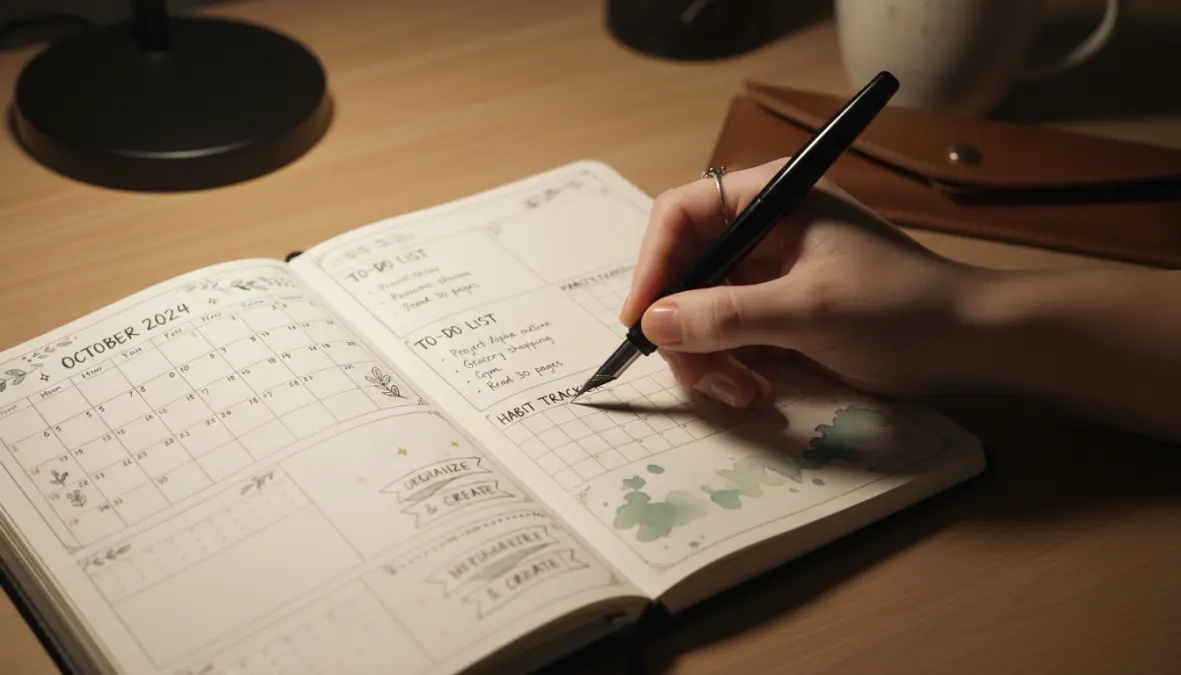
Why Analog Planning Tools Actually Work Better
So why are people switching from digital to paper planners? It’s not just trendy contrarianism. There are legitimate, scientifically-backed reasons why analog planning tools might actually be superior for certain tasks. The paper planner benefits extend far beyond avoiding digital distractions—they tap into how our brains are wired to process and retain information.
The Science Behind Handwriting and Memory Retention
Here’s where things get interesting. Multiple neuroscience studies have demonstrated that handwriting for memory significantly outperforms typing when it comes to cognitive retention. A landmark study by Mueller and Oppenheimer found that students who took notes by hand performed better on conceptual questions than those who typed. Why? Because writing by hand forces you to process information more deeply. You can’t transcribe every word verbatim, so your brain has to synthesize and summarize—creating stronger neural pathways in the process.
When you write tasks by hand, you’re activating the Reticular Activating System (RAS), a network in your brain that filters information and signals what deserves your attention. This neurological benefit of handwriting means that simply writing down a goal makes you more likely to remember and achieve it. It’s not magic—it’s cognitive science. The physical act of forming letters engages motor memory, visual processing, and conceptual understanding simultaneously, creating a multi-sensory learning experience that typing can’t replicate.
Freedom From Digital Distractions
Let’s be honest: how many times have you opened your productivity app only to get sucked into checking emails, social media, or that notification you just heard? Productivity without technology eliminates this constant temptation. A paper planner offers distraction-free planning because it’s physically impossible for it to ping you with alerts or tempt you into doomscrolling.
The concept of screen fatigue reduction has become critical as remote work blurs the boundaries between professional and personal time. When your entire life exists on screens—work emails, video calls, entertainment, social connections—adding yet another digital tool creates cognitive overload. Paper planners provide a mental break, a different texture to your day that signals to your brain: “This is focused planning time.” This contributes to mindful task management and intentional workflows, where you’re making deliberate choices rather than reacting to whatever notification screams loudest.
Choosing the Right Analog Productivity System for You
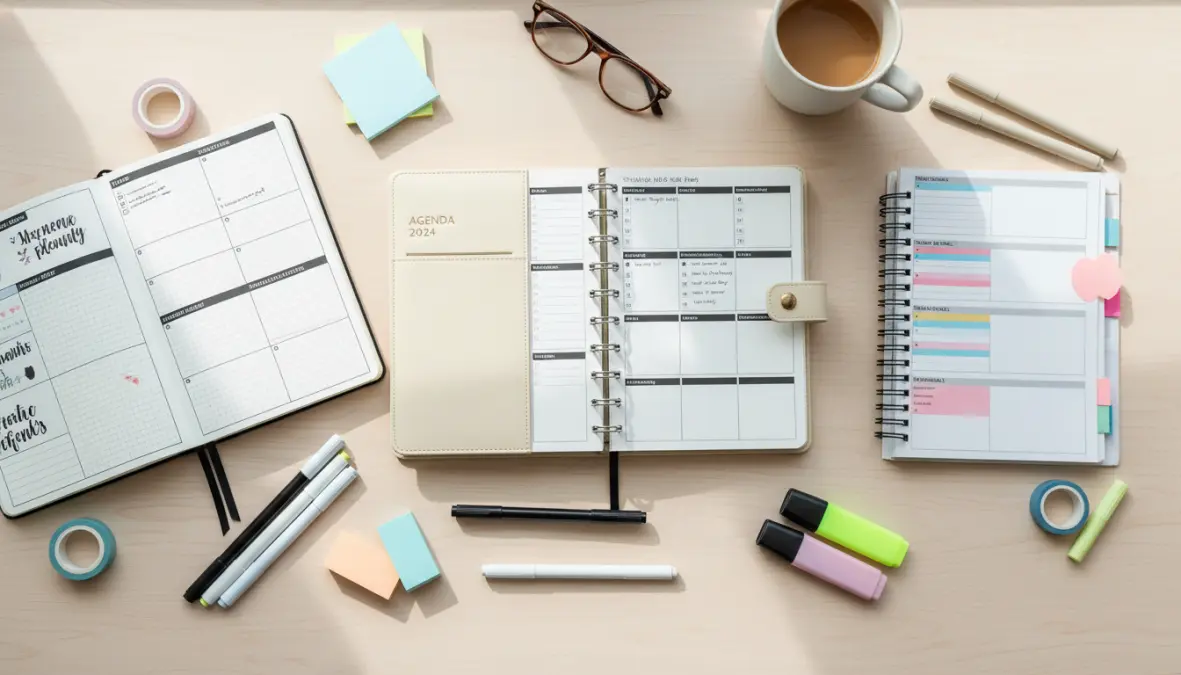
Convinced to give analog productivity methods a try? Great, but here’s where it gets slightly overwhelming: there are dozens of different systems, each with passionate devotees. Let me break down the most popular options so you can find what works for your brain and workflow.
The Bullet Journal Method remains the most flexible option. Created as a customizable organization system, it combines to-do lists, calendars, notes, and trackers in one notebook. The beauty is its modularity—you design spreads that match your needs. Pros: infinitely customizable, creative outlet, one system for everything. Cons: requires time investment for setup, can become overly complex, might not suit those who prefer pre-made structure. This is the best analog productivity system for professionals who like control over every detail.
Traditional Structured Planners (like those from brands such as Moleskine or Passion Planner) come pre-formatted with daily or weekly layouts. They’re ready to use immediately—just open and start writing. Pros: no setup required, consistent format helps build habits, often include goal-setting sections. Cons: less flexible if your needs change, might have sections you never use. Perfect for people who want to know exactly how to use a paper planner effectively without reinventing the wheel.
Time-Blocking Planners focus specifically on scheduling, with hourly breakdowns that help you allocate time for deep work. These are ideal for people managing complex schedules or practicing techniques like time-boxing. Pros: visual representation of your day, prevents overcommitment, great for meeting-heavy schedules. Cons: can feel rigid, requires discipline to maintain.
Hybrid Systems combine digital and analog approaches—perhaps using a paper planner for daily tasks and intentions, while keeping a digital calendar for appointments and reminders. This answers the common question of whether you must choose one or the other. You don’t. Many successful people use both, leveraging the strengths of each medium. Just like companies experimenting with four-day work weeks are finding unconventional solutions, mixing analog and digital might be your productivity sweet spot.
Ready to make the switch? Start simple. Grab a basic notebook and try the bullet journal method for one month, or invest in an inexpensive structured planner. Give yourself permission to experiment with what works for your unique brain and workflow. You might just discover that the best analog productivity system is the one that helps you disconnect from screens and reconnect with intentional work.
FAQ: Analog Productivity Methods
Are paper planners better than digital apps?
It depends on your goals and work style. Paper planners excel at memory retention, focus, and screen-time reduction. They’re particularly effective for strategic thinking and deep work planning. Digital apps win for collaboration, reminders, and accessibility across devices. Many people find that a hybrid approach—using paper for daily planning and reflection while keeping digital calendars for appointments—offers the best of both worlds.
Does handwriting really improve memory?
Yes, and the science is compelling. Research consistently shows that handwriting activates different brain regions than typing, leading to better conceptual understanding and long-term retention. The slower, more deliberate nature of handwriting forces your brain to process information more deeply, creating stronger neural connections. This is why students who take handwritten notes typically perform better on tests than those who type.
What is the bullet journal method?
The bullet journal method is a customizable organization system created by Ryder Carroll that combines planning, tracking, and journaling in one notebook. It uses rapid logging (short bulleted entries), migration (moving unfinished tasks forward), and custom collections (pages dedicated to specific topics). The core philosophy is mindfulness and intentionality—helping you track the past, organize the present, and plan for the future in whatever format serves you best.
Can I use both digital and analog productivity tools?
Absolutely! Many productivity experts recommend hybrid systems that leverage the strengths of each medium. Use digital tools for things requiring automation, sharing, or time-sensitive reminders. Use analog tools for deep work planning, goal setting, creative brainstorming, and daily intentions. The key is being intentional about when and why you use each tool, rather than letting technology default to running your life.