Urban Heat Island Solutions: Effective Strategies for Cooling Our Cities
Ever wonder why your city feels like an actual oven during summer while the countryside stays relatively pleasant? You’re not imagining things. Urban areas can be up to 7°C hotter than their rural surroundings, creating what scientists call the urban heat island effect. But here’s the good news: cities around the world are fighting back with innovative urban heat island solutions that are actually working. From Singapore’s green revolution to Los Angeles’ cool roof initiative, municipalities are discovering that beating the heat isn’t just possible—it’s becoming essential for survival.
Understanding the Urban Heat Island Effect and Its Impact
The urban heat island effect happens when cities replace natural landscapes with concrete jungles. Think about it: asphalt streets, dark roofs, and endless pavement absorb and trap heat throughout the day, then release it at night. Meanwhile, the lack of trees means there’s no natural cooling through shade or evapotranspiration. Add in heat from cars, air conditioners, and industrial processes, and you’ve got yourself a recipe for sweltering conditions.
The numbers tell a stark story. Studies show that urban areas experience temperatures 1-7°C higher than nearby rural regions during the day, with nighttime differences sometimes reaching 12°C. This isn’t just uncomfortable—it’s deadly. Heat waves kill more people annually than hurricanes, floods, and tornadoes combined. The elderly, children, and low-income communities without access to air conditioning bear the brunt of these impacts.
Beyond health concerns, the urban heat island effect drives up energy consumption dramatically. When temperatures rise, so does the demand for air conditioning, creating a vicious cycle: more AC means more electricity use, which means more heat generation, which means even more AC needed. Cities spend millions extra on cooling costs, while power grids strain under peak demand. Air quality suffers too, as higher temperatures accelerate the formation of ground-level ozone and other pollutants. Understanding these impacts makes urban temperature reduction not just nice to have, but absolutely critical.
Proven Urban Heat Island Solutions Cities Are Implementing
Now let’s talk solutions. Cities worldwide are rolling out effective heat island mitigation strategies that combine smart planning with green technology. These cooling cities strategies aren’t theoretical—they’re delivering measurable results right now. The key is understanding that heat island prevention requires multiple approaches working together, creating comprehensive climate adaptation cities programs that address the problem from every angle.
Green Infrastructure and Urban Forestry
Trees are nature’s air conditioners, and cities are finally giving them the respect they deserve. Urban forestry programs focus on strategic tree planting where they’ll have maximum cooling impact. A single mature tree can provide the cooling effect of five air conditioning units running 20 hours a day, thanks to shade and evapotranspiration—the process where plants release water vapor that cools the air.
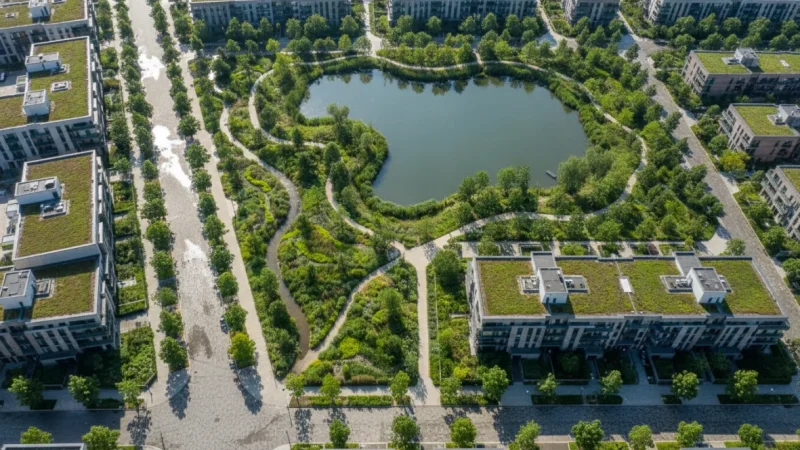
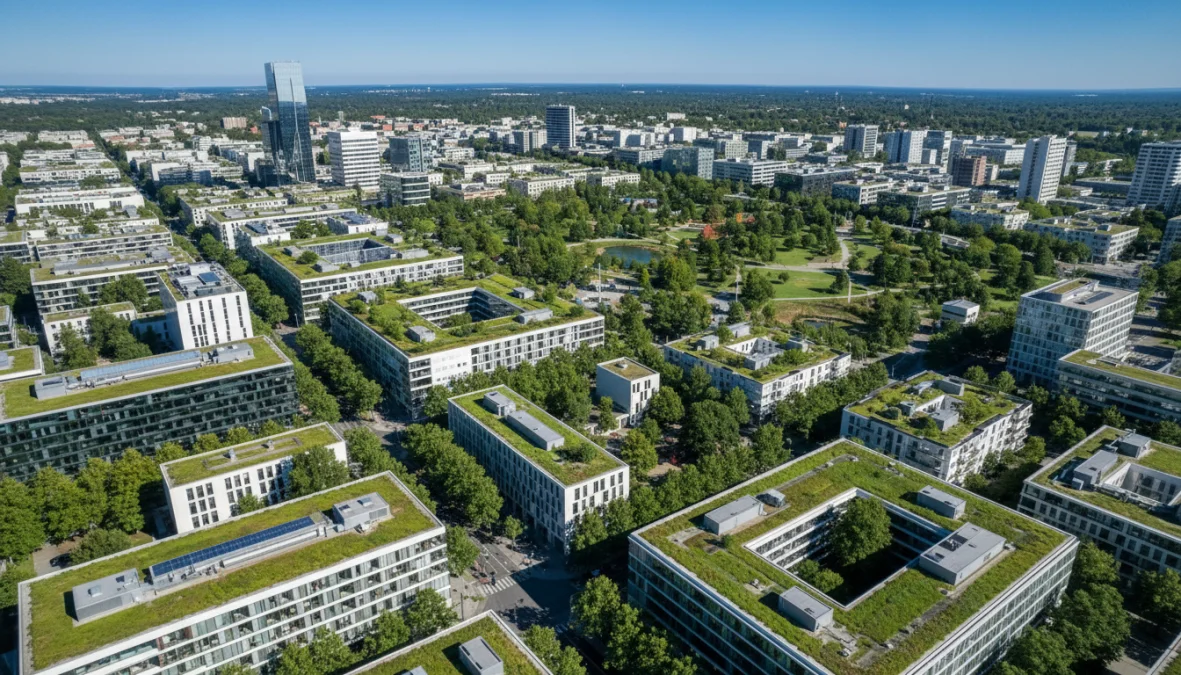
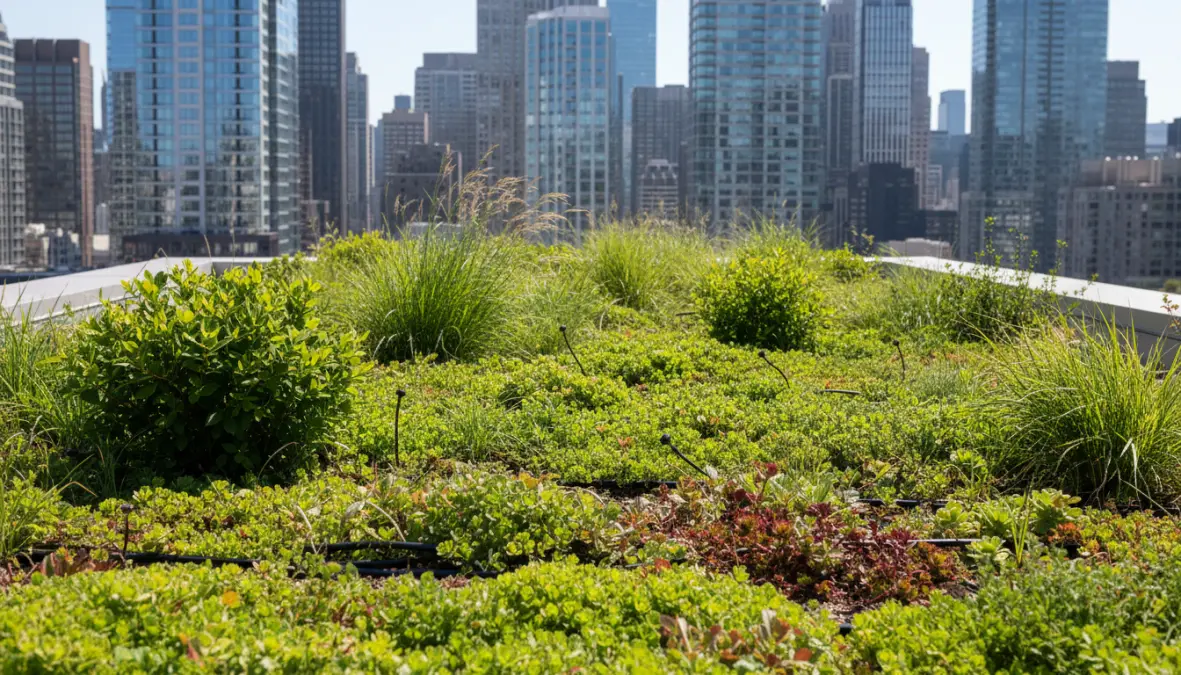
Green roofs transform bare rooftops into living ecosystems. These installations can reduce surface temperatures by up to 30°C compared to conventional roofs, cutting building cooling costs by 25-40%. Singapore leads the pack here, requiring new developments to replace greenery equivalent to what was lost during construction. Their skyline now features stunning vertical gardens and rooftop farms that double as climate solutions. Melbourne’s urban forest strategy aims to increase tree canopy coverage from 22% to 40%, demonstrating how tree canopy coverage urban planning can transform entire cities.
Parks and green corridors create cool zones throughout urban areas. Studies from Chicago show that neighborhoods with abundant green infrastructure can be 2-4°C cooler than areas dominated by buildings and pavement. These spaces don’t just cool—they improve mental health, encourage physical activity, and provide essential habitat for urban wildlife. As discussed in vertical farming innovations, integrating food production into urban green spaces adds another layer of benefits.
Cool Roofs, Pavements, and Reflective Surfaces
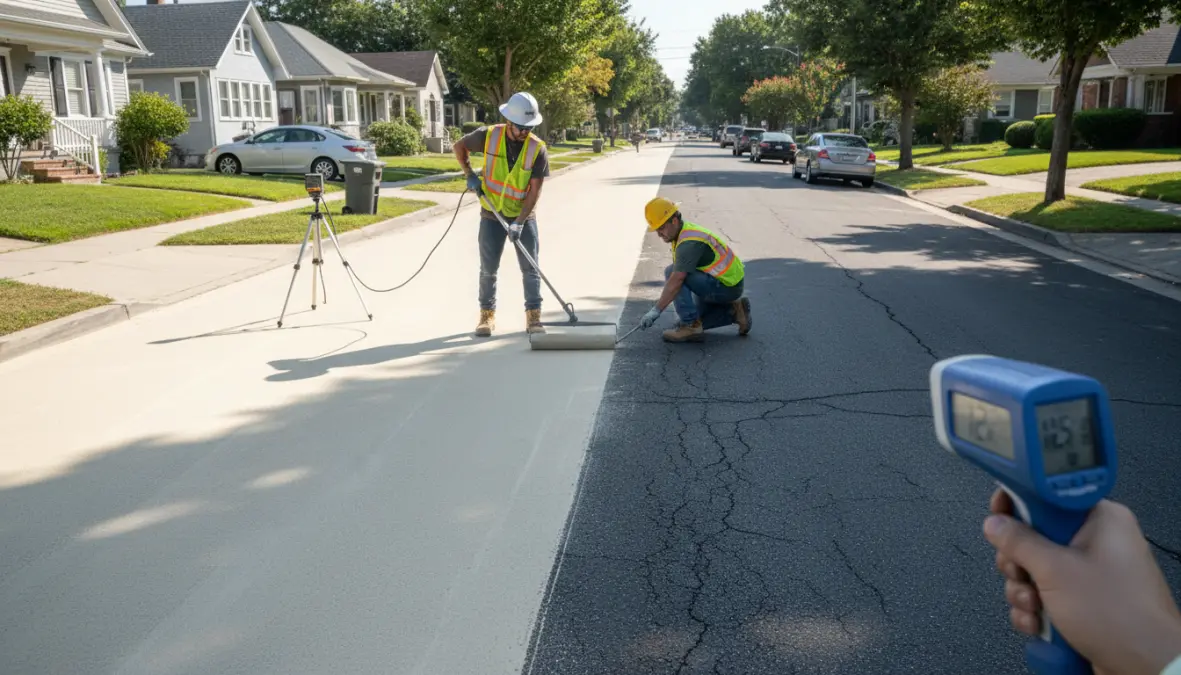
If you can’t add green, go with white. Cool pavements and reflective surfaces use the albedo effect—the measure of how much sunlight surfaces reflect—to bounce heat back into the atmosphere instead of absorbing it. Traditional dark asphalt can reach temperatures of 65°C on hot days, but light-colored alternatives stay 20-30°C cooler.
Los Angeles has become a laboratory for best solutions for urban heat islands using this approach. Their CoolSeal program coats streets with reflective gray paint, reducing surface temperatures by 5-10°C. Phoenix has tested permeable surfaces that allow water to seep through, reducing runoff while keeping pavements cooler. These technologies to combat urban heat islands show that sometimes the simplest solutions work best.
Cool roof programs for cities incentivize building owners to install high-albedo roofing materials. White or specially coated roofs reflect 65-90% of sunlight, compared to just 5-20% for traditional dark roofs. The payoff? Buildings stay cooler, air conditioning costs drop by 10-30%, and the entire neighborhood benefits from reduced ambient temperatures. New York City’s Cool Roofs initiative has coated over 10 million square feet of roofing, demonstrating scalable urban heat island mitigation strategies.
Sustainable Urban Cooling: Water Features and Smart Urban Design
Water is another powerful ally in the fight against urban heat. Sustainable urban cooling increasingly incorporates water features like fountains, ponds, and innovative misting systems. Tokyo’s summer misting stations provide instant relief in public spaces, while Paris has installed temporary urban beaches and water features that help residents cope during heat waves.
But perhaps the most impactful approach involves rethinking urban design itself. Smart planning considers how buildings are oriented to maximize natural ventilation and minimize heat absorption. Wide streets aligned with prevailing winds create “cool corridors” that channel breezes through neighborhoods. Portland’s approach includes preserving natural waterways and creating connected green spaces that work together to moderate temperatures across the entire city.
Green infrastructure for cooling cities works best when integrated holistically. Seoul’s Cheonggyecheon Stream restoration project replaced an elevated highway with a flowing waterway surrounded by parks, dropping local temperatures by 3.6°C while creating a beloved public space. This demonstrates how to reduce urban heat island effect through bold reimagining of urban landscapes.
The changing nature of cities, influenced by trends like remote work reshaping urban planning, creates new opportunities. Reduced commuter traffic means opportunities to reduce pavement and increase green space. Forward-thinking planners are seizing these moments to implement comprehensive cooling cities strategies that address thermal comfort while improving quality of life.
FAQ: Urban Heat Islands and Mitigation Strategies
What causes the urban heat island effect?
The urban heat island effect results from replacing natural landscapes with heat-absorbing materials like asphalt and concrete, reduced vegetation that would normally provide cooling through shade and evapotranspiration, and waste heat from vehicles, buildings, and industrial activities. Tall buildings also trap heat and reduce airflow, preventing natural cooling.
How much cooler can green roofs make a building?
Green roofs can reduce rooftop surface temperatures by 20-30°C compared to conventional roofs. Inside buildings, this translates to cooling energy savings of 25-40%. They also extend roof lifespan, manage stormwater, and improve air quality—making them one of the most effective urban heat island solutions available.
Which cities have the most effective heat island mitigation programs?
Singapore leads globally with mandatory green building standards and extensive urban forestry. Melbourne’s urban forest strategy targets 40% tree canopy coverage. Los Angeles and Phoenix are pioneering cool pavement technologies, while New York City’s Cool Roofs initiative has treated millions of square feet. Copenhagen and Tokyo excel at integrating water features and smart urban design.
How does urban heat affect energy consumption?
For every 1°C temperature increase, peak electricity demand rises by 2-4% as people crank up air conditioning. This costs U.S. cities an estimated $10 billion annually in extra energy expenses. The increased demand also strains power grids, potentially causing blackouts during heat waves when electricity is needed most.
Can individual homeowners contribute to reducing urban heat?
Absolutely! Plant trees strategically for shade, install a cool or green roof, choose light-colored paving materials, maintain vegetation, and reduce impermeable surfaces in your yard. Even small actions like using permeable pavers instead of concrete contribute. When multiplied across neighborhoods, individual choices create significant collective cooling effects.
The fight against urban heat islands isn’t just about comfort—it’s about creating livable, sustainable cities for future generations. Whether through expanding tree canopy, implementing reflective surfaces, or redesigning urban spaces entirely, the solutions exist. The question isn’t whether we can cool our cities, but whether we’ll act quickly enough to make a difference. The good news? Cities worldwide are already proving it’s possible.