Direct Air Capture Technology: Can We Really Vacuum CO2 From the Atmosphere?
Imagine a giant vacuum cleaner sucking carbon dioxide straight out of thin air. Sounds like science fiction, right? Yet direct air capture technology is doing exactly that—albeit on a much more sophisticated level. As climate change accelerates and emissions continue to rise, scientists and engineers are developing machines that can pull CO2 from the atmosphere and store it permanently. But can this technology really scale up enough to make a dent in our climate crisis, or is it just an expensive distraction from the real work of cutting emissions?
What Is Direct Air Capture Technology and How Does It Work?
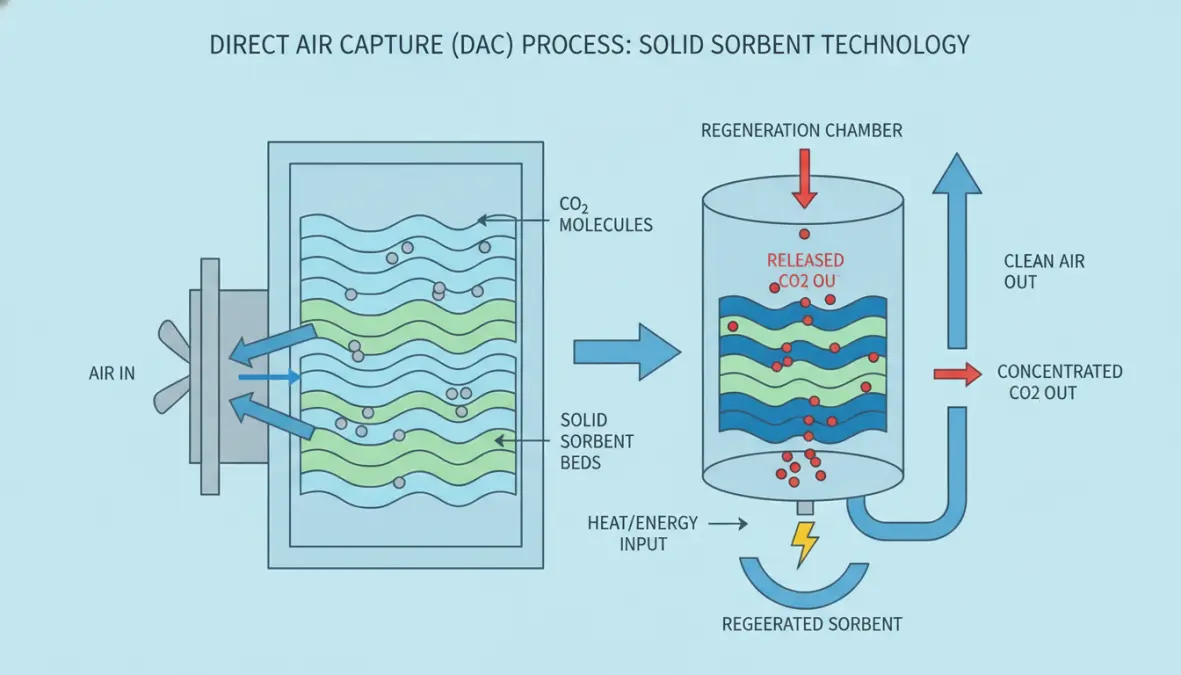
Direct air capture technology (DAC) is essentially a mechanical process that extracts carbon dioxide directly from the ambient air around us. Unlike traditional carbon capture systems that trap emissions at the source—like power plants or factories—DAC can operate anywhere, pulling CO2 from the atmosphere regardless of where it was originally emitted.
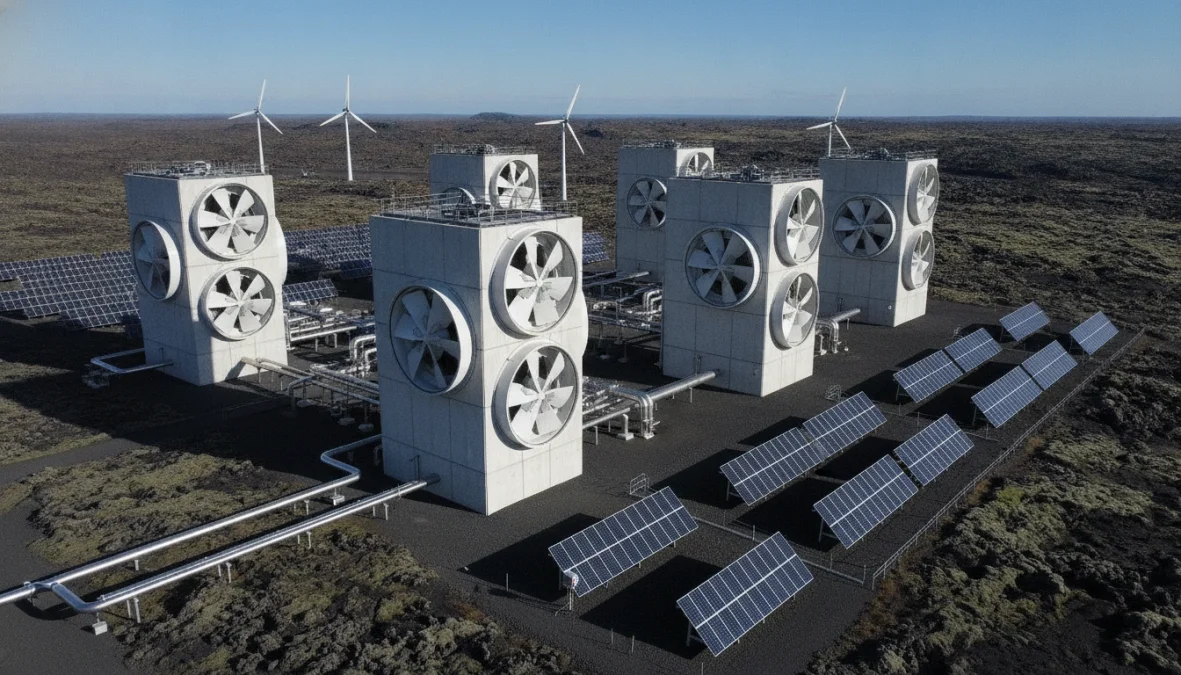
The process works through chemical reactions using either solid sorbents or liquid solvents. In the solid sorbent approach, large fans pull air through filters coated with chemicals that bind to CO2 molecules. Once saturated, these filters are heated to release the concentrated CO2, which can then be captured and stored. The liquid solvent method works similarly, but uses liquid chemical solutions that absorb CO2 when exposed to air, then release it when heated or subjected to other chemical processes.
Think of it like this: if reducing emissions is turning off the tap filling a bathtub, DAC is the drain helping to remove water already in the tub. The key difference between DAC and source carbon capture is location flexibility—DAC facilities can be placed anywhere with sufficient energy supply, while source capture must be installed directly at emission points. This makes direct air capture technology particularly valuable for addressing atmospheric CO2 that’s already warming our planet, including historical emissions and those from diffuse sources like agriculture and transportation that are difficult to capture at the source.
The Current State of Direct Air Capture: Projects, Costs, and Scalability Challenges
The reality of direct air capture today is both exciting and sobering. Several pioneering projects are now operational, but they’re operating at a scale that’s microscopic compared to what’s needed. Climeworks, a Swiss company, runs the Orca facility in Iceland—the world’s first commercial DAC plant—which captures about 4,000 tons of CO2 annually. Their newer Mammoth plant, also in Iceland, aims to capture 36,000 tons per year when fully operational. Carbon Engineering, a Canadian company, has partnered with Occidental Petroleum to build a massive facility in Texas’s Permian Basin designed to capture up to 1 million tons annually.
These numbers might sound impressive until you consider the scale of the problem. Humanity emits roughly 40 billion tons of CO2 each year, and scientists estimate we’ll need to remove between 5-10 gigatons (billions of tons) annually by mid-century to meet climate targets. Current DAC capacity globally? Less than 0.01 million tons per year. We’d need thousands of facilities to make a meaningful impact.
The economics are equally challenging. Current costs range from $600 to over $1,000 per ton of CO2 captured, far above the price needed for widespread adoption (experts suggest $100-150 per ton would be commercially viable). These high costs stem from energy requirements, infrastructure needs, and the simple physics of capturing a relatively dilute gas—CO2 makes up only about 0.04% of our atmosphere, so you’re processing massive volumes of air to extract relatively small amounts of carbon dioxide.
Infrastructure presents another hurdle. DAC plants need connections to storage sites or industrial facilities that can use the captured CO2. They also require substantial land—a facility capturing 1 million tons annually might need an area equivalent to several football fields. Much like the challenges facing global supply chain infrastructure, scaling DAC requires coordinated planning across multiple sectors and regions.
Energy Requirements: The Achilles’ Heel of DAC?
Here’s the paradox: capturing CO2 from air requires significant energy—often as much energy as was released when the carbon was originally burned. If that energy comes from fossil fuels, you could actually emit more CO2 than you capture, creating a perverse outcome. This is why successful DAC facilities like Climeworks’ Iceland plants are powered by geothermal energy, and why most experts agree that climate technology like DAC only makes environmental sense when paired with renewable energy sources. Companies are racing to develop more energy-efficient capture methods, including new chemical processes and novel materials that require less heating and cooling, but the energy equation remains DAC’s biggest technical challenge.
What Happens to Captured CO2?
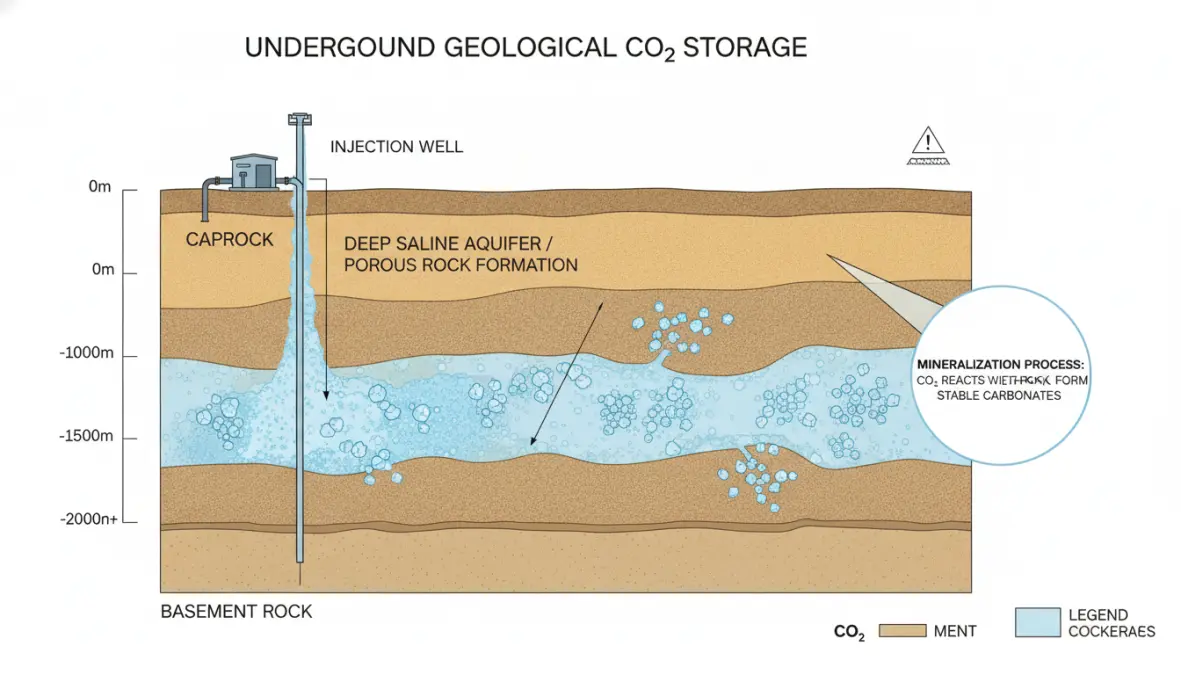
Once captured, CO2 has two potential pathways. The most climate-beneficial option is permanent geological storage—injecting it deep underground into porous rock formations where it mineralizes over time, effectively removing it from the carbon cycle for millennia. Alternatively, captured CO2 can be used commercially to create products like synthetic fuels, concrete, carbonated beverages, or plastics. While utilization sounds appealing, it often releases the CO2 back into the atmosphere when the product is consumed or degrades, making it less effective for long-term carbon removal compared to permanent storage. The exception is when CO2 is permanently locked into materials like building products.
Can Direct Air Capture Really Make a Difference? The Realistic Outlook
So what’s the verdict on direct air capture technology? The IPCC (Intergovernmental Panel on Climate Change) includes DAC in most pathways to limiting warming to 1.5°C, but always as a complementary tool—never as a substitute for aggressive emissions reductions. Think of it as part of a climate solution portfolio, not a silver bullet.
The scientific consensus is clear: we cannot engineer our way out of the climate crisis with DAC alone. The technology faces fundamental constraints of physics, energy, and economics that make it impossible to scale fast enough or cheap enough to offset continued high emissions. But for addressing residual emissions from sectors that are genuinely hard to decarbonize—like aviation, certain industrial processes, or agriculture—and for removing historical CO2 already warming our planet, DAC could play an important supporting role.
Future projections suggest that with sufficient investment and policy support, costs could drop to $200-300 per ton within the next decade, and eventually to $100 per ton with continued innovation. Governments are beginning to provide incentives—the U.S. Inflation Reduction Act offers tax credits of up to $180 per ton for DAC with storage—which could accelerate development. Companies and countries committed to net-zero targets are also creating demand through voluntary carbon removal purchases.
The realistic outlook? Direct air capture technology will likely become an important niche tool in our climate toolkit, particularly valuable for offsetting truly unavoidable emissions and cleaning up historical pollution. But it will succeed only if deployed alongside—not instead of—dramatic cuts to current emissions, renewable energy deployment, and nature-based solutions like reforestation. Just as we’ve seen with other technological solutions to environmental problems, there’s no substitute for reducing the problem at its source. DAC is the cleanup crew, but first, we need to stop making the mess.