Carbon Credits Explained: A Practical Guide for Individuals Taking Climate Action

Ever wondered if there’s a practical way for everyday people to fight climate change beyond recycling and shorter showers? You’re not alone. With carbon credits explained properly, you’ll discover that taking meaningful climate action isn’t reserved for corporations and governments anymore. Whether you’re a conscious consumer wanting to offset that overseas flight or someone genuinely curious about how carbon markets work, understanding carbon credits opens up real opportunities to reduce your environmental impact. Let’s break down what carbon credits actually are, how they function, and most importantly, how you can participate in making a tangible difference.
What Are Carbon Credits and How Do They Work?
At its core, what are carbon credits is surprisingly straightforward: one carbon credit represents the removal or prevention of one metric ton of carbon dioxide (or its equivalent in other greenhouse gas emissions) from the atmosphere. Think of it as a certificate proving that somewhere in the world, a verified project has either stopped CO2 from being released or actively removed it from the air.
The carbon credit trading ecosystem operates in two main arenas. First, there’s the compliance market, where governments mandate that polluting industries must buy credits to offset their emissions—essentially a regulatory requirement. Then there’s the voluntary carbon markets, where individuals, companies, and organizations voluntarily purchase credits to achieve their sustainability initiatives and net zero goals. This second category is where everyday people can participate.
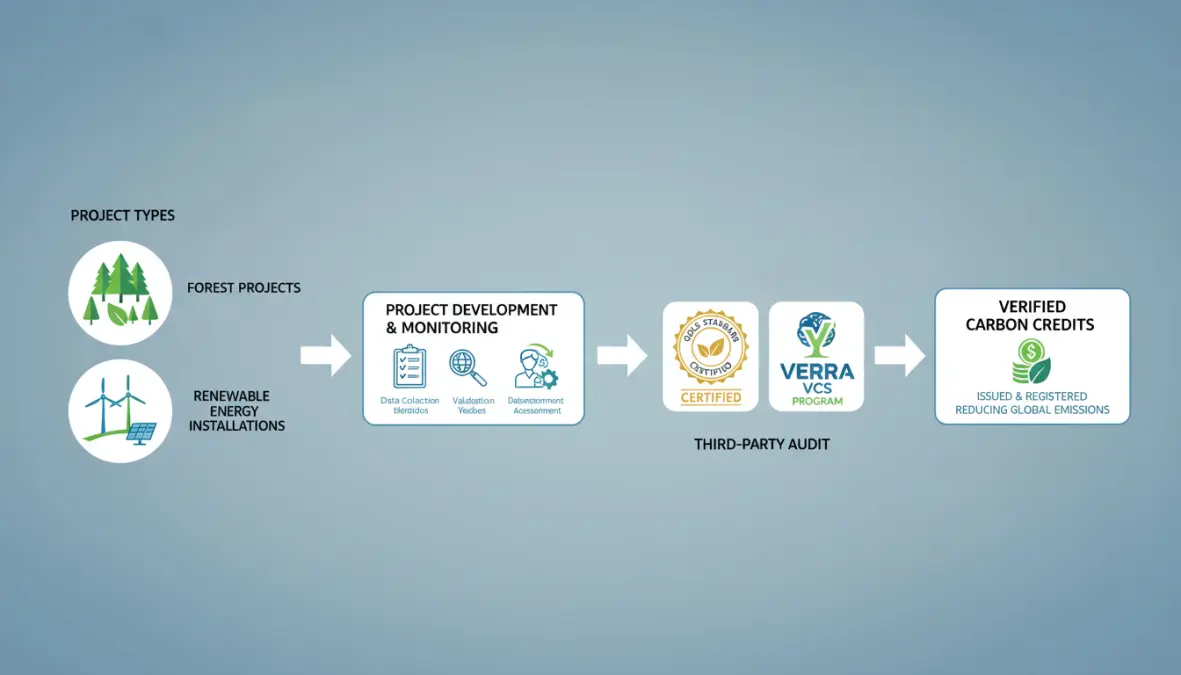
So how do these credits get created? Carbon credits are generated through projects that demonstrably reduce or remove emissions. Popular examples include renewable energy installations that replace fossil fuel power plants, reforestation efforts that absorb CO2 through carbon sequestration, methane capture from landfills, and energy efficiency programs in developing communities. Each project undergoes rigorous verification by independent third-party organizations to ensure the emission reductions are real, additional (wouldn’t have happened without the project), permanent, and accurately measured. Only after this certification process can credits be issued and sold on carbon markets.
How Individuals Can Participate in Carbon Offset Programs
Ready to move from theory to action? Participating in carbon offset programs as an individual is more accessible than most people realize. The process involves understanding your environmental impact, selecting credible projects, and integrating personal carbon offsets into a broader strategy for carbon footprint reduction. Here’s your practical roadmap for meaningful climate action individuals can take right now.
Calculating Your Carbon Footprint and Choosing Offset Projects
Before you can offset emissions, you need to know what you’re dealing with. Numerous free online calculators help estimate your annual carbon footprint by analyzing key lifestyle areas: transportation (car, flights, public transit), home energy consumption (heating, cooling, electricity), dietary choices (meat consumption significantly impacts your footprint), and general consumption patterns. Tools from organizations like the EPA, Carbon Footprint Ltd, and Conservation International provide reliable estimates, typically measured in metric tons of CO2 equivalent per year.
Once you know your number—the average American produces about 16 tons annually—you can explore how to participate in carbon credit markets by choosing offset projects. But here’s the critical part: not all carbon credits are created equal. When selecting best carbon offset programs for individuals, look for projects certified by recognized standards. The Gold Standard, Verra’s Verified Carbon Standard (VCS), and Climate Action Reserve are the gold-standard certifications (pun intended) that ensure projects undergo rigorous verification. These certifications guarantee your money funds genuine emission reductions.
Consider project types that align with your values. Nature-based solutions like reforestation offer co-benefits such as biodiversity protection and watershed conservation. Renewable energy projects in developing countries provide clean power while supporting economic development. Cookstove distribution programs reduce deforestation while improving health outcomes for communities. Reputable marketplaces where how do individuals buy carbon credits include platforms like Wren, Terrapass, Cool Effect, and Native Energy, each offering transparent project portfolios with detailed impact reporting.

Beyond Offsets: Combining Carbon Credits with Direct Emission Reduction
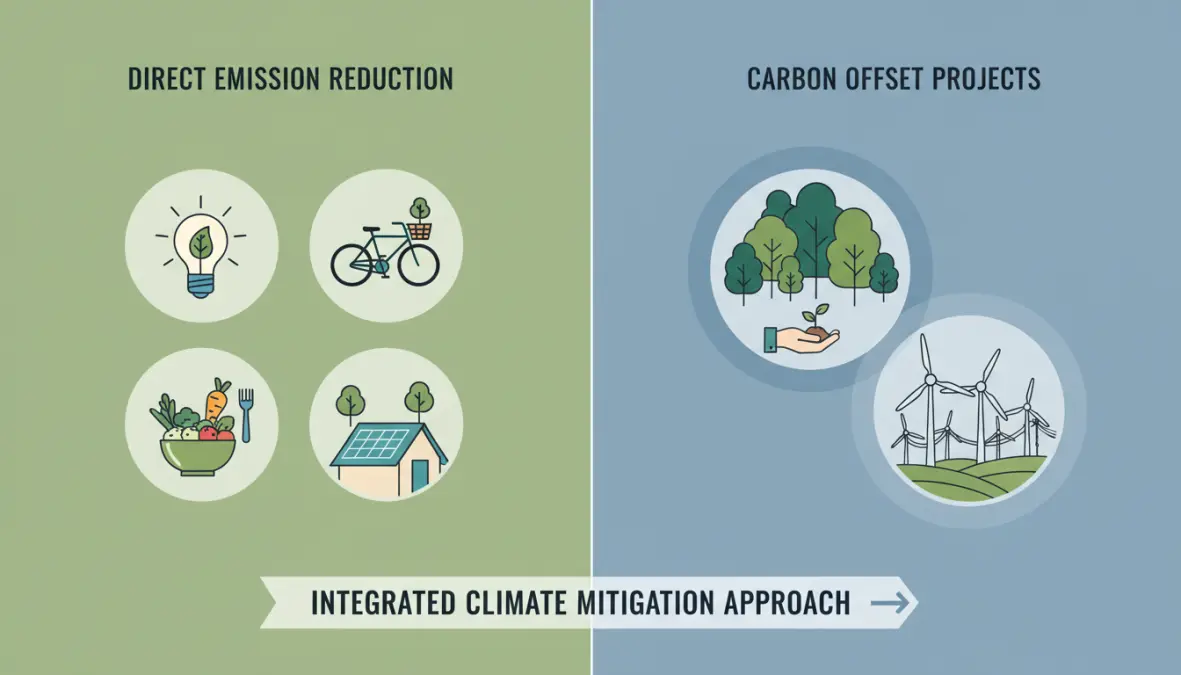
Here’s something most carbon neutrality guide resources won’t emphasize enough: carbon offsets should complement, not replace, direct emission reductions. Think of it as a hierarchy—reduction first, offsets second. The most impactful approach combines aggressive personal emission cuts with strategic offsetting of unavoidable emissions.
Start by targeting the biggest emission sources in your life. Switch to renewable energy for your home (or choose a green energy plan from your utility), improve home insulation to reduce heating and cooling needs, transition to electric or hybrid vehicles when possible, reduce air travel or choose direct flights, adopt a more plant-based diet, and practice mindful consumption by buying less and choosing durable goods. These actions directly shrink your footprint rather than simply compensating for it elsewhere.
After exhausting reduction opportunities, use personal carbon offsets for remaining emissions. This integrated approach embodies genuine climate mitigation. Many forward-thinking companies now offer carbon-neutral products and services—from airlines offering offset options at checkout to subscription services that automatically offset your lifestyle emissions monthly. By combining both strategies, you’re addressing the problem from multiple angles and demonstrating that achieving personal carbon neutrality isn’t just aspirational—it’s entirely achievable.
Common Questions About Carbon Credits for Individuals
As interest in voluntary carbon markets grows, several practical questions consistently arise. Let’s address the most common concerns about carbon credit trading for individuals pursuing a carbon neutrality guide.
How much do personal carbon offsets cost? Prices vary significantly based on project type and certification standards, typically ranging from $10 to $50 per ton of CO2. For context, offsetting the average American’s 16-ton annual footprint would cost between $160 and $800 per year. High-quality projects with robust co-benefits generally command premium prices, while simpler industrial projects cost less. When asking how much do carbon credits cost for individuals, remember that paying slightly more often ensures better verification and genuine impact.
Are carbon credits tax-deductible? Generally, purchasing carbon offsets as an individual isn’t tax-deductible unless you’re buying from a qualified nonprofit organization and receive proper documentation. Some offset providers operate as 501(c)(3) charities, making contributions potentially deductible as charitable donations. Always consult a tax professional and retain receipts if you’re considering this approach.
How can I verify a carbon offset project is legitimate? Look for third-party certification from Gold Standard, Verra (VCS), Climate Action Reserve, or American Carbon Registry. These organizations ensure projects meet stringent criteria for additionality, permanence, and accurate measurement. Transparent providers publish detailed project information, independent audit reports, and retirement certificates proving your purchased credits have been permanently removed from circulation.
What’s the difference between carbon credits and renewable energy certificates? This question addresses difference between carbon credits and offsets and related instruments. Renewable energy certificates (RECs) specifically represent the environmental attributes of renewable electricity generation—one REC equals one megawatt-hour of clean energy. Carbon credits are broader, representing any ton of CO2 reduced or removed, regardless of method. While both support climate action individuals can take, RECs focus exclusively on clean energy, whereas carbon credits encompass diverse project types.
Can I invest in carbon credits as an individual? While the compliance emissions trading system primarily serves regulated entities, individuals can explore carbon credit investment through specialized funds, ETFs tracking carbon markets, or platforms connecting investors with project developers. However, most individual participation focuses on purchasing credits for offsetting rather than financial speculation. When wondering are personal carbon credits worth it, consider your primary goal: immediate climate impact through offsetting typically matters more than potential financial returns.
Taking climate action doesn’t require waiting for perfect policy solutions or technological breakthroughs. With carbon credits explained and practical pathways outlined, you can start making measurable environmental contributions today. Calculate your footprint, reduce what you can, offset what remains, and join the growing movement of individuals proving that personal responsibility and collective action can address our greatest environmental challenge. Your choices matter—and now you have the knowledge to make them count.