Ocean Deoxygenation: Understanding the Silent Crisis Beneath the Waves
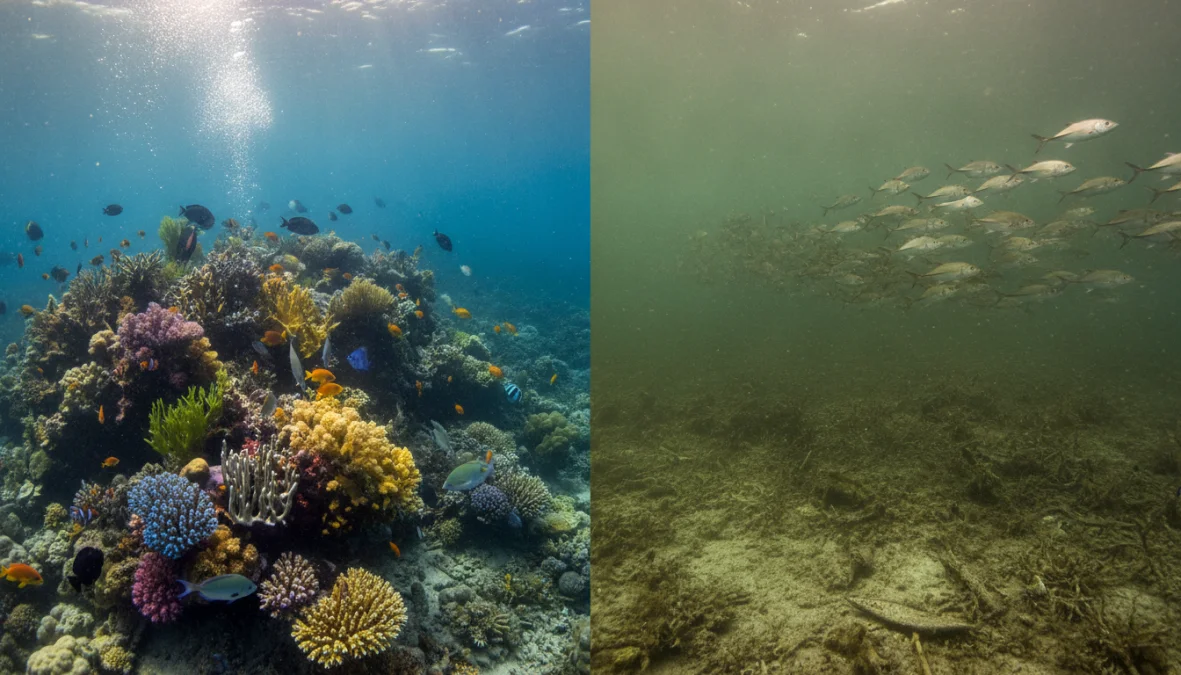
Beneath the surface of our oceans, a crisis is unfolding that most people never see or think about. While we worry about plastic pollution and coral bleaching, there’s another threat silently choking marine life: ocean deoxygenation. Our seas are literally losing their breath, and the consequences could reshape life on Earth as we know it. Let’s dive into what’s happening below the waves and why it matters more than you might think.
What Is Ocean Deoxygenation and Why Should We Care?
Ocean deoxygenation is exactly what it sounds like—the progressive loss of oxygen in our oceans. Since the 1960s, the world’s oceans have lost approximately 2% of their dissolved oxygen, which might not sound dramatic until you realize what that means for marine life. Think of it as the underwater equivalent of climbing to a higher altitude where the air gets thinner, except marine creatures can’t just pack up and leave.
Scientists distinguish between two conditions: hypoxia (low oxygen levels, typically below 2 mg/L) and anoxia (complete absence of oxygen). Both spell disaster for most marine organisms. The most visible manifestation of this dissolved oxygen decline is the proliferation of dead zones ocean—areas where oxygen levels have dropped so low that fish and other sea creatures simply can’t survive. As of recent counts, scientists have identified over 500 of these dead zones globally, and the number keeps climbing.
This isn’t just about fish—it’s about the entire foundation of ocean life. From the smallest plankton to the largest whales, every creature depends on adequate oxygen levels. And since oceans produce about half of Earth’s oxygen and absorb a quarter of our carbon emissions, what happens to them happens to us. The connection between ocean warming effects and climate change oceans makes this a truly global crisis that demands our attention.
The Root Causes: How Climate Change and Pollution Drive Oxygen Loss
Understanding how does climate change cause ocean deoxygenation requires looking at two interconnected culprits: global warming and nutrient pollution. Let’s start with the thermal effect. As ocean temperatures rise due to climate change oceans, a basic law of physics kicks in—warm water holds less dissolved oxygen than cold water. It’s the same reason your soda goes flat faster on a hot day. But there’s more to it than simple chemistry.
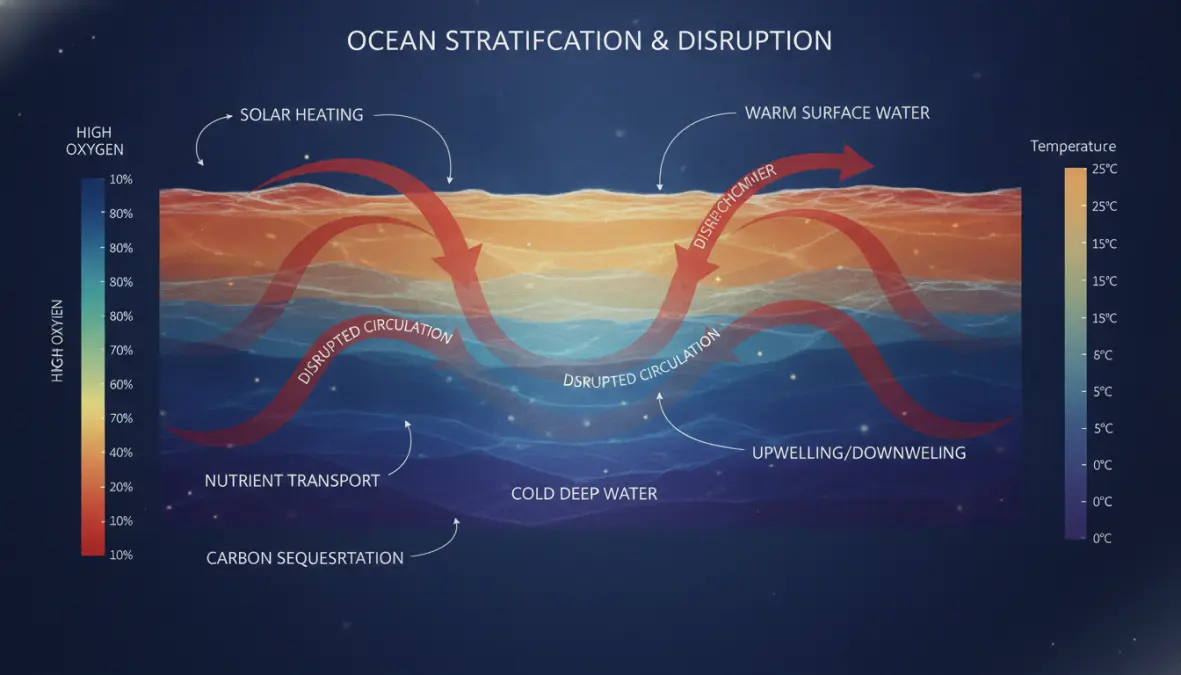
Warming also creates thermal stratification—imagine a layer cake where warm water sits on top of cold water, and the layers don’t mix well. This disrupts ocean circulation patterns that normally bring oxygen-rich surface water down to the depths and nutrient-rich deep water up to the surface. When these conveyor belts slow down, the ocean’s ability to distribute oxygen gets compromised. Thermal expansion further complicates matters by literally expanding water volumes, stretching out the oxygen that’s available.
The second major cause is eutrophication—a fancy word for nutrient overload. Agricultural nutrient runoff (think fertilizers) and urban sewage dump massive amounts of nitrogen and phosphorus into coastal waters. This triggers explosive phytoplankton blooms that seem beneficial at first—more plants making oxygen, right? Wrong. When these blooms die, bacteria decompose them in a process that consumes enormous amounts of oxygen, creating marine hypoxia.
Real-world examples hit hard: the Gulf of Mexico experiences an annual dead zone the size of New Jersey, fed by runoff from the Mississippi River. The Baltic Sea struggles with oxygen depletion due to agricultural waste from surrounding countries. Coastal regions off China, Japan, and South America face similar problems where industrialization meets ocean. These anoxic waters represent the breakdown of biogeochemical cycles that have sustained marine life for millennia.
Devastating Impacts on Marine Life and Ocean Ecosystems
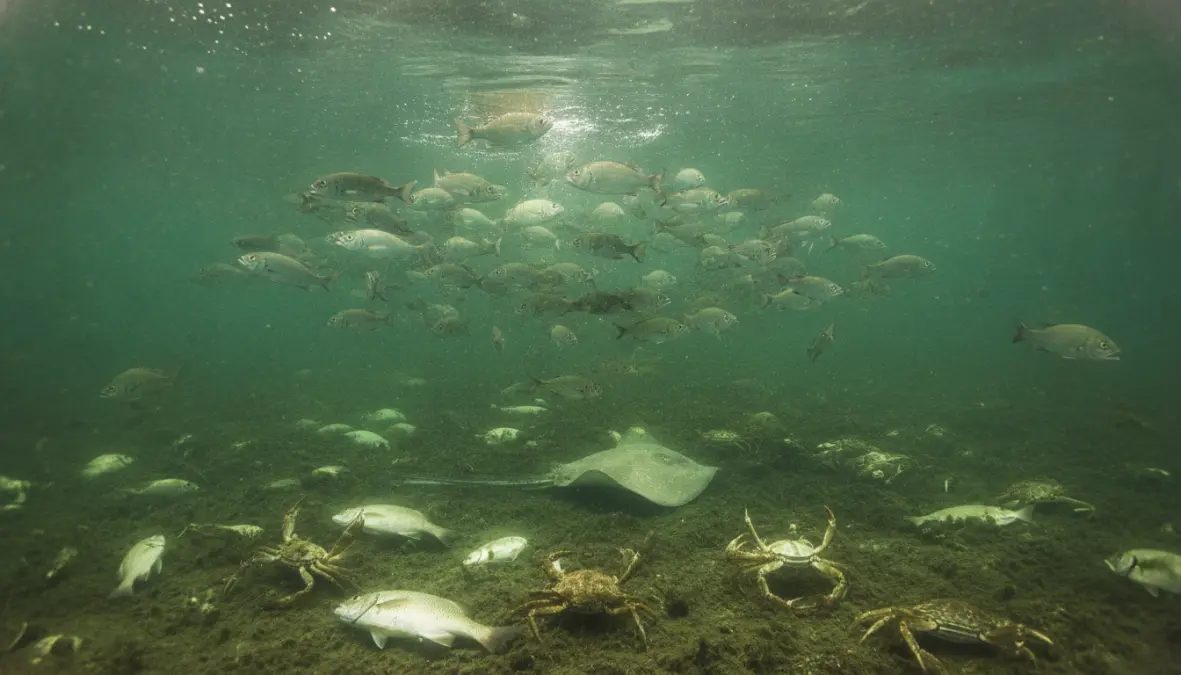
The effects of ocean deoxygenation on marine life range from immediate die-offs to subtle but profound ecosystem shifts. When oxygen levels plummet in dead zones ocean, mobile species like fish, shrimp, and squid flee if they can—but they’re essentially refugees being pushed into already crowded habitats. Less mobile creatures like oysters, clams, and bottom-dwelling organisms simply suffocate. Mass mortality events have become increasingly common, with thousands of dead fish washing up on beaches from Oregon to Uruguay.
But the real danger lies in the chronic, long-term exposure to marine hypoxia. Fish in low-oxygen environments grow smaller, reproduce less successfully, and become more vulnerable to disease and predators. Species that can tolerate low oxygen—like jellyfish and certain bacteria—start dominating ecosystems, fundamentally altering food webs. Coral reefs, already stressed by warming and acidification, face additional pressure as oxygen levels drop, accelerating marine ecosystem collapse.
The cascading effects ripple through entire ocean regions. Predator-prey relationships shift. Migration patterns change as species seek oxygen-rich waters. Biodiversity plummets as sensitive species disappear. Some areas that once teemed with life become biological deserts patrolled only by the most resilient survivors. This isn’t just an environmental tragedy—it’s an economic one. Commercial fisheries report declining catches, forcing boats to travel farther and work harder for smaller hauls. Coastal communities that depend on fishing face uncertain futures.
Long-Term Consequences for Global Food Security
The ocean deoxygenation impact on fisheries extends far beyond local economies. Approximately three billion people rely on seafood as their primary protein source, and global fisheries represent a $150 billion industry. As productive fishing grounds shrink and species migrate toward the poles seeking cooler, oxygen-rich waters, competition for marine resources intensifies. Developing nations with limited capacity to follow migrating fish stocks face the greatest risks.
Projections suggest that if current trends continue, we could see 30-50% reductions in fish populations in affected regions by mid-century. This isn’t just about having less tuna for sushi—it’s about food security for hundreds of millions of people. The connection between ocean dead zones and global warming creates a vicious cycle: climate change drives deoxygenation, which reduces fish stocks, which forces industrial fishing further into pristine areas, causing more ecological damage. Some experts warn that without intervention, we’re heading toward scenarios of international conflict over dwindling marine resources, much like we see with freshwater in arid regions.
FAQ: Common Questions About Ocean Deoxygenation
Can ocean deoxygenation be reversed?
Yes, but it requires action on two fronts. For coastal eutrophication-driven dead zones, reducing nutrient runoff through better agricultural practices and wastewater treatment can help waters recover within years to decades. However, the warming-driven component of ocean oxygen loss is tied directly to climate change oceans, meaning we need aggressive carbon emission reductions. Solutions like those discussed in our article on carbon credits can help individuals contribute to this effort. Some areas have shown improvement when pollution controls are implemented—Chesapeake Bay has seen partial recovery through coordinated watershed management.
How does ocean deoxygenation affect humans?
Beyond threatening food security, dissolved oxygen decline impacts coastal economies, tourism, and property values. Dead zones can create foul-smelling waters, kill off recreational fishing opportunities, and damage the marine industries that support millions of jobs globally. There are also health implications—some low-oxygen conditions favor the growth of harmful bacteria and toxin-producing algae that can contaminate seafood or make beaches unsafe.
What is the difference between dead zones and hypoxic zones?
Hypoxic zones have low but not zero oxygen (typically 0.5-2 mg/L)—they’re struggling but still support some life, usually hardy species. Dead zones ocean are areas with such severe oxygen depletion (below 0.5 mg/L or completely anoxic waters) that virtually nothing can survive except certain bacteria. Think of hypoxic zones as the warning sign and dead zones as the full-blown crisis.
What can be done to prevent ocean oxygen loss?
Preventing ocean oxygen depletion requires both local and global actions. Locally, we need better agricultural practices to minimize fertilizer runoff, improved sewage treatment, and wetland restoration that naturally filters nutrients. Globally, we must address climate change through emission reductions and ocean protection. Ocean deoxygenation solutions and mitigation also include creating marine protected areas, supporting sustainable fishing practices, and funding ocean monitoring systems. Efforts similar to the conservation approaches described in our piece on rewilding projects could help restore ocean resilience. Every action counts—from choosing sustainable seafood to supporting policies that protect marine environments.
The ocean’s silent suffocation won’t stay silent forever. The consequences will echo through ecosystems, economies, and ultimately our dinner plates. Understanding ocean deoxygenation is the first step toward solutions. The question is whether we’ll act quickly enough to give our oceans—and ourselves—the breath of life they desperately need.