Phonetic Alphabet Origin: How NATO’s Spelling System Became the Global Standard
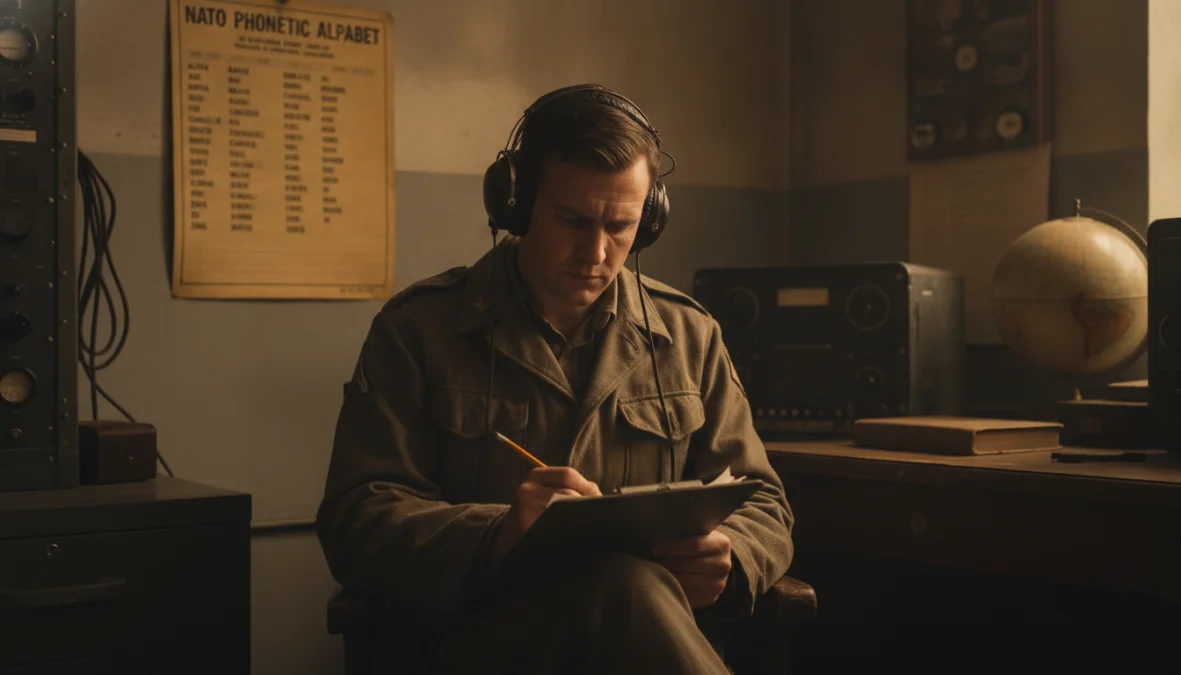
Ever wondered why pilots say “Alpha Bravo Charlie” instead of just spelling out letters? The phonetic alphabet origin story is way more fascinating than you might think—and it literally saved lives. What started as desperate military necessity during wartime has become the universal language of clear communication, from air traffic control towers to customer service centers worldwide. Let’s dive into how this clever system went from battlefield chaos to global standard.
The Birth of Phonetic Alphabets: From WWI to Standardization
The phonetic alphabet origin begins in the trenches and radio rooms of World War I, where static-filled communications could mean the difference between victory and catastrophic failure. Early military alphabet origins were born from pure desperation—soldiers quickly realized that letters like “B” and “D” or “M” and “N” sounded identical over crackling radio transmissions.
During WWI, various military units created their own ad-hoc spelling alphabet development systems. The Royal Navy used one set of words, the Army another, and American forces had their own variants. This chaotic situation led to documented disasters: misdirected artillery strikes, supplies sent to wrong coordinates, and reinforcements arriving at incorrect positions. One infamous incident involved a misheard grid coordinate where “B” was confused with “P,” resulting in friendly fire that could have been prevented.
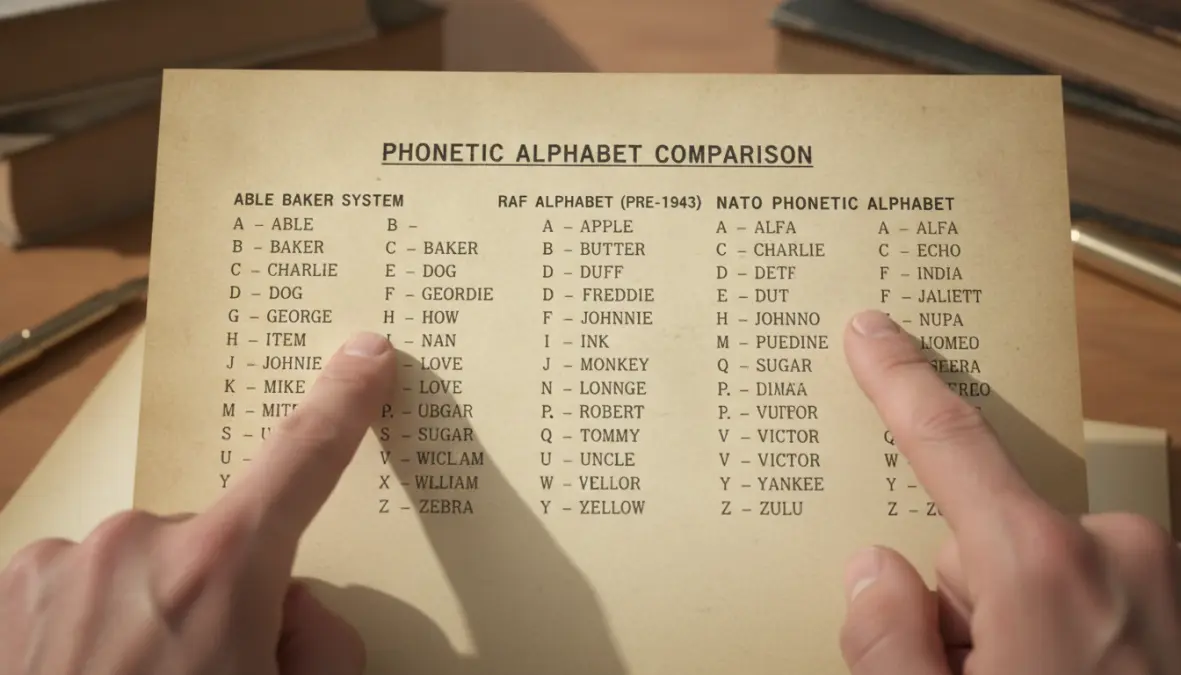
By WWII, the problem had escalated. Allied military communications now required coordination between British, American, Canadian, and other forces—each using different systems. The RAF used words like “Ack” and “Beer,” while Americans preferred “Able” and “Baker.” These inconsistencies created dangerous confusion during critical joint operations.
Early Military Systems and Their Limitations
The most prominent pre-NATO system was the “Able Baker” alphabet, officially adopted by US forces in the 1940s. It ran: Able, Baker, Charlie, Dog, Easy, Fox, George, and so on. Meanwhile, the RAF phonetic alphabet used completely different words for several letters. The fundamental problem? These systems weren’t designed for international use or cross-cultural pronunciation.
French pilots struggled with certain English sounds, while English speakers mangled words that worked perfectly in other languages. “Dog” sounded too similar to other words in certain accents. “Baker” could be confused with “Bravo” in noisy conditions. The history of alpha bravo charlie alphabet shows us that earlier attempts failed precisely because they prioritized ease for native speakers rather than universal intelligibility.
The Push for International Cooperation
Enter the International Civil Aviation Organization (ICAO) and the International Telecommunication Union (ITU), who recognized that post-war aviation needed something better. The question of when was the NATO phonetic alphabet created involves understanding this crucial transition period. In the early 1950s, ICAO assembled linguists and communication experts to scientifically test thousands of potential words.
The testing process was rigorous. Researchers from multiple nations evaluated words based on specific criteria: intelligibility across different languages, absence of negative connotations in major world languages, and distinctiveness even in poor radio transmission protocols. They conducted tests with speakers of English, French, Spanish, and other languages, measuring comprehension rates in simulated noisy conditions. The ICAO phonetic alphabet emerged from this scientific process, finalized in 1956 after extensive trials.
NATO Phonetic Alphabet: Design, Adoption and Global Impact
The NATO phonetic alphabet was officially adopted on March 1, 1956, but here’s the interesting part: NATO didn’t invent it. The alliance adopted the ICAO’s scientifically-tested system, which is why was the phonetic alphabet invented by ICAO but carries NATO’s name. NATO’s adoption gave it military credibility and accelerated its spread throughout Western military forces, making “NATO phonetic alphabet” the popular term.
The complete Alpha-to-Zulu system replaced all previous variants, creating unprecedented standardization. The aviation alphabet origin and radio alphabet history converged at this moment—commercial aviation, maritime communications, and emergency services all adopted the same system. This wasn’t coincidental; it reflected the growing interconnectedness of global communications, much like how modern challenges require international cooperation (similar to issues discussed in reshaping global systems).
The system’s genius lay in its scientific foundation. Each word was chosen for maximum voice clarity communication, ensuring that even under terrible conditions—engine noise, static, stress—the words remained distinguishable. “Alfa” (with an ‘f’ to ensure proper pronunciation) sounds nothing like “Oscar.” “Juliet” can’t be confused with “Mike.” This represents true telecommunications standards evolution.
Why These Specific Words Were Chosen
The selection process for how did the military alphabet originate in its modern form involved fascinating technical considerations. Researchers prioritized phonetic distinctiveness—words needed different vowel sounds, consonant patterns, and syllable counts. “November” with three syllables sounds completely different from “Tango” with two, even if you only catch part of the transmission.
Cross-linguistic pronunciation was crucial. International aviation language requirements meant that a Japanese pilot, Russian controller, and Brazilian co-pilot all needed to understand the same words. Words like “uniform” and “whiskey” worked because their sounds existed in most major language families. Many initially considered words were rejected: “Nancy” sounded too similar to other words in certain accents, while some options had negative connotations in specific cultures.
The testing with speakers from different linguistic backgrounds revealed surprising results. Some seemingly obvious choices failed miserably when speakers of tonal languages attempted them. The final selection represented a compromise between perfect English pronunciation and practical international usability—part of why who invented the international spelling alphabet is best answered as “a committee of international experts” rather than a single person.
Modern Applications and Variations Around the World
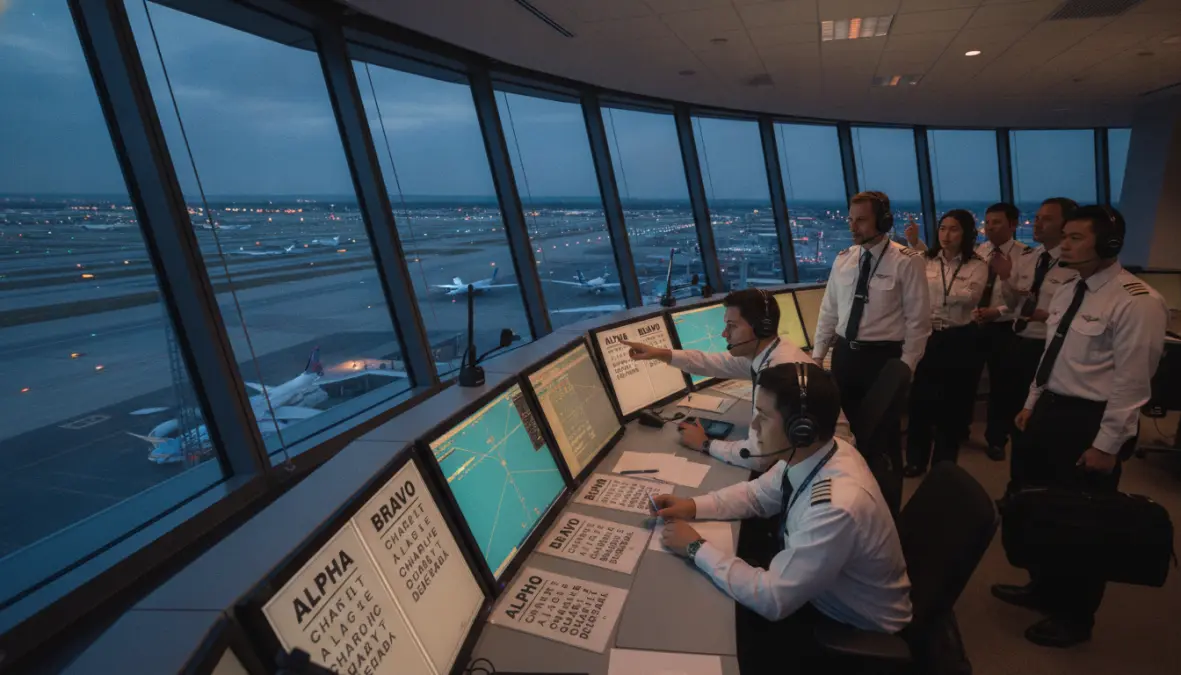
Today’s international phonetic alphabet history extends far beyond cockpits and battlefields. Customer service representatives use it to confirm email addresses. Police dispatchers spell license plates with it. Medical professionals relay patient information clearly over hospital intercoms. The evolution of phonetic alphabets over time shows remarkable expansion from specialized military tool to everyday communication aid.
Despite NATO standardization, some national variations persist. British police sometimes use traditional names like “Charlie” pronounced differently, while German emergency services occasionally substitute local alternatives. Italy’s police use a completely different system based on city names (Ancona, Bologna, Como). These variations reflect cultural preferences but increasingly give way to NATO standardization for international compatibility.
An important clarification: the difference between NATO and ICAO phonetic alphabet is essentially nothing—they’re the same system. However, both differ entirely from the International Phonetic Alphabet (IPA) used by linguists, which is a scholarly notation system for transcribing speech sounds, not a communication tool.
In our digital age, you might wonder why standardized spelling systems remain relevant when we can text or email. The answer? Human voices still matter in critical situations. When systems fail, when visual communication is impossible, or when verification is essential, the phonetic alphabet provides reliable morse code alternatives for the modern era. Just as human connection remains vital in an increasingly isolated world (explored in discussions about social disconnection), clear verbal communication endures as irreplaceable.
FAQ
When was the phonetic alphabet invented?
The NATO phonetic alphabet was finalized and adopted in 1956 by ICAO after years of scientific testing. However, earlier military phonetic systems existed from WWI onward, with the “Able Baker” system being the most prominent precursor used during WWII.
Who created the NATO phonetic alphabet?
The International Civil Aviation Organization (ICAO) developed it through extensive international collaboration and scientific testing with linguists and communication experts from multiple countries. NATO adopted ICAO’s system, which is why it carries both names despite ICAO being the primary creator.
Why is it called NATO alphabet if ICAO developed it?
NATO’s adoption and promotion of the system in 1956 gave it widespread military use and recognition. The alliance’s influential role in standardizing it across Western military forces made “NATO phonetic alphabet” the popular name, even though ICAO did the actual development work.
Is the phonetic alphabet the same worldwide?
The NATO/ICAO version is the international standard used in aviation, maritime, and most emergency services globally. However, some countries maintain national variations for domestic use, particularly in law enforcement. These variations are gradually being replaced by the NATO standard for consistency.
What’s the difference between NATO and International Phonetic Alphabet (IPA)?
They’re completely different systems. The NATO phonetic alphabet (Alpha, Bravo, Charlie) is for spelling words clearly over radio. The IPA is a scholarly notation system used by linguists to transcribe precise speech sounds in any language, unrelated to telecommunications or military use.
The journey from chaotic wartime communications to a globally unified system shows how necessity drives innovation. The phonetic alphabet’s endurance proves that sometimes the best solutions are elegantly simple—just smart enough to work everywhere, for everyone, every time. Next time you hear “Roger that,” remember you’re hearing decades of international cooperation distilled into perfect clarity.