The Polycrisis Era: Understanding How Multiple Global Emergencies Are Converging
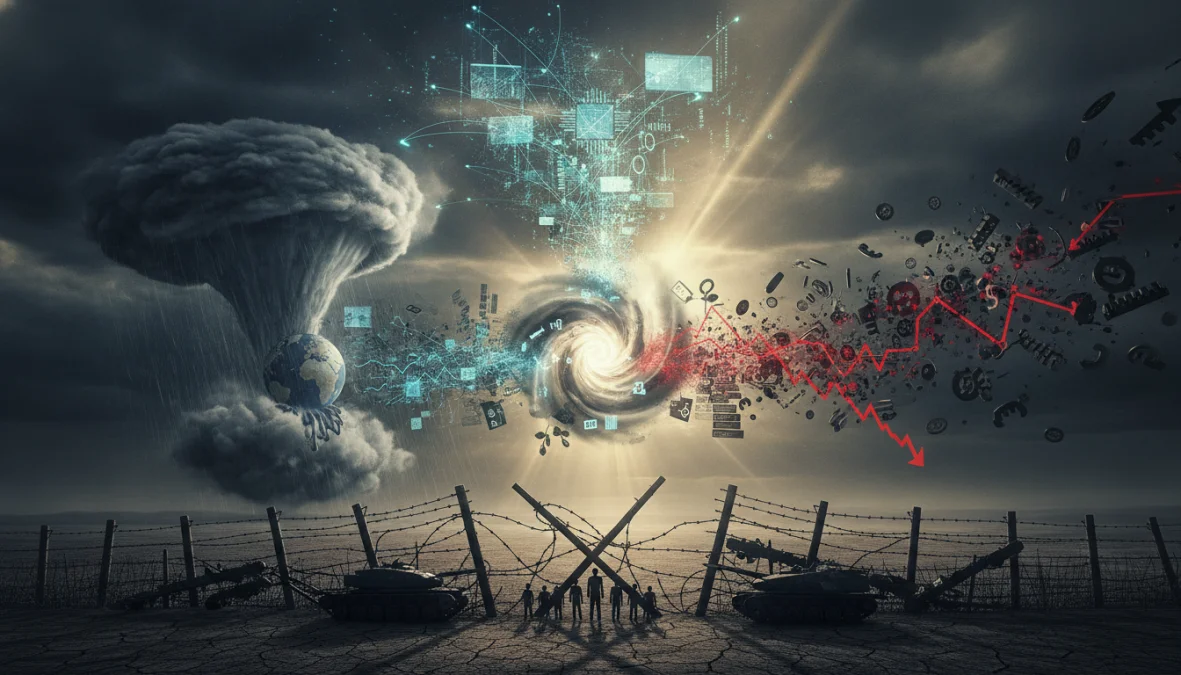
Remember when we used to deal with one crisis at a time? Those were simpler days. Now, it feels like we’re juggling flaming torches while standing on a melting ice floe during an earthquake. Welcome to the polycrisis era, where multiple global crises aren’t just happening simultaneously—they’re feeding off each other in ways that make everything exponentially worse.
What Is Polycrisis and Why It Matters Now
The term polycrisis was popularized by the World Economic Forum to describe something fundamentally different from the challenges we’ve faced before. It’s not just about having several problems at once—it’s about how these global emergencies interact and amplify each other in unpredictable, non-linear ways.
Think of it this way: a traditional crisis is like a broken pipe in your house. You fix it, clean up, move on. But a polycrisis is when the pipe breaks, which floods the basement, which shorts the electrical system, which shuts down your heating, which freezes another pipe, which breaks and floods more areas. Each problem makes the others worse, creating a cascading nightmare that’s exponentially harder to manage than any single issue would be.
Right now, we’re witnessing climate disruption colliding with energy shortages, food insecurity, geopolitical tensions, economic instability, and technological disruption—all at once. These interconnected threats don’t just coexist; they actively intensify each other. A drought in one region doesn’t just cause local water problems—it triggers food price spikes, migration pressures, political instability, and economic shocks that ripple globally. This is what is polycrisis and how it affects the world in the most concrete sense: nothing happens in isolation anymore.

How Converging Crises Create Cascading Failures Across Systems
The mechanics of converging crises are both fascinating and terrifying. Our global systems—financial networks, supply chains, digital infrastructure, food production—are more interconnected than ever before. This connectivity brings efficiency but also creates massive systemic risk. When one piece fails, the failure spreads like a virus through the entire network.
Consider how climate change and economic crisis are connected in practice: extreme weather events disrupt agricultural production, which drives up food prices. Higher food costs contribute to inflation, which forces central banks to raise interest rates. Higher borrowing costs slow economic growth, reducing government revenues just when more investment is needed for climate adaptation. Meanwhile, economic stress reduces public support for climate action, which guarantees more extreme weather in the future. It’s a perfect example of feedback loops creating compound disasters.
The pandemic offered a preview of these dynamics. COVID-19 wasn’t just a health crisis—it triggered cascading failures across every domain. Healthcare systems overwhelmed, economies locked down, supply chains fractured, political tensions escalated, and mental health deteriorated. We saw firsthand how geopolitical tensions and supply chain disruptions can interact to create problems far larger than their individual components would suggest.
The Amplification Effect: When 1+1 Equals More Than 2
This is where things get really interesting. In a polycrisis, the combined impact of multiple crises happening at the same time isn’t additive—it’s multiplicative. When Russia invaded Ukraine, the immediate impact was terrible enough. But because that crisis intersected with existing climate-driven droughts in major grain-producing regions, the global food crisis that resulted was far worse than either factor alone would have caused.
Similarly, water scarcity isn’t just an environmental issue. When regions face critical water shortages, it doesn’t just affect drinking water—it cripples agriculture, disrupts energy production (many power plants require water for cooling), forces migration, and fuels conflict. Each of these secondary effects then triggers tertiary effects, creating an exponential expansion of global instability.
Key Domains Where Threats Are Interconnecting
Understanding why multiple crises are converging now requires mapping the key intersection points where interconnected threats are most volatile:
- Climate-Energy-Food Nexus: These three domains are inseparably linked. Climate change disrupts food and energy systems, while our current energy and food production methods accelerate climate change.
- Technology-Security-Information: Cyber attacks can cripple critical infrastructure, while misinformation spreads through digital networks, undermining social cohesion needed to address other crises.
- Health-Economy-Society: Public health crises tank economies, economic stress worsens health outcomes, and both fuel social fragmentation—as we saw with the loneliness epidemic during pandemic lockdowns.
- Geopolitics-Resources-Migration: Resource scarcity drives geopolitical competition, which creates refugees and migrants, which strains receiving countries, which fuels nationalist politics, which reduces international cooperation on resource management.
Building Resilience in a Polycrisis World
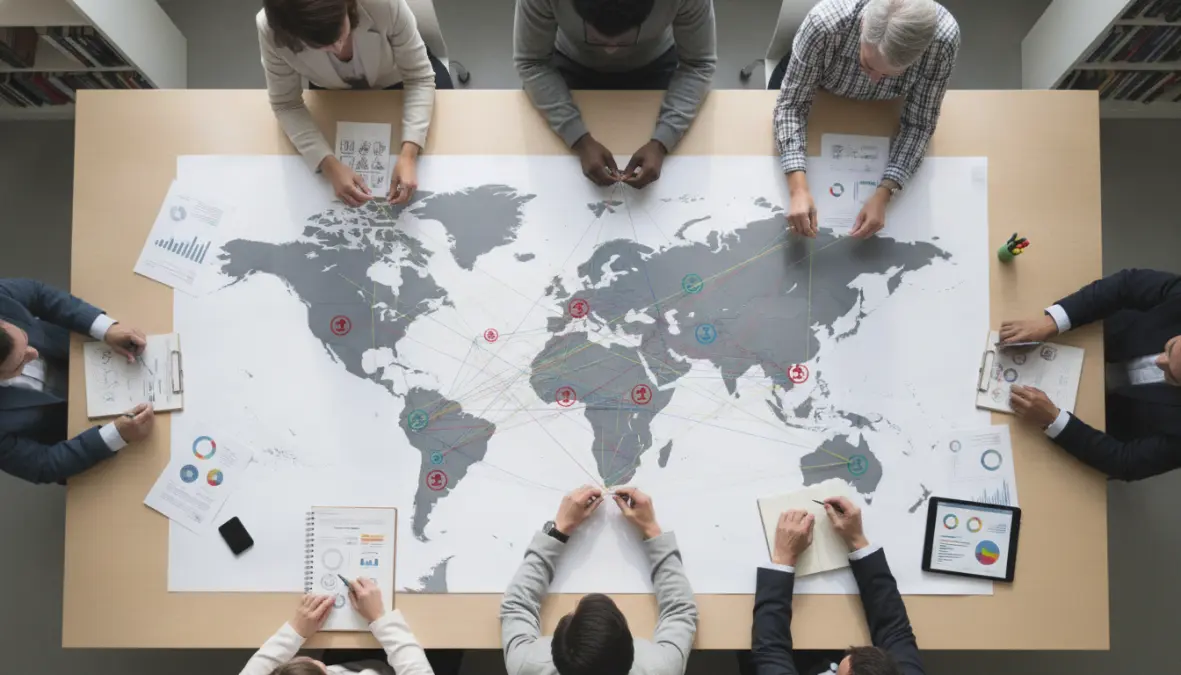
So what do we do when facing this daunting convergence of global emergencies? The first step is abandoning the illusion that we can solve these problems one at a time. Managing simultaneous global emergencies requires systemic thinking that acknowledges interdependencies rather than ignoring them.
At the institutional level, this means moving beyond siloed agencies and departments. Climate policy can’t be separated from economic policy, energy strategy, or agricultural planning. We need integrated frameworks that consider how interventions in one domain will ripple through others. This is where concepts like complexity theory and adaptive governance become crucial—we need decision-making processes that can respond to rapid changes and unexpected interactions.
For businesses and organizations, resilience planning now requires scenario planning that accounts for multiple simultaneous shocks. It’s not enough to have a pandemic plan, a cyber security plan, and a climate adaptation plan sitting in separate binders. Those crises will likely hit together, and your response to one will affect your capacity to handle the others.
At the individual level, understanding how to prepare for polycrisis situations means building personal resilience across multiple domains: financial buffers, diverse skill sets, strong community networks, and mental adaptability. The impact of converging global threats will be felt in daily life through price volatility, service disruptions, and increased uncertainty.
Perhaps most importantly, we need to recognize that preventing system collapse requires addressing root causes rather than just managing symptoms. This means confronting uncomfortable truths about consumption patterns, inequality, and the sustainability of our current economic model. The polycrisis era challenges and solutions demand transformative change, not incremental adjustments.
FAQ: Understanding Polycrisis and Global Emergencies
What is the difference between polycrisis and multiple crises?
Multiple crises are separate problems that happen to occur at the same time but don’t necessarily interact. A polycrisis involves crises that amplify each other through feedback loops and crisis interdependence, creating combined effects greater than the sum of individual parts. The key distinction is interaction and risk amplification.
What are the main global emergencies converging today?
The primary converging crises include climate disruption, biodiversity collapse, energy transitions, food system instability, geopolitical tensions, economic inequality, technological disruption, and public health vulnerabilities. These aren’t separate tracks—they’re interconnected systems approaching multiple tipping points simultaneously.
Can polycrisis be prevented or only managed?
Prevention requires addressing root causes before cascading failures begin—which becomes harder as systems approach critical thresholds. While complete prevention may no longer be possible for current crises, proactive resilience planning and systemic reforms can reduce severity and build adaptive capacity. The focus should be on both mitigation and building robust systems.
How does polycrisis affect everyday life?
The impact of converging global threats appears in price volatility (food, energy), service disruptions (supply chains, infrastructure), increased uncertainty (job security, planning), and psychological stress. Even people not directly experiencing disasters feel the effects through inflation, shortages, political instability, and the constant drumbeat of bad news affecting mental health.
Living through a polycrisis era isn’t about waiting for things to return to “normal”—it’s about adapting to a fundamentally different reality where complexity, interconnection, and uncertainty are the new constants. The sooner we embrace systemic thinking and build genuine resilience, the better equipped we’ll be to navigate whatever comes next.