Kelp Farming Benefits: How Ocean Agriculture Captures Carbon and Feeds the Future
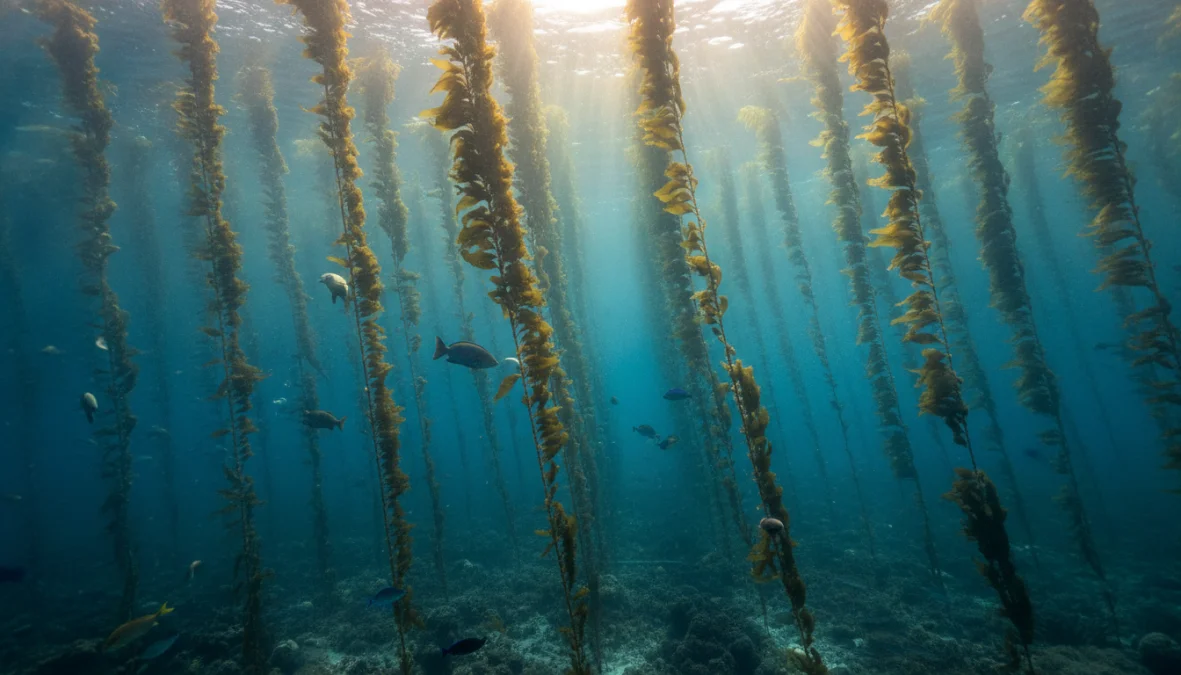
Picture this: vast underwater gardens stretching across coastal waters, silently pulling carbon from the atmosphere while producing nutritious food and revitalizing marine ecosystems. This isn’t science fiction—it’s the reality of kelp farming, an ancient practice experiencing a modern renaissance. As climate change accelerates and food security concerns mount, kelp farming benefits are capturing attention from scientists, entrepreneurs, and policymakers alike. This underwater agriculture could be one of our most powerful tools for healing the planet while feeding its growing population.
What Is Kelp Farming and Why Ocean Agriculture Matters
Kelp farming, also known as seaweed cultivation, involves growing various species of large brown algae in controlled marine environments. Unlike wild harvesting, which can deplete natural kelp forests, ocean farming creates new productive areas specifically for macroalgae production. The process is remarkably simple: farmers anchor vertical ropes or lines underwater, where kelp spores attach and grow rapidly—some species can shoot up three feet per day under ideal conditions.
This form of sustainable aquaculture differs fundamentally from terrestrial farming. Kelp requires no fresh water, no fertilizers, no pesticides, and no arable land. It simply harnesses the ocean’s natural nutrients and sunlight. The global seaweed farming industry has exploded in recent decades, with production exceeding 35 million tons annually and growing at roughly 8% per year. While Asia has dominated the market historically, North America, Europe, and other regions are rapidly developing their own kelp farming operations.
The kelp farming benefits span environmental restoration, climate mitigation, economic opportunity, and food security—making it a rare solution that addresses multiple global challenges simultaneously. Similar to how regenerative agriculture transforms land-based food systems, ocean farming represents a paradigm shift in how we think about marine resources.
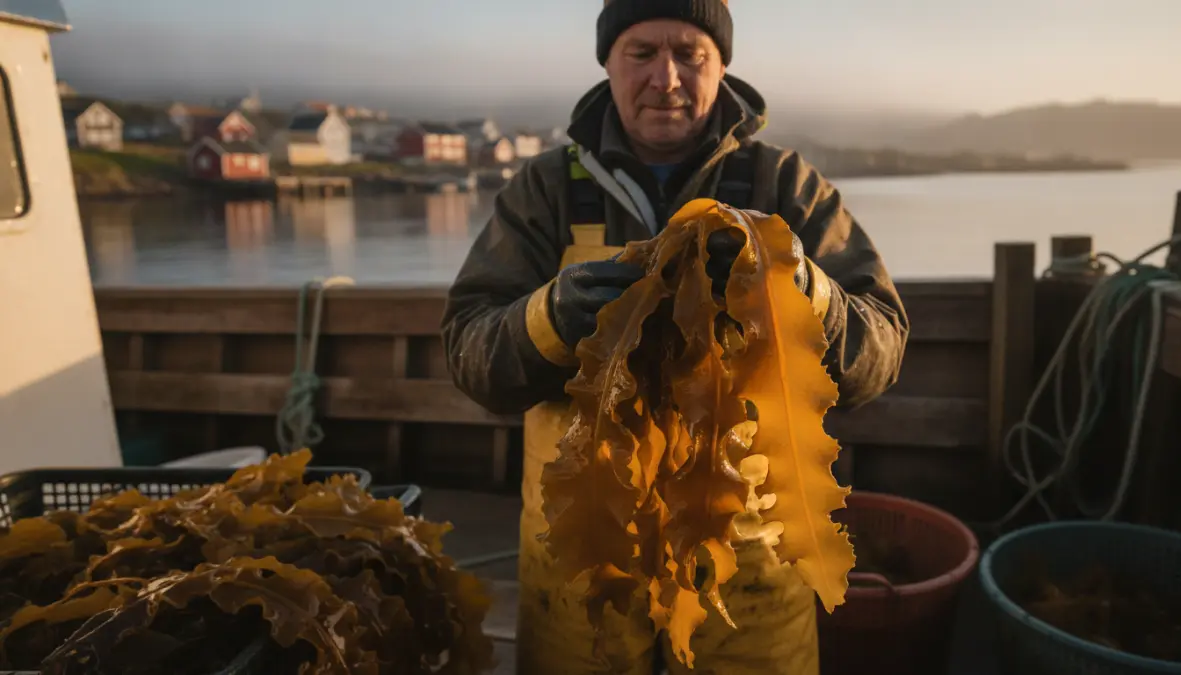
Environmental and Climate Benefits of Kelp Farming
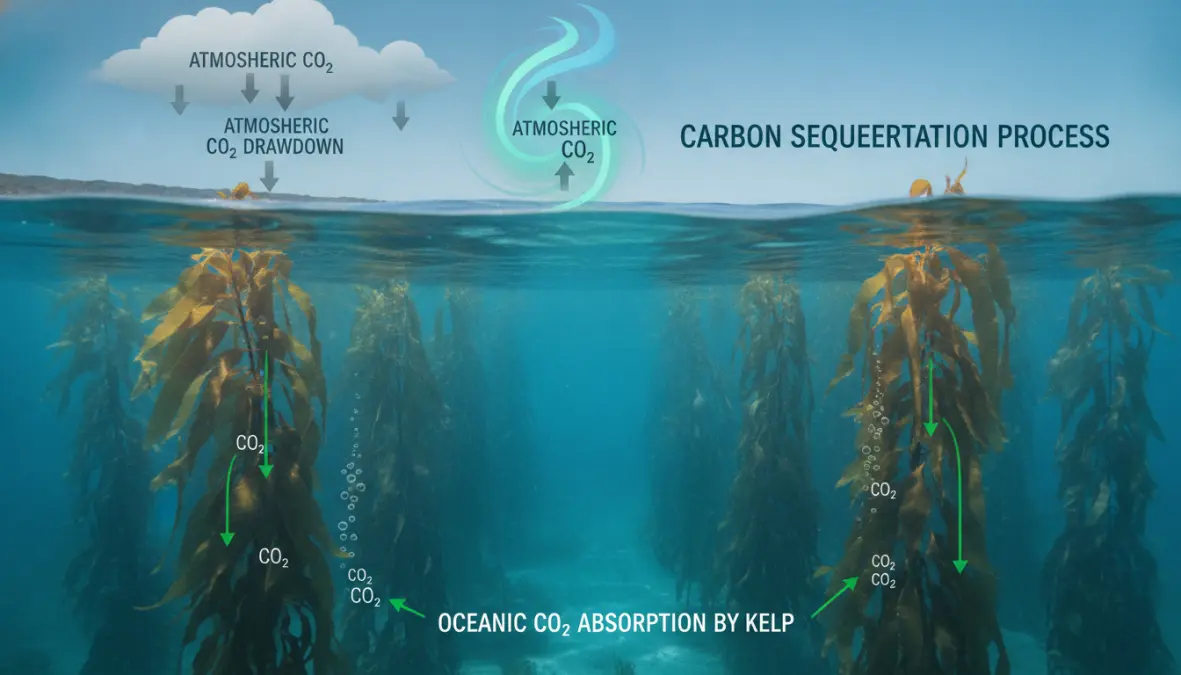
The kelp environmental benefits are staggering in their scope and impact. Through photosynthesis, kelp absorbs dissolved carbon dioxide from seawater, which in turn draws more CO2 from the atmosphere. Research suggests that large-scale kelp farming could sequester significant amounts of carbon—estimates range from 2 to 20 tons of CO2 per acre annually, depending on species and conditions. This makes kelp a promising blue carbon solution alongside mangroves and seagrass meadows.
Beyond carbon sequestration kelp provides, these underwater farms tackle ocean acidification mitigation by removing CO2 that would otherwise acidify seawater. As kelp photosynthesizes, it raises local pH levels, creating refuges for shellfish and other organisms struggling with increasingly acidic oceans. This localized buffering effect can extend hundreds of meters from kelp farms.
The environmental advantages extend far beyond carbon:
- Biodiversity enhancement: Kelp farms create three-dimensional habitats that attract fish, invertebrates, and marine mammals, functioning similarly to natural kelp forests
- Bioremediation: Kelp absorbs excess nitrogen and phosphorus from agricultural runoff and sewage, reducing eutrophication and harmful algal blooms
- Coastal ecosystem restoration: Farms can serve as stepping stones for rebuilding depleted natural kelp forests
- Water quality improvement: By filtering nutrients and suspended particles, kelp clarifies water and improves conditions for other marine life
- Coastal protection: Kelp beds dampen wave energy, reducing erosion and protecting shorelines from storm damage
Studies from organizations like The Nature Conservancy have documented fish populations increasing by 20-30% near kelp farms, while local water quality measurements show significant reductions in nitrogen levels. This positions marine permaculture as a restoration tool, not just an extractive industry.
How Kelp Functions as a Blue Carbon Solution
Understanding how does kelp farming capture carbon requires looking at the biological mechanisms involved. During photosynthesis, kelp converts dissolved inorganic carbon in seawater into organic biomass—the plant tissue itself. Some of this carbon gets stored long-term through several pathways: kelp fragments sink to deep ocean floors where cold temperatures and pressure slow decomposition; carbon gets incorporated into sediments; and some carbon enters the marine food web, eventually settling in deep-sea ecosystems.
Unlike terrestrial forests vulnerable to wildfires or deforestation, deep ocean carbon storage can last centuries to millennia. The benefits of kelp farming for climate change become even more compelling when considering scalability. Researchers estimate that farming just 2% of the world’s oceans with kelp could potentially offset up to 10% of annual global carbon emissions, though practical and ecological constraints make such massive expansion unrealistic. Still, even modest expansion could create meaningful impact, potentially qualifying for marine carbon credits as verification methodologies improve.
Economic and Food Security Benefits of Seaweed Cultivation
The economic benefits of seaweed farming extend from coastal communities to global markets. Kelp serves as a nutritional powerhouse—packed with vitamins A, C, E, and K, essential minerals including iodine, calcium, and iron, and providing complete proteins with all nine essential amino acids. As a kelp as sustainable food source, it offers a low-environmental-impact alternative to land-based crops and animal proteins, much like insect protein presents innovative food solutions.
Commercial applications for kelp continue expanding across industries:
- Human food: Fresh, dried, and processed kelp products, from traditional nori to kelp noodles and seasonings
- Animal feed: Nutritious supplements for livestock that can reduce methane emissions from cattle by up to 80%
- Fertilizers and soil amendments: Organic kelp extracts boost plant growth and soil health
- Biofuels: Seaweed as biofuel shows promise for renewable energy production without competing for agricultural land
- Pharmaceuticals and nutraceuticals: Bioactive compounds with anti-inflammatory and antimicrobial properties
- Cosmetics and personal care: Hydrating and mineral-rich ingredients for skin and hair products
- Bioplastics: Biodegradable packaging materials derived from kelp polysaccharides
The global seaweed market reached approximately $16 billion and continues growing as new applications emerge. For coastal communities, particularly those affected by declining wild fisheries, kelp farming offers economic diversification. Start-up costs remain relatively low compared to traditional aquaculture, and kelp farming methods and techniques are accessible to small-scale operators. The crop grows during winter months, providing year-round income opportunities when combined with summer fisheries.
Kelp Farming as Sustainable Aquaculture
Sustainable aquaculture through kelp cultivation addresses many problems plaguing conventional fish farming. Traditional aquaculture often requires massive inputs of feed, generates waste that pollutes surrounding waters, and can spread diseases to wild populations. Kelp farming flips this equation entirely—it’s a zero-input system that actually cleans water rather than polluting it.
The concept of marine permaculture and integrated multi-trophic aquaculture (IMTA) takes this further by combining kelp farms with shellfish and finfish operations. In these regenerative ocean agriculture systems, kelp absorbs nutrients from fish waste, shellfish filter particles, and all species benefit from improved water conditions. This creates closed-loop systems that maximize productivity while minimizing environmental impact—a stark contrast to industrial monoculture approaches. Similar to vertical farming innovations on land, ocean farming represents a fundamental reimagining of food production that works with natural systems rather than against them.
Kelp farming exemplifies how human activity can actively restore rather than degrade ecosystems, offering a blueprint for truly sustainable food systems in our ocean-dominated planet.
As we face converging crises of climate change, ocean degradation, and food insecurity, kelp farming emerges not as a silver bullet, but as a versatile tool with remarkable potential. From capturing carbon and buffering ocean acidification to providing nutritious food and economic opportunity, the benefits of cultivating these remarkable marine plants span environmental, social, and economic dimensions. The underwater gardens spreading across our coasts may just represent the future of sustainable food production and climate action—a future where feeding humanity helps heal the planet.