Sponge City Design: How Urban Planning Can Absorb and Manage Stormwater Naturally
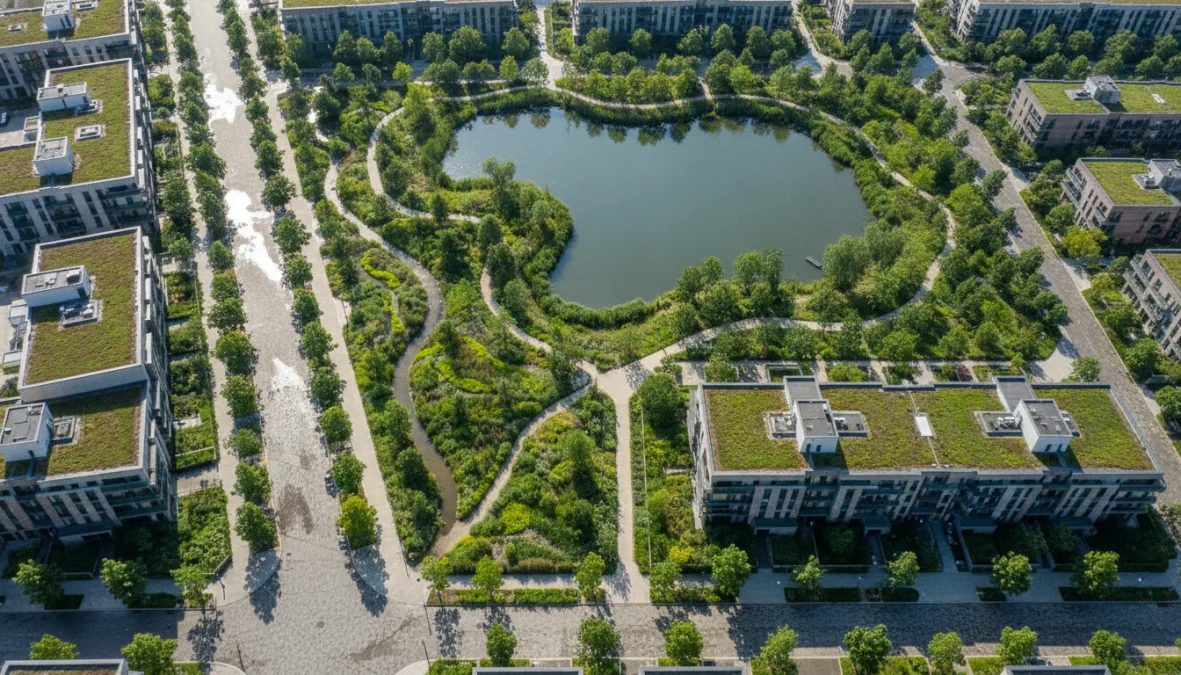
Picture this: a massive downpour hits your city, and instead of watching streets transform into rivers and basements flood, the water simply… disappears. It soaks into porous sidewalks, gets absorbed by lush roadside gardens, and collects in beautiful urban ponds. Sounds like urban planning fantasy? Welcome to the world of sponge city design, where cities work with nature rather than against it to manage stormwater in ways that are smarter, greener, and way more sustainable than traditional concrete drainage systems.
What Is Sponge City Design and Why It Matters
Sponge city design is exactly what it sounds like—urban planning that makes cities behave like giant sponges, naturally absorbing, storing, and managing rainwater. Born from China’s ambitious urban planning initiatives in the early 2010s, this approach follows six core principles: absorb, store, infiltrate, purify, drain, and reuse. It’s essentially nature’s playbook for handling water, applied to concrete jungles.
Traditional cities fail spectacularly at urban stormwater management because they’re built like bathtubs with drainage holes. Impermeable surfaces—asphalt, concrete, rooftops—cover 60-90% of urban areas, preventing water from doing what it naturally wants to do: soak into the ground. Instead, rainwater races across hard surfaces, picking up pollutants, overwhelming drainage systems, and causing flash floods. According to research, urban flooding has increased by 50% in major cities over the past two decades, with climate change intensifying rainfall events.
The benefits of implementing sponge city principles for urban flood mitigation are compelling: reduced flooding damage (which costs billions annually), improved water quality through natural filtration, creation of vibrant green spaces, enhanced biodiversity, and—crucially—climate adaptation. These aren’t just drainage systems; they’re multifunctional urban ecosystems that make cities more livable while tackling water challenges head-on.
Key Components of Sponge City Infrastructure
The magic of green infrastructure design lies in combining multiple elements that work together as an integrated system. Think of it as orchestrating different instruments to create harmonious sustainable urban drainage. Each component plays a specific role, but together they create resilient, water-sensitive urban environments.
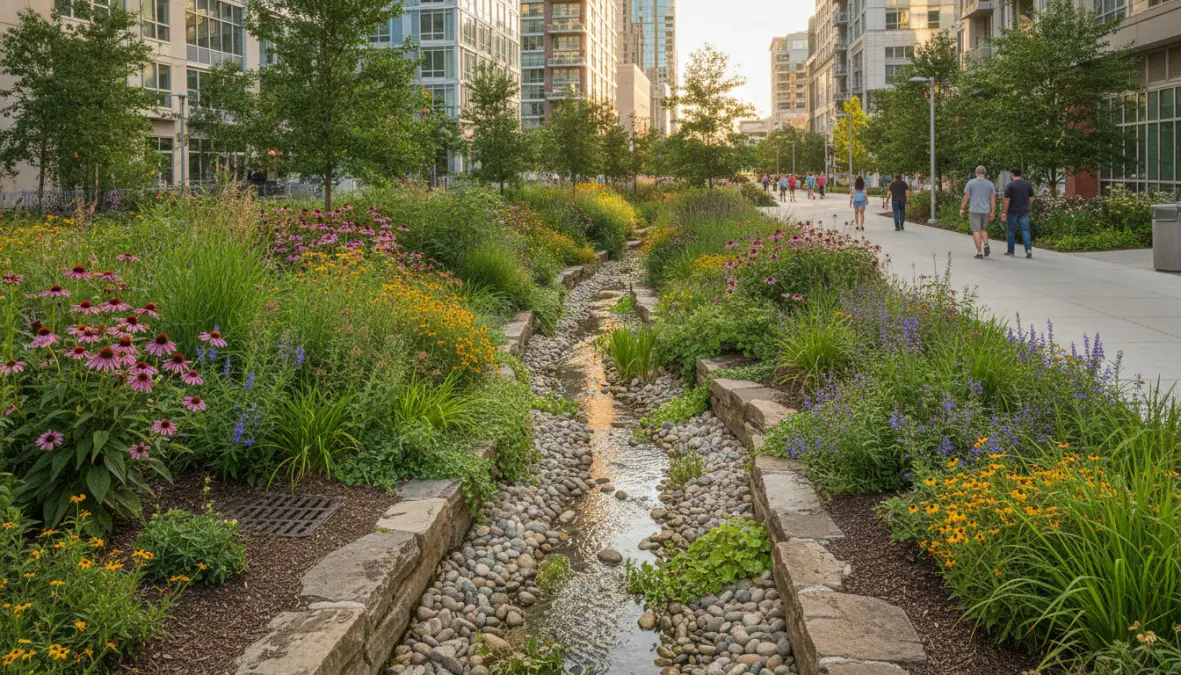
At street level, permeable pavement solutions replace traditional impervious surfaces with materials that let water pass through. Bioswale design integrates vegetated channels along roadways that slow, filter, and absorb runoff. Green roofs and vertical gardens turn building surfaces into water-absorbing landscapes. Rainwater harvesting systems capture precipitation from rooftops for later use, while urban wetlands and retention ponds provide large-scale storage and natural purification. Similar to how vertical farming cities integrate food production into urban design, sponge cities weave water management into the urban fabric itself.
Permeable Surfaces and Bioswale Systems
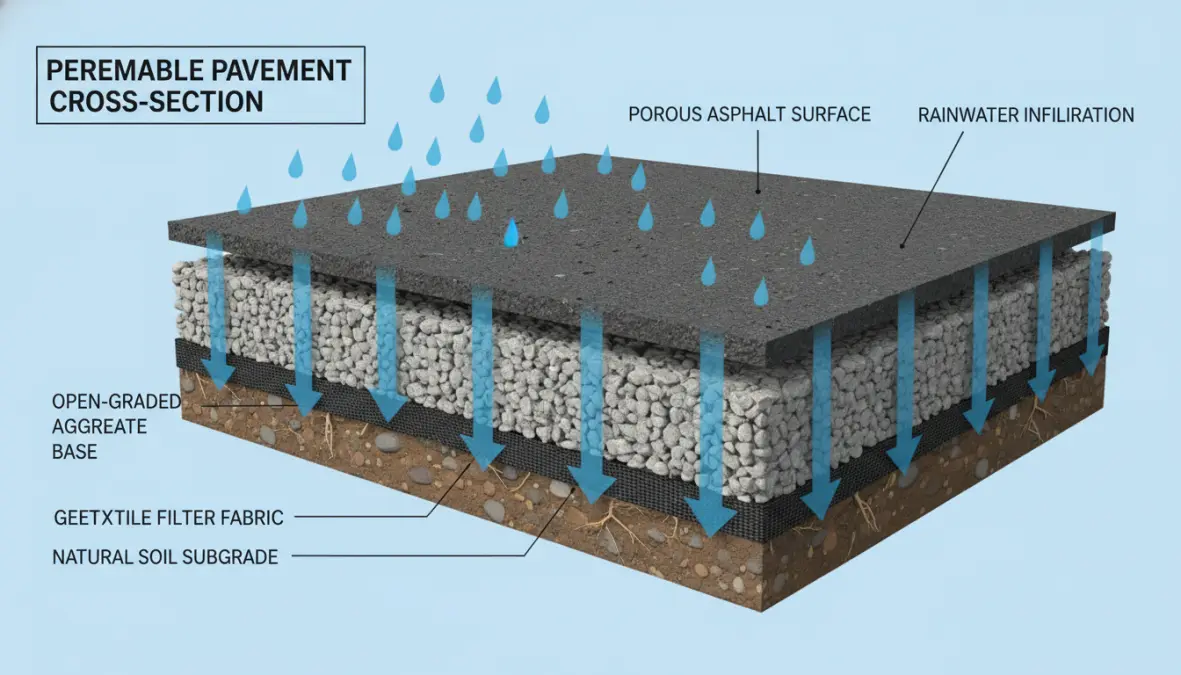
Let’s get into the nuts and bolts of permeable pavement solutions. These aren’t your grandfather’s sidewalks. Porous asphalt uses special aggregate mixes with void spaces that allow water infiltration while maintaining structural integrity. Permeable concrete incorporates larger aggregates with minimal fine particles, creating interconnected voids. Permeable pavers—concrete or stone blocks with gaps filled with gravel or vegetation—offer flexibility and aesthetic appeal.
Each option has specific applications: porous asphalt works great for parking lots and low-traffic roads, permeable concrete suits pedestrian plazas, and pavers shine in residential driveways and patios. The key is matching the solution to the expected load and infiltration needs.
Bioswale design requires careful planning around several factors. Dimensioning depends on drainage area, expected runoff volume, and infiltration rates—typically designed to handle storms up to the 10-year event. Slopes between 2-6% ensure water moves through the system without erosion. Plant selection is critical: native species with deep roots and high pollutant-uptake capacity work best. Think ornamental grasses, sedges, and flowering perennials adapted to both wet and dry conditions. Maintenance involves periodic sediment removal, vegetation management, and ensuring inlet/outlet structures remain clear.
Water Storage and Reuse Solutions
Beyond absorption, smart rainwater harvesting systems capture and store water for later use—the “reuse” component of sponge city principles. Underground storage tanks can hold thousands of gallons beneath parks or parking areas without consuming valuable surface space. Cisterns, both above and below ground, provide decentralized storage at building scale.
The real value emerges when this harvested water offsets potable water demand. Irrigation of parks and street trees, toilet flushing, industrial cooling, and even street cleaning can all use harvested rainwater. This dual benefit—reducing both flood risk and water supply pressure—exemplifies sustainable urban drainage thinking. Advanced systems include filtration, UV treatment, and smart controls that empty storage before major storms to maximize flood mitigation capacity.
Implementing Sponge City Principles: From Planning to Practice
Transitioning from concept to reality requires systematic approaches to sponge city design. It starts with site assessment—understanding existing hydrology, soil infiltration rates, drainage patterns, and infrastructure. Hydrological modeling predicts how different interventions will perform under various rainfall scenarios, informing design decisions.
Planning strategies must integrate water sensitive urban design into zoning codes and building regulations. Progressive cities mandate minimum percentages of permeable surfaces in new developments, offer density bonuses for green infrastructure, and create stormwater utilities that fund improvements. Much like remote work is reshaping urban planning priorities, climate realities are forcing cities to rethink infrastructure fundamentals.
Real-world examples demonstrate diverse approaches: Wuhan, China—the poster child for sponge cities—has invested billions in comprehensive systems across 160 square kilometers, including wetlands restoration and permeable infrastructure. Copenhagen, Denmark tackled cloudbursts with beautiful blue-green infrastructure like retention parks that double as recreational spaces. Portland, USA pioneered low impact development through thousands of green street projects featuring bioswales and tree planters that manage 90% of runoff onsite.
Common challenges include upfront costs (typically 10-30% higher than conventional systems), ongoing maintenance requirements, retrofitting existing infrastructure, and coordinating multiple stakeholders. However, long-term ROI is compelling: reduced flood damage, lower water treatment costs, increased property values, improved public health, and enhanced resilience to climate extremes. The approach is scalable—starting with pilot neighborhoods builds knowledge and political support before city-wide implementation. Integration with other sustainability initiatives, such as urban heat island mitigation strategies, multiplies benefits and justifies investment.
Frequently Asked Questions About Sponge City Design
How much does sponge city infrastructure cost compared to traditional drainage? Initial construction costs for green infrastructure typically run 10-30% higher than conventional gray infrastructure. However, lifecycle analysis shows sponge city solutions often cost less over 20-30 years when accounting for reduced flood damage, lower maintenance, extended infrastructure lifespan, and multiple co-benefits like improved property values and public health.
What cities have successfully implemented sponge city design? Beyond China’s 30+ designated sponge cities (including Wuhan, Shanghai, and Shenzhen), international leaders include Copenhagen (Denmark), Portland and Philadelphia (USA), Singapore, Melbourne (Australia), and Rotterdam (Netherlands). Each adapts principles to local climate, geography, and urban context.
Can sponge city design work in cold climates? Absolutely. Cold-climate adaptations include designing bioswales with adequate depth to prevent freezing, using native plants tolerant of freeze-thaw cycles, incorporating sand/salt management, and designing permeable pavements with proper base layers. Copenhagen and several Canadian cities demonstrate successful implementation in harsh winter conditions.
How do you maintain green infrastructure components? Maintenance requirements vary by component but generally include: removing sediment and debris from bioswales 2-4 times yearly, replanting vegetation as needed, cleaning permeable pavement surfaces annually, inspecting storage systems, and monitoring performance. Properly designed systems require less maintenance than traditional catch basins and pipes.
What is the difference between sponge cities and traditional stormwater management? Traditional systems prioritize rapid conveyance—moving water away as quickly as possible through pipes to centralized treatment. Sponge cities emphasize infiltration, storage, and reuse—managing water where it falls through distributed, multifunctional green infrastructure that provides ecological, social, and economic benefits beyond drainage.
As climate change intensifies rainfall extremes and cities continue growing, sponge city design offers a proven pathway toward climate resilient cities. By working with nature’s processes rather than fighting them, we create urban environments that are not just more functional, but more beautiful, equitable, and sustainable. The question isn’t whether cities can afford to adopt these principles—it’s whether they can afford not to.