Attention Economy Explained: How Tech Companies Monetize Your Focus
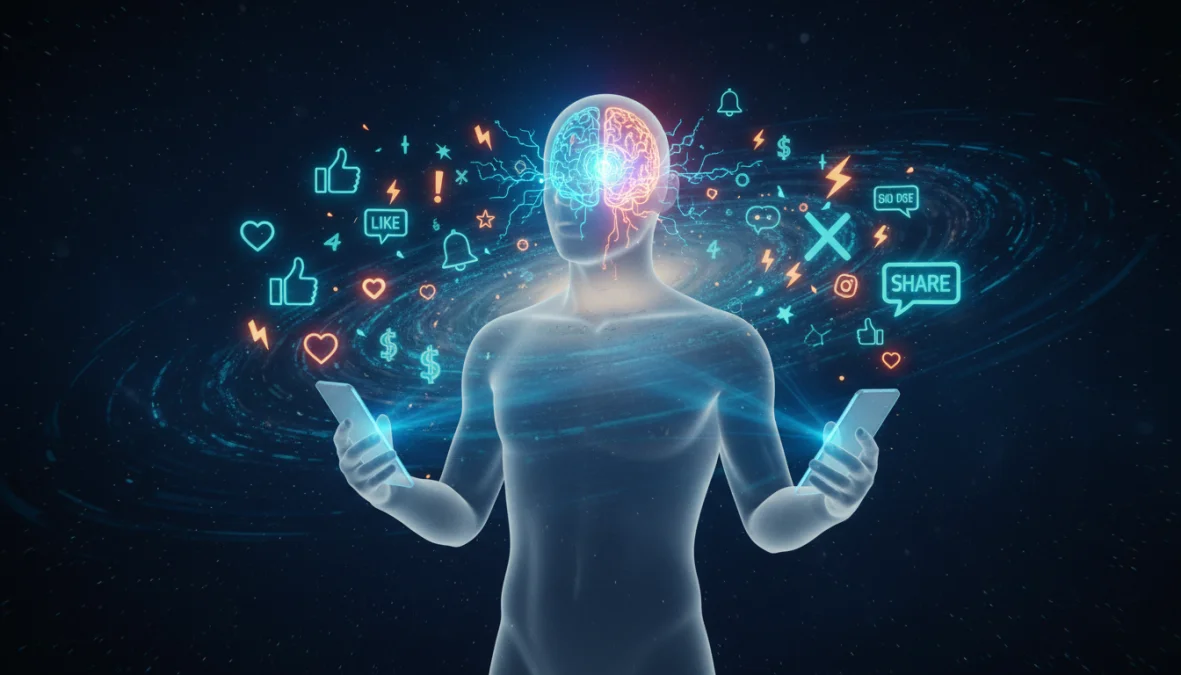
Ever wonder why you can’t stop scrolling through TikTok at 2 AM, or why Netflix automatically plays the next episode before you can even reach for the remote? You’re not weak-willed—you’re experiencing the attention economy in action. In a world where information is abundant and time is limited, your focus has become the most valuable commodity on the internet. Tech companies have turned attention into a marketplace, and they’ve gotten incredibly good at capturing, holding, and monetizing every second you spend staring at a screen.
What Is the Attention Economy? Definition and Core Principles
The attention economy definition describes a system where human attention is treated as a scarce resource that can be captured, quantified, and traded for profit. The term was popularized by economist Herbert Simon in the 1970s, who observed that “a wealth of information creates a poverty of attention.” Back then, he couldn’t have imagined just how prophetic those words would become.
In traditional business models, companies focused on creating better products to win customers. The attention marketplace flipped this equation entirely. Today’s digital platforms aren’t primarily selling you products—they’re selling you to advertisers. Your eyeballs, your clicks, your engagement patterns: these are the actual products. This shift represents what critics call attention capitalism, where corporations compete fiercely not for your money directly, but for your mental bandwidth.
Think of it this way: if you’re not paying for the product, you are the product. The attention economy thrives on information overload. When faced with endless content options, our attention becomes the bottleneck. Platforms that can capture and retain that attention the longest win the game, regardless of whether that time spent actually benefits users.
How Tech Companies Capture and Monetize Your Attention
Understanding how tech companies monetize attention requires looking at the sophisticated psychological and technological mechanisms they deploy. Monetizing user attention isn’t accidental—it’s engineered through persuasive design patterns that exploit human psychology.
The toolkit includes infinite scroll design, which eliminates natural stopping points that might give you a moment to reflect and leave. There’s autoplay, which keeps content flowing without requiring your active consent. Notification systems are carefully calibrated to pull you back into apps at optimal moments, creating what researchers call dopamine-driven feedback loops. Each like, comment, or share triggers a small hit of dopamine, the same neurotransmitter associated with gambling and addiction.
Behind the scenes, content recommendation algorithms analyze millions of user engagement metrics—time spent, scroll speed, pause patterns, rewatches—to predict exactly what will keep you engaged longest. This enables behavioral advertising that’s far more effective than traditional marketing. When platforms know you’ve spent 45 minutes watching cooking videos, they can charge premium rates to show you kitchen equipment ads.
The numbers tell the story: average users spend over 2.5 hours daily on social media platforms, generating billions in advertising revenue. Facebook alone makes roughly $50 per user annually in the US, purely from data mining practices and targeted advertising based on attention patterns. Much like deepfake technology threatens our media trust, the attention economy challenges our autonomy and decision-making capacity.
The Role of Social Media Platforms
The attention economy social media connection is particularly stark. Facebook and Instagram pioneered the algorithmic feed, abandoning chronological timelines in favor of showing you content their algorithms predict will maximize engagement. This isn’t about showing you what’s most relevant or valuable—it’s about what is the attention economy in social media: maximizing time spent on platform.
TikTok represents the attention economy’s evolution. Its For You Page uses machine learning that’s frighteningly effective at predicting what will hook you. The platform’s average session length exceeds 50 minutes, with users opening the app 8+ times daily. The attention economy business model explained here is simple: addictive content drives screen time, screen time drives ad impressions, ad impressions drive revenue.
Twitter (now X) built its business on virality and real-time engagement, using controversy and outrage as attention magnets. LinkedIn, despite its professional veneer, employs similar engagement tactics with its algorithm favoring posts that spark lengthy comment threads. These are all attention economy examples of platforms optimizing for one metric above all: your screen time.
Beyond Social Media: Gaming, Streaming, and News Apps
The attention economy extends far beyond social platforms. Netflix’s binge-watching features—automatic episode starts, cliffhanger endings, entire seasons released at once—are deliberately designed for screen time optimization. As we’ve explored regarding the environmental cost of streaming services, these platforms consume both our attention and planetary resources at unprecedented scales.
Mobile gaming has perfected attention capture through reward systems, daily login bonuses, and limited-time events that create FOMO (fear of missing out). Free-to-play games don’t sell you the game—they capture your attention, then monetize it through in-app purchases and advertising.
News apps and websites use clickbait headlines and sensationalist framing to grab attention in crowded markets. Email marketing employs increasingly sophisticated notification strategies, with subject lines A/B tested to maximize open rates. The entire digital ecosystem has been redesigned around capturing and holding human focus.

The Impact on Users and How to Reclaim Your Attention
The how does the attention economy affect users question has serious answers. Research shows the average digital attention span has decreased dramatically, from 12 seconds in the early 2000s to around 8 seconds today—supposedly less than a goldfish. While that specific comparison is contested, the broader trend is clear: constant context-switching and notification interruptions are fragmenting our ability to focus deeply.
The impact of attention economy on society extends beyond productivity. Mental health professionals report increases in anxiety, depression, and sleep disorders correlated with heavy social media use. The constant comparison, FOMO, and dopamine-seeking behavior patterns can become genuinely addictive. Like biohacking your health, reclaiming your attention requires intentional strategies.
So how do you fight back? Start with notification management: disable all non-essential alerts. Use app blockers like Freedom or Forest during focus time. Replace infinite scroll apps with finite alternatives. Practice “digital sunset” routines, stopping screen time an hour before bed to improve your sleep quality. Consider time-tracking apps to build awareness of where your attention actually goes.
More radically, explore platforms built on different models. Some emerging social networks use chronological feeds, no algorithmic manipulation, and subscription-based revenue instead of advertising. These attention-respecting alternatives prove that why is attention valuable to tech companies doesn’t mean we’re powerless to protect it.
The attention economy isn’t inherently evil, but it’s designed to benefit platforms, not users. Becoming conscious of how social media platforms capture attention is the first step toward using technology intentionally rather than being used by it. Your focus is finite, precious, and increasingly under siege. Treat it accordingly—your mind depends on it.