Ocean Thermal Energy Conversion: Harnessing the Power of Ocean Temperature Gradients
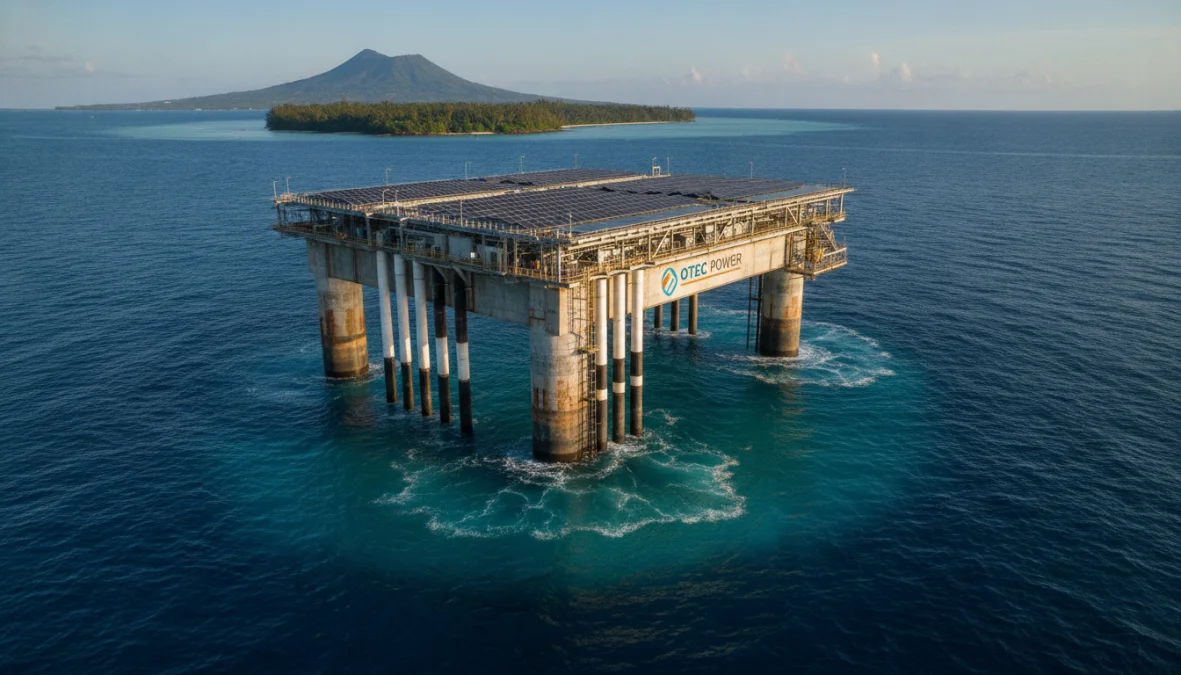
Imagine tapping into an endless energy source that works around the clock, doesn’t depend on sunshine or wind, and exists beneath the vast blue expanses covering most of our planet. That’s the promise of ocean thermal energy, a fascinating renewable technology that transforms the ocean’s natural temperature differences into electricity. While it might sound like science fiction, OTEC technology has been quietly developing for decades, offering a unique approach to our growing energy needs.
What Is Ocean Thermal Energy Conversion and How Does It Work
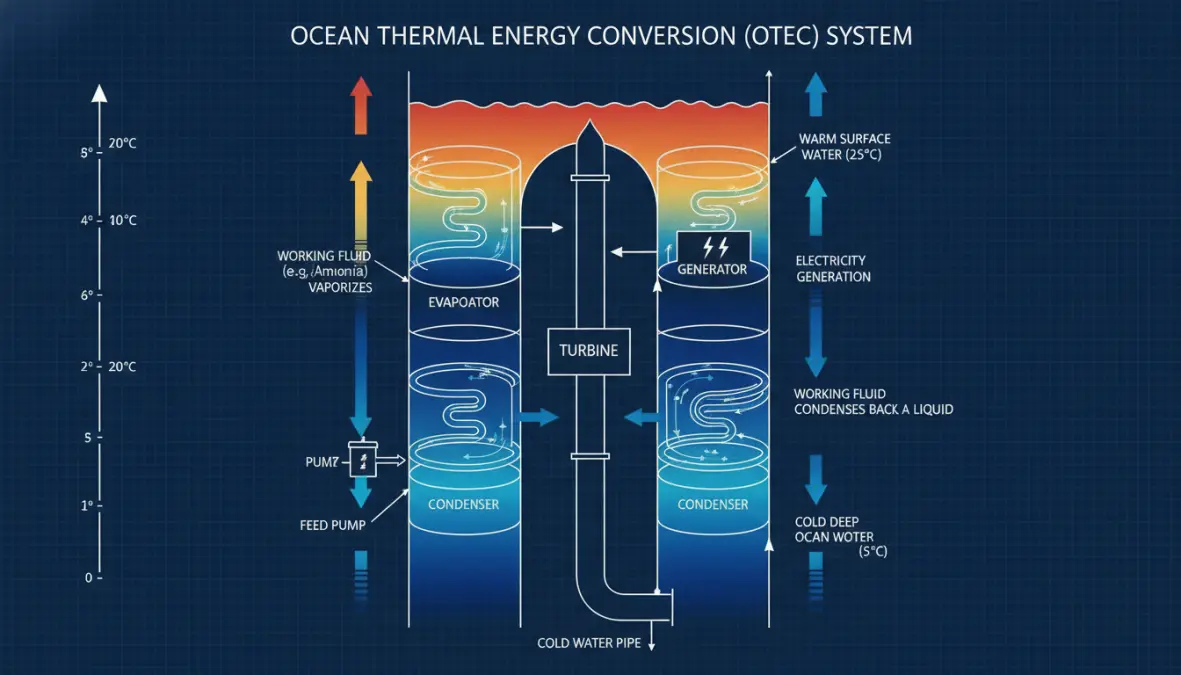
Ocean thermal energy conversion, or OTEC, is a clever way of generating power by exploiting the ocean temperature gradient between warm surface water and cold deep ocean water. The concept is surprisingly straightforward: in tropical and subtropical regions, surface waters bask in the sun and can reach temperatures of 25-30°C, while water just 1,000 meters below sits at a chilly 4-5°C. When this temperature difference reaches at least 20°C, OTEC technology can kick into gear and produce electricity through thermal energy conversion.
But how does ocean thermal energy conversion work exactly? The process relies on three main system types. The closed cycle OTEC system uses warm surface water to vaporize a working fluid with a low boiling point (like ammonia), which then drives a turbine to generate electricity before being condensed back to liquid using cold deep water. The open-cycle system actually boils the warm seawater itself in a low-pressure environment, using the resulting steam to power turbines. Hybrid systems combine elements of both approaches. The magic happens through seawater heat exchange in specialized heat exchangers, where thermal energy transfers between water masses without them mixing.
Geography matters enormously here. OTEC technology in tropical regions works best because these areas maintain consistent temperature gradients year-round. Countries like Hawaii, the Philippines, Indonesia, and various Caribbean and Pacific island nations sit in the sweet spot for OTEC deployment, making them ideal candidates for this marine renewable power source.
The Technology Behind OTEC Systems and Their Applications
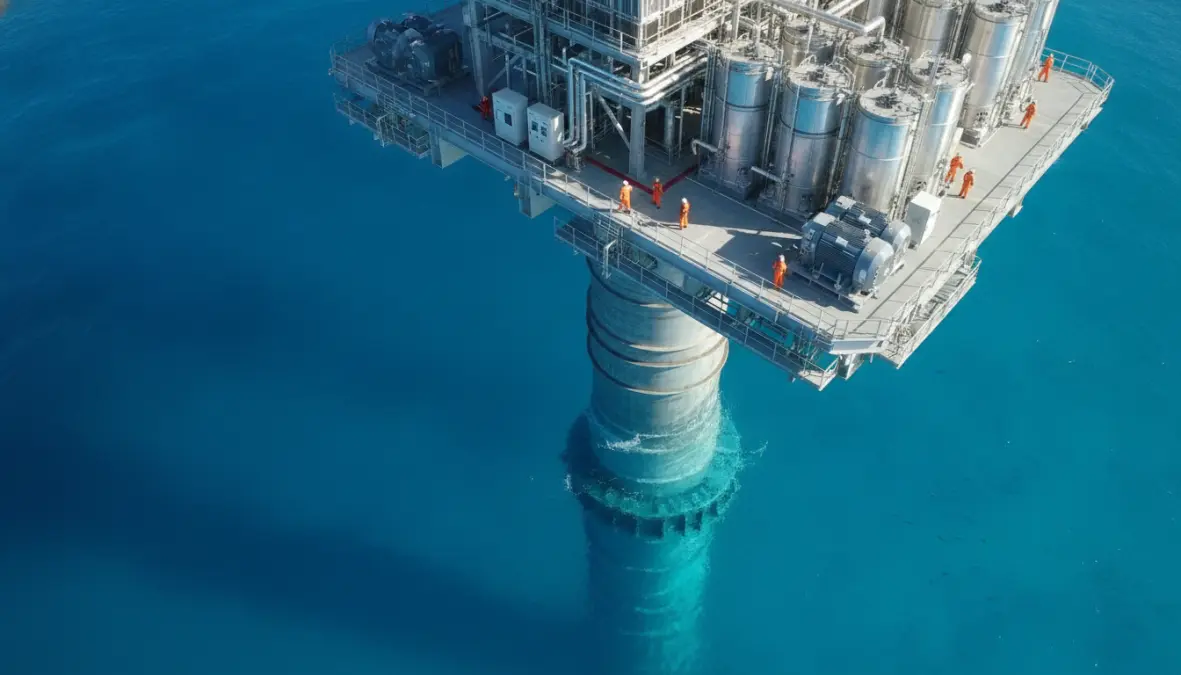
Diving deeper into the technical side, OTEC systems are engineering marvels that combine several critical components. At the heart of any OTEC plant, you’ll find heat exchangers that facilitate the temperature transfer, a massive cold water pipe extending deep into the ocean (often over a kilometer down), pumps to circulate millions of liters of water daily, and turbines connected to generators. The Rankine cycle, a thermodynamic process used in conventional power plants, forms the theoretical foundation for closed-cycle systems, adapted here for the ocean environment.
What makes OTEC particularly attractive is its ability to provide baseload power generation. Unlike solar panels that go dark at night or wind turbines that idle when breezes fade, ocean thermal energy works 24/7/365. The ocean’s thermal gradient doesn’t take vacations, making OTEC one of the most reliable renewable ocean energy sources available. This constant availability aligns it more closely with traditional power sources and complements the intermittent nature of other renewables, much like how nuclear energy provides consistent baseload capacity.
Beyond electricity generation, OTEC plants offer valuable co-benefits. The nutrient-rich deep ocean water brought to the surface can support aquaculture operations, growing fish and seaweed in controlled environments. The cold water itself provides virtually free air conditioning for nearby buildings—a system already implemented in some locations. Perhaps most importantly, OTEC systems can produce fresh water as a desalination byproduct, particularly valuable for island communities struggling with freshwater scarcity. Several pilot projects have demonstrated these capabilities, including facilities in Hawaii, Japan, and the Maldives.
When it comes to OTEC power plant efficiency, the technology faces some challenges. The efficiency typically ranges from 2-4%, which sounds low compared to conventional power plants. However, this figure is somewhat misleading because the “fuel” (temperature difference) is free and inexhaustible. The real question isn’t efficiency but economics and scalability. The ocean thermal energy potential worldwide is enormous—some estimates suggest OTEC could theoretically supply humanity’s entire energy needs if deployed extensively in suitable locations.
Environmental and Economic Considerations
From an environmental perspective, renewable ocean energy through OTEC presents a mixed but generally positive picture. The carbon footprint of OTEC operations is minimal once construction is complete, as no fuel is burned and no greenhouse gases are emitted during operation. The technology avoids the air pollution and CO2 emissions that plague fossil fuels. However, questions remain about impacts on marine ecosystems, particularly regarding the massive volumes of water intake and the potential effects of returning deep, nutrient-rich water to surface layers. Studies suggest these impacts are localized and manageable with proper design.
Economically, the story gets more complicated. The cost of ocean thermal energy conversion remains high, primarily due to the expensive infrastructure required—those kilometer-long cold water pipes and robust offshore power platforms don’t come cheap. Capital costs can exceed several thousand dollars per kilowatt of capacity, making OTEC currently uncompetitive with solar and wind in most scenarios. However, costs could decrease dramatically with technological improvements and economies of scale. For isolated island communities currently dependent on expensive diesel imports, OTEC economics become more favorable. Similar to how microgrids build community resilience, OTEC could provide energy independence for tropical regions.
FAQ: Common Questions About Ocean Thermal Energy
Where can OTEC plants be built?
OTEC plants require specific conditions: a minimum 20°C ocean temperature gradient between surface and deep water, relatively close access to deep water (within a few kilometers of shore or on floating platforms), and tropical or subtropical locations. This limits viable sites to areas between roughly 24° north and south of the equator, including Hawaii, Caribbean islands, Southeast Asian nations, and Pacific island countries.
Is ocean thermal energy truly renewable?
Absolutely. Ocean thermal energy is genuinely renewable because it relies on solar heating of the ocean surface—a process that will continue as long as the sun shines. The ocean acts as a massive solar collector, and OTEC simply harvests a tiny fraction of this stored energy without depleting the resource. It’s as renewable as wind or solar power.
What are the main challenges facing OTEC development?
The primary obstacles are economic rather than technical. High capital costs, the expense of deep-ocean construction, maintenance challenges in harsh marine environments, and competition from cheaper renewables all hinder deployment. Additionally, OTEC technology needs demonstration at commercial scale to prove long-term viability and attract investment.
How efficient is thermal energy conversion in OTEC systems?
OTEC systems typically achieve 2-4% thermal energy conversion efficiency due to the relatively small temperature difference they work with. While this seems low, remember that conventional power plants waste significant heat too, and OTEC’s “fuel” is free and constant. The question is whether the economics work, not whether the efficiency meets arbitrary benchmarks.
Can OTEC compete with solar and wind energy?
Currently, OTEC cannot compete on cost with solar and wind in most locations. However, OTEC offers unique advantages: continuous baseload power generation, valuable co-products (fresh water, aquaculture support), and energy independence for remote tropical islands. In these specific niches, particularly when diesel displacement is factored in, OTEC’s economics improve significantly. As the technology matures and scales up, costs should decrease.
Ocean thermal energy conversion represents a fascinating frontier in our renewable energy toolkit. While it won’t replace solar panels or wind turbines globally, OTEC offers tropical and subtropical regions a path toward energy independence and sustainability. As we continue diversifying our energy portfolio—from green hydrogen to advanced nuclear technologies—ocean thermal energy deserves its place at the table. The question isn’t whether OTEC works (it does), but whether we’ll invest in scaling it to realize its considerable potential. For island nations and coastal tropical communities, that investment could transform their energy future.