Contrast Therapy: The Science Behind Alternating Hot and Cold for Recovery
Ever notice how your grandma used to swear by alternating hot towels and ice packs for every ache and pain? Turns out, she was onto something pretty sophisticated. Contrast therapy—the practice of alternating between hot and cold exposure—has evolved from folk remedy to science-backed recovery technique that athletes and fitness enthusiasts worldwide now use to bounce back faster from intense training sessions.
Whether you’re a weekend warrior dealing with sore muscles or a competitive athlete looking to optimize recovery, understanding how thermal contrast therapy works can give you a legitimate edge in your fitness journey. Let’s dive into what makes this simple yet powerful technique so effective.
What Is Contrast Therapy and How Does It Work?
Contrast therapy is a recovery method that involves alternating exposure between hot and cold temperatures to promote healing and reduce muscle soreness. This hot and cold therapy triggers a physiological response that many experts believe enhances circulation, reduces inflammation, and speeds up the removal of metabolic waste from fatigued muscles.
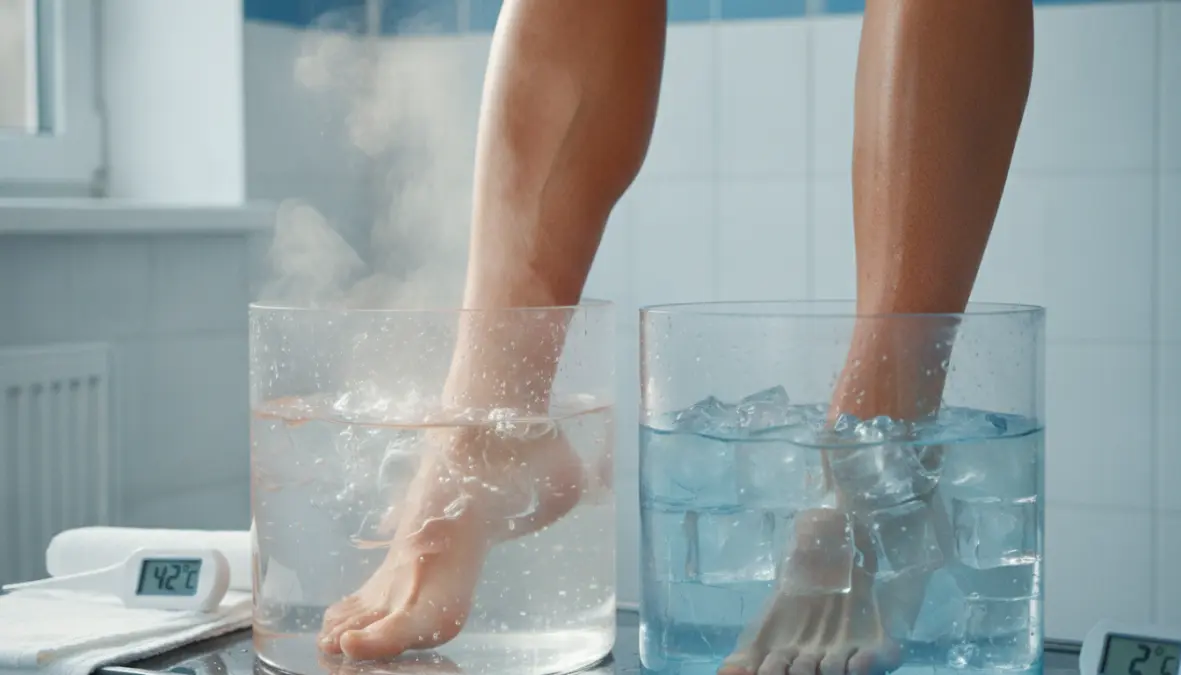
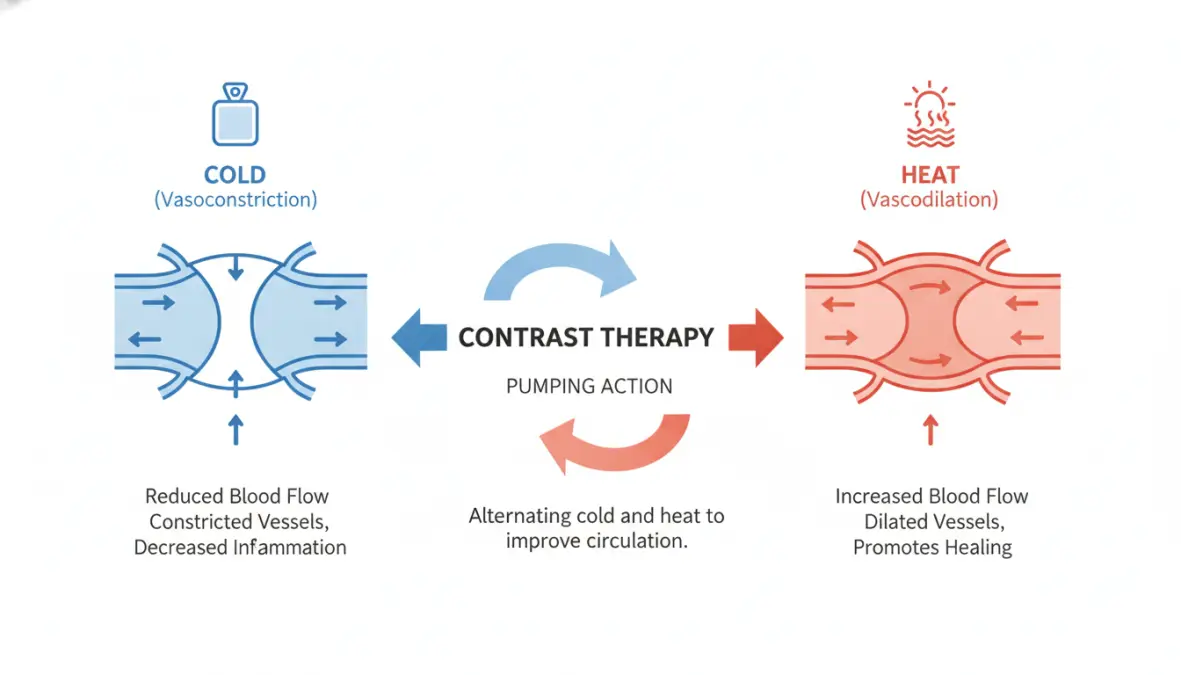
The magic happens through a process called vasoconstriction and vasodilation. When you immerse yourself in cold water (typically 10-15°C), your blood vessels constrict, pushing blood away from the extremities toward your core. Switch to hot water (38-40°C), and those vessels dilate, causing blood to rush back to the periphery. This pumping action creates what some researchers describe as a “vascular flush” that theoretically accelerates recovery.
Contrast water therapy has roots stretching back to ancient Roman bath houses, where people would move between frigidarium (cold pools) and caldarium (hot baths). Modern applications have refined these practices into specific protocols used in athletic training facilities worldwide.
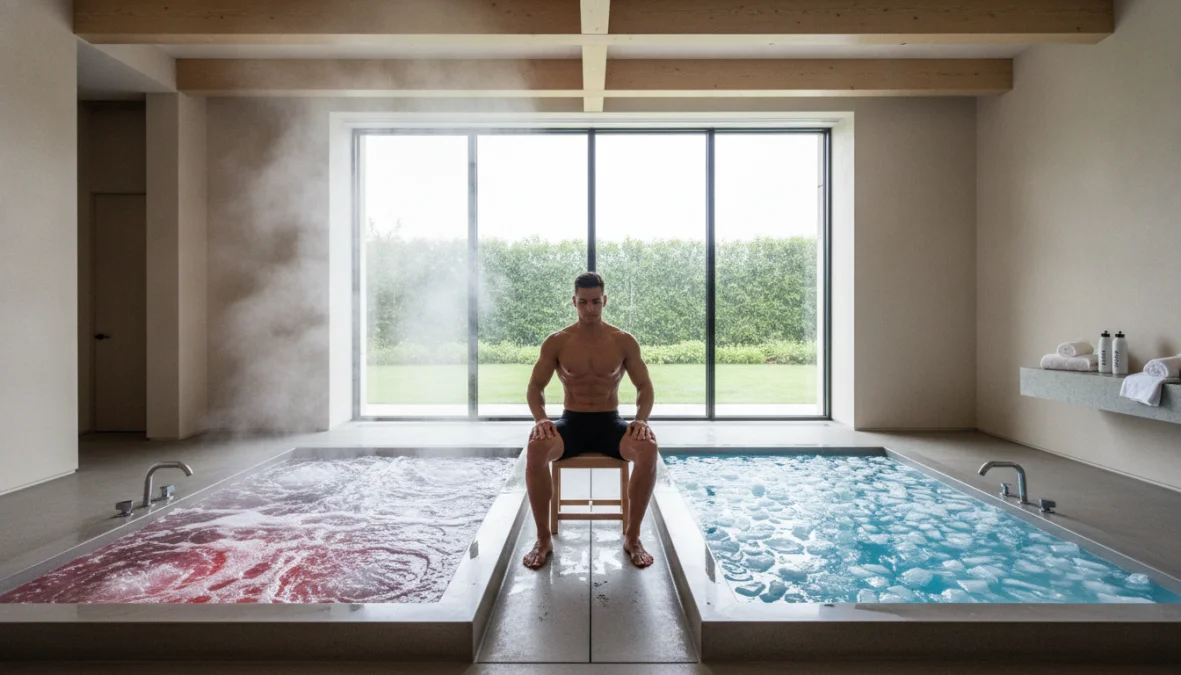
Unlike single-temperature treatments, thermal contrast therapy combines the benefits of both thermotherapy (heat application) and cryotherapy (cold application). It differs from standalone ice baths or sauna sessions by leveraging the transition between temperatures rather than sustained exposure to one extreme. Some practitioners use contrast bath therapy with water immersion, while others alternate between saunas and cold plunges for a more intense experience. Similar to cold water therapy through wild swimming, contrast therapy harnesses the power of temperature manipulation for health benefits.
Science-Backed Benefits and Practical Applications
Research on alternating hot cold treatment has produced compelling evidence for several key benefits, particularly in the realm of sports medicine and muscle recovery techniques. Here’s what the science actually supports:
- Reduced muscle soreness (DOMS): Multiple studies show that contrast therapy can significantly decrease delayed-onset muscle soreness compared to passive recovery, helping athletes return to training faster.
- Enhanced circulation: The alternating vasoconstriction and vasodilation may improve blood flow, delivering fresh oxygen and nutrients while removing metabolic waste products like lactate.
- Inflammation reduction: Cold exposure helps control inflammatory responses, while heat promotes healing—the combination may offer balanced recovery without completely suppressing beneficial inflammation.
- Improved perceived recovery: Athletes consistently report feeling better and more recovered after contrast therapy sessions, which can have psychological benefits for performance.
- Flexibility maintenance: Unlike ice baths alone, which can temporarily reduce range of motion, contrast therapy helps maintain flexibility while still providing recovery benefits.
For those wondering about contrast therapy for muscle recovery, the key is getting the protocol right. The optimal temperature for the hot phase sits around 38-40°C (100-104°F), while the cold phase should be between 10-15°C (50-59°F). Too extreme in either direction can be uncomfortable or even counterproductive.
Hot cold immersion therapy works best for specific populations and situations. Endurance athletes, team sport players, and anyone engaged in high-intensity training can benefit most from regular sessions. The ideal timing is within 30-60 minutes post-workout when inflammation and metabolic waste accumulation peak. Just as somatic therapy works with the body’s natural healing mechanisms, contrast therapy leverages physiological responses for recovery.
Step-by-Step Protocol for Optimal Results
Ready to learn how to do contrast therapy at home? Here’s your actionable contrast therapy protocol for recovery:
- Prepare your setup: You’ll need two containers large enough for the body part you’re treating. For full-body sessions, a bathtub and a cold shower work perfectly. For limbs, two large buckets or bins suffice.
- Fill with appropriate temperatures: Hot water at 38-40°C and cold water at 10-15°C. Use a thermometer for accuracy, especially when starting out.
- Start with heat: Begin your session with 3-5 minutes in the hot water. This helps your muscles relax and prepares your body for the contrast.
- Switch to cold: Immediately transition to 1-2 minutes in cold water. The shorter cold phase prevents excessive cooling while still triggering vasoconstriction.
- Repeat the cycle: Alternate between hot and cold for 3-4 complete cycles. The entire session should last 15-20 minutes.
- End with cold: Finish your final cycle with cold exposure to help reduce any residual inflammation and close the pores.
- Dry off and warm up gradually: Don’t jump into hot clothing immediately—let your body temperature normalize naturally.
For those without elaborate setups, a regular shower works perfectly. Simply alternate between the hottest temperature you can comfortably tolerate and the coldest. While not as immersive as full-body baths, this method still provides significant contrast therapy benefits for athletes and recreational exercisers alike.
Safety Considerations and Who Should Avoid It
While contrast bath therapy for inflammation is generally safe for healthy individuals, certain populations should exercise caution or avoid it entirely. People with cardiovascular conditions, including hypertension or heart disease, should consult their physician before trying contrast therapy, as the rapid temperature changes can stress the cardiovascular system.
Pregnant women should avoid extreme temperature contrasts, particularly in the first trimester. Those with diabetes or peripheral neuropathy may have impaired temperature sensation and risk burns or frostbite without realizing it. Individuals with Raynaud’s disease or other circulatory disorders should also skip this treatment, as the vasoconstriction could exacerbate symptoms.
Watch for warning signs during sessions: dizziness, chest pain, extreme discomfort, or numbness that persists beyond the cold phase. If any of these occur, stop immediately and warm up gradually. Unlike continuous cold therapy or sustained heat application, alternating hot and cold therapy for injury requires careful attention to your body’s responses throughout the entire protocol.
Frequently Asked Questions About Contrast Therapy
How long should each hot and cold cycle last?
The standard recommendation is 3-5 minutes for the hot phase and 1-2 minutes for the cold phase. This ratio (roughly 3:1 or 4:1 hot to cold) appears optimal for triggering the vascular pumping effect without causing excessive stress. Complete 3-4 full cycles for best results.
Is contrast therapy better than ice baths alone?
It depends on your goals. Ice baths excel at reducing inflammation immediately after injury, but contrast water therapy may be superior for general post-workout recovery. The alternating temperatures help maintain flexibility and may improve circulation more effectively than cold alone, making it ideal for athletes who need to train again soon.
Can I do contrast therapy at home?
Absolutely! You don’t need fancy equipment—a bathtub and shower, two large buckets, or even just a shower with good temperature control will work. The key is maintaining proper temperatures and timing, not expensive facilities.
How often should I use contrast water therapy?
For most athletes, 2-4 times per week after intense training sessions is sufficient. Daily use isn’t necessary and might even blunt some beneficial training adaptations. Listen to your body and use it strategically after your hardest workouts.
Does contrast therapy really reduce muscle soreness?
Research suggests yes, though results vary individually. Most studies show reduced perceived soreness and faster return to performance compared to passive recovery. While it won’t eliminate soreness entirely, many athletes find it noticeably speeds up recovery time.
Just as holistic approaches like forest bathing work with natural processes for wellness, contrast therapy harnesses your body’s innate temperature regulation systems to optimize recovery. Whether you’re training for competition or just want to recover faster from your workouts, this time-tested technique offers a practical, accessible tool for your recovery arsenal. Start with conservative protocols, pay attention to how your body responds, and adjust based on your individual needs. Your muscles—and your next workout—will thank you.