Gravity Energy Storage: Using Weight and Height to Store Renewable Power
Imagine lifting a massive weight to the top of a tower, then letting it fall back down to generate electricity whenever you need it. Sounds simple, right? That’s essentially the brilliance behind gravity energy storage – a technology that’s turning heads in the renewable energy world. As wind and solar power become increasingly dominant but frustratingly intermittent, we need smart ways to store excess energy for when the sun isn’t shining and the wind isn’t blowing. While lithium-ion batteries grab most headlines, gravitational energy storage is emerging as a compelling alternative that uses one of physics’ most fundamental forces to solve our energy storage challenges.
What Is Gravity Energy Storage and How Does It Work?
At its core, gravity energy storage is beautifully straightforward. When you have excess electricity from renewable sources, you use it to lift heavy weights upward. When you need that energy back, you let those weights descend, converting their potential energy back into electricity through generators. It’s the same physics principle you learned in school: PE = mgh (potential energy equals mass times gravitational acceleration times height).
The concept isn’t entirely new – we’ve been using pumped hydro storage for decades, which works by pumping water uphill to a reservoir and releasing it through turbines when needed. What makes modern gravitational energy storage different is that it doesn’t require specific geographic features like mountains or valleys. Instead, these systems use solid masses – concrete blocks, soil, or even recycled materials – that can be deployed almost anywhere.
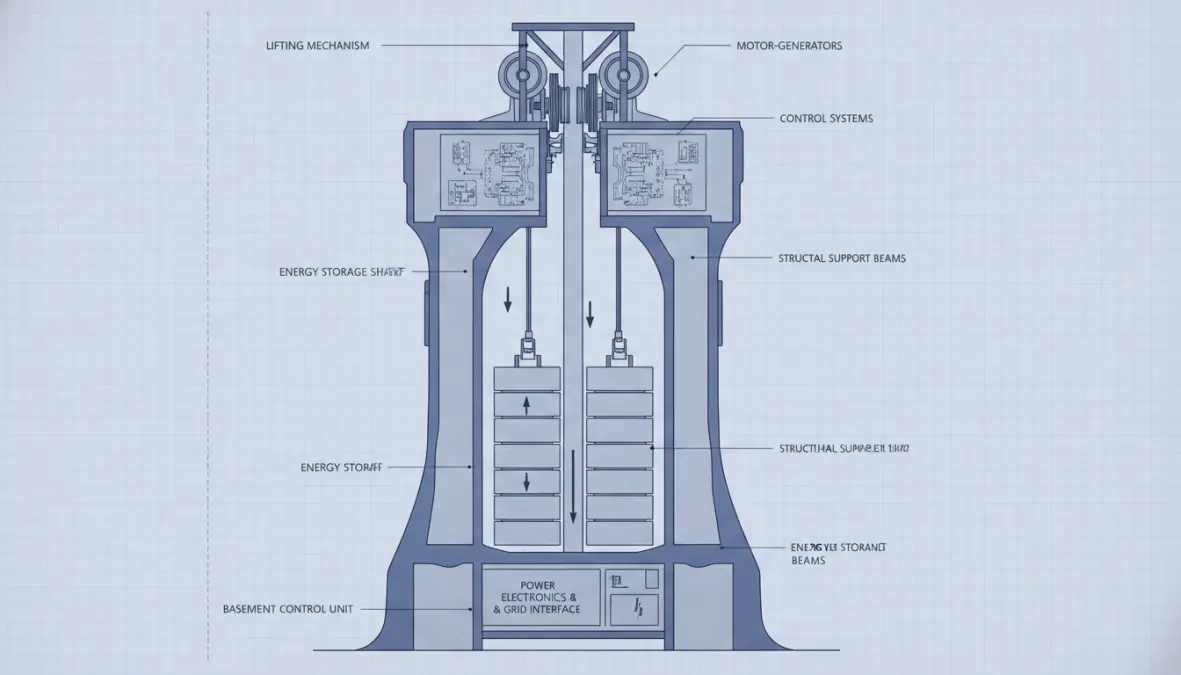
A typical mechanical energy storage system consists of several key components: heavy masses (the energy storage medium), a lifting mechanism (cranes, winches, or elevators), control systems to manage charging and discharging, and generators/motors that convert between electrical and mechanical energy. When understanding how does gravity energy storage work, think of it as a giant rechargeable battery where the ‘charge’ is literally the physical height of massive objects.
The beauty of potential energy storage systems lies in their predictability and reliability. Unlike chemical batteries that degrade over time, gravity doesn’t weaken. Drop a weight from the same height today or in thirty years, and it’ll generate the same amount of energy every single time.
Types of Gravity Battery Technology and Energy Storage Systems
The gravity battery technology landscape is surprisingly diverse, with innovators developing multiple approaches to harness gravitational potential energy. Each system type offers distinct advantages depending on location, scale, and application requirements within the broader spectrum of energy storage technologies.
Tower-Based and Crane Systems
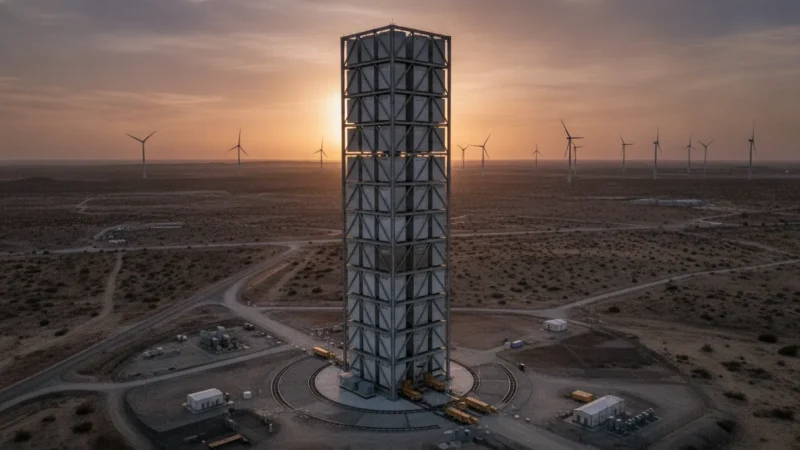
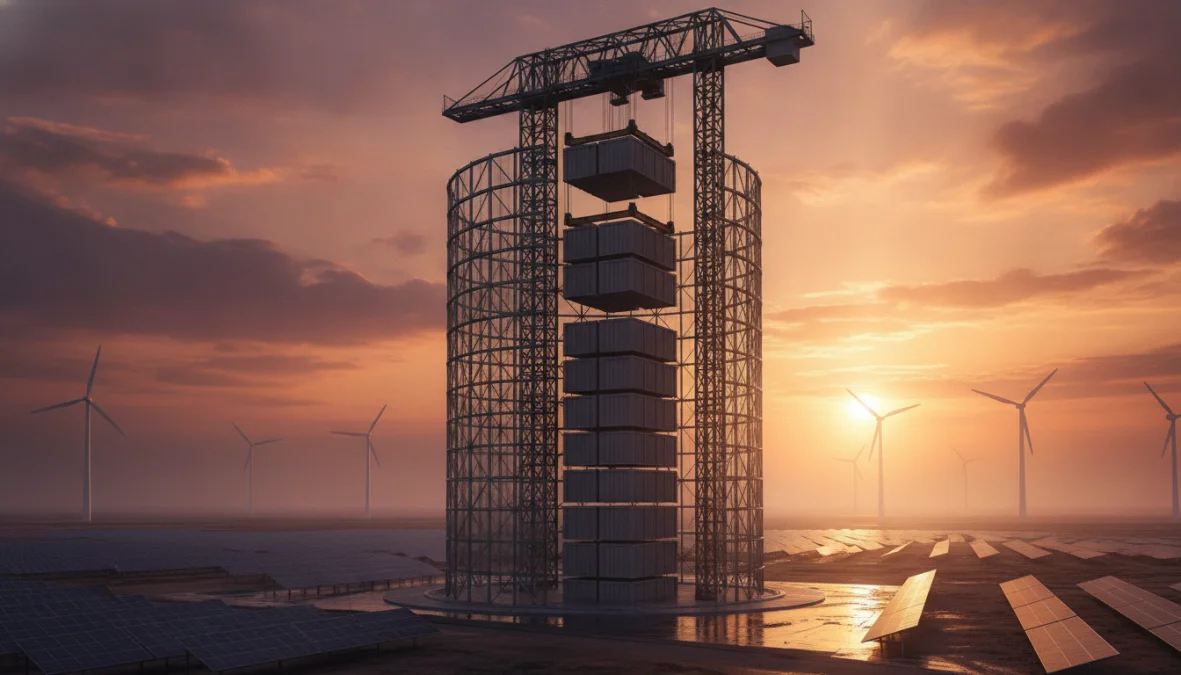
Swiss-American company Energy Vault pioneered one of the most visually striking approaches to grid-scale energy storage. Their system uses a massive crane to stack composite blocks – made from soil and waste materials – into a tower reaching over 100 meters tall. When energy is abundant, the crane lifts blocks and builds the tower. When electricity is needed, blocks are lowered, and the descending weight drives generators.
These tower systems boast impressive scalability and can be installed virtually anywhere with solid ground. The blocks themselves are designed for tens of thousands of cycles without degradation, potentially lasting 30-50 years. When comparing gravity battery vs lithium ion storage, tower systems win on longevity and sustainability but currently lag in energy density. A typical Energy Vault installation can store 20-80 MWh of energy with round-trip efficiency around 75-85%.
Underground and Mine Shaft Solutions
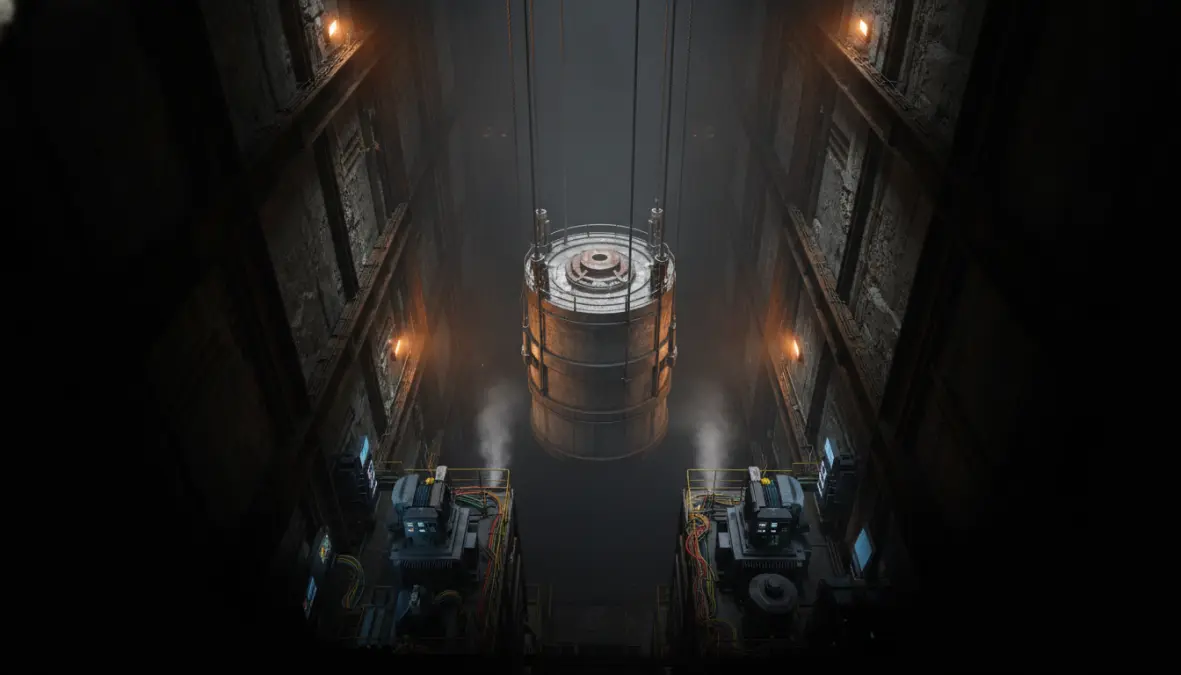
Edinburgh-based Gravitricity takes a different approach by repurposing abandoned mine shafts. Their system suspends massive weights – up to 12,000 tonnes – in deep vertical shafts, sometimes reaching depths of 1,500 meters. This design offers several compelling advantages for renewable energy storage solutions: it uses existing infrastructure, minimizes visual impact, and achieves higher energy densities due to greater drop heights.
The underground approach excels at rapid response times, delivering full power in less than a second – crucial for grid stabilization and managing renewable intermittency. Gravitricity’s systems can perform load balancing and peak demand management with efficiency rates approaching 80-90%. Other projects explore using railway systems on slopes, where weighted trains roll downhill to generate power, combining transportation infrastructure with energy storage in innovative ways.
Compared to other mechanical energy storage alternatives like flywheel energy storage or compressed air energy storage, gravity systems offer superior duration capabilities – storing energy for hours or days rather than minutes – making them ideal for gravity energy storage for renewable integration.
Advantages, Challenges, and Future of Gravitational Energy Storage
The advantages of gravity based energy storage are compelling, especially as we transition toward cleaner energy grids. Unlike chemical batteries, these systems experience virtually no degradation over time. They can operate for 30-50 years without significant performance loss, while lithium-ion batteries typically degrade after 3,000-5,000 cycles. There’s no thermal runaway risk, no rare earth materials required, and the components can be sourced locally in most regions.
Environmental sustainability is another strong suit. Many lifting weights to store energy systems use recycled materials or waste products for their masses. The technology integrates smoothly with existing grids for grid-scale energy storage applications and can respond in milliseconds to provide ancillary services like frequency regulation – something particularly valuable alongside intermittent renewables like solar and wind.
However, challenges remain. Initial capital costs are substantial, though they’re offset by minimal maintenance and long operational lifespans. When examining gravity energy storage efficiency and cost, systems typically achieve 70-90% round-trip efficiency – respectable but slightly lower than lithium-ion (90-95%). Energy density is another limitation; you need significant mass and height to store meaningful amounts of energy, making gravity systems better suited for stationary grid-scale energy storage rather than mobile applications.
Several gravity energy storage companies and projects are moving from pilot to commercial deployment. Energy Vault has installations in China and is expanding globally. Gravitricity is developing projects in the UK and Czech Republic. These deployments will provide crucial real-world performance data. The future likely involves complementary deployment: gravity systems handling long-duration storage (4-24 hours) while lithium-ion tackles short-duration needs, alongside emerging solutions like green hydrogen for seasonal storage.
As renewable energy continues expanding and nations invest in resilient energy infrastructure, gravity storage could capture a significant portion of the projected trillion-dollar energy storage market. Its role will be complementary rather than dominant, but for communities seeking sustainable, long-lasting storage solutions, gravity might just be the heavy hitter we’ve been waiting for.
FAQ: Common Questions About Gravity Energy Storage
How efficient is gravity energy storage?
Most gravity systems achieve 70-90% round-trip efficiency, meaning you get back 70-90% of the energy you put in. This is slightly lower than lithium-ion batteries but remains competitive, especially considering their longer lifespan and lack of degradation.
What are the main companies developing gravity batteries?
Energy Vault (Swiss-American), Gravitricity (UK), and several Chinese firms lead the field. Energy Vault has the most commercial deployments currently operational, while Gravitricity focuses on underground shaft solutions.
Can gravity storage replace lithium-ion batteries?
Not entirely – they serve different purposes. Gravity excels at long-duration, stationary storage with minimal degradation over decades. Lithium-ion remains superior for mobile applications and short-duration, high-density storage. The future grid will likely use both.
How long can gravity systems store energy?
Indefinitely, in theory. Once a weight is elevated, it maintains that potential energy until released. Practically, these systems are designed for daily cycling – storing excess renewable energy for hours to days – rather than seasonal storage.