Agrivoltaics: How Solar Panels and Agriculture Work Together on the Same Land
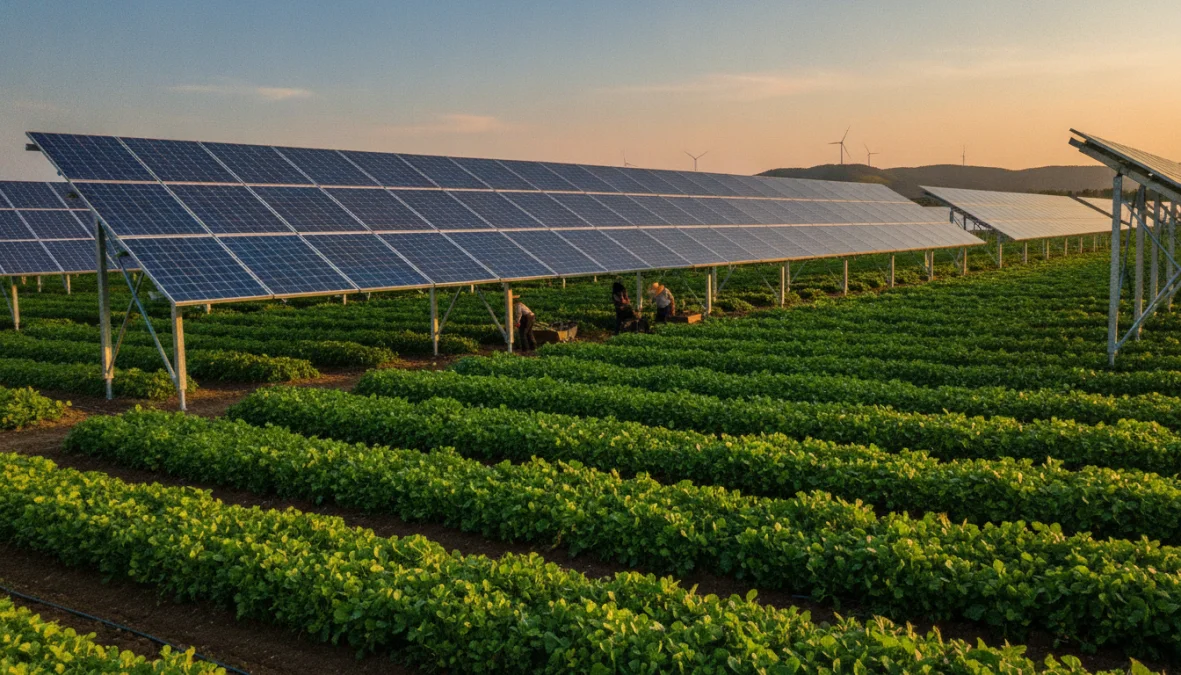
Imagine a farm where rows of crops grow beneath towering solar panels, creating energy while producing food on the exact same piece of land. This isn’t science fiction—it’s agrivoltaics, an innovative approach that’s revolutionizing how we think about land use, renewable energy, and sustainable farming. As the world grapples with climate change, food security, and the urgent need for clean energy, agrivoltaics offers a brilliant solution that addresses multiple challenges at once. Let’s explore how this dual-use technology is transforming agriculture and energy production simultaneously.
What Is Agrivoltaics and How Does It Work?
Agrivoltaics—also known as photovoltaic agriculture or dual-use solar—is the practice of combining solar energy generation with agricultural production on the same land. The term was coined by German researchers in the early 1980s, though the technology has gained significant momentum only in recent years as solar costs have dropped and land-use efficiency has become critical.
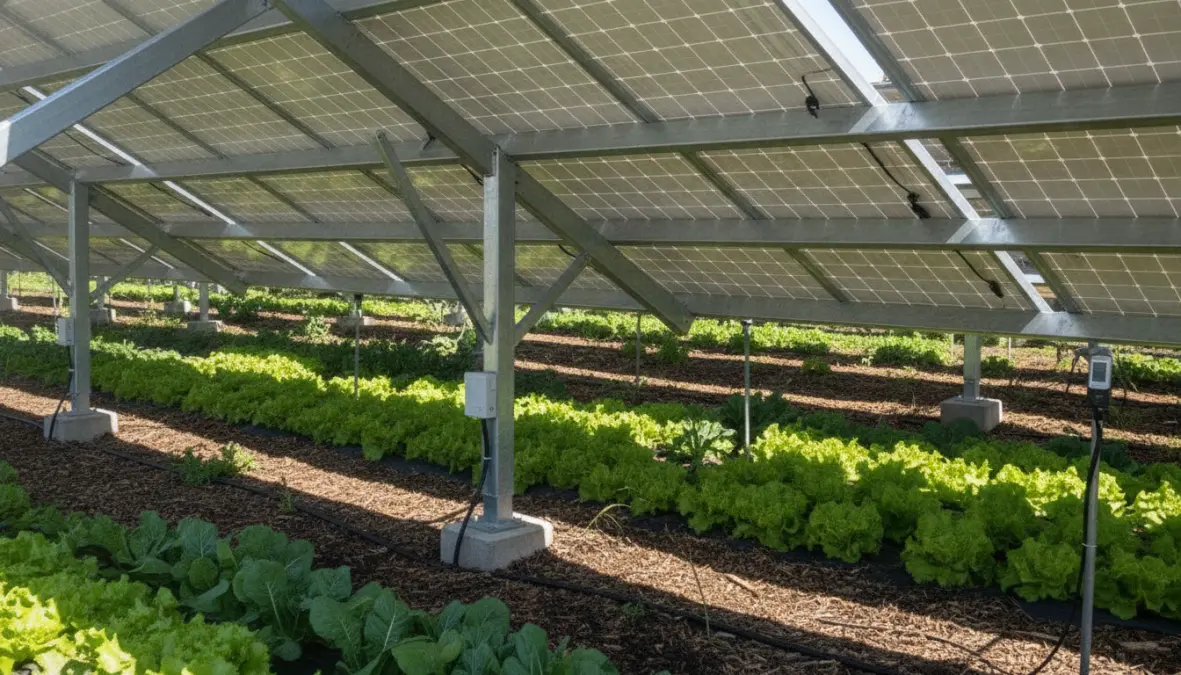
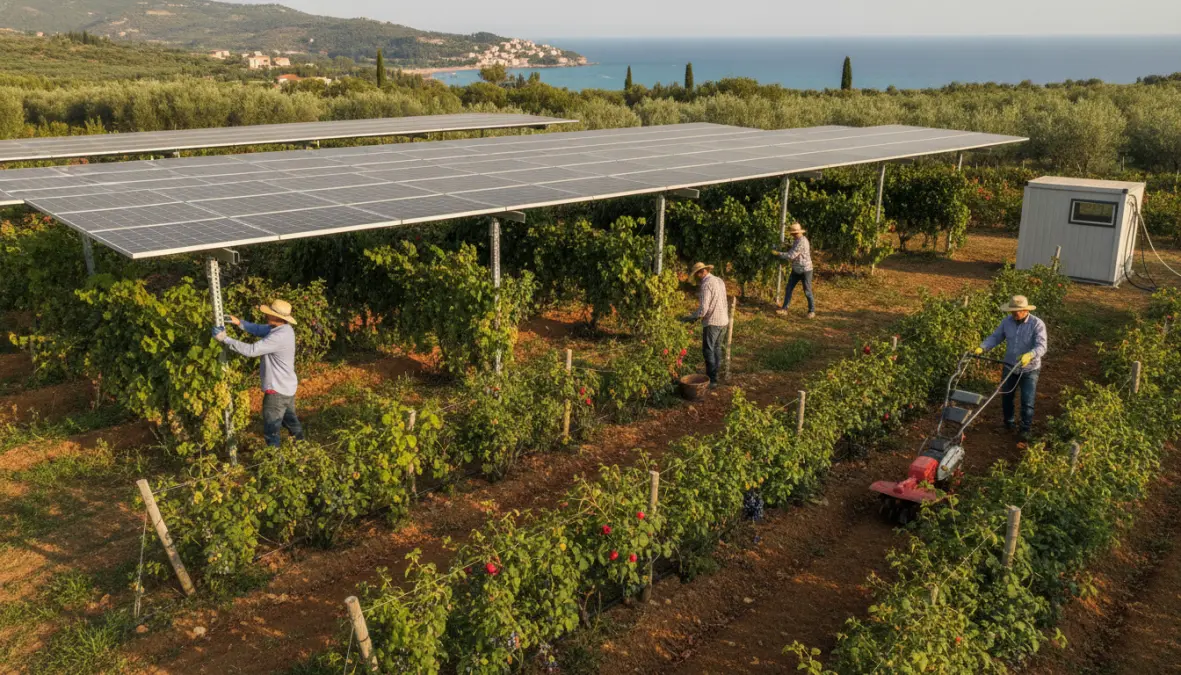
Unlike traditional solar farming where panels cover entire fields and exclude agriculture, agrivoltaic systems are specifically designed to accommodate both activities. The key is in the configuration: photovoltaic modules are mounted on elevated structures—typically 2 to 5 meters high—with strategic spacing between rows. This allows sunlight to reach crops below while generating electricity above. Panels can be tilted at optimized angles, and some advanced installations use bifacial solar panels that capture light from both sides, maximizing energy production without excessively shading crops.
The spacing and orientation depend on the crops being grown, local climate, and energy goals. Some designs place solar panels between crop rows, while others create checkerboard patterns or use semi-transparent panels. This flexibility makes agrivoltaics adaptable to various farming contexts, from vegetable production to livestock grazing.
Benefits and Challenges of Agrivoltaic Systems
The benefits of combining solar panels with agriculture are compelling and multifaceted. First and foremost is land optimization—agrivoltaics can increase land productivity by 60-70% compared to using the same area for either agriculture or solar alone. This dual use is particularly valuable in regions where arable land is scarce or expensive.
Surprisingly, many crops actually perform better under partial shade provided by solar panels. Studies show that shade tolerant crops like lettuce, spinach, and tomatoes can experience increased yields due to reduced heat stress and improved water conservation—the panels decrease evaporation and protect plants from extreme weather. Farmers also gain a diversified income stream through energy sales, reducing financial vulnerability to crop failures or market fluctuations. This addresses the crucial food-energy nexus by producing both simultaneously.
From an environmental perspective, renewable energy agriculture reduces carbon emissions while maintaining food production. The panels can protect crops from hail, excessive sun, and wind damage, potentially reducing the need for irrigation by up to 30% in some installations.
However, agrivoltaic systems aren’t without challenges. The cost of agrivoltaic installation is typically higher than traditional solar farms—elevated structures and specialized designs can increase upfront investment by 40-100%. Managing these systems requires new skills and knowledge, as farmers must coordinate crop management with energy infrastructure. Not all crops thrive under panels; sun-loving plants like corn or wheat may see reduced yields without careful system design.
Farm machinery needs to fit beneath and between panels, sometimes requiring specialized equipment or modifications to existing tools. Additionally, regulations governing dual use of agricultural land for energy vary widely by region, creating bureaucratic hurdles in some areas. Despite these obstacles, many farmers and energy developers find the long-term benefits outweigh the initial complications, particularly with declining solar costs and rising energy prices.
Best Crops and Applications for Solar Farming
Identifying the best crops for agrivoltaic farming is crucial for success. Leafy greens like lettuce, kale, and chard excel in partial shade environments, often producing higher quality yields with less bitterness than their sun-grown counterparts. Berries—especially strawberries, raspberries, and blueberries—thrive under panels, as do herbs like basil, cilantro, and parsley. Root vegetables such as potatoes and carrots also adapt well to reduced light conditions.
Beyond traditional crops, solar crop production systems are proving ideal for livestock integration. Sheep grazing beneath solar panels helps control vegetation while producing wool and meat—projects in the UK and US have successfully combined sheep farming with energy generation. Poultry operations benefit too, with chickens providing pest control and fertilization while enjoying shade and weather protection from the panels above.
Real-world examples demonstrate agrivoltaics’ potential. In Japan, where land is precious, numerous farms combine rice cultivation with solar energy. France’s Sun’Agri has installed systems over apple orchards and vineyards, reporting improved fruit quality. The University of Arizona runs successful agrivoltaic research facilities testing everything from tomatoes to peppers under photovoltaic agriculture setups. Similar to innovations in vertical farming that maximize food production in limited spaces, agrivoltaics optimizes land use for dual purposes.
Climate and geography significantly influence agrivoltaics land use efficiency. Hot, arid regions benefit most from reduced water evaporation and crop cooling, while temperate zones can extend growing seasons. Future research focuses on dynamic systems with adjustable panels that respond to weather conditions, integration with precision agriculture technologies, and developing crop varieties specifically bred for partial-shade environments. Much like regenerative agriculture practices that work with natural systems, agrivoltaics represents a holistic approach to land stewardship.
FAQ About Agrivoltaics
Do solar panels reduce crop yields?
It depends on the crop and system design. Shade tolerant crops often see maintained or even increased yields due to reduced heat stress and water conservation. However, sun-intensive crops may experience decreased production without careful planning. Studies show that well-designed agrivoltaic systems can optimize both energy and food production.
How much does an agrivoltaic system cost?
The cost of agrivoltaic installation typically ranges from $1,500 to $3,000 per kilowatt, which is 40-100% higher than traditional ground-mounted solar. However, the dual revenue streams from crops and energy can improve return on investment over time, especially with available incentives.
What is the difference between agrivoltaics and traditional solar farms?
Traditional solar farms maximize energy production by covering land entirely with panels, excluding agriculture. Agrivoltaics vs traditional solar farms differs in that agrivoltaic systems use elevated, spaced panels specifically designed to allow continued farming beneath and between them, enabling dual land use.
Can livestock graze under solar panels?
Absolutely. Sheep are particularly well-suited for grazing under solar panel farming installations, providing vegetation management while generating additional farm income. Poultry operations also work well, with chickens benefiting from shade and weather protection.
Are there government incentives for agrivoltaic projects?
Many regions offer incentives for renewable energy agriculture projects, including tax credits, grants, and favorable loan terms. Programs vary by country and state, so consulting local agricultural extension services and energy agencies is recommended before starting a project.
As we face increasing pressure on land resources and the urgent need for clean energy, agrivoltaics represents a pragmatic, forward-thinking solution. By proving that solar panels and crops can not only coexist but actually complement each other, this technology challenges the false choice between food security and energy transition. Whether you’re a farmer considering diversification, a developer exploring innovative solar projects, or simply someone interested in sustainable solutions, agrivoltaics demonstrates that with creativity and science, we can design systems that work with nature rather than against it. The future of farming might just be looking up—literally.