The Economics of Longevity: How Aging Populations Are Reshaping Global Markets

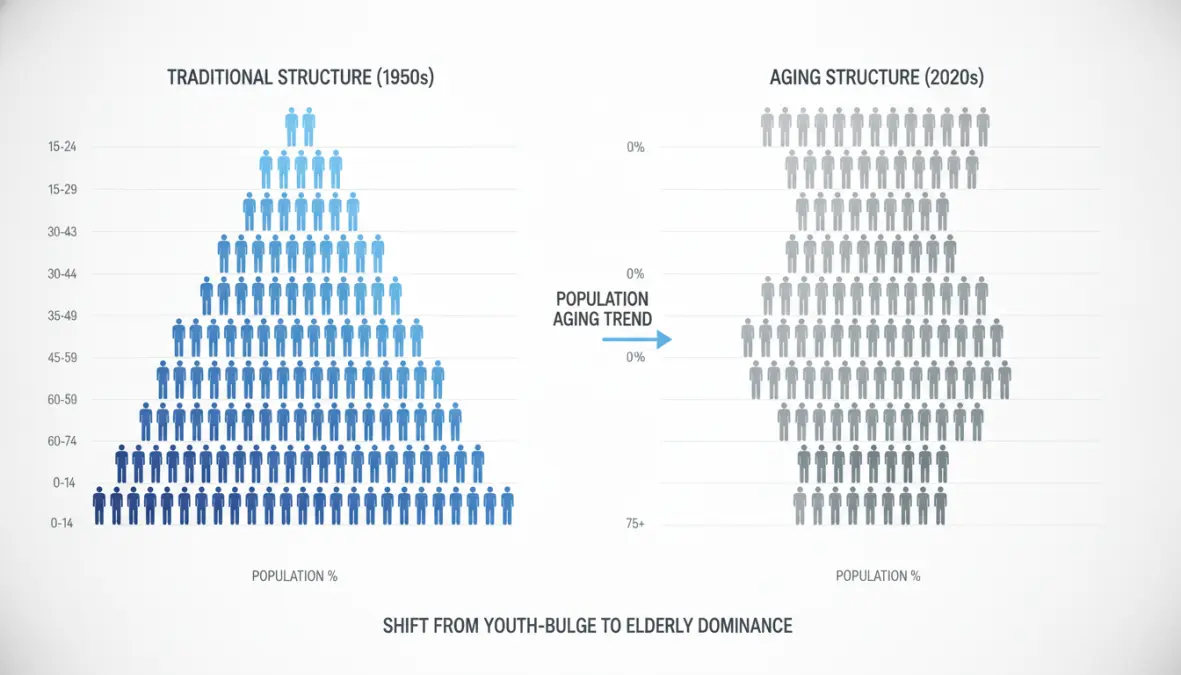
Picture this: for the first time in human history, people over 65 are about to outnumber children under five globally. This isn’t science fiction—it’s our new economic reality. The silver tsunami is reshaping markets, pension systems, and entire economies in ways we’re only beginning to understand. Aging population economics has become one of the most critical factors influencing investment decisions, government policies, and business strategies worldwide. While some see crisis, others see unprecedented opportunity in what’s become known as the longevity economy—a market already worth trillions and growing faster than most traditional sectors.
Understanding the Global Demographic Shift and Its Economic Implications
The numbers tell a compelling story about demographic transition economics. Japan leads the charge with nearly 30% of its population over 65, while countries like Italy, Germany, and South Korea aren’t far behind. Even traditionally young nations are experiencing rapid elderly population growth. China’s working-age population has been shrinking since 2015, and the UN projects that by 2050, one in six people globally will be over 65—up from one in eleven in recent years.
These population aging trends stem from two converging forces: plummeting birth rates and soaring life expectancy. Women in most developed nations now have fewer than 2.1 children—the replacement rate needed to maintain population levels. Meanwhile, advances in healthcare mean people are living longer, healthier lives. This demographic earthquake fundamentally alters aging population economics because it changes the dependency ratio—the balance between working-age people and those they support.
The longevity economy encompasses all economic activity related to people over 50, including their consumption, employment, and wealth management. Estimates suggest this sector already represents over $8 trillion in the United States alone, making it larger than the entire economies of all countries except China. This isn’t just about selling products to seniors—it’s a complete reimagining of how economies function when the age pyramid inverts.
The Longevity Economy: New Market Opportunities and Challenges
The longevity economy presents a paradox: enormous market potential alongside serious structural challenges. Success in this new landscape requires understanding both sides of the equation.
The Rise of the Silver Consumer Market
The senior consumer market is anything but frail. Today’s older adults control a disproportionate share of global wealth—in the U.S., households headed by someone 55+ hold roughly 75% of the nation’s net worth. This translates into serious purchasing power and creates investment opportunities in longevity economy sectors that didn’t exist a generation ago.
Technology companies are racing to serve this demographic. The stereotype of tech-phobic seniors is outdated—older adults are the fastest-growing segment of social media users and smartphone adopters. Companies are designing senior-friendly interfaces, developing health monitoring devices, and creating platforms that address isolation (a concern increasingly linked to social disconnection challenges). The age-related consumption patterns show seniors prioritize experiences over possessions, driving growth in travel, dining, and entertainment sectors tailored to their needs.
The housing market is transforming too. Age-in-place modifications, continuing care retirement communities, and multi-generational housing are booming. Financial services are innovating with reverse mortgages, longevity insurance, and products addressing the complex realities of intergenerational wealth transfer—estimated at $30 trillion changing hands over the next few decades in North America alone.
Economic Pressures: Healthcare, Pensions, and Workforce Productivity
Now for the challenges. Healthcare costs aging populations impose on national budgets are staggering. Older adults consume healthcare at rates three to five times higher than younger populations. Long-term care, chronic disease management, and geriatric services create fiscal pressure that makes current systems unsustainable. The geriatric care industry faces workforce shortages even as demand explodes—a supply-demand imbalance with serious consequences.
The fiscal challenges of population aging extend beyond healthcare. Aging population effects on pension systems threaten retirement security globally. When pension systems were designed, people lived perhaps a decade in retirement. Now they might live thirty years beyond leaving the workforce. The math simply doesn’t work with fewer workers supporting each retiree. Many developed nations already spend 10-15% of GDP on pensions—a figure set to rise dramatically.
Aging workforce challenges create additional headwinds. As experienced workers retire, companies face knowledge transfer problems and skill gaps. The shrinking pool of prime-working-age adults creates labor shortages in key sectors. Meanwhile, questions arise about productivity decline as workforces age, though research suggests older workers’ experience often compensates for any age-related productivity changes. The real issue is how aging populations affect labor markets by reducing overall workforce participation rates, which directly impacts economic impact of aging population on GDP.

Policy and Business Strategies for an Aging World
Navigating demographic transition economics requires coordinated action from governments and businesses alike. The good news? Solutions exist, but they require political will and strategic thinking.
Pension reform tops the policy agenda. Countries are gradually raising retirement ages to reflect life expectancy trends, shifting from defined-benefit to defined-contribution systems, and encouraging private retirement savings. Some nations are exploring universal basic pension schemes funded through broader tax bases rather than just payroll taxes.
Immigration policy becomes crucial in aging societies. Countries like Canada and Australia use immigration to offset aging demographics, bringing in younger workers who support economic growth. However, immigration alone can’t solve the problem—political resistance and integration challenges limit this approach.
Technology offers another path forward. Automation and AI can compensate for shrinking workforces, boosting productivity without requiring more human labor. Japan leads in robotics for elderly care, while other nations invest in healthcare AI to make geriatric medicine more efficient. The key is ensuring displaced workers transition successfully—something that relates to broader discussions about evolving career structures.
Businesses are adapting their strategies for the longevity economy. Smart companies recognize that consumer spending patterns of elderly population differ from younger demographics and design products accordingly. They’re also rethinking workforce management, implementing lifelong learning programs, offering flexible work arrangements for older employees, and combating age discrimination. Some organizations actively recruit older workers for their reliability and experience.
Forward-thinking regions are developing comprehensive aging strategies that integrate urban planning (creating age-friendly cities), healthcare innovation, and economic growth in aging societies initiatives. This holistic approach acknowledges that aging isn’t just a healthcare issue—it touches everything from transportation infrastructure to retail design to financial regulation.
The reality is that aging population economics will define the coming decades as profoundly as industrialization defined the 19th century or digitalization shaped the late 20th. The countries and companies that adapt earliest and most comprehensively will thrive. Those that resist this demographic reality will struggle with mounting fiscal pressures, labor shortages, and missed market opportunities. The longevity economy isn’t coming—it’s already here. The only question is whether we’ll embrace it as an opportunity or treat it as a crisis to endure.