The Metaverse Workplace: How Virtual Offices Are Transforming Remote Collaboration
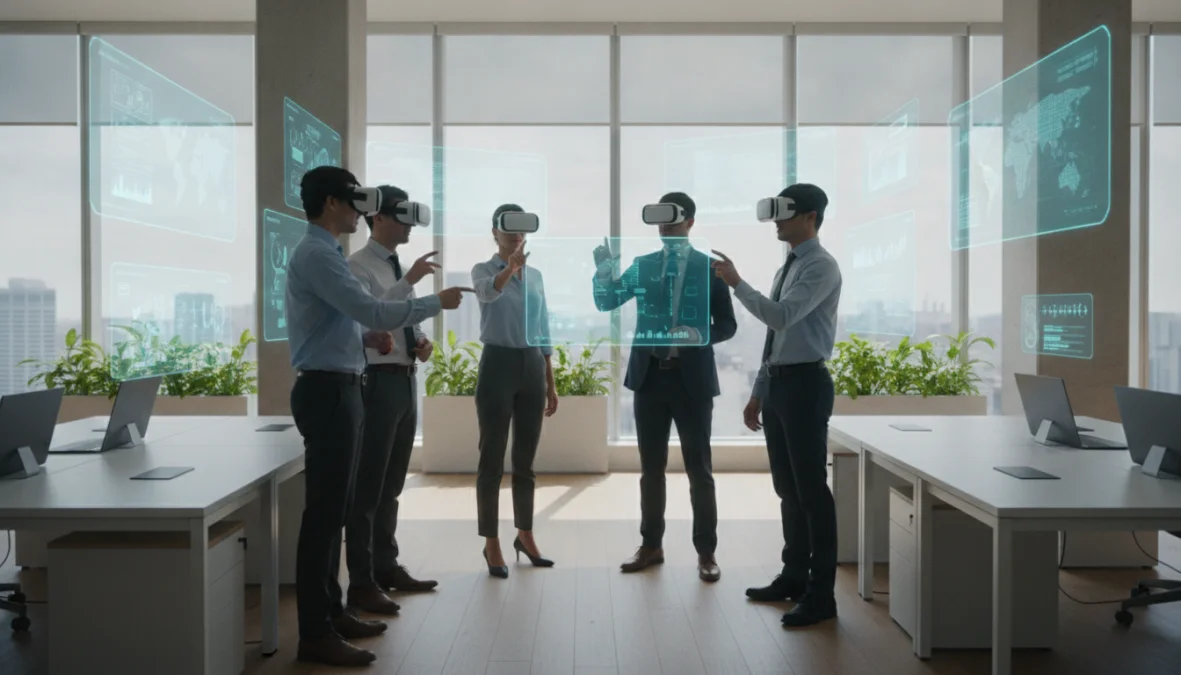
Remember when working from home meant endless Zoom calls, staring at tiny squares on your screen? Well, the metaverse workplace is flipping that script entirely. Imagine strapping on a VR headset and suddenly finding yourself in a sleek virtual office where your colleagues appear as avatars, you can whiteboard ideas on floating screens, and spatial audio makes conversations feel genuinely natural. Sounds like science fiction? It’s happening right now, and it’s reshaping how distributed teams collaborate across continents.
The workplace transformation triggered by recent shifts in work culture has opened doors to experimentation with immersive technologies. As companies wrestle with hybrid work models and employees demand flexibility, the digital office environment offers a compelling middle ground between physical offices and traditional remote work. But is this virtual reality workplace ready for prime time, or are we still in the early adopter phase?
What Is a Metaverse Workplace and How Does It Work?
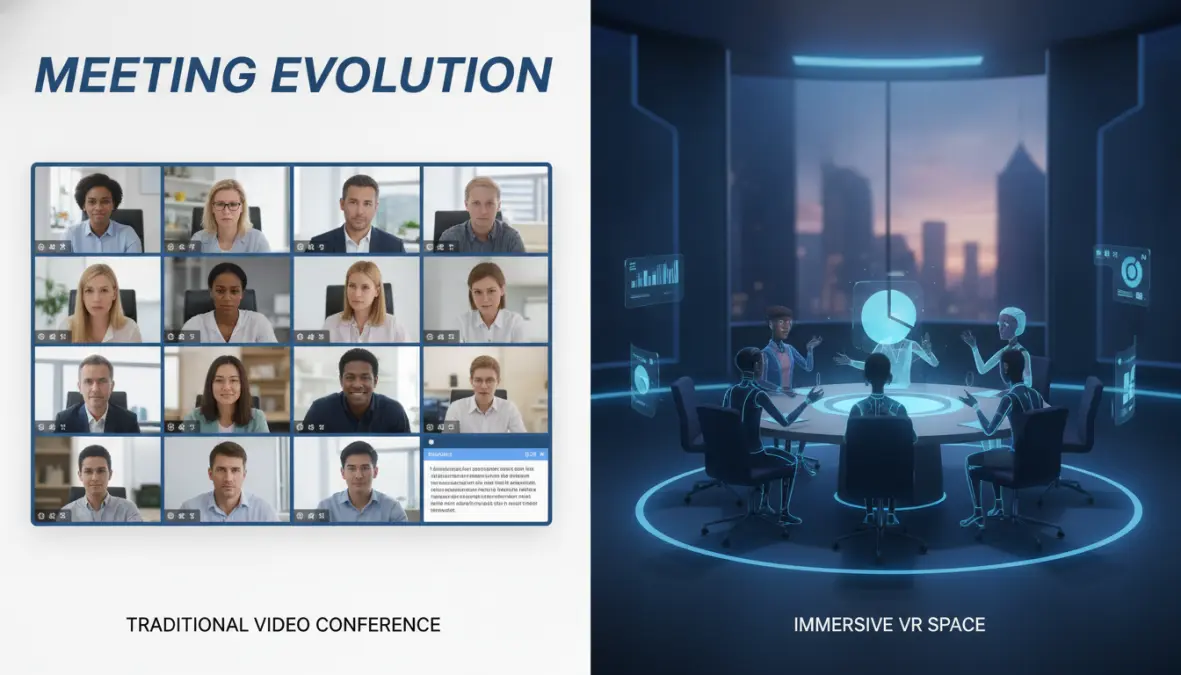
A metaverse workplace is essentially a digital office environment where employees interact through avatars in three-dimensional virtual meeting rooms and collaborative spaces. Unlike standard video conferencing, this immersive work environment leverages VR headsets, AR glasses, or even desktop access to create a sense of presence and spatial awareness that mimics physical office interactions.
The technology stack behind these metaverse workspaces involves several components. At its core, you’ll need a VR headset like the Meta Quest, HTC Vive, or more affordable options for basic access. Platforms such as Meta’s Horizon Workrooms, Microsoft Mesh, Spatial, and Engage provide the infrastructure where your virtual office exists. Your avatar becomes your digital representation, and sophisticated tracking technology translates your head movements, hand gestures, and even voice modulation into the virtual space.
What makes avatar-based collaboration different from traditional remote work? The spatial computing element changes everything. When a colleague speaks from your left in a VR meeting space, you hear them from that direction thanks to spatial audio. You can walk over to a virtual whiteboard, sketch ideas with hand controllers, and others can gather around to contribute. Documents become 3D objects you can pin to virtual walls or share by virtually handing them to teammates.
Setting up a virtual office in the metaverse typically requires mid-range hardware (a decent VR headset runs $300-500), stable internet connection, and compatible software. Best metaverse platforms for business collaboration currently include Horizon Workrooms for Meta Quest users, which offers seamless integration with productivity tools, and Microsoft Mesh for organizations already embedded in the Microsoft ecosystem. Spatial attracts creative teams with its emphasis on visual collaboration, while Engage caters to enterprise-level training and conferences.
Benefits and Challenges of Virtual Reality Workplaces
Key Advantages of Metaverse Collaboration
The benefits of metaverse workplace for remote teams extend far beyond novelty. First, engagement levels skyrocket compared to Zoom fatigue-inducing video calls. When your brain perceives you’re in a shared space with colleagues, attention naturally improves. Research shows participants in VR meeting spaces report feeling more present and connected than traditional video conferencing.
Spatial audio deserves special mention as a game-changer for remote collaboration. In conventional calls, everyone’s voice comes from the same direction, creating cognitive overload. In the metaverse workspace, conversations flow naturally because you can hear who’s speaking from where, enabling side conversations and natural turn-taking that mirrors physical offices.
Body language communication through avatars, while limited compared to real life, surpasses static video squares. Hand gestures, head nods, and spatial positioning convey engagement levels and reactions. Creative collaboration particularly benefits—design reviews where team members walk around 3D models, architecture firms showcasing virtual building walkthroughs, or marketing teams arranging mood boards in shared virtual space demonstrate practical applications already delivering results.
Cost savings represent another compelling advantage. Companies implementing metaverse collaboration tools can reduce physical office footprints while maintaining collaborative culture. Global accessibility means teams spanning continents can feel co-located, addressing the isolation many remote workers experience. Environmental benefits from reduced commuting and business travel align with corporate sustainability goals.
Current Limitations and Barriers to Adoption
Despite the promise, implementing virtual reality in workplace settings faces substantial hurdles. The cost of metaverse virtual office solutions remains prohibitive for many organizations. Beyond hardware investment, software licensing, training programs, and IT support add up quickly. Not everyone can afford $400 per employee for headsets plus ongoing platform subscriptions.
Physical discomfort poses real challenges. Motion sickness affects 20-40% of VR users to varying degrees, and extended headset use causes eye strain and physical fatigue. Most experts recommend limiting VR sessions to 30-45 minutes, which constrains its utility for all-day work.
The learning curve intimidates less tech-savvy employees, creating adoption friction. Accessibility concerns are significant—current VR technology inadequately serves users with disabilities, vision impairments, or mobility limitations. Privacy worries around data collection, avatar tracking, and workplace surveillance in immersive work environments require thoughtful governance frameworks.
Technology standardization remains elusive. Different platforms don’t communicate seamlessly, forcing organizations to choose ecosystems that may lock them in. Resistance to change persists among managers comfortable with traditional methods and skeptical about telepresence technology delivering genuine productivity improvements.
However, technological advancement continues accelerating. Lighter headsets, improved resolution, and more intuitive interfaces address many current limitations. As younger generations more comfortable with immersive tech enter the workforce, cultural barriers will naturally diminish.
Is the Metaverse Workplace Ready for Mainstream Adoption?
The honest answer? We’re in the experimental phase, not mainstream adoption. Current market maturity suggests the metaverse workplace works brilliantly for specific use cases but isn’t replacing traditional offices or video calls wholesale anytime soon.
Corporate investment signals growing interest. Companies like Accenture have equipped thousands of employees with VR headsets for onboarding and training. BMW uses collaborative virtual environments for factory planning. PwC deployed VR for soft skills training across multiple countries. These implementations focus on high-value scenarios where immersion genuinely improves outcomes rather than routine daily work.
The future of remote work in metaverse likely involves hybrid approaches. Think strategic use for quarterly team gatherings, design sprints, training sessions, or creative workshops rather than daily standup meetings. Industries like architecture, engineering, product design, healthcare training, and education show strongest adoption because visualization and spatial understanding directly enhance their workflows.
Realistic predictions suggest broader workplace adoption hinges on several factors reaching critical mass over the next 3-5 years: hardware becoming as comfortable and affordable as quality headphones, platform interoperability improving dramatically, proven ROI data convincing CFOs, and cultural acceptance growing organically. The technology must disappear into the background—when putting on a headset feels as natural as opening a laptop, we’ll know we’ve arrived.
Organizations exploring metaverse workplace productivity tools should start small. Pilot programs with volunteer early adopters, focused use cases with measurable outcomes, and clear opt-out policies respect individual preferences while building organizational capability. The comparison of metaverse workplace vs traditional office shouldn’t be framed as either/or but rather as expanding the toolkit available for different collaboration needs.
As remote work continues evolving, the virtual office represents one experimental branch of workplace innovation alongside four-day work weeks and flexible arrangements. The metaverse won’t replace physical presence entirely—humans crave real-world connection. But for distributed teams seeking richer collaboration than screens allow, these immersive work environments offer intriguing possibilities worth exploring. The workplace of tomorrow will likely blend physical, virtual, and metaverse elements, giving employees genuine choice in how they work best.