The Rise of Digital Nomad Visas: Which Countries Offer the Best Programs for Remote Workers

Picture this: sipping espresso at a café in Lisbon while finishing a client presentation, or coding from a beachside co-working space in Bali. For millions of remote workers worldwide, this isn’t a vacation fantasy—it’s their everyday reality. As companies embrace flexible work arrangements, governments are rolling out the red carpet with digital nomad visa programs designed specifically for location independent professionals. These specialized visas are transforming how we think about work, travel, and where we call home.
Understanding Digital Nomad Visa Programs and Why They’re Gaining Popularity
Unlike traditional tourist visas that prohibit any form of work, digital nomad visa programs are specifically designed for remote workers who earn income from sources outside their host country. Think of them as a work from anywhere visa that gives you legal permission to live in a country for extended periods while maintaining your job or freelance clients abroad.
The difference between a tourist visa and a remote work visa program is crucial. Tourist visas typically last 30-90 days and explicitly forbid work activities. Digital nomad visas, however, acknowledge the new reality of remote work and provide legal frameworks for stays ranging from six months to several years. You’re not taking a job from a local—you’re bringing your income (and spending power) into the local economy.
Why are countries jumping on this bandwagon? The economics are compelling. Digital nomads inject money into local businesses without requiring employment infrastructure or social services. Post-pandemic, many nations saw an opportunity to revitalize tourism-dependent economies while attracting educated, financially stable professionals. Countries like Portugal, Estonia, and Costa Rica weren’t just being generous—they were making smart economic bets that are paying off handsomely.
Top Digital Nomad Countries and Their Visa Programs
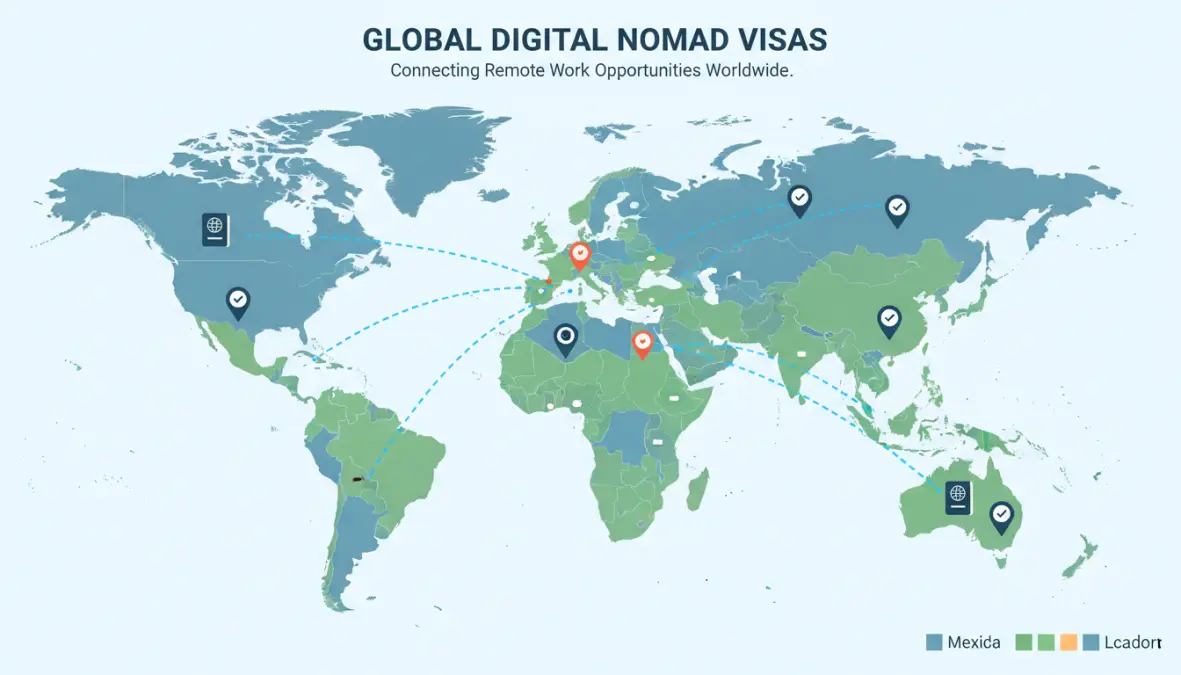
The landscape of best digital nomad visas has exploded, with over 50 countries now offering specialized programs. Let’s break down the standout options across different regions, so you can find your perfect match among these digital nomad countries.
Europe leads the pack with sophisticated programs. Portugal’s D7 visa has become legendary among remote workers, requiring proof of roughly €3,040 monthly income and offering a pathway to permanent residence. The application process takes 2-3 months, costs around €90, and grants a digital nomad residence permit valid for two years with renewal options. Estonia pioneered Europe’s first dedicated digital nomad visa, allowing stays up to one year with a straightforward online application requiring €3,504 monthly income—perfect for tech-savvy professionals who appreciate digital efficiency.
Spain recently launched its digital nomad visa, requiring €2,000 monthly income and offering attractive tax benefits for the first four years. Croatia jumped in with competitive nomad visa requirements—just €2,300 monthly income and a quick approval process, making it one of the easiest digital nomad visa to get in the EU zone.
Latin America offers incredible value propositions. Costa Rica’s remote worker visa allows two-year stays with just $3,000 monthly income proof and minimal bureaucracy. Colombia’s digital nomad visa debuted with a two-year duration and only $684 monthly income requirement—paired with an incredibly low cost of living, it’s a budget nomad’s dream. Mexico, while technically using its temporary residence visa for digital nomads, offers four-year permits with income requirements starting around $2,595 monthly.
Asia and the Caribbean round out compelling options. Thailand’s Long-Term Resident Visa targets remote workers with $80,000 annual income, providing 10-year stays. Dubai’s virtual working program requires no income tax and costs about $287 for a one-year permit. Barbados Welcome Stamp became famous early in the pandemic, offering 12-month stays (renewable for another year) for $2,000—though higher living costs balance the equation.
The visa application process typically requires passport copies, proof of employment or freelance contracts, bank statements demonstrating income requirements, health insurance coverage, and sometimes background checks. Most freelancer visa programs are processed within 4-12 weeks, though some fast-track options exist for premium fees.
Key Requirements Across Different Programs
While each program has unique quirks, common nomad visa requirements create a baseline you can prepare for. Nearly all programs require minimum monthly income ranging from $1,000 to $5,000, with European programs typically on the higher end. You’ll need comprehensive health insurance—either international coverage or a policy from the host country. Most countries require proof you’re working remotely through employment contracts, client agreements, or business registration documents.
A passport valid for at least six months beyond your intended stay is universal, and many programs now require background checks or police clearances from your home country. Some nations, particularly in Europe, mandate proof of accommodation—either a rental agreement or hotel booking for your initial period. The key differentiator? Some countries want to see your money in the bank (saved funds), while others focus on consistent monthly income streams.
Cost Comparison and Duration of Stay
When evaluating temporary residence for remote workers, consider both upfront costs and visa duration and renewal options. Application fees range dramatically: Estonia charges around €80, while Barbados hits $2,000. Portugal sits at €90 but requires additional costs for background checks and notarization, totaling roughly €500-800.
Duration matters as much as cost. One-year programs (Dubai, Barbados, Estonia) work great for trying out the nomad lifestyle. Two-year options (Portugal, Costa Rica, Spain) provide stability for deeper cultural immersion. Countries offering pathways to permanent residence—like Portugal and Spain—add long-term value beyond the initial permit.
Renewal policies vary widely. Some programs allow straightforward extensions (Croatia, Mexico), while others require leaving and reapplying. Tax implications become critical for longer stays—Portugal’s non-habitual resident regime offers tax breaks, while Dubai’s zero income tax policy is unbeatable for high earners. Always factor in the local cost of living when calculating true affordability.
FAQ: Common Questions About Digital Nomad Visas
Can I work for local companies with a digital nomad visa? Generally, no. These visas specifically prohibit employment with local businesses, as they’re designed for people working remotely for foreign employers or clients. Violating this can result in visa cancellation and deportation.
Do digital nomad visas lead to permanent residence? Some do! Portugal and Spain’s programs can lead to permanent residence and eventually citizenship. However, programs in Thailand, Barbados, and Dubai are strictly temporary with no residency pathways. Check each country’s specific regulations if long-term settlement interests you.
What happens if my visa expires? You must leave the country before expiration or apply for renewal if eligible. Overstaying can result in fines, deportation, and bans on future entry. Most countries send reminders, but tracking your expiration date is your responsibility.
Are digital nomad visas tax-friendly? It varies dramatically. Countries like Portugal and Spain offer special tax regimes with reduced rates. Dubai and some Caribbean nations have no income tax. However, you’re typically still liable for taxes in your country of citizenship or tax residence—consult a tax professional familiar with international remote work.
How long does the application process take? Expect anywhere from two weeks (Dubai, Barbados) to three months (Portugal, Spain). Estonia’s digital process is remarkably fast at around 30 days. Build in buffer time and don’t book non-refundable travel until your visa is approved.
The rise of digital nomad visa programs represents more than just a bureaucratic convenience—it’s a fundamental shift in how we define work, citizenship, and belonging. Whether you’re dreaming of European culture, tropical beaches, or bustling Asian cities, there’s likely a program that fits your lifestyle and budget. The hardest part isn’t finding a visa anymore—it’s choosing which incredible destination to call your temporary home. Ready to trade your daily commute for a passport full of stamps? Your laptop office awaits.