How Remote Work Is Reshaping Urban Planning and City Infrastructure
The morning commute is vanishing from countless lives, and cities are scrambling to catch up. Office towers stand half-empty while suburban neighborhoods buzz with midday activity. What started as a pandemic necessity has evolved into a fundamental shift in how we work—and it’s forcing urban planners to rethink everything they thought they knew about remote work urban planning. From transportation networks to zoning laws, the ripple effects of telecommuting are redrawing the urban landscape in ways we’re only beginning to understand.
The Shift in Urban Demand: How Remote Work Is Transforming City Landscapes
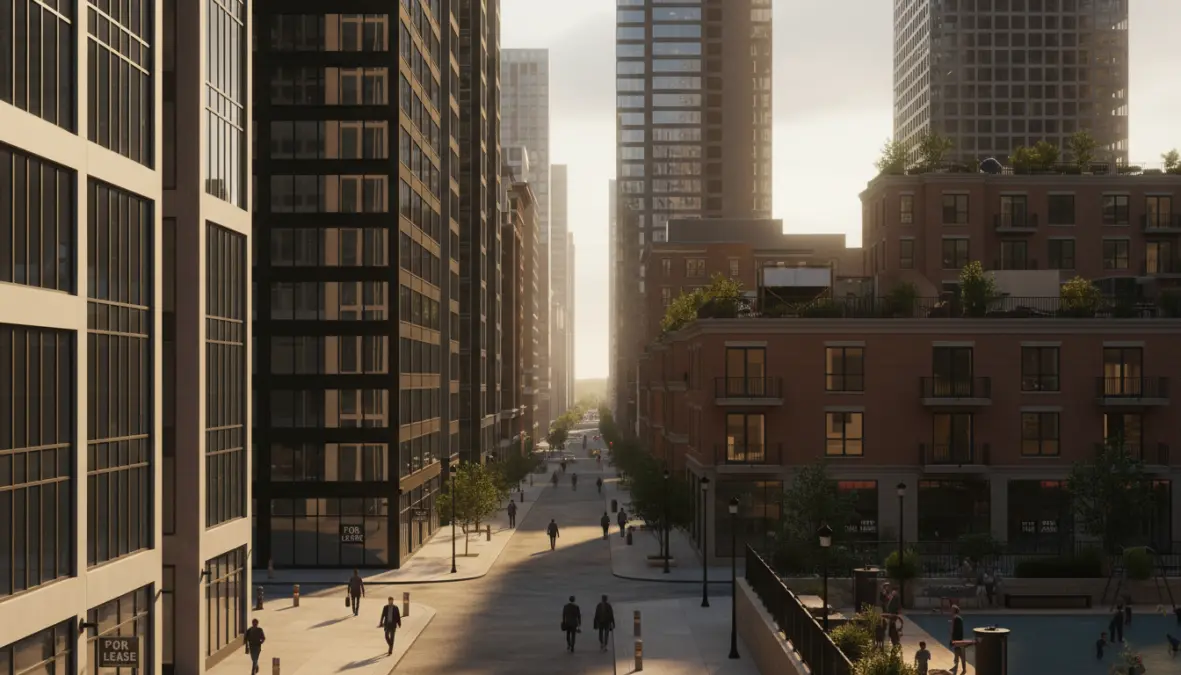
The remote work impact cities have experienced isn’t subtle—it’s seismic. Downtown business districts that once teemed with suited professionals now face vacancy rates that would have seemed impossible just years ago. San Francisco’s office vacancy hit 25%, while New York City saw a net loss of over 300,000 residents during the height of remote work adoption. This isn’t just about empty desks; it’s a complete reconfiguration of urban planning remote work dynamics that challenges decades of development patterns.
The exodus from dense urban cores has triggered what experts call “suburban migration” on steroids. Mid-sized cities like Austin, Boise, and Nashville experienced population surges as workers untethered from physical offices sought more space, lower costs, and better quality of life. This post-pandemic urbanism represents a fundamental shift in urban demand—people want different things from their cities now. The daily commute no longer dictates where people live, opening up housing markets that were previously impractical for downtown workers.
From Central Business Districts to Distributed Urban Cores
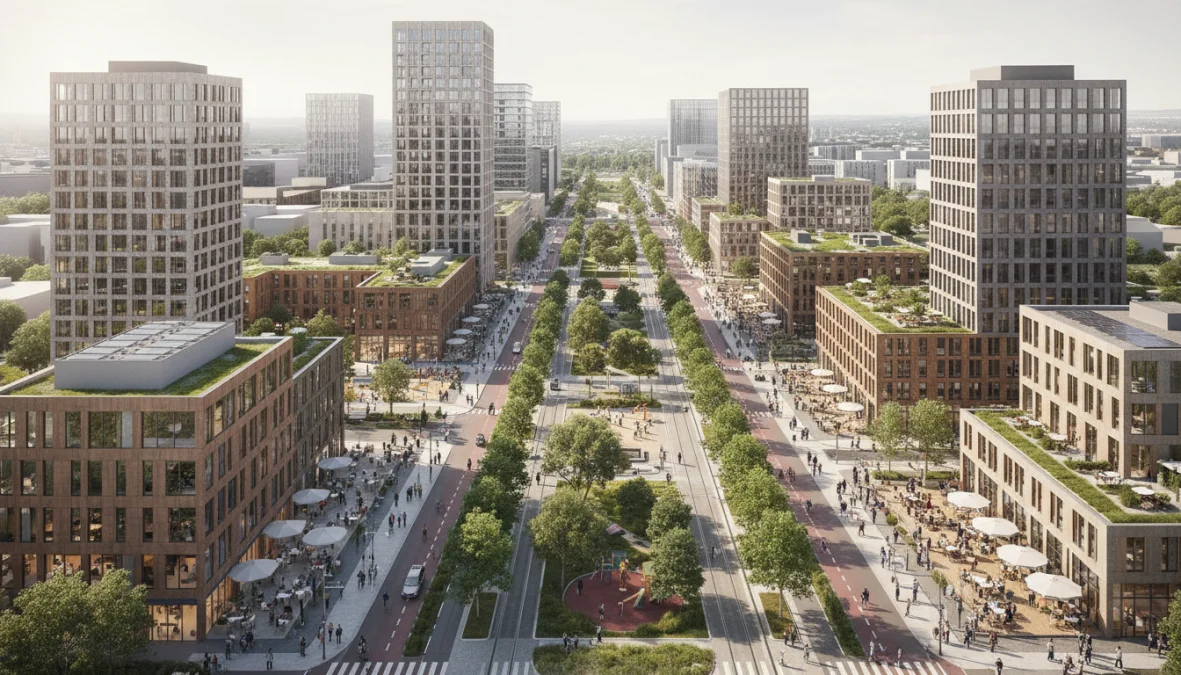
Traditional Central Business Districts (CBDs) are undergoing an identity crisis. The monolithic office tower model is giving way to mixed-use development that acknowledges people now live, work, and play in the same neighborhoods. Cities like Paris are championing the 15-minute city concept—the idea that residents should access all essential services within a quarter-hour walk or bike ride. Remote work accelerates this vision by ensuring more people are actually in their neighborhoods during business hours to support local economies.
Conversion projects are transforming obsolete office buildings into residential units, though the economics and logistics remain challenging. Buildings designed for open-plan workspaces don’t easily translate to apartments with windows and proper ventilation. Yet forward-thinking developers are tackling these conversions, recognizing that urban development trends now favor residential density over commercial concentration. The result is a more distributed urban core where multiple neighborhoods function as semi-autonomous hubs rather than satellites orbiting a single downtown.
Residential Preferences and Housing Market Evolution
The question of how remote work affects urban planning becomes crystal clear when examining housing preferences. The spare bedroom has become the home office, and suddenly that cramped city apartment feels unbearably small. Searches for homes with dedicated office spaces surged by 60%, while properties with outdoor access commanded premium prices. Workers no longer willing to sacrifice living space for commute convenience are reshaping demand patterns across metropolitan areas.
This shift has created fascinating urban density patterns as people seek a “Goldilocks zone”—not too urban, not too rural. Second-tier cities with good internet infrastructure and cultural amenities but lower costs are booming. Meanwhile, housing markets in traditional gateway cities have seen corrections, though the impact varies wildly by neighborhood. Areas with parks, walkability, and local services have maintained value, while neighborhoods that were purely bedroom communities have struggled.
Infrastructure Adaptation: Reimagining City Services for Telecommuting Communities
Cities aren’t just watching these changes happen—the smart ones are actively adapting their infrastructure to support telecommuting urban design. This means rethinking priorities that seemed set in stone. When fewer people commute daily, does a city still need that expensive subway expansion? When neighborhoods become daytime activity centers, how should street design change? These questions are driving concrete city infrastructure changes that will define urban life for decades.
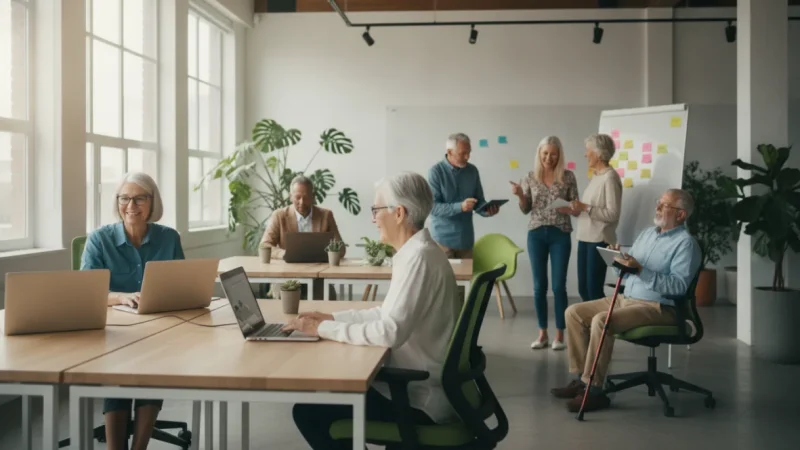
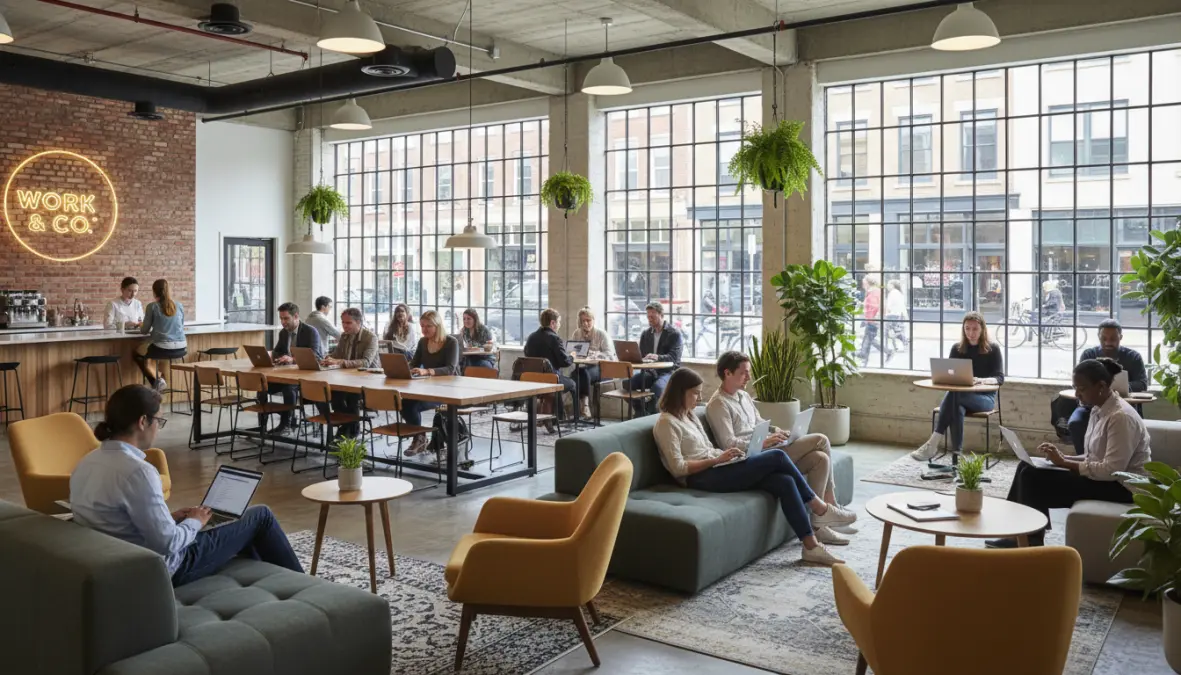
The most progressive cities are treating digital connectivity as a utility rather than a luxury. Barcelona launched a comprehensive fiber-optic network treating internet access like water or electricity—essential infrastructure the city provides. Meanwhile, Miami has invested heavily in creating neighborhood co-working spaces within walking distance of residential areas, acknowledging that “work from home” doesn’t always mean isolated in an apartment. These hubs provide professional environments without requiring commutes, embodying work from home city planning at its best.
Transportation Networks and Reduced Commuter Pressure
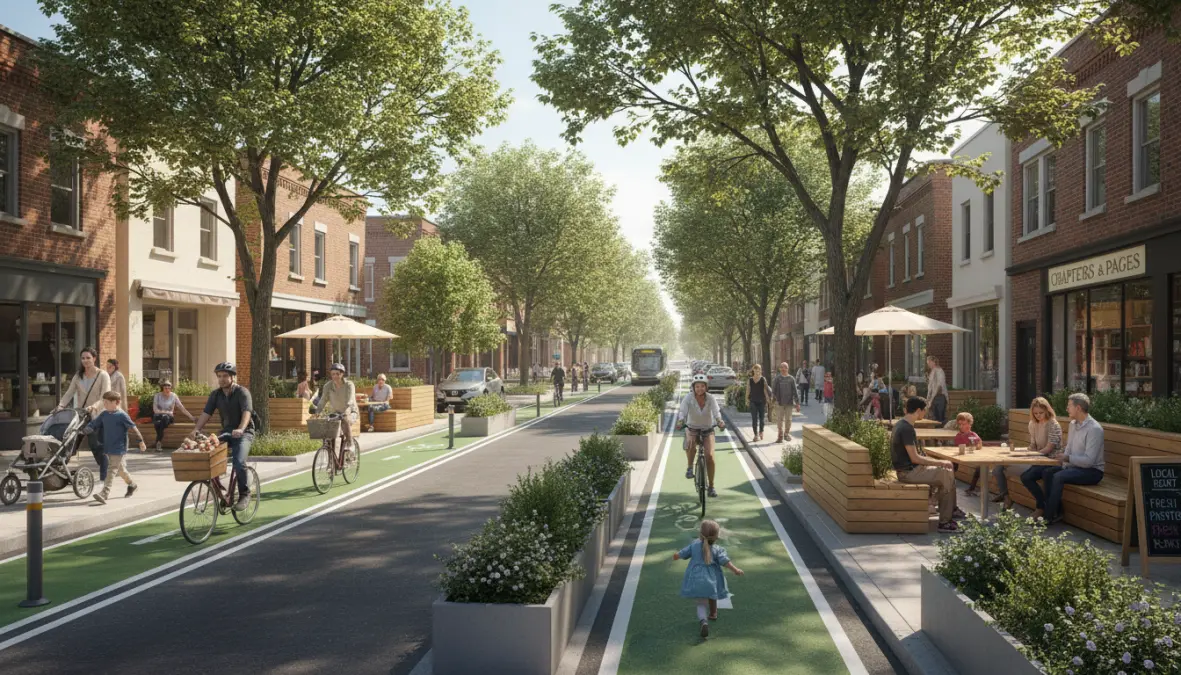
The most immediate infrastructure impact? Transportation networks designed for crushing peak-hour commutes suddenly have excess capacity. While this might sound like a problem, it’s actually an opportunity for neighborhood revitalization. Cities like Oakland are converting underutilized parking structures into mixed-use spaces with retail and housing. Streets once dominated by rush-hour traffic are being reimagined with protected bike lanes, expanded sidewalks, and parklets.
Public transit agencies face financial challenges as ridership remains below pre-pandemic levels, but they’re also experimenting with new models. Rather than focusing exclusively on shuttling workers downtown during narrow time windows, transit-oriented development is shifting toward all-day service connecting residential neighborhoods to distributed employment centers and amenities. Some cities are reallocating transportation budgets from commuter-focused projects to local improvements—better sidewalks, bike infrastructure, and neighborhood circulators that serve the new pattern of distributed, localized activity.
Digital Infrastructure as the New Urban Priority
Perhaps the most critical insight about city infrastructure adaptations for remote workers is that digital connectivity now ranks alongside roads and sewers as essential infrastructure. The pandemic exposed brutal digital divides—whole neighborhoods locked out of remote work opportunities simply because broadband wasn’t available or affordable. Cities serious about equitable urban planning strategies for distributed workforce are treating universal broadband as a civil rights issue.
Chattanooga pioneered municipal gigabit internet as smart city infrastructure, and the competitive advantage is undeniable. Remote workers can live anywhere with good internet, so cities offering superior digital infrastructure attract talent and businesses. Meanwhile, neighborhood co-working hubs address another need: professional space without commutes. These aren’t just real estate plays—they’re deliberate urban planning interventions that acknowledge how work happens now, creating third spaces between home isolation and downtown offices.
Future Urban Development Trends: Planning Cities for Hybrid Work Models
Looking ahead, the consensus among urbanists is that we’re not heading toward complete remote work or a return to full-time office presence—we’re entering an era of hybrid models. This creates unique challenges for urban development trends and remote work urban planning strategies. How do you plan for a workforce that’s sometimes downtown, sometimes in neighborhoods, sometimes not working from a fixed location at all?
The answer lies in flexibility and mixed-use approaches. Zoning laws written for an era of strict separation between residential, commercial, and industrial uses are being rewritten. Forward-thinking cities are embracing mixed-use development that allows ground-floor retail, office spaces on middle floors, and residential units above—creating vibrant, self-sustaining neighborhoods that function regardless of how many people are commuting on any given day. This represents reshaping cities for remote work era in practical terms.
Sustainability benefits from reduced commuting could be massive, but only if cities plan accordingly. Less driving could mean cleaner air and lower emissions, but if suburban sprawl accelerates unchecked, the gains disappear. Post-pandemic urbanism needs to balance distributed living with compact, walkable neighborhoods. The goal isn’t abandoning density but rethinking where that density occurs and how it functions.
The impact of telecommuting on city development also creates opportunities for regeneration. Struggling commercial districts can be reimagined, abandoned industrial sites repurposed, and declining neighborhoods revitalized as people seek livable, well-connected communities rather than mere proximity to office towers. Cities that embrace these changes strategically—investing in local amenities, digital infrastructure, and quality of life—will compete successfully for residents and businesses in this new landscape.
FAQ
How is remote work affecting urban planning?
Remote work is fundamentally shifting urban planning priorities from commuter-focused infrastructure to neighborhood-based amenities and services. Cities are emphasizing walkability, local co-working spaces, digital connectivity, and mixed-use development rather than concentrating resources on downtown business districts. This creates more distributed, polycentric urban models where multiple neighborhoods function as complete communities.
What cities are adapting best to remote work trends?
Cities investing in digital infrastructure, flexible zoning, and quality-of-life amenities are leading the adaptation. Examples include Chattanooga with municipal gigabit internet, Barcelona with comprehensive connectivity initiatives, and smaller cities like Tulsa offering remote worker incentive programs. Mid-sized cities with good broadband, outdoor access, and lower costs are particularly competitive in attracting remote workers.
Will remote work lead to urban decline?
Not necessarily—it’s driving urban transformation rather than decline. While some downtown business districts face challenges, neighborhoods with strong local amenities are thriving. Remote work enables urban design changes due to work from home that can actually improve livability, reduce traffic, and create more sustainable communities. Cities that adapt strategically will emerge stronger, while those clinging to outdated models may struggle.
How does telecommuting impact city infrastructure needs?
Telecommuting shifts infrastructure priorities from peak commuter capacity to distributed, all-day services. Cities need universal broadband as essential infrastructure, neighborhood-level co-working spaces, enhanced local amenities, and transportation networks serving diverse patterns rather than just rush-hour commutes. This requires rethinking everything from zoning laws to utility provision, treating digital access as fundamental as roads and water.
The transformation of cities through remote work isn’t a temporary disruption—it’s a fundamental recalibration of how urban spaces function. The cities that thrive will be those recognizing this shift isn’t about accommodating a trend but embracing a new urban paradigm. As planners, developers, and policymakers navigate these changes, the opportunity exists to create more livable, sustainable, and equitable cities that work better for everyone, whether they commute daily or never leave their neighborhood.