Flow Battery Technology: The Future of Long-Duration Energy Storage
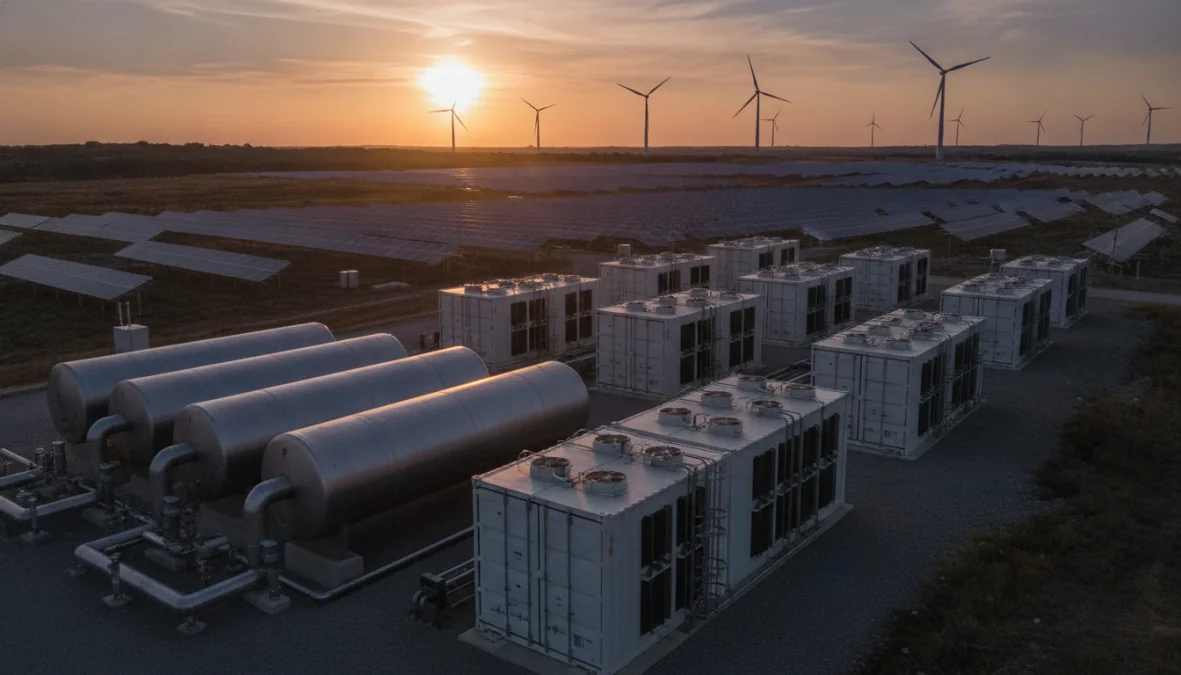
The renewable energy revolution has hit a major roadblock: the sun doesn’t always shine, and the wind doesn’t always blow. While solar panels and wind turbines have become increasingly affordable, storing that energy for when we actually need it remains one of the biggest challenges in our transition away from fossil fuels. Enter flow battery technology—a game-changing approach to energy storage systems that’s quietly positioning itself as the backbone of our clean energy future.
What Is Flow Battery Technology and How Does It Work?
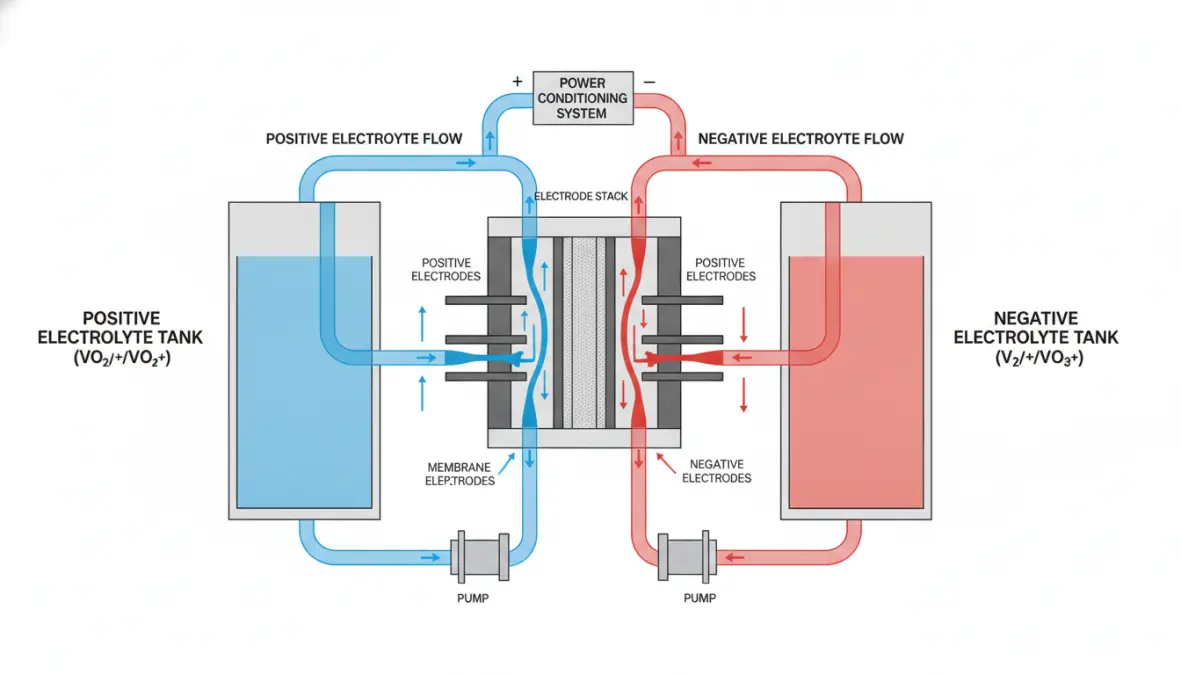
If you’re wondering how do flow batteries work, think of them less like traditional batteries and more like rechargeable fuel cells. Unlike the lithium-ion batteries in your phone or electric car, flow battery technology stores energy in liquid electrolyte solution contained in external tanks, not within the battery cell itself. This fundamental difference is what makes them so promising for large-scale applications.
The basic components include two tanks of electrolyte solution, a membrane separator, and an electrode stack where the magic happens. During charge discharge cycles, these liquids are pumped through the cell stack where a redox flow battery reaction occurs—electrons transfer between the two electrolytes across the membrane, generating electricity. When charging, the process simply reverses.
What makes this design brilliant is the complete separation between energy capacity (determined by tank size) and power capacity (determined by stack size). Want more storage? Just add bigger tanks. Need more power output? Increase the stack. This scalability is impossible with conventional batteries. The main types include vanadium flow battery systems, zinc-bromine variants, and emerging iron-based technologies, each with unique characteristics suited to different applications.
Vanadium Flow Batteries: The Industry Standard
When people talk about commercial flow battery applications, they’re usually referring to vanadium flow battery systems. These have become the industry standard for good reason. Vanadium-based systems use the same element in different oxidation states on both sides of the membrane, which eliminates a major headache: cross-contamination. If electrolytes mix slightly over time (which inevitably happens), the system doesn’t degrade—you can simply rebalance it.
Vanadium redox flow battery efficiency typically ranges from 70-85% round trip efficiency, which is respectable for long duration energy storage. These systems can handle over 20,000 charge-discharge cycles with minimal degradation, translating to operational lifespans exceeding 20 years. That longevity makes the flow battery cost per kwh increasingly competitive when calculated over the system’s lifetime, despite higher upfront costs.
Key Applications and Benefits of Flow Battery Technology
So where does flow battery technology actually shine? The sweet spot is renewable energy storage for grid scale energy storage projects where duration matters more than space. When evaluating the best flow batteries for solar storage or wind integration, the key advantage becomes clear: these systems can discharge at full power for 4-10+ hours without breaking a sweat—something lithium-ion struggles with economically.
Major flow battery applications include:
- Renewable integration: Storing excess solar energy during midday for evening peak demand
- Peak shaving: Reducing electricity costs by discharging during expensive peak hours
- Load leveling: Smoothing out demand fluctuations to improve grid efficiency
- Microgrid support: Providing reliable backup power for isolated communities or industrial facilities
- Grid stability: Responding to frequency regulation needs and preventing blackouts
Real-world examples include utility-scale installations in California storing wind energy, commercial facilities in Japan using flow batteries for backup power, and remote Australian communities achieving energy independence. The flow battery technology advantages and disadvantages become apparent in these contexts: they’re not ideal for electric vehicles (too bulky) but perfect for stationary storage where space is less constrained.
The safety factor can’t be overstated. Unlike lithium-ion systems that can experience thermal runaway, flow battery electrolytes are non-flammable and operate at room temperature. Flow battery lifespan and maintenance requirements are also minimal—mostly just pump maintenance and occasional electrolyte testing. For facility managers considering commercial flow battery systems, this translates to lower operational headaches and insurance costs.
Grid-Scale Energy Storage: Why Flow Batteries Excel
When comparing flow battery vs lithium ion for grid applications, it’s not really a fair fight for long duration energy storage. Lithium-ion excels at short-duration applications (under 4 hours) where high energy density matters. But for the 6-10 hour storage needed to truly support renewable-heavy grids, flow batteries dominate economically.
The reason is simple physics: lithium-ion batteries degrade with each cycle, losing capacity over time. Flow batteries? Their electrolytes don’t degrade—they can theoretically last indefinitely. For grid scale energy storage projects planning 20+ year operational lifetimes, this makes flow technology increasingly attractive. As more regions push toward 100% renewable energy targets, the ability to store massive amounts of energy for extended periods becomes critical infrastructure, not optional.
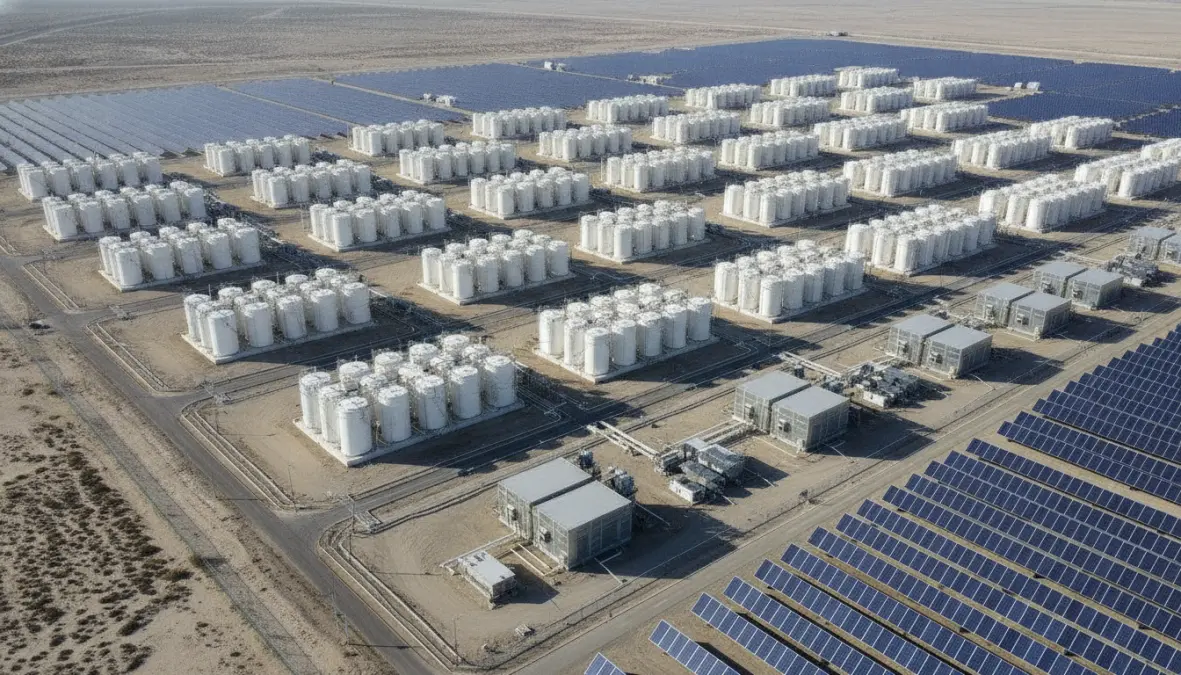
Projects like Dalian, China’s 200MW/800MWh vanadium flow battery (one of the world’s largest) demonstrate the technology’s readiness for utility-scale deployment. These installations provide the grid stability services that enable higher penetration of intermittent renewables without compromising reliability. Similar to how advances in nuclear energy are supporting baseload power, flow batteries are becoming essential for renewable energy baseload.
Challenges and Future Outlook for Flow Battery Adoption
Despite their promise, flow battery technology faces real obstacles. The elephant in the room is upfront cost—current flow battery cost per kwh remains higher than lithium-ion for shorter-duration applications. The systems are also physically larger due to lower energy density, making them impractical for space-constrained locations. System complexity with pumps, tanks, and monitoring equipment increases installation requirements compared to simpler battery blocks.
But the trajectory is encouraging. Research into new chemistries—organic flow batteries using carbon-based molecules, hybrid systems, and even solid-state flow concepts—promises to address current limitations. Manufacturing scale-up is driving costs down steadily, with analysts projecting flow battery costs could drop 30-50% over the next decade as production volumes increase.
The energy storage systems market is also evolving beyond simple either-or choices. Smart grid operators are increasingly deploying hybrid systems: lithium-ion for fast response and short-duration needs, flow batteries for longer-duration storage, and even solid-state batteries as they mature. This complementary approach leverages each technology’s strengths.
Policy support is ramping up too. Government incentives for long duration energy storage specifically favor flow battery projects, recognizing their essential role in grid decarbonization. Major energy companies are placing serious bets on the technology, with billions in investment flowing into manufacturing capacity and project development.
The path forward for flow battery technology isn’t about replacing lithium-ion entirely—it’s about claiming its rightful place as the preferred solution for applications demanding duration, safety, and longevity. As renewable energy continues its exponential growth, the question isn’t whether we need flow batteries, but how quickly we can scale them. The future of clean, reliable energy likely flows through tanks of carefully engineered electrolyte solutions—and that future is already arriving at grid-scale installations worldwide.