Neuromorphic Computing: How Brain-Inspired Chips Are Revolutionizing AI Efficiency

Your brain consumes roughly 20 watts of power to perform incredible computational feats—recognizing faces, processing language, making split-second decisions. Meanwhile, the AI models running on traditional processors can burn through thousands of watts doing far simpler tasks. This massive energy gap has sparked a revolution in computing: neuromorphic computing, a radical approach that mimics the brain’s architecture to create chips that are exponentially more efficient than anything we’ve used before.
While conventional AI relies on brute-force number crunching, neuromorphic systems work fundamentally differently—processing information through events, learning on the fly, and sipping power instead of guzzling it. The implications for everything from smartphones to autonomous vehicles are nothing short of transformative.
What Is Neuromorphic Computing and How Does It Work?
At its core, neuromorphic computing represents a paradigm shift from traditional binary logic to brain-inspired computing architectures. Instead of executing instructions sequentially like conventional processors, neuromorphic chips process information using artificial neurons and synapses that communicate through electrical spikes—much like biological neurons in your brain.
The magic happens through spiking neural networks (SNNs), which operate on an event-driven basis. Traditional processors continuously cycle through calculations whether they’re needed or not, burning energy the entire time. Neuromorphic processors, by contrast, only activate when specific events occur—a concept called event-driven computing. Think of it like the difference between a lightbulb that’s always on versus one with a motion sensor: energy is only consumed when actually needed.
The hardware itself incorporates components like memristors—resistors with memory—that can adjust their resistance based on the electrical current that’s passed through them, mimicking synaptic plasticity in the brain. This allows the chip to literally rewire itself as it learns, without separate memory and processing units. The neural architecture enables massive parallel processing, with thousands or millions of artificial neurons firing simultaneously, just like in biological neural networks.
Key Advantages of Neuromorphic Chips for AI Applications
The benefits of neuromorphic AI extend far beyond just copying nature—they address some of the most pressing limitations in modern artificial intelligence. The most striking advantage is energy efficiency. Where a GPU-based deep learning system might consume 300 watts during inference, a neuromorphic chip performing similar tasks can operate on less than 1 watt. This represents a reduction of two to three orders of magnitude, making how neuromorphic computing improves AI efficiency a question with a straightforward answer: by fundamentally rethinking how computation happens.
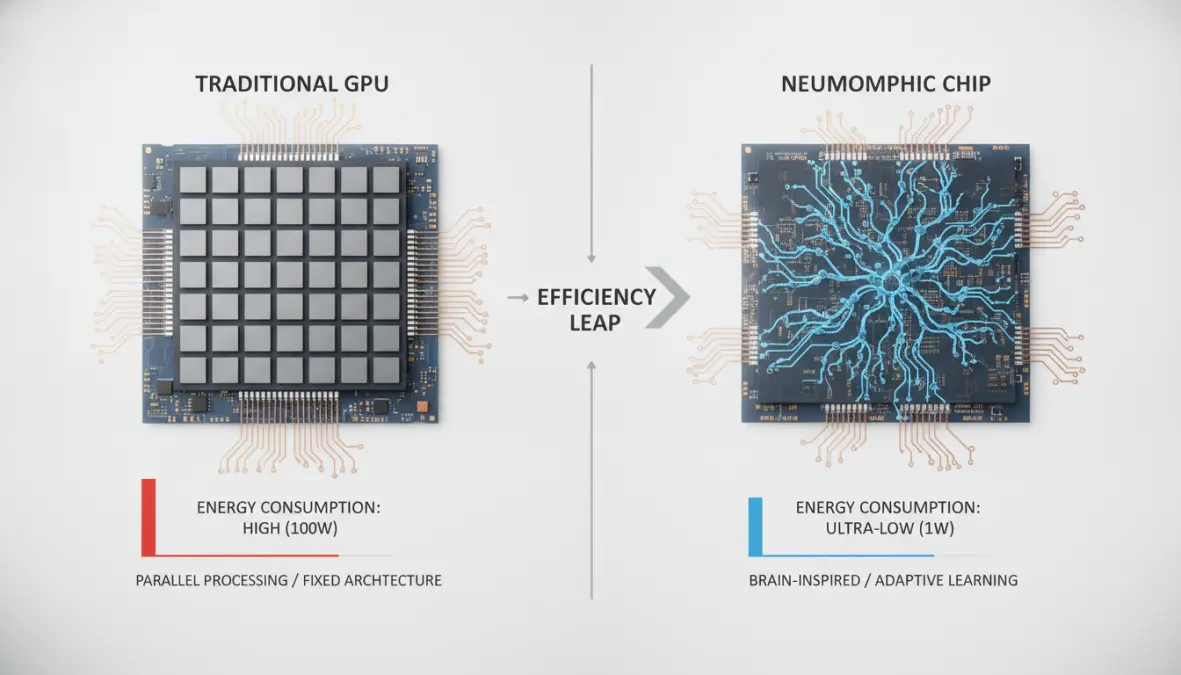
When comparing neuromorphic chips vs traditional processors, the differences become even clearer in real-time applications. Analog computing approaches allow these chips to process sensory data—like vision or audio—in its native analog form, eliminating costly analog-to-digital conversions. The event-driven computing model means that processing only occurs when input changes, perfect for applications like surveillance cameras that spend most of their time watching static scenes.
This brain-inspired architecture for machine learning excels at tasks requiring continuous adaptation. Traditional neural networks need to be retrained offline with massive datasets, but neuromorphic systems can learn incrementally in real-time, adjusting weights as new data arrives. This makes them ideal for robotics, where environmental conditions constantly change, and for edge computing scenarios where devices must operate autonomously without cloud connectivity.
The scalability advantage comes from the massively parallel nature of neural architecture. While adding more cores to a traditional processor yields diminishing returns due to communication overhead, neuromorphic chips can scale to millions of neurons with minimal bottlenecks, since each neuron operates largely independently. This low-power AI approach is revolutionizing IoT deployments, where battery life is critical, and enabling sophisticated AI in environments where traditional computing simply isn’t viable.
Real-World Applications and Industry Adoption
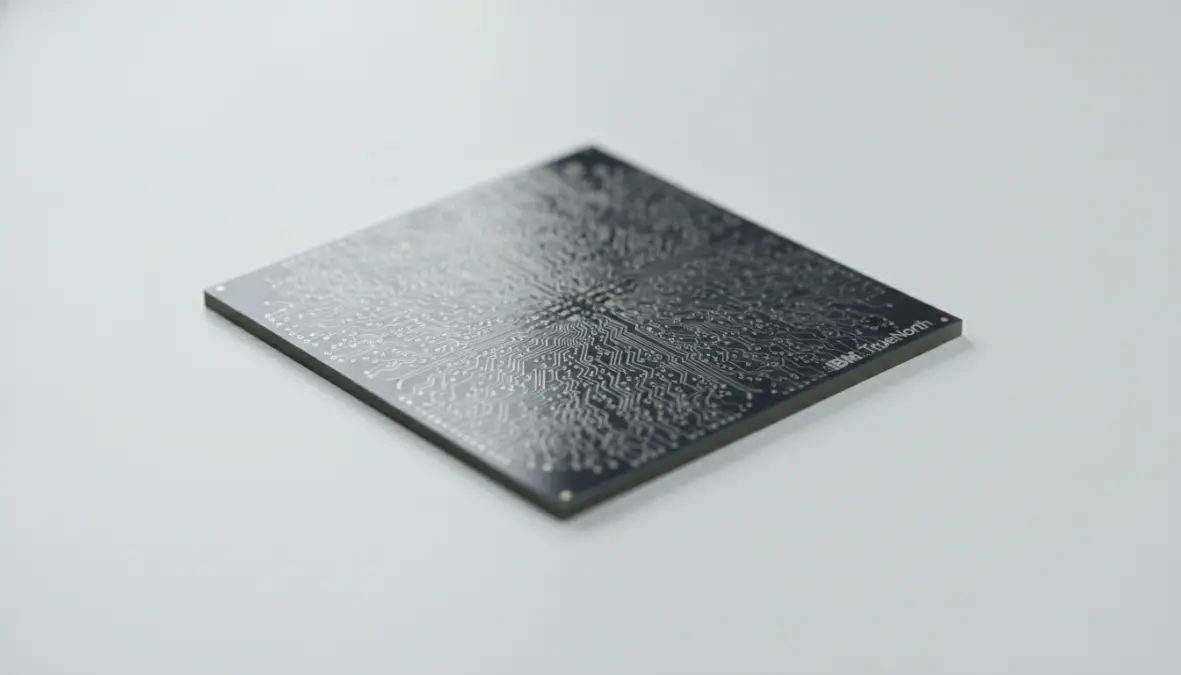
The technology has moved beyond research labs into tangible products. Intel’s Loihi chip packs 130,000 artificial neurons and 130 million synapses onto a single processor, demonstrating neuromorphic computing examples and use cases in gesture recognition and optimization problems. IBM’s TrueNorth chip contains 1 million programmable neurons and 256 million synapses, consuming just 70 milliwatts while running—roughly the power of a hearing aid battery.
In autonomous vehicles, neuromorphic processors handle sensor fusion and real-time decision-making with latencies measured in microseconds. Medical diagnostics benefit from the pattern recognition capabilities, with researchers using neuromorphic systems to detect anomalies in EEG and ECG data faster than traditional methods. The applications of neuromorphic computing in AI extend to drone navigation, where power constraints make conventional processors impractical, and sensory processing in robotics, where the ability to filter relevant signals from noise in real-time is crucial. These systems naturally integrate with ambient computing environments, providing intelligent processing that remains invisible to users.
Challenges and Future Outlook for Neuromorphic Computing
Despite the promise, neuromorphic chips face significant hurdles before mainstream adoption. The lack of standardization means each platform requires different programming approaches, creating a steep learning curve for developers accustomed to conventional frameworks. Most engineers trained on PyTorch or TensorFlow must learn entirely new paradigms for cognitive computing on neuromorphic hardware, limiting adoption speed.
The future of neuromorphic chip technology depends heavily on solving the software gap. Current neuromorphic hardware for deep learning requires specialized algorithms that can’t simply port existing models. Researchers are working on hybrid approaches that combine traditional and neuromorphic elements, allowing gradual transition rather than wholesale replacement of existing infrastructure.
Commercial availability remains limited, with most advanced chips still in research phases or available only to select partners. The gap between laboratory breakthroughs and production-ready energy efficient neuromorphic computing systems typically spans years, though investment from tech giants suggests this timeline is compressing. As manufacturing processes mature and development tools improve, we’re likely to see neuromorphic accelerators appearing first as specialized coprocessors alongside traditional CPUs, handling specific workloads where their advantages are most pronounced.
The next decade will likely witness neuromorphic computing transitioning from niche applications to integral components of AI infrastructure, particularly where power efficiency and real-time learning are paramount. The question isn’t whether brain-inspired chips will revolutionize AI—it’s how quickly we can bridge the gap between biological inspiration and commercial reality.