Perovskite Solar Cells: How This Breakthrough Technology Is Making Renewable Energy More Affordable
Imagine solar panels that are cheaper to produce, more efficient than traditional silicon, flexible enough to bend, and light enough to stick on a backpack. Sound like science fiction? Perovskite solar cells are making this reality closer than you think. These next-generation photovoltaic devices have taken the renewable energy world by storm, achieving efficiency gains in just over a decade that took silicon panels nearly 70 years to reach. Whether you’re passionate about fighting climate change or simply tired of sky-high electricity bills, understanding perovskite solar technology might just change how you think about affordable solar energy.
What Are Perovskite Solar Cells and Why They Matter
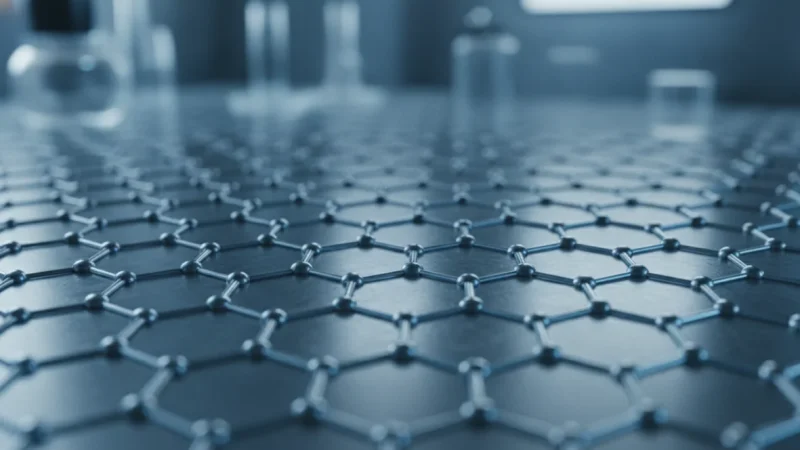
Perovskite solar cells are photovoltaic devices that use materials with a perovskite crystal structure—the same arrangement found in the mineral calcium titanium oxide discovered in Russia’s Ural Mountains in 1839. But here’s where it gets interesting: in solar applications, we’re talking about lead halide perovskites, synthetic materials with the general formula ABX₃, where ‘A’ is typically an organic molecule, ‘B’ is usually lead, and ‘X’ is a halogen like iodine or bromine.
Unlike traditional silicon solar panels that require high-temperature processing (around 1,400°C) and ultra-pure materials, perovskite photovoltaic cells can be manufactured at relatively low temperatures—sometimes even at room temperature. This fundamental difference in production makes them potentially game-changing for renewable energy innovation.
The journey has been remarkably fast. The first perovskite solar cell was demonstrated in 2009 with a modest 3.8% efficiency. Today, single-junction perovskite cells have reached over 25% efficiency in laboratory settings, while tandem solar cells combining perovskite with silicon have achieved stunning efficiencies exceeding 33%. To put this in perspective, most commercial silicon panels max out around 20-22% efficiency. This rapid progress—achieving in 15 years what took silicon seven decades—explains why researchers worldwide are racing to commercialize this technology.

The Advantages: Efficiency, Cost, and Versatility
What makes perovskite solar technology so promising isn’t just one breakthrough—it’s a perfect storm of multiple advantages that could democratize access to affordable solar energy globally.
Higher Efficiency at Lower Production Costs
When people ask “how efficient are perovskite solar cells,” the answer keeps getting better. Perovskite solar efficiency has shattered records year after year. Single-junction cells have achieved certified efficiencies above 25%, approaching the theoretical limit for single-bandgap materials. But the real excitement lies in bandgap engineering—the ability to tune perovskite materials to absorb different parts of the light spectrum.
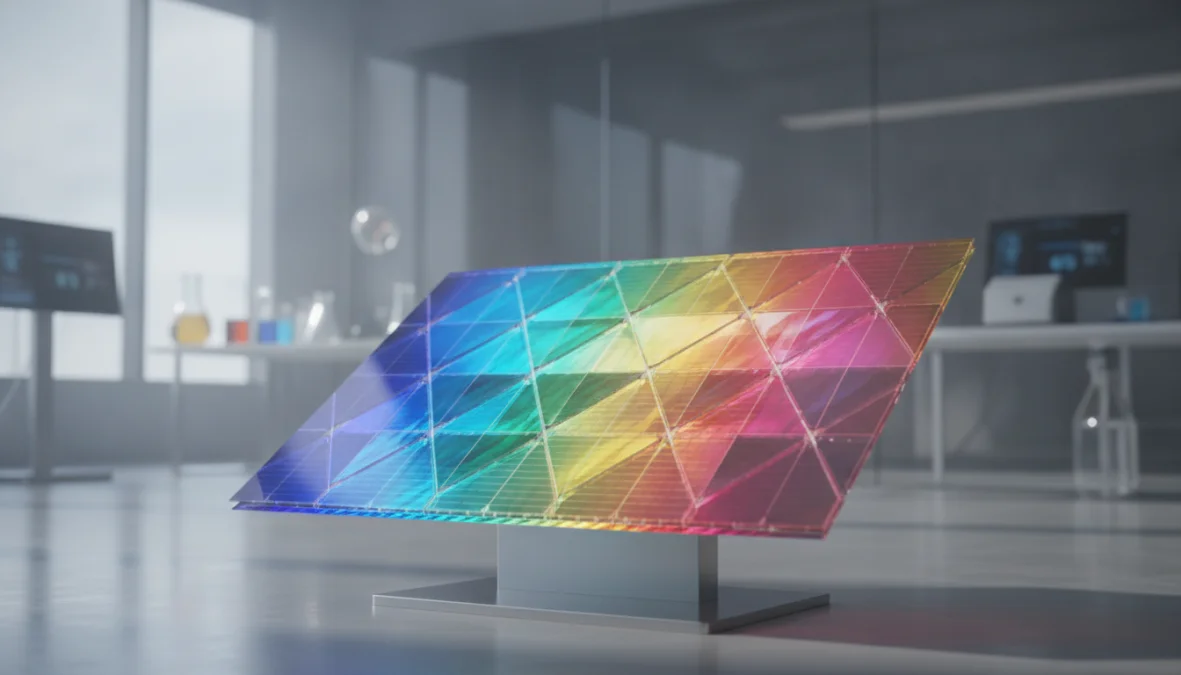
This tunability makes perovskites perfect partners for silicon. Tandem solar cells stack a perovskite layer (optimized for blue and green light) on top of a silicon layer (optimized for red and infrared). This combo has achieved power conversion efficiency beyond 33%, getting tantalizingly close to the theoretical limit of around 43% for tandem configurations. That’s 50% more power from the same rooftop space compared to conventional panels.
But here’s the kicker: production costs could be dramatically lower. Unlike silicon, which requires energy-intensive purification and processing, perovskite materials can be dissolved in solution and applied using techniques borrowed from printing technology—inkjet printing, spray coating, or even roll-to-roll manufacturing similar to printing newspapers. This thin film solar technology approach could slash manufacturing costs while enabling entirely new applications. Combined with innovations in other renewable sectors like green hydrogen production, we’re looking at a complete transformation of the energy landscape.
Flexibility and Diverse Applications
If you’re wondering about perovskite solar cells vs silicon, versatility is where perovskites truly shine. Traditional silicon panels are rigid, heavy, and fragile. Perovskite cells can be deposited on flexible substrates, creating bendable, lightweight solar panels that weigh a fraction of conventional alternatives.
This flexibility unlocks applications that silicon could never touch. Picture solar cells integrated directly into building facades, curved architectural elements, or even vehicle bodies. Building-integrated photovoltaics (BIPV) become genuinely practical when your solar material can conform to any surface. Some perovskite formulations can even be made semi-transparent, opening possibilities for energy-generating windows that don’t completely block your view.
The lightweight nature of next generation solar panels also makes them perfect for portable electronics, drones, Internet of Things (IoT) sensors in remote locations, and emergency power solutions. When combined with decentralized energy systems like microgrids, flexible perovskite panels could bring electricity to communities where heavy silicon panels are impractical to transport or install.
Challenges and the Path to Commercial Viability
Before you rush to ask about the cost of perovskite solar panels for your home, we need to address the elephant in the room: perovskite solar cells aren’t quite ready for your roof. Yet.
The biggest obstacle is stability. While silicon panels commonly last 25-30 years with minimal degradation, perovskite solar cell stability issues have historically limited their lifespan to months or even weeks under real-world conditions. Solar cell degradation accelerates when perovskites are exposed to moisture, oxygen, heat, and UV light—basically, all the things you find outdoors where solar panels need to work.
Then there’s the environmental concern. Most high-performing perovskites contain lead, raising questions about manufacturing safety and end-of-life disposal. While the lead content is actually lower than in many common products like car batteries, and proper encapsulation prevents leaching, it’s still a hurdle for public acceptance and regulatory approval.
Scalability presents another challenge. Moving from stamp-sized lab cells to square-meter commercial panels while maintaining efficiency and uniformity isn’t trivial. Manufacturing processes that work beautifully in research settings don’t always scale economically.
But here’s the good news: progress on all these fronts is accelerating. Advanced encapsulation techniques are protecting perovskite layers from environmental damage, with some formulations now surviving thousands of hours of stability testing. Researchers are developing lead-free alternatives using tin, bismuth, or other metals, though these haven’t yet matched lead-based efficiency. Several companies have announced pilot production lines, and commercial perovskite solar cells in niche applications are already available.
The timeline? Experts predict we’ll see the first commercial perovskite products for specialized applications within 2-3 years, with broader residential availability possibly emerging in the following decade. This aligns with larger trends in renewable energy solutions, including the nuclear energy renaissance, as societies pursue multiple pathways to clean energy.
FAQ
Are perovskite solar cells better than silicon?
In efficiency and versatility, yes—perovskite solar cells offer higher potential efficiency, especially in tandem configurations, flexible form factors, and lower production costs. However, silicon currently wins on durability and proven long-term stability. The future likely involves both technologies working together in tandem solar cells rather than one replacing the other completely.
How long do perovskite solar cells last?
Current perovskite photovoltaic cells face durability challenges, typically lasting months to a few years depending on formulation and encapsulation quality. This falls short of silicon’s 25-30 year lifespan. However, recent advances in encapsulation and material stability are rapidly improving longevity, with some prototypes surviving multiple years of accelerated testing.
When will perovskite solar panels be available for homes?
While specialty applications may see commercial perovskite solar cells within 2-3 years, widespread residential availability will likely take longer—possibly 5-10 years. The technology must first overcome stability issues, pass long-term certification testing, and establish reliable manufacturing at scale. Early adopters might access hybrid perovskite-silicon panels sooner than pure perovskite products.
Are perovskite solar cells safe for the environment?
This depends on the formulation. Lead halide perovskites contain lead, raising environmental concerns, though proper encapsulation prevents leaching and the amount is comparable to car batteries. Researchers are actively developing lead-free alternatives. The manufacturing process itself is generally more environmentally friendly than silicon production due to lower energy requirements and reduced material waste.
The promise of affordable solar energy through perovskite technology represents more than just incremental improvement—it’s potentially transformative. As researchers solve stability challenges and scale up production, we may finally see solar power become truly accessible to communities worldwide, accelerating our transition away from fossil fuels. The solar revolution might be closer than we think, and it might just come wrapped in a shimmering perovskite crystal structure.